 Semiahmoo
 A Unique Place to Own a Home
Point Roberts sits on the tip of a peninsula that pokes south from Canada into the Strait of Georgia, which makes it a small piece of the United States that you can only reach by driving through British Columbia, by boat, or by small plane. It's part of Whatcom County, but geographically it's cut off from the rest of the county and the rest of Washington. That isolation shapes a lot about how homes here are built, maintained, and repaired — and it's part of why the exterior work on a Point Roberts house deserves a contractor who understands the area rather than treats it like just another stop on the route.
Homes on this peninsula face water on three sides. That means near-constant exposure to marine air, salt spray, and wind that has nothing to slow it down before it hits a wall. Combine that with the Pacific Northwest's long wet season and you get an exterior environment that is tougher on siding, trim, roofing, and decking than most inland communities ever see.
What the Climate Actually Does to a House
Salt Air and Wind
Being surrounded by saltwater isn't just a scenic detail — airborne salt is corrosive. It accelerates the breakdown of fasteners, flashing, and any siding material that isn't engineered to resist moisture intrusion at the seams and edges. Wind off the water also drives rain sideways into walls, which is a very different stress than rain falling straight down. Siding that performs fine in a sheltered inland yard can fail years early on an exposed, waterfront-facing wall.
Driving Rain and Standing Moisture
Whatcom County's marine west coast climate means long stretches of steady, low-intensity rain through fall, winter, and spring. It's rarely a downpour — it's persistent dampness that seeps into anything with a gap, a poorly lapped joint, or a cracked caulk line. Over months and years, that slow moisture intrusion is what actually rots sheathing and trim, more than any single storm.
Moss and Shade
Between the tree cover common on many lots and the extended damp season, moss and algae growth on siding, roofing, and decking is a fact of life here. Moss holds moisture against a surface long after the rain stops, which is exactly the condition that causes wood-based products to soften and fail. North-facing walls and shaded rooflines are usually the first places it shows up.
Signs Your Siding Is Losing the Fight
A lot of exterior damage on the peninsula develops slowly, so it's worth knowing what to look for before a small problem becomes a structural one:
- Soft or spongy spots when you press on siding, especially near the bottom courses and around window trim
- Paint that's peeling, bubbling, or needing repainting far more often than it should
- Visible moss or dark streaking that keeps coming back after cleaning
- Gaps opening up at seams, corners, or where siding meets trim
- Warping, cupping, or visible swelling along panel edges
- Musty smell or discoloration on interior walls that back up to exterior siding
Any one of these is worth a look. Several at once usually means the siding has been losing the moisture battle for a while.
Why We Only Install James Hardie Fiber Cement
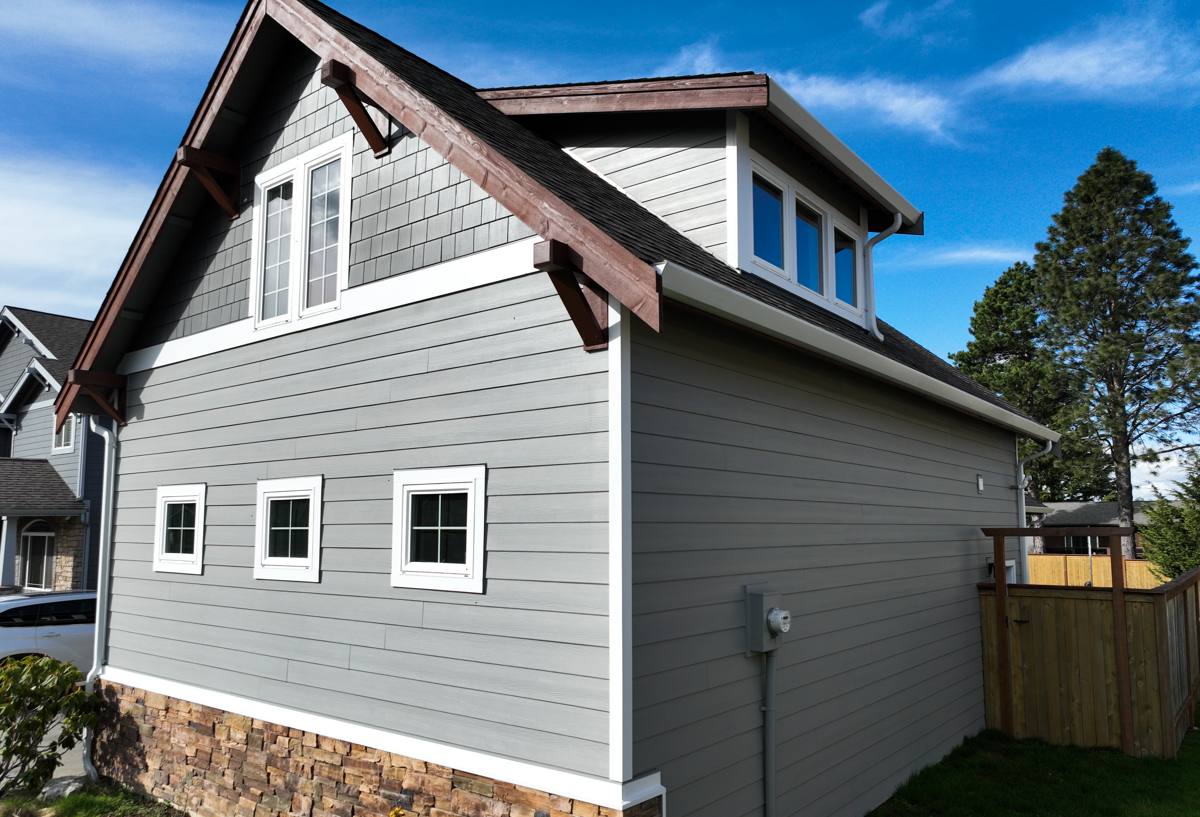
We made a deliberate choice to standardize on James Hardie fiber cement siding and not offer vinyl, LP SmartSide, or other wood-based composite products. That's not a marketing position — it's a response to exactly the conditions described above.
How It Handles Moisture
Fiber cement is made from cellulose fiber, sand, and cement. It doesn't have the wood content that gives engineered wood siding its vulnerability to swelling and rot when water gets past a seam. It also doesn't soften the way vinyl can distort or warp under sustained heat and cold cycling. For a peninsula getting salt-laden wind and driving rain for months at a stretch, that moisture resistance is the whole ballgame.
Non-Combustible Material
James Hardie siding is non-combustible, which matters increasingly across the Pacific Northwest as wildfire risk has become a bigger part of regional building conversations, even in wetter coastal areas.
ColorPlus Factory Finish
Hardie's ColorPlus finish is baked on at the factory under controlled conditions, rather than field-painted after installation. That finish is engineered to resist fading and chipping better than a standard field-applied coat, which reduces the repainting cycle that a lot of homeowners here already know too well.
Climate-Engineered Product Lines
Hardie makes region-specific HZ product lines engineered for different climate zones. For a marine environment like this one, that means a product formulated with this kind of sustained moisture exposure in mind, not a generic one-size-fits-all board.
The Warranty
James Hardie backs its siding with a strong, transferable limited warranty — a real factor if you ever sell the house, since a documented warranty on the siding is worth something to a buyer doing due diligence on a coastal property.
More Than Siding: Roofing, Windows, and Decks
Siding doesn't work in isolation — it's one piece of a building envelope that also includes the roof, windows, and any attached decking, and on a property like this, all of them are fighting the same salt air and moisture. A roof with failing flashing will feed water behind good siding just as easily as bad siding will. Windows with worn seals let moisture into wall cavities from the inside out. Decks facing the water take the same driving rain and UV exposure as the walls behind them.
We handle all four — siding, roofing, windows, and decks — because addressing them together, rather than one contractor patching siding while another handles the roof, is how you actually stop water from finding its way in. It also means one crew who understands how these systems interact, instead of coordinating between multiple companies with different assumptions about how the house should be sealed.
Getting Work Done on the Peninsula
Because Point Roberts is only reachable by crossing an international border, scheduling and logistics look a little different than a typical job. Material deliveries, equipment, and crew all have to make that crossing, and that's a detail that catches contractors unfamiliar with the area off guard. A crew that regularly works this route knows how to plan around it so it doesn't turn into wasted days or delayed material.
It's also a small, tight-knit community with a mix of full-time residents and seasonal or weekend homeowners. A lot of work here gets scheduled around owners who aren't on-site full time, which means clear communication and a crew that shows up when they say they will matters even more than usual.
What the Process Looks Like
- Inspection — we look at the current siding condition, trim, flashing, and any trouble spots like north-facing walls or areas with heavy moss.
- Estimate — a clear written scope and price, with options if there's a range of approaches worth considering (full replacement versus repair-and-partial-replacement, for example).
- Scheduling — built around ferry, border, and delivery logistics so the job runs on the timeline we quote.
- Installation — installed to Hardie's specifications, including proper fastening, clearances, and flashing details, which matter more here than in a sheltered inland climate.
- Walkthrough — a final review so you know exactly what was done and what maintenance, if any, to expect going forward.
What Affects Cost
| Factor | Why It Matters |
|---|---|
| Home size and wall complexity | More corners, gables, and trim details mean more labor and material |
| Extent of existing damage | Rotted sheathing or framing found during tear-off adds repair scope |
| Siding profile and finish choice | Lap width, texture, and ColorPlus color selection affect material cost |
| Access and logistics | Border crossing and delivery scheduling factor into project timelines |
| Scope beyond siding | Bundling roofing, window, or deck work can affect overall pricing and sequencing |
We don't quote made-up numbers on a page like this — every property and scope is different, and the only way to get an honest price is a real inspection.
Maintaining a Coastal Exterior
Whatever siding is currently on your home, a few habits go a long way in this climate:
- Rinse siding periodically to knock off salt residue and slow moss growth
- Trim back vegetation that keeps walls shaded and damp
- Check caulking around windows, doors, and trim every year or two
- Look at north-facing and water-facing walls more often than sheltered sides
- Address soft spots or moss buildup promptly rather than waiting for a full season to pass
Why a Local Crew Matters
A contractor who works this peninsula regularly understands its logistics, its climate, and the specific ways homes here take a beating over time. That's different from a crew driving out for a one-off job without factoring in the border crossing, the marine exposure, or the moss season that never quite ends. We'd rather walk your property, tell you honestly what we see, and give you a straightforward estimate for the work that actually needs doing — no pressure, no upsell. If you're dealing with aging siding, roofing, windows, or decking on your Point Roberts property, reach out for a free estimate and we'll take it from there.