 Semiahmoo
 Point Roberts Decks Live a Harder Life Than Most
Point Roberts sits out on its own peninsula, exposed to Boundary Bay and the open marine air that rolls in off the water almost year-round. That exposure is part of what makes the area beautiful, and it's also exactly what wears out a deck faster than it would twenty miles inland. Salt-laden air accelerates corrosion on fasteners and hardware, driving rain off the water finds every gap in a poorly built deck, and the long, damp shoulder seasons here mean moss and algae get a real foothold on any surface that doesn't drain and dry properly.
None of that means decking is a bad idea for a Point Roberts home. It means the materials, fastening, and substructure have to be chosen and built with that climate in mind from day one, not treated as an afterthought.
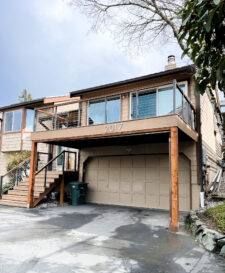
What the Climate Actually Does to a Deck Out Here
Salt Air and Metal Hardware
Salt air speeds up oxidation on anything ferrous. Standard interior-grade screws, joist hangers, and brackets that might last two decades in a dry inland climate can start showing rust streaks and weakening within a few years this close to the water. Once a fastener starts to corrode, it can stain the surrounding decking and eventually lose holding strength, which is a structural issue, not just a cosmetic one.
Driving Rain and Water Intrusion
Wind-driven rain off Boundary Bay doesn't fall straight down — it gets pushed sideways into ledger connections, stair stringers, and any exposed end grain. A deck built without proper flashing at the house connection, or without gapping between boards to let water shed, will hold moisture in places it shouldn't, and that's where rot and decay start on any wood components underneath the decking surface.
Moss, Algae, and the Long Damp Season
Whatcom County's wet season stretches long, and Point Roberts gets its full share of it. Any decking surface that stays damp and shaded — under trees, on the north side of a house, or anywhere airflow is blocked underneath — will grow moss and algae over time. Composite decking resists this far better than untreated wood, but "resists" doesn't mean "immune." Surface texture, ventilation underneath the deck, and drainage all affect how much moss pressure a deck actually faces.
Why Composite Makes Sense Here
Composite decking (a blend of wood fiber and recycled plastic, usually with a protective cap layer) doesn't absorb water the way solid wood does, so it doesn't swell, cup, or splinter from repeated wet-dry cycles the way an untreated cedar or fir deck will after a few Point Roberts winters. It also doesn't need annual staining or sealing, which matters for homeowners who aren't out here full-time or who'd rather not spend a weekend every year maintaining a deck.
That said, composite isn't a magic material that solves every problem on its own. A composite deck built on a poorly ventilated substructure, or fastened with the wrong hardware, will still trap moisture, still stain from corroding screws, and still grow moss in shaded, low-airflow spots. The board is only as good as the structure underneath it and the details around it.
Composite vs. Wood vs. PVC for This Climate
| Material | Moisture Behavior | Maintenance | Salt Air Durability |
|---|---|---|---|
| Untreated wood (cedar, fir) | Absorbs water, swells and shrinks seasonally | Annual staining/sealing recommended | Fasteners and surface both vulnerable to corrosion staining and weathering |
| Composite (capped) | Minimal absorption, dimensionally stable | Periodic washing, no staining or sealing | Good, if hardware is corrosion-resistant |
| PVC / cellular vinyl | Essentially waterproof | Lowest maintenance, occasional washing | Excellent, but higher cost and a different look/feel underfoot |
We install composite for most Point Roberts homeowners because it strikes the right balance of durability, cost, and appearance for this climate. PVC is a reasonable option for homeowners who want the absolute lowest maintenance and are comfortable with the tradeoffs in feel and cost — we're happy to walk through both.
What a Correctly Built Composite Deck Looks Like Out Here
Substructure and Fasteners
The framing underneath a composite deck matters as much as the boards on top. In a salt-air, high-rain environment, we use corrosion-resistant fasteners and hardware rated for exterior and coastal exposure, not standard interior-grade hardware that will start corroding within a few seasons. Joist tape or a protective barrier over the framing helps keep moisture from wicking into the wood substructure underneath the composite surface.
Ventilation Underneath
Airflow under the deck is what keeps moisture from sitting and encouraging moss, mold, and rot in the framing. We build in proper clearance and skirting that allows air movement rather than sealing the underside completely, especially on lower decks close to grade.
Ledger Flashing and House Connection
Where the deck meets the house is the single most common source of hidden water damage on any deck, anywhere. Proper flashing at that ledger connection keeps driving rain from getting behind siding and into the wall structure — this is a detail that's easy to get wrong and expensive to fix later, so it's not a place to cut corners.
Board Spacing and Drainage
Correct gapping between composite boards lets water shed through rather than pool on the surface. Combined with a slight slope away from the house, this keeps standing water — and the moss it invites — off the deck surface.
Our Process for a Point Roberts Composite Deck
- On-site assessment — we look at sun exposure, wind direction, existing drainage, and how close the deck sits to grade, since these all affect how much moss and moisture pressure the finished deck will face.
- Substructure evaluation — if we're replacing an existing deck, we check the ledger, joists, and posts for rot or corrosion before deciding what can be reused versus what needs to be rebuilt.
- Material and layout selection — board color, texture, and layout, plus railing and fascia choices, sized to the home and budget.
- Build — proper flashing, corrosion-resistant fasteners, correct board spacing, and ventilated substructure, built to manufacturer installation specs so the product warranty stays intact.
- Walkthrough — we go over basic care so the deck looks good years down the road, not just on installation day.
Maintenance Realities in a Moss-Prone Marine Climate
- Rinse or sweep debris off the deck regularly — trapped leaves and needles hold moisture and speed up algae growth in shaded spots.
- An occasional wash with a mild cleaner and soft-bristle brush keeps surface grime and early moss growth from taking hold — avoid pressure washing at high pressure directly on composite, which can damage the cap layer.
- Trim back overhanging branches where possible to cut down on shade and debris buildup on the deck surface.
- Check railing hardware and fasteners periodically for early signs of corrosion staining, especially on decks facing open water.
- Keep gutters and downspouts near the deck clear so overflow isn't adding extra water load right where the deck meets the house.
Logistics Worth Knowing About
Point Roberts' location means material deliveries and crew scheduling take a bit more planning than a typical job elsewhere in Whatcom County — border crossing times and delivery windows are real factors, not an afterthought. Because we already work in the area regularly, we build that into our scheduling and materials planning up front, so it doesn't turn into delays or surprises partway through your project.
Why Local Experience with Point Roberts Homes Matters
A contractor who's only worked on decks further inland may not think twice about standard interior-grade fasteners or skip the extra ventilation detailing that matters so much this close to the water. Getting those details right the first time is the difference between a composite deck that looks and performs well for decades and one that shows corrosion stains, moss buildup, or soft spots in the substructure within a handful of years. We build decks throughout Semiahmoo and the surrounding Whatcom County coastline, including Point Roberts, and we build every one of them with this specific climate — the salt air, the driving rain, and the long moss season — in mind from the framing up.
Cost Factors to Expect
| Factor | Why It Affects Price |
|---|---|
| Deck size and shape | Square footage and cuts around stairs, angles, or multiple levels increase labor and material |
| Substructure condition | Rebuilding rotted or corroded framing adds cost beyond a straightforward resurface |
| Board line and color | Composite product lines vary in price based on cap technology and board profile |
| Railing and fascia choices | Composite, metal cable, or glass railing systems carry different material and labor costs |
| Site access | Limited access or scheduling complexity for Point Roberts deliveries can factor into project timing and cost |
If you're weighing a new composite deck or a replacement for an aging one on your Point Roberts property, we're glad to come take a look and give you an honest, no-pressure estimate — no obligation, just a straight assessment of what your home needs. Use the form below to get started.