 Semiahmoo
 A Contractor Decision, Not a Sales Pitch
Most siding contractors install whatever a homeowner picks off a sample board. We stopped doing that. Every job we take on in Semiahmoo and the surrounding Whatcom County shoreline goes up in James Hardie fiber cement, full stop. No vinyl, no LP SmartSide, no Cemplank or Allura, no primed spruce or cedar. That's a narrower menu than most siding companies offer, and we think homeowners deserve to know exactly why we drew the line where we did before they hire us.
This isn't a manufacturer relationship or a rebate program talking. It's twenty-some years of watching which products hold their shape, their color, and their seams on homes that sit a few hundred yards from saltwater, under a sky that delivers rain sideways for half the year. Some products handle that. Some don't, at least not without a maintenance schedule most homeowners never sign up for.
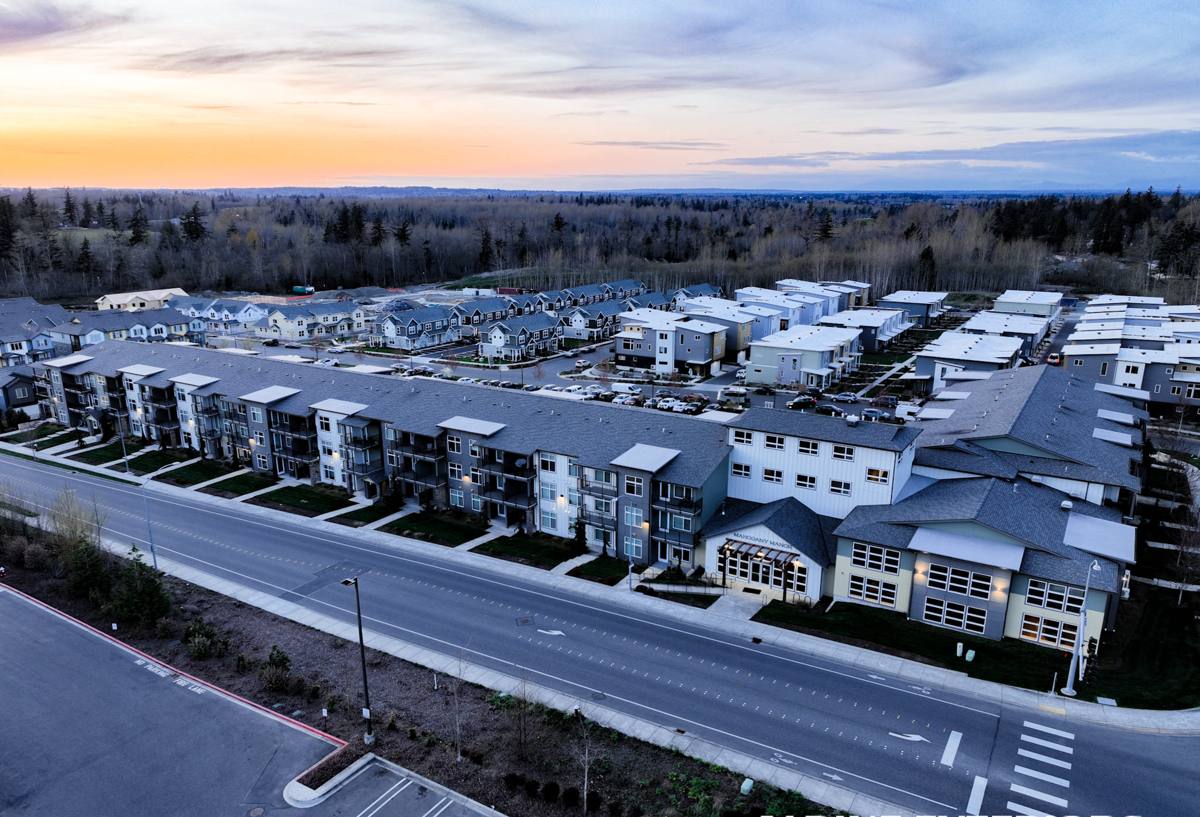
What Semiahmoo's Climate Actually Does to a Wall
Semiahmoo sits on a spit between Drayton Harbor and Semiahmoo Bay, which means salt-laden air isn't an occasional visitor here — it's a daily condition. Add Whatcom County's long, wet winters and the driving rain that comes off the Strait of Georgia, and a home's siding is doing more work here than it would fifty miles inland.
Salt Air
Airborne salt accelerates corrosion on fasteners, staples, and any exposed metal trim, and it degrades certain paint and coating systems faster than manufacturers' inland test data suggests. Products that rely on a thin field-applied finish tend to chalk, fade, or lose adhesion sooner in a coastal marine environment than they do in a Spokane subdivision.
Driving Rain
Wind-driven rain doesn't just fall on a wall, it gets pushed into laps, seams, and butt joints. Siding that swells, wicks moisture, or relies on caulking at every seam to stay watertight is fighting a losing battle over a 20- or 30-year span in this kind of weather.
The Moss Season
Whatcom County's moss season runs long — often eight or nine months of the year with enough moisture and shade to keep organic growth active on north-facing walls, under eaves, and anywhere airflow is restricted. Wood-based products are especially vulnerable here because moss and algae hold moisture against the substrate, and once a wood fiber product takes on sustained moisture, it doesn't fully recover.
Why We Narrowed the Field to One Product
We didn't start out Hardie-only. We got there by tracking callbacks, warranty claims, and what siding actually looked like on 10- and 15-year-old homes in this exact climate.
It Doesn't Burn
James Hardie fiber cement is non-combustible. It's made from cement, sand, and cellulose fiber, not wood or engineered wood fiber, so it doesn't contribute fuel to a fire the way wood-based sidings can. That matters to insurers and it matters to us as a straightforward safety difference between product categories.
It Doesn't Swell or Rot
Wood-based siding products, even engineered ones with resin-treated strands, are still organic material at their core. They can take on moisture at cut edges, fastener penetrations, and seams, and once that happens the clock starts on swelling, delamination, or rot — especially in a climate that doesn't give a wall much time to dry out between storms. Fiber cement doesn't have that failure mode. It's dimensionally stable wet or dry.
The Finish Is Baked On, Not Painted On
Most of what we install carries Hardie's ColorPlus factory finish — a baked-on, multi-coat finish applied in a controlled plant environment rather than sprayed or brushed on site after installation. That finish holds color and resists fading, chipping, and salt-air chalking far better than field-applied paint, because it cures under conditions no job site can replicate.
The James Hardie System We Install
James Hardie isn't one product, it's a system, and we spec it to the site.
HardiePlank Lap Siding
The most common choice for Semiahmoo homes — horizontal lap boards in a range of widths and textures, from smooth to cedar-grain, that give a traditional look without the traditional maintenance.
HardiePanel and HardieShingle
Vertical panel siding for board-and-batten looks, and individual shingle siding for homes that want a cottage or Craftsman shingle profile without actual wood shingles absorbing coastal moisture.
HZ5 Climate Engineering
Hardie engineers its products by climate zone, and coastal Whatcom County falls in the HZ5 category — formulated for regions with significant moisture exposure and freeze-thaw cycling. We only order HZ5-rated product for this area; it's a different formulation than what gets shipped to drier inland climates, and using the wrong zone rating is one of the more common corner-cutting mistakes in this trade.
Color and Curb Appeal Without the Upkeep
ColorPlus finishes come in a real, standing color palette engineered to work as a system — trim, soffit, and accent colors are designed to coordinate rather than approximated with mismatched paint cans. Because the color is factory-applied, touch-up product is manufacturer-matched rather than guessed at with a hardware store swatch, and repaints are measured in decades rather than every 5 to 8 years, which is a realistic repaint interval for field-painted wood siding in this climate.
Warranty That Actually Transfers
James Hardie backs its ColorPlus products with a non-prorated limited warranty that covers both the substrate and the finish, and it's transferable to a subsequent homeowner within the warranty period if the home sells — which matters on the coast, where siding condition is one of the first things a buyer's inspector flags. We install strictly to Hardie's published fastening, clearance, and flashing specifications, because installation errors are the single most common reason a warranty claim gets denied, on any siding product, from any manufacturer.
How the Alternatives Compare in This Climate
| Product | Moisture Behavior | Salt Air / Finish Durability | Fire Rating | Typical Maintenance |
|---|---|---|---|---|
| James Hardie Fiber Cement | Dimensionally stable, doesn't swell or rot | Factory ColorPlus finish resists chalking and fade | Non-combustible | Occasional wash; repaint interval measured in decades |
| Vinyl Siding | Doesn't absorb water, but can warp or buckle with heat/impact | Field-installed trim and fasteners can corrode; color can fade unevenly | Combustible, can melt or deform near heat sources | Low, but panels crack and are hard to color-match if replaced |
| LP SmartSide / Engineered Wood | Wood-strand substrate can swell at cut edges and fasteners if seals fail | Field or factory finish still ages faster than fiber cement in marine air | Combustible | Requires diligent caulking and edge sealing to avoid moisture entry |
| Cedar / Primed Spruce | Absorbs moisture readily; prone to rot, cupping, and checking | Repaint or restain every 5-8 years in coastal exposure | Combustible | High — regular refinishing and moss/mildew treatment |
What Correct Installation Actually Involves
Fiber cement's durability depends on getting the details right. A lot of the siding failures we get called to inspect on other contractors' work trace back to shortcuts here, not the product itself.
- Proper starter strip and clearance from grade, decks, and roof lines so water has somewhere to go
- Correct fastener type, spacing, and penetration depth — Hardie is specific about this, and it's often skipped
- Rainscreen or drainage plane behind the siding, which matters even more in a high-rainfall coastal zone
- Flashing at every window, door, and penetration, installed before siding goes up, not caulked in after
- HZ5-rated product ordered for the coastal zone, not a generic inland formulation
- Factory-cut edges used wherever possible, with field cuts sealed per manufacturer spec
Cost Considerations, Honestly
Fiber cement typically costs more upfront than vinyl and is comparable to or somewhat above engineered wood siding, largely because of material weight, cutting requirements, and installation labor. It's usually less than a full cedar installation once you account for cedar's premium material cost. The way we'd encourage a homeowner to think about it isn't the sticker price alone — it's sticker price plus 20 years of maintenance, repainting, and the realistic odds of a moisture-related repair in a climate that doesn't give a wall much of a break. On that basis, most homeowners we've worked with in the Semiahmoo and Blaine area find the total cost of ownership favors Hardie, even though it isn't the cheapest option on day one.
Why We Don't Keep the Other Options on the Truck
We get asked, fairly often, why we don't just offer everything and let the homeowner decide. The honest answer is that offering a product we don't believe holds up here, and then being the crew that has to install it, doesn't sit right with us. We'd rather turn down a job than install something we expect to be back out here fixing in eight years. Standardizing on one product also means our crews are genuinely expert in one installation system rather than passably familiar with five, which shows in the finished work.
If you're weighing siding options for a home in Semiahmoo, Blaine, or anywhere along the Whatcom County shoreline, we're glad to walk your property, look at your specific exposure, and give you a straight answer — including whether your existing siding has real years left in it. Reach out for a free, no-pressure estimate using the form below.