 Semiahmoo
 Point Roberts Is a Different Siding Job Than Most of Whatcom County
Point Roberts sits on its own peninsula, cut off from the rest of Washington by geography — the only way in or out by road is through Canada. That isolation matters for more than logistics. Homes here take a steadier beating from marine weather than houses further inland: salt-laden air off the water, wind-driven rain that hits siding sideways instead of straight down, and a wet season long enough that moss and algae get a real foothold on north- and west-facing walls before summer ever dries things out. Any siding installed here has to be chosen and installed with that specific exposure in mind, not just "coastal Washington" in general.
We install fiber cement siding on Point Roberts homes regularly, and the failures we get called out to fix almost always trace back to the same two things: a product that wasn't built for sustained moisture exposure, or an installation that skipped the water-management details that matter most in a climate like this. Get both right and a siding job here should last decades with normal upkeep. Get either wrong and you're looking at repairs inside ten years.
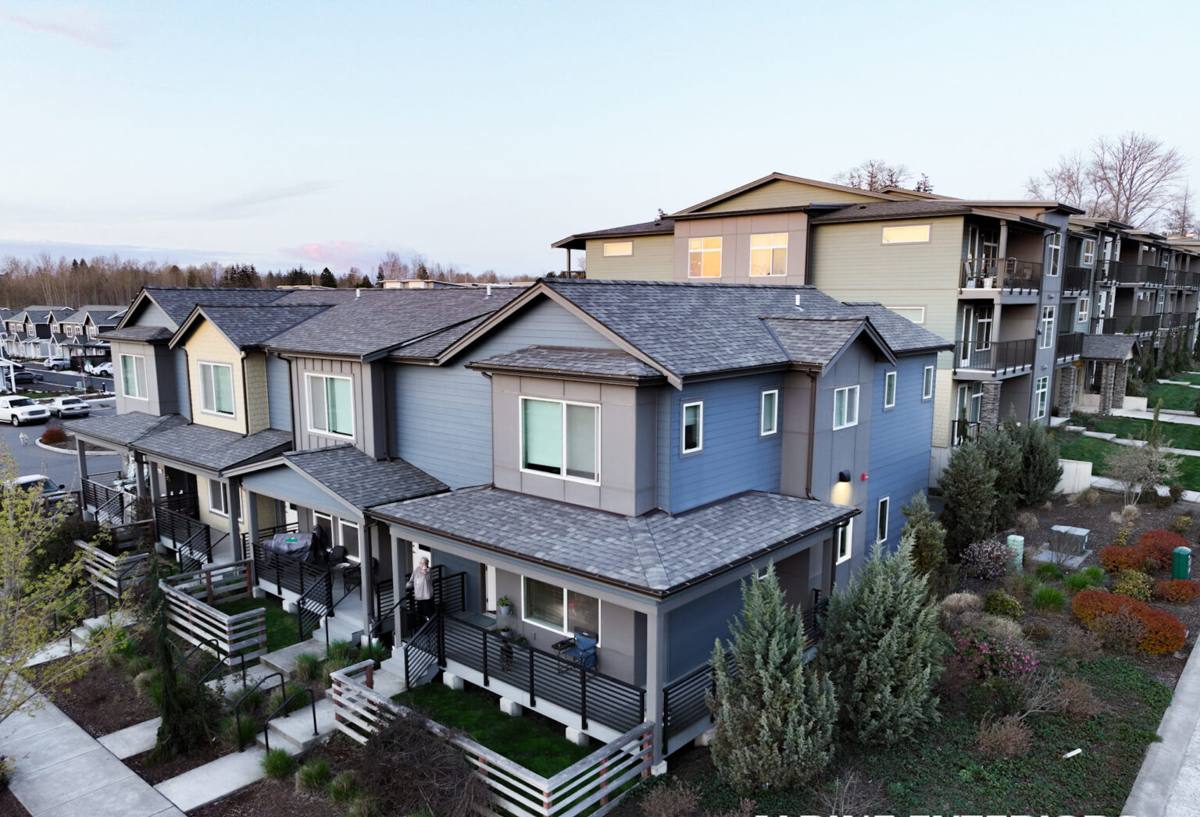
What Salt Air, Driving Rain, and Moss Season Actually Do to Siding
Salt Air
Airborne salt is corrosive to exposed metal fasteners and trim, and it accelerates the breakdown of coatings and caulking that aren't rated for marine exposure. On vinyl and lower-grade composite products, salt exposure combined with UV also speeds up fading and brittleness. Fiber cement doesn't corrode, but the fasteners, flashing, and trim used alongside it still need to be salt-air rated or the weak point just moves to the hardware.
Wind-Driven Rain
Rain that comes in sideways doesn't behave like rain falling straight down. It gets pushed up under laps, into butt joints, and behind trim that would stay dry in a calmer climate. That's why lap exposure, joint treatment, and flashing details matter more here than they would on a sheltered inland lot — a siding system that's "technically" installed to code can still let water in if it wasn't installed with wind-driven rain specifically in mind.
Moss and Algae Season
Shaded, north-facing walls near mature trees or close to the water stay damp for long stretches of the year. That's exactly the environment moss, algae, and mildew need to establish themselves on a siding surface. Once organic growth gets a foothold in seams, laps, or a porous substrate, it holds moisture against the material and speeds up whatever deterioration was already happening underneath.
What a Correct Siding Installation Involves in This Climate
The siding panel itself is only part of the system. In a high-moisture, wind-exposed location, the installation details around it do most of the work:
- A continuous, correctly lapped weather-resistant barrier (house wrap or building paper) behind the siding, with all seams and penetrations properly taped or flashed
- A rainscreen gap (furring strips or a drainage mat) between the siding and the wall assembly, so any water that gets past the cladding can drain and the wall can dry out instead of staying saturated
- Correct lap exposure and fastener placement — under-lapped or over-driven fasteners are a common source of early water intrusion
- Proper flashing at every horizontal trim board, window head, and roof-to-wall transition, since these are the spots wind-driven rain finds first
- Factory-primed or factory-finished cut edges sealed in the field, since a raw, unsealed cut edge is the fastest path for moisture into a fiber cement panel
- Corrosion-resistant fasteners and flashing throughout — stainless or hot-dipped galvanized, not standard-grade hardware that will pit and stain in salt air
Skip any one of these and the siding can still look fine going up — the problems show up two, five, or ten years later, usually as staining, soft spots, or paint failure that traces back to trapped moisture rather than the panel itself.
Why We Install James Hardie Fiber Cement Here — Not the Alternatives
We standardized on James Hardie fiber cement for every home we side, and a peninsula climate like Point Roberts is exactly the case that decision is built around. Hardie's HZ5 formulation is engineered for climates that see sustained damp, freeze-thaw swings, and coastal exposure — it's not a generic panel with a coastal sticker on it. A few specifics that matter for this location:
- Non-combustible core — fiber cement doesn't feed a fire the way wood-based siding can, which matters for insurance and for peace of mind on a property that isn't quick to reach by emergency services
- Dimensionally stable — it doesn't swell, cup, or crack from moisture cycling the way engineered wood products can, which matters when a wall assembly is wet more months of the year than it's dry
- ColorPlus factory finish — a baked-on finish applied under controlled conditions holds up to UV and salt air far better than field-applied paint, and it comes with its own finish warranty separate from the substrate warranty
- Resists organic growth better than porous or wood-based substrates — it won't fully prevent moss or algae from settling on the surface (nothing does, in a location with this much shade and moisture), but it doesn't feed the growth or break down from it the way wood-based products can
We don't install LP SmartSide, vinyl, or cedar, and in a spot like Point Roberts that's not a marketing position — it's a maintenance and moisture argument. Engineered wood products need their cut edges and joints kept sealed indefinitely or moisture gets into the wood fiber core; on a property with a long wet season and less day-to-day access than a mainland home, that's a maintenance schedule that's easy to fall behind on. Vinyl expands, contracts, and can distort under strong wind-driven weather, and it doesn't hold a factory finish the way ColorPlus does over a multi-decade service life in salt air. Cedar looks good going up but is the most maintenance-intensive option of all in a climate this wet — regular refinishing, and a real risk of rot in the sections that stay shaded and damp longest. Fiber cement with a factory finish sidesteps all three of those failure modes, which is why it's the only product we put on homes.
Our Installation Process for Point Roberts Jobs
Because Point Roberts is only reachable by road through Canada, material delivery and crew scheduling get planned differently than a job five minutes off I-5. We stage materials and coordinate the crossing in advance so a job doesn't stall mid-installation waiting on a truck. In practice, our process looks like this:
- On-site assessment — we look at wall orientation, shading, existing moisture damage, and how exposed each elevation is to wind and salt air before recommending a plan
- Tear-off and substrate check — old siding comes off and we inspect the sheathing underneath for rot or water damage before anything new goes up; a good exterior over a compromised substrate is a wasted job
- Weather barrier and rainscreen installation — the drainage plane goes in correctly the first time, since it's the layer you can't fix later without pulling siding back off
- Hardie panel and trim installation — installed to manufacturer spec on lap exposure, fastening, and flashing, with attention to the elevations that take the most wind-driven rain
- Joint and penetration sealing — every cut edge, joint, and penetration sealed before the job is called finished
- Final walk-through — we review the completed work and care basics with the homeowner before we leave
Cost Factors for a Point Roberts Siding Job
Every job is priced on the specifics of the home, but a few factors move the number more than others in this location:
| Factor | Why It Affects Cost |
|---|---|
| Substrate condition | Rot or water damage found during tear-off means sheathing repair before new siding can go on |
| Number of stories and access | Second-story and hard-to-access elevations take longer and need more scaffolding or lift equipment |
| Trim and detail complexity | Homes with more corners, window trim, and roof-to-wall transitions need more flashing and cutting labor |
| Rainscreen vs. direct-applied | Adding a furred-out drainage gap costs more up front and is worth it on the most exposed elevations |
| Panel profile and finish | Lap width, shake-style panels, and premium ColorPlus color options carry different material costs |
| Material logistics | Staging and transporting materials to Point Roberts factors into scheduling and delivery costs |
What to Look For in a Contractor for This Location
Not every siding crew wants to take on the logistics of a Point Roberts job, and that shows up in how carefully the work gets done when they do. A few things worth asking before you hire anyone:
- Do they have experience with this specific peninsula, including how material delivery and scheduling work here?
- Are they James Hardie factory-trained or certified, not just familiar with the product?
- Will they walk you through the rainscreen and flashing plan for your specific elevations before work starts, not just the panel color?
- Do they carry proper insurance and offer a written scope of work, not a verbal estimate?
- Can they explain what they found during tear-off before they close the wall back up, in writing or photos?
A crew that already knows the drive, the scheduling realities, and the way this climate treats a wall assembly is going to make fewer costly assumptions than one pricing the job sight-unseen from the mainland.
Caring for Your Siding After Installation
A correctly installed Hardie system is low-maintenance, not no-maintenance. In a moss-prone, salt-air climate, a simple annual routine goes a long way:
- Rinse siding gently once or twice a year, focusing on shaded north- and west-facing walls where moss and algae take hold first
- Keep gutters clear so overflow doesn't run down the siding face and stay damp longer than it should
- Trim back vegetation and tree limbs that keep a wall shaded and slow to dry
- Check caulking at trim joints and penetrations every couple of years and re-seal if it's cracking or pulling away
- Address any paint or finish concerns early — ColorPlus is warrantied, but catching an issue early is always cheaper than letting it spread
If your Point Roberts home needs new siding or you're dealing with an existing installation that isn't holding up to the weather out here, we're happy to take a look. Reach out for a free, no-pressure estimate using the form below.