 Semiahmoo
 Exterior Work Built for Laurel's Climate
Laurel sits in the part of Whatcom County that gets the full package of Pacific Northwest weather: long wet winters, a marine layer that rolls in off the Strait of Georgia and Semiahmoo Bay, and a growing season for moss and algae that most homeowners underestimate until it's already established on their north-facing wall. Add in the salt-laden air that drifts inland from the bay, and you've got a climate that is quietly hard on exterior building materials, even though it rarely produces the dramatic storm damage you'd see elsewhere in the country.
The damage here is slow and cumulative. It's not one big event that takes out a wall of siding — it's years of moisture cycling in and out of a material that wasn't built to handle it, salt air accelerating corrosion on fasteners and trim, and moss holding dampness against a surface long after the rain has stopped. Homes in Laurel that look fine from the street can have real problems developing behind the siding, especially on the sides that face prevailing wind and rain.
What Driving Rain and Salt Air Actually Do to a House
Moisture Intrusion
Whatcom County doesn't just get rain — it gets rain pushed sideways by wind coming off the water. That driving rain finds every gap, seam, and fastener point in a siding system that isn't installed with tight, correct flashing and caulking. Once moisture gets behind siding, it doesn't dry out quickly in our climate, because the air itself stays damp for months at a stretch.
Salt Air Corrosion
Proximity to Semiahmoo Bay means airborne salt settles on exterior surfaces, including metal fasteners, flashing, and trim. Over time, this accelerates corrosion in anything not rated for coastal exposure. It's a slower process than what you'd see right on the waterfront, but Laurel is close enough to feel the effect, particularly on homes with west or northwest exposure.
Moss and Algae Growth
Our moss season isn't really a season — it's most of the year. Shaded, north-facing walls and anything under tree cover stay damp long enough for moss and algae to take hold on porous or textured siding surfaces. Beyond the cosmetic issue, sustained organic growth holds moisture against the substrate, which is exactly the condition that leads to rot in wood-based products.
Why We Install Only James Hardie Fiber Cement Siding
We made a deliberate decision years ago to install one siding system on every home we work on: James Hardie fiber cement. We don't offer vinyl, LP SmartSide, Cemplank, Allura, primed spruce, or cedar as options — not because those products can't be installed correctly by someone, but because we've seen how each of them performs over time in exactly the climate Laurel sits in, and we'd rather stand behind one product line we trust completely than offer a menu of trade-offs.
Wood-based and engineered-wood sidings depend heavily on an intact factory coating and perfect field sealing at every cut edge. In a climate with this much sustained moisture and moss pressure, any gap in that protection — a missed caulk line, a cut edge left exposed, a fastener that backs out — becomes an entry point for water, and wood-based products absorb and hold that water in a way that leads to swelling, delamination, and rot. Vinyl siding handles moisture better in that specific sense, but it's a thin material that can warp, crack, or fade under years of UV and temperature cycling, and it's not fire-resistant.
James Hardie fiber cement is a cement, sand, and cellulose fiber composite. It doesn't absorb water the way wood products do, it isn't a fuel source for pests or fungus the way wood is, and it holds its factory-applied ColorPlus finish far longer than field-painted alternatives. It's also non-combustible, which matters more each year given regional wildfire smoke and ember exposure concerns even on the wet side of the state. None of that makes Hardie maintenance-free, and it isn't the cheapest siding option on the market — but for a home that has to sit through Laurel's wet season year after year, it's the product we're willing to put our name behind.
How Siding Materials Compare in This Climate
| Material | Moisture Behavior | Maintenance Burden | Longevity Locally |
|---|---|---|---|
| James Hardie Fiber Cement | Does not absorb/swell; engineered for wet climates | Occasional wash; factory finish resists fading | Strong, backed by a long transferable warranty |
| Vinyl | Sheds water but can trap moisture behind panels if installed loosely | Low, but prone to cracking/warping over time | Moderate; UV and temperature cycling shorten lifespan |
| LP SmartSide / Engineered Wood | Absorbs water at cut edges and seams if not perfectly sealed | Ongoing caulk and coating upkeep required | Variable; heavily dependent on installation quality |
| Primed Spruce / Cedar | Absorbs moisture readily; needs an intact paint film | High — repainting and sealing on a recurring cycle | Shorter without diligent, repeated maintenance |
Beyond Siding: Roofing, Windows, and Decks
Siding is only one part of how a Laurel home sheds water and holds up to the marine climate. We also handle roofing, window replacement, and deck construction, and we think about all four as one connected system rather than separate projects.
Roofing
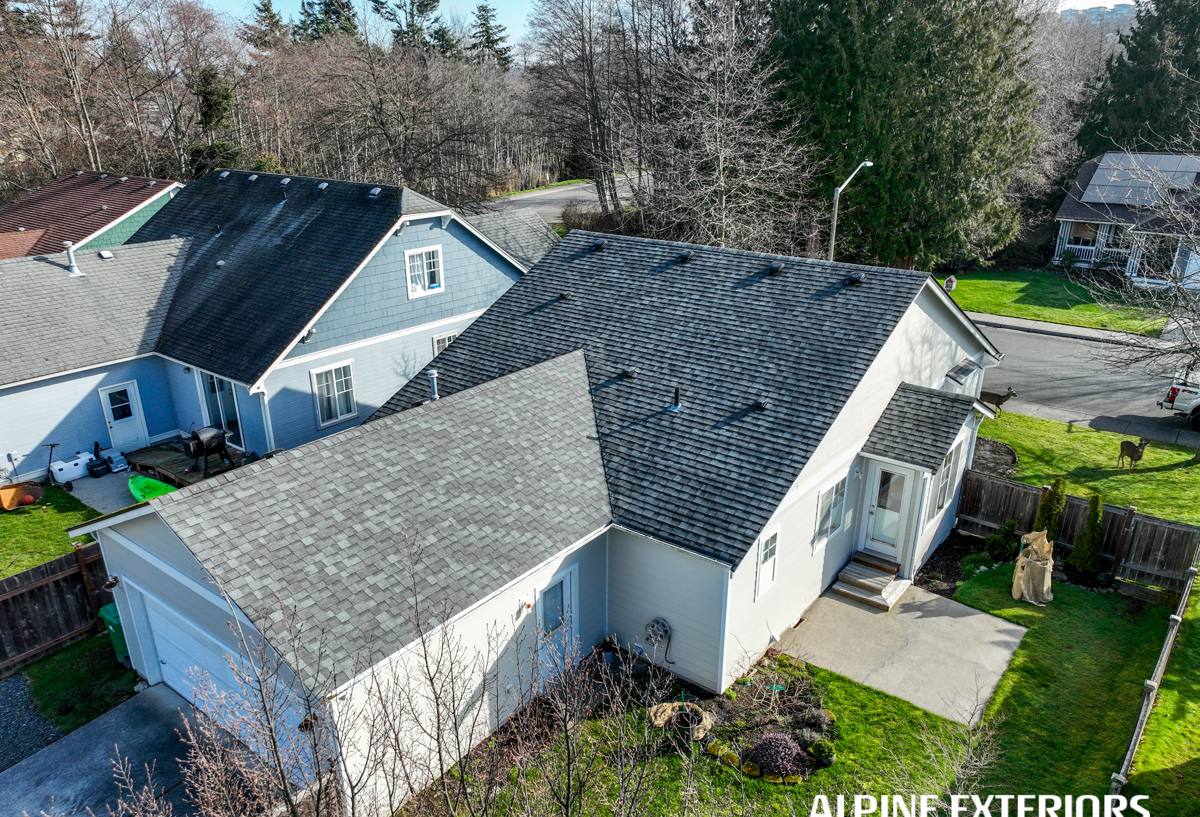
A roof that's shedding granules, holding moss, or letting moisture creep under flashing puts stress on everything below it — including your siding. We look at roof condition and drainage as part of any full exterior conversation, because a leak at the roofline can show up as a siding or trim problem months later.
Windows
Window flashing and integration with the siding plane is one of the most common places we find hidden moisture problems on older homes. Replacing siding without addressing failing window seals just moves the leak point — we treat window flashing as part of the siding installation, not an afterthought.
Decks
Outdoor living structures in this climate take a beating from the same rain and moss pressure as siding, just at ground level with less airflow. We build and repair decks with drainage and material choices suited to a wet Pacific Northwest yard, not a dry-climate assumption.
What a Local Crew Means for Laurel Homeowners
Installation quality is what determines whether any siding system — Hardie included — performs the way it's supposed to. Correct flashing details, proper fastener spacing, and tight seams at penetrations matter more here than in a drier climate, because there's less margin for error before moisture finds a way in. A crew that works Whatcom County regularly knows how local homes are built, what details tend to get missed on older construction, and how to sequence a job around our rain patterns instead of fighting them.
We also think being local means being reachable after the job is done. If a question comes up two years into a warranty, or you want an honest opinion on whether a section of trim needs attention, that's a conversation with a crew that's still working in your area — not a call center.
What to Ask Before Hiring Anyone for Exterior Work
- Are they licensed and insured to work in Washington, and can they provide proof without you having to press for it?
- Do they specify a full flashing and moisture-barrier plan, or just talk about the siding panels themselves?
- Is the estimate written out with material, labor, and scope clearly separated, or is it a single vague number?
- Do they have experience with the specific product they're proposing — and can they explain trade-offs honestly, not just sell the upgrade?
- What does the warranty actually cover, and is it transferable if you sell the home?
What Affects the Cost of a Siding Project
| Factor | Why It Matters |
|---|---|
| Home size and complexity | More corners, gables, and trim details mean more labor and material cuts |
| Existing siding removal | Tear-off and disposal of old material adds time versus a bare wall |
| Moisture damage found underneath | Rotted sheathing or framing discovered mid-project requires repair before new siding goes on |
| Product line and profile | Hardie offers multiple panel and lap profiles and factory colors at different price points |
| Window and trim integration | Full flashing replacement at openings adds labor but reduces future leak risk |
We don't quote a price without seeing the home. Broad ranges you'll find online rarely account for what's actually happening behind your existing siding, and giving a number before that inspection would be a guess, not an estimate.
Caring for Hardie Siding Once It's Installed
- Rinse siding with a garden hose once or twice a year to keep salt residue and pollen from building up.
- Trim back vegetation and tree limbs that shade a wall long enough for moss to establish.
- Check caulk lines at trim and window edges annually — this is the first place wear shows up.
- Keep gutters clear so overflow doesn't run down the siding face during heavy rain events.
- Address any impact damage or chipped factory finish promptly rather than letting it sit exposed.
None of this is heavy maintenance — that's part of the point of installing a product engineered for this exact climate instead of one that needs a repaint cycle to keep performing.
Let's Take a Look at Your Home
If you're in Laurel and dealing with siding that's showing its age, moss that keeps coming back, or you're just planning ahead for a home that can handle another few decades of Whatcom County weather, we're happy to come take a look. The estimate is free, there's no pressure attached to it, and you'll get a straight answer about what your home actually needs — use the form below to get started.