 Semiahmoo
 Building Decks for One of the Most Exposed Spots in Whatcom County
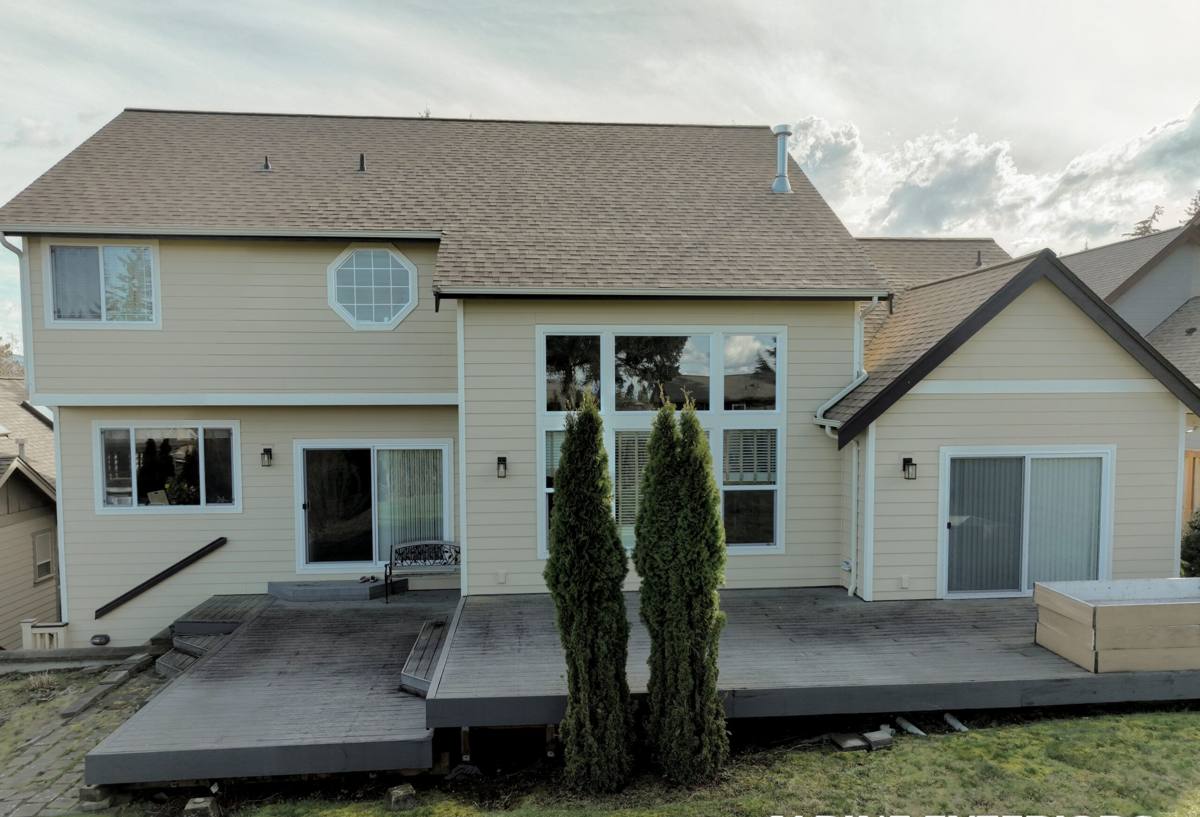
Point Roberts sits out on its own peninsula, bordered by Boundary Bay and the Strait of Georgia on nearly every side. That location gives homeowners some of the best water views in Whatcom County, but it also means decks here take a beating that a deck built a few miles inland never has to deal with. Salt-laden marine air, wind-driven rain that comes in sideways during winter storms, and long shaded stretches where surfaces never fully dry out — a deck built for "average" Pacific Northwest weather often isn't built for Point Roberts weather.
We build and rebuild decks in this area regularly, and most of the repair calls we get trace back to the same root cause: a deck that was built to a general spec instead of a spec that accounts for salt exposure, moisture cycling, and moss. This page covers what we've found actually matters here — the materials, the hardware, the framing details, and the design choices that decide whether a deck lasts eight years or twenty-five.
What the Climate Actually Does to a Deck Over Time
Salt Air and Fastener Corrosion
Homes closer to the water take on a steady dose of salt-laden air, and that air is hard on anything metal. Standard galvanized fasteners, cheap hinges, and uncoated screws can start to streak, weaken, or bleed rust stains into decking within a few seasons. It doesn't always show up as obvious failure — often it's a slow loosening of fastener holds that isn't visible until a board starts to flex or a railing post develops play.
Driving Rain and Trapped Moisture
Rain that falls straight down is easy to shed. Rain that's pushed sideways by wind off the water finds every gap, seam, and ledger connection a deck has. When that water gets driven behind rim joists or under decking without a way to escape, it sits there — and wood that stays wet longer than it stays dry is wood that rots, regardless of species or treatment.
Moss, Algae, and Shaded or North-Facing Surfaces
Point Roberts has plenty of tree cover and plenty of decks that sit in partial shade for much of the day. Combine that with a long damp season and you get moss and algae establishing on decking boards, stair treads, and railing caps — which is both a slip hazard and a long-term surface problem, since moss holds moisture against wood or composite longer than open sun-exposed areas ever would.
Choosing the Right Decking Material for This Environment
There's no single "best" decking material for every project — it depends on your budget, how much upkeep you're willing to do, and how exposed your specific lot is. Here's how the common options actually perform under Point Roberts conditions:
| Material | Moisture & Salt Behavior | Maintenance | Typical Lifespan |
|---|---|---|---|
| Pressure-treated lumber | Good rot resistance if sealed and maintained; fasteners and hardware are the weak point near salt air | Annual cleaning, re-sealing every 1-2 years | 10-15 years with upkeep |
| Cedar | Naturally rot- and insect-resistant, but the surface grays and can cup if left unsealed in driving rain | Sealing or staining every 1-2 years | 15-20 years with upkeep |
| Capped composite | Doesn't absorb moisture, resists moss staining better than wood, unaffected by salt | Periodic washing, no sealing or staining | 25-30 years |
| PVC decking | Fully synthetic, best moisture and salt performance, doesn't support rot | Lowest — occasional washing | 25-30+ years |
We install all of these depending on what a project calls for. Wood still makes sense for homeowners who want a specific look and are willing to keep up with sealing. For shaded, moisture-heavy, or salt-exposed lots, composite or PVC decking usually costs less over the life of the deck once you factor in the sealing and repair that wood requires out here.
Framing, Flashing, and Fasteners That Actually Hold Up
The decking surface is what you see, but the framing and hardware underneath are what actually determine whether a deck survives this climate. This is where a lot of older or budget decks in the area were cut short, and it's usually the first thing we check when a homeowner calls us about a deck that's failing early.
- Ledger board flashing that actually sheds water away from the house rim joist, not just a bead of caulk
- Joist tape over the tops of framing lumber to keep standing water out of exposed end grain
- Stainless steel or high-grade coated structural screws instead of standard galvanized nails, especially within a few hundred yards of the water
- Proper board gapping so decking can dry between rain events instead of holding moisture against itself
- Post bases that hold posts above grade and standing water rather than burying wood directly in soil
None of this is visible once the deck is finished, which is exactly why it matters — it's the difference between a deck that needs board replacement in year six and one that's still solid in year twenty.
Design Choices for Exposed and Waterfront Lots
Railings
Cable and glass railings are popular for the view they preserve, but both have trade-offs in a wind-and-salt environment — cable needs periodic re-tensioning and hardware inspection, and glass panels need to be rated for the wind loads this area can see. Wood and metal picket railings are simpler to maintain but block more of the view. We'll walk through the trade-offs based on your specific lot and how exposed it is.
Orientation and Drainage
Where possible, we design decking, roof lines, and drainage to work with the prevailing wind and rain direction rather than against it — including grading the ground underneath a low deck so water has somewhere to go instead of pooling against posts and framing.
Covered vs. Open Decks
A partial roof or pergola over at least part of the deck can meaningfully cut down on how much driving rain the decking surface takes, which extends the life of whatever material you choose and gives you usable outdoor space on the area's wetter days.
How We Build a Deck, Start to Finish
1. Site Visit and Design
We look at your lot's specific exposure — how much direct wind and rain it takes, how much shade it gets, and what the ground and existing structure are doing — before recommending materials or a layout. A design that works on a sheltered inland lot isn't automatically right for a lot facing open water.
2. Permitting
Deck projects in Whatcom County typically require permitting, and requirements can vary depending on deck height, size, and attachment to the home. We handle that process as part of the job so you're not tracking down county paperwork yourself.
3. Demolition and Framing
If we're replacing an existing deck, we remove it down to sound structure, inspect what's underneath (this is often where hidden rot or corrosion turns up), and build new framing to the standard described above — proper flashing, fasteners, and drainage from the start.
4. Decking, Railings, and Finish Work
Once framing is solid, we install decking, railings, stairs, and any trim or lighting, and do a final walkthrough with you to check fit, finish, and function before calling the job done.
Why It Matters to Hire a Crew That Already Works in Point Roberts
Point Roberts is a bit of a logistical outlier — it's only reachable by land through Canada, which means not every contractor in Whatcom County is set up to work here regularly, and some treat it as a special trip rather than a normal part of their route. That matters more than it might seem: a crew that's unfamiliar with the area may not have local material suppliers dialed in, may underestimate how much this specific coastline's wind and salt exposure calls for, or may simply be harder to schedule for follow-up work.
We build and repair decks throughout this area regularly enough to know which lots face the worst exposure, what the local building department expects for permitting, and which material and hardware choices actually hold up here versus which ones look fine on paper but fail early. That's the kind of thing you only learn by doing the work in this specific place, not by building decks somewhere drier and assuming the same approach applies.
Keeping a Deck Healthy Once It's Built
Even a well-built deck needs some seasonal attention in this climate. A short list of what actually makes a difference:
- Sweep debris and standing leaves off the deck surface regularly, especially in fall — trapped organic matter holds moisture and feeds moss
- Wash the surface at least once a year to remove salt residue, pollen film, and early moss growth before it takes hold
- Check railing posts and stair stringers for movement or loose fasteners once a year
- Re-seal or re-stain wood decking on the schedule the product calls for — don't wait until it's visibly graying or cracking
- Clear leaves and debris from underneath the deck so ground-level moisture has somewhere to evaporate instead of sitting against framing
- Look underneath the deck at ledger flashing and framing once every year or two, especially after a hard winter storm season
Catching a small issue — a loosening fastener, an early moss patch, a spot where flashing has pulled away — is a lot cheaper than the repair that follows if it's ignored for a few more seasons.
Get a Straightforward Estimate
If you're planning a new deck or need to replace one that's showing its age, we're happy to come take a look, walk the site with you, and give you an honest assessment of what your specific lot calls for. There's no pressure and no obligation — just a straight answer on materials, scope, and cost based on how exposed your property actually is. Use the form below to request a free estimate.