 Semiahmoo
 Why Point Roberts Roofs Wear Differently
Point Roberts sits out on open water, surrounded on three sides by the Strait of Georgia and Boundary Bay. That exposure means homes here take a steadier beating than roofs even a few miles inland in the rest of Whatcom County. Salt-laden air corrodes metal faster, wind-driven rain finds its way under shingles that would hold up fine somewhere more sheltered, and the mild, damp winters keep moss growing for most of the year instead of just a few soggy months. None of this means a roof here is doomed early — it means the installation has to account for conditions a generic crew from out of the area may not think twice about.
A roof that's installed the same way you'd install one in a dry inland climate will usually look fine for the first year or two. The differences show up later — corroded fasteners bleeding rust streaks, moss mats holding moisture against the deck, or water finding a path in through a valley that wasn't detailed for sideways rain. Getting it right the first time costs the same as getting it wrong; it just takes more attention to the details that matter here.
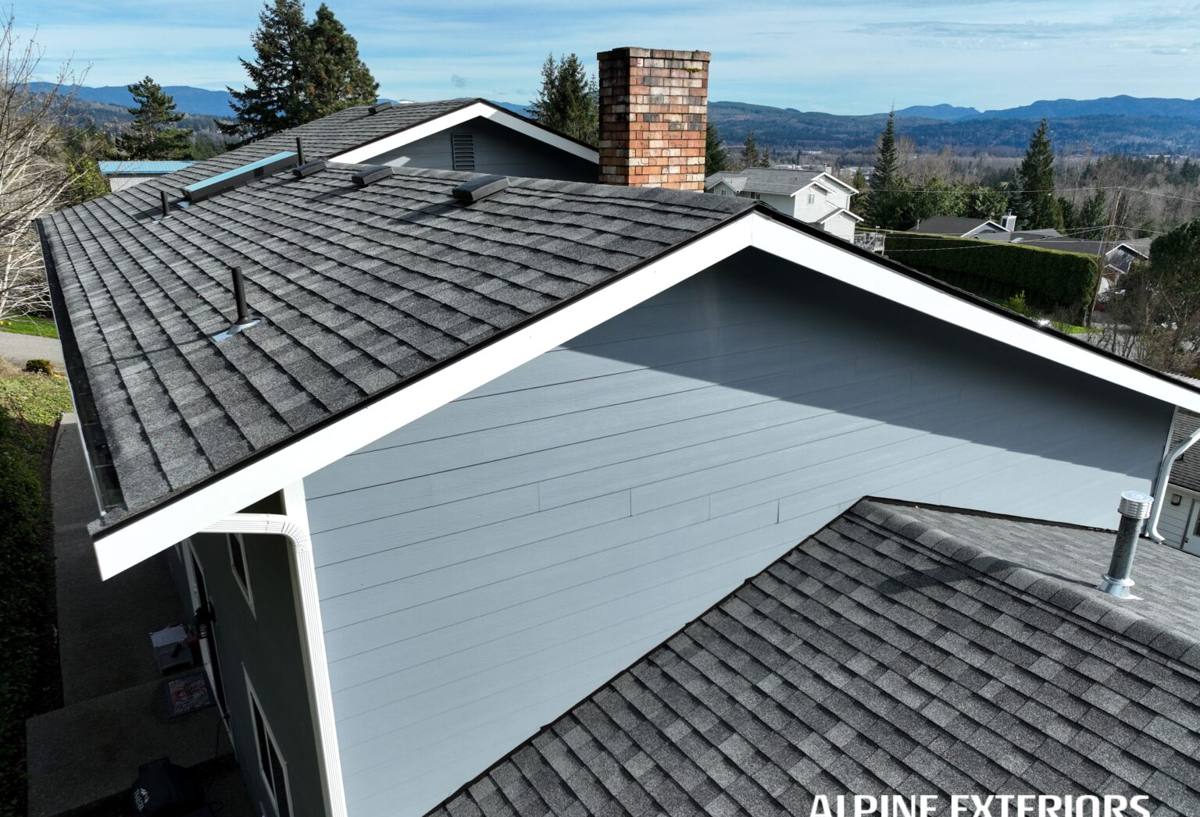
What a Correct New Roof Installation Involves
Tear-Off and Deck Inspection
A proper new roof starts with removing the old roofing down to the deck — not layering over it. That's the only way to actually see what's underneath: soft spots, rot around old flashing, or decking that's been quietly absorbing moisture for years. In a marine climate, hidden deck damage is more common than homeowners expect, especially around chimneys, skylights, and low-slope sections where water sits longer. Any damaged sheathing gets replaced before a single shingle goes down. Skipping this step is the single most common shortcut that leads to a roof failing early.
Underlayment and Flashing for Wind-Driven Rain
Standard felt underlayment is fine in a lot of the country. Here, where storms regularly push rain sideways instead of straight down, we use synthetic underlayment across the whole roof and self-adhered, waterproof membrane at the eaves, valleys, and any roof-to-wall transitions. Those are the spots where wind-driven rain gets forced backward under shingles by pressure rather than gravity, and it's where most "mystery leaks" in this area actually originate. Flashing around chimneys, skylights, and sidewalls gets formed and sealed as a system, not just tucked and caulked.
Fastener and Metal Choices for Salt Air
Fasteners and exposed metal matter more here than almost anywhere inland. Standard electro-galvanized nails and flashing can start showing surface rust within a few years this close to open salt water. We use hot-dip galvanized or stainless fasteners and coated metal flashing sized for the exposure the roof actually faces, not just whatever's cheapest at the supply house. It's a small cost difference at installation and a real difference in how the roof looks and performs a decade later.
Ventilation and Moss Control
Moss doesn't just grow on old roofs — it grows fastest where a roof stays damp and shaded, which describes a lot of Point Roberts properties tucked under tree cover. Balanced intake and exhaust ventilation keeps the underside of the deck drier, which slows moss and algae growth from the inside out. On the outside, we install zinc or copper strips near the ridge on shingle roofs, which release trace metal ions with every rain and suppress new moss growth for years without chemical treatments. It's a small detail that saves homeowners from paying for moss removal every couple of seasons.
Choosing the Right Roofing Material
There's no single "best" roofing material for this area — there's a best fit for a given home, budget, and how much upkeep the owner wants to do. Here's how the common options actually compare for a Point Roberts property:
| Material | Salt Air Performance | Moss Resistance | Maintenance |
|---|---|---|---|
| Architectural asphalt shingle (AR-rated) | Good with proper flashing/fasteners | Good with AR granules + zinc strips | Low |
| Standing seam metal | Excellent with marine-grade coatings | Excellent — little for moss to grip | Very low |
| Cedar shake | Fair — needs treatment and airflow underneath | Poor without regular treatment | High |
| Standard 3-tab asphalt | Fair — shorter lifespan in this exposure | Fair | Low-moderate |
Cedar shake is part of the traditional look in this region, and we'll install it when that's what a homeowner wants, but we're honest about the trade-off: it needs consistent treatment and airflow to resist moss and rot in a climate this damp, and skipping that maintenance shortens its life quickly. Architectural asphalt with algae-resistant granules is the most common choice we install here because it balances upfront cost, appearance, and low maintenance well. Standing seam metal costs more initially but shrugs off salt air, wind, and moss better than anything else on the list, which is why we see more owners choosing it for full replacements rather than just repairs.
What Drives the Cost of a New Roof
Every roof is priced on its own specifics, but the factors that move the number are consistent. Rough, honest ranges depend heavily on these:
| Factor | Why It Matters |
|---|---|
| Roof size and pitch | More surface area and steeper slopes mean more material and labor time |
| Layers to remove | Tearing off multiple old layers takes longer and adds disposal cost |
| Deck condition | Rotted or soft sheathing found during tear-off requires replacement before installation continues |
| Roof complexity | Valleys, dormers, skylights, and multiple chimneys all add flashing detail and time |
| Material choice | Asphalt, metal, and cedar carry different material and installation costs |
| Access and staging | Tight lots or limited driveway access can affect equipment and delivery logistics |
We walk every roof and give a written estimate that spells out what's included before any work starts — no surprise change orders for things a proper inspection should have caught up front.
Our Installation Process, Step by Step
- On-site inspection of the current roof, attic ventilation, and any visible trouble spots
- Written estimate outlining material options, scope, and timeline
- Permit pulled through Whatcom County before work begins
- Full tear-off to the deck, with sheathing inspected and repaired as needed
- Synthetic underlayment installed, with waterproof membrane at eaves, valleys, and wall transitions
- New flashing formed and installed around all penetrations and roof-to-wall junctions
- Roofing material installed to manufacturer specification for the fastening pattern and exposure
- Ridge and intake ventilation checked and corrected if the existing system was inadequate
- Full site cleanup, magnetic sweep for stray fasteners, and a final walk-through with the homeowner
Signs Your Point Roberts Home Needs a New Roof
Not every roof problem calls for full replacement, but these are the signs that usually mean repair isn't enough anymore:
- Shingles curling, cupping, or missing granules in patches
- Heavy moss mats rather than light surface growth, especially on north-facing slopes
- Soft or spongy spots when walking the roof, or sagging visible from the ground
- Daylight visible through the roof deck from inside the attic
- Rust streaking from nail heads or flashing
- Recurring leaks in the same area despite past repairs
- A roof older than 20-25 years for asphalt, or showing widespread wear regardless of age
Why Local Experience in Point Roberts Matters
Point Roberts is geographically separated from the rest of Whatcom County — the only road access runs through Canada. That's not a small detail for a roofing project. Material deliveries, dump runs for tear-off debris, and even crew scheduling all have to account for the border crossing, and a contractor who hasn't planned around that before will lose days figuring it out on your job instead of theirs. A crew that already works this area has supplier relationships and logistics worked out ahead of time, so your project isn't the one absorbing the learning curve.
Local experience also means knowing which details actually matter for this specific stretch of coastline versus generic advice that applies somewhere drier or more sheltered. We know which roof orientations here hold moss the longest, which valleys take the worst of the wind-driven rain off the water, and what Whatcom County's permitting process actually requires — not just what a manual says in general.
Maintaining Your New Roof After Installation
A correctly installed roof still benefits from a little attention. We recommend a visual check after major storms, keeping gutters clear so water doesn't back up under the eaves, and trimming back tree limbs that shade the roof and feed moss growth. Zinc or copper strips do most of the moss-prevention work on their own, but a rinse of built-up debris every year or two keeps things from taking hold in the first place. None of this is heavy maintenance — it's the kind of upkeep that protects the investment you just made.
If your roof is showing its age or you want a straight answer about what it actually needs, we're happy to take a look. The estimate is free, there's no pressure attached to it, and you'll get a clear explanation of what we find — just fill out the form below to get started.