 Semiahmoo
 Why Point Roberts Siding Wears Out Faster Than Most
Point Roberts sits on its own peninsula at the southern tip of Boundary Bay, surrounded on three sides by open water. That geography is part of what makes the area beautiful, and it's also exactly why siding here takes more abuse than siding fifteen miles inland. Salt-laden air moves off the water and settles on every exterior surface, wind-driven rain gets pushed sideways into seams and laps that would stay dry in a more sheltered spot, and the long, damp Whatcom County shoulder seasons keep exterior walls wet for weeks at a time. Add a moss season that can run from fall through spring, and you've got a climate that actively hunts for weak points in a home's siding system.
None of that means siding is doomed in Point Roberts — it means the material and the installation have to be matched to the conditions. A lot of the siding failures we see here aren't age-related at all; they're the result of a product or an install detail that was never really suited to a marine exposure like this one.
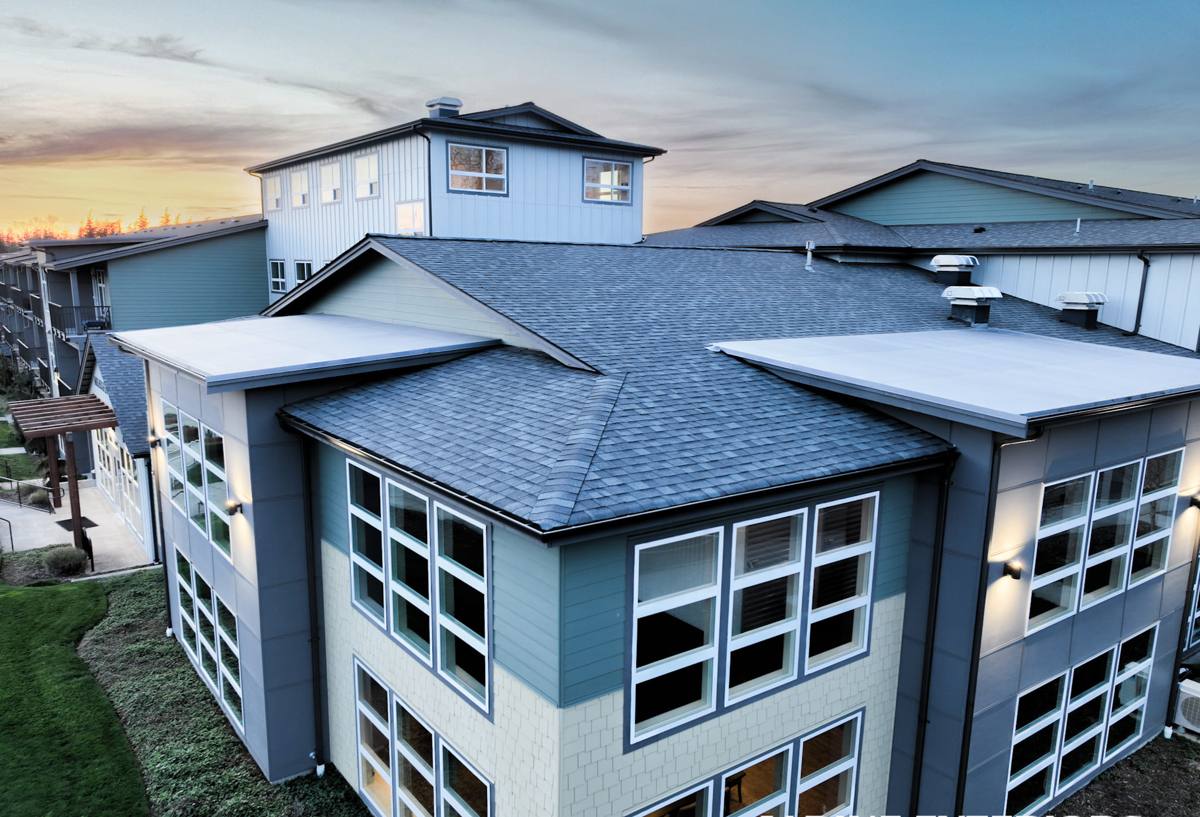
What Salt Air, Driving Rain, and Moss Actually Do to Siding
Salt Air
Airborne salt is corrosive and hygroscopic — it pulls moisture out of the air and holds it against whatever it lands on. On fasteners, trim, and any exposed metal, that means accelerated corrosion. On painted or coated siding surfaces, it means the finish breaks down faster than the manufacturer's published warranty terms usually assume, because those numbers are rarely tested against a marine-exposure environment like Point Roberts.
Driving Rain
Wind off the Strait doesn't just fall on a house, it pushes rain horizontally into every lap, joint, and penetration. A siding system that isn't detailed correctly — insufficient lap coverage, poorly sealed penetrations, missing or undersized flashing — will take on moisture behind the cladding long before the face material shows any obvious damage. By the time staining or soft spots are visible from the street, the sheathing behind it has often been wet for a season or more.
Moss
Moss needs shade, moisture, and a surface to grip. North- and west-facing walls in Point Roberts, especially under eaves or tree cover, check all three boxes for a good chunk of the year. Moss holds water against the siding face, and on materials that aren't dimensionally stable or that have seams prone to wicking, that constant moisture load is what eventually causes swelling, delamination, or rot at the substrate.
Signs a Point Roberts Home Needs Replacement, Not Repair
- Soft or spongy panels when pressed, especially near the bottom courses or below windows
- Persistent staining or dark streaking that reappears within a season of cleaning
- Visible gaps, buckling, or panels that have pulled away from the wall
- Paint or finish that's chalking, peeling, or bubbling across large sections rather than a single spot
- Moss or algae that returns almost immediately after washing
- Rising interior heating costs or drafts near exterior walls, which often points to a compromised water barrier behind the siding
- Visible rot or deterioration at butt joints, corners, or anywhere trim meets siding
A single damaged board can sometimes be a repair. Widespread staining, soft spots in multiple locations, or a water barrier that's been compromised for years usually means a full replacement is the more honest recommendation — patching over a failing system just delays the real cost.
What a Correct Siding Replacement Involves
Replacing siding correctly is not just swapping old panels for new ones. In a climate like Point Roberts', the work happening behind the siding matters as much as the finish material itself.
Tear-Off and Sheathing Inspection
Once the old siding is off, we inspect the sheathing for rot, soft spots, or hidden water damage — this is often the first time anyone has been able to actually see the condition of the wall assembly. Any compromised sheathing gets replaced before anything new goes back on; installing new siding over damaged sheathing just hides the problem for another few years.
Water-Resistive Barrier
A weather-resistant barrier goes over the sheathing, lapped correctly from bottom to top so water is always shed downward and outward. In a driving-rain environment, this layer is doing a lot of the actual work of keeping the wall dry, even though it's never visible once the job is done.
Flashing at Every Penetration
Windows, doors, vents, hose bibs, light fixtures — every penetration through the siding is a potential entry point for wind-driven rain. Correct flashing at each of these, integrated properly with the water-resistive barrier, is what actually keeps a home dry in a marine exposure. This is one of the most commonly skipped or rushed details on lower-cost installs, and it's usually where failures start.
Fastening and Clearances
Fastener type, spacing, and penetration depth all need to follow the manufacturer's specification, not just "close enough." We also hold correct clearances from grade, roof lines, and decks, since tight clearances are a common way moisture and moss get a foothold that a homeowner won't notice until it's already established.
Why We Install James Hardie Fiber Cement — Not Vinyl, Not Wood, Not LP
We install James Hardie fiber cement siding exclusively. We don't install vinyl, LP SmartSide, cedar, primed spruce, or other fiber cement brands, and in a place like Point Roberts, that standard exists for practical reasons, not brand loyalty.
| Material | How It Handles Salt Air & Rain | How It Handles Moss |
|---|---|---|
| James Hardie fiber cement | Non-combustible, dimensionally stable; ColorPlus factory finish is engineered for UV and moisture exposure beyond standard field paint | Dense, stable surface resists moisture absorption that feeds moss growth; holds up to regular cleaning |
| Vinyl siding | Can warp, fade, or become brittle with sustained UV and temperature swings; seams are a common water entry point in wind-driven rain | Moss grips seams and laps; cleaning at high pressure can crack or dislodge panels |
| Wood / cedar / primed spruce | Absorbs moisture readily; salt air accelerates finish breakdown, requiring frequent repainting or restaining | Highly prone to moss and rot where moisture sits against the grain |
| LP SmartSide (engineered wood) | Wood-strand core is more moisture-sensitive than fiber cement; edge sealing and caulking become critical maintenance points | Susceptible to swelling at compromised edges where moss retains moisture |
Every product on that list has homeowners who are happy with it, and each has legitimate strengths. But for a peninsula exposed to salt air on three sides with a long moss season, fiber cement's dimensional stability and factory-applied finish hold up with meaningfully less maintenance over the life of the siding. That's the whole reason we standardized on it — it's what we'd want on our own homes here.
Our Process for Point Roberts Projects
Point Roberts is geographically part of Whatcom County but physically cut off from the rest of the county by land — the only road access is through Canada. That's not a small detail when it comes to a siding job. Material deliveries, crew scheduling, and equipment logistics all have to account for the border crossing, and a crew that hasn't planned for that ahead of time can turn a straightforward project into a delayed one.
Because we already work this area regularly, our estimating and scheduling account for that reality from the start — materials are staged and timed so the crew isn't waiting at the border with a truck full of siding, and we build the project timeline around it rather than discovering the problem mid-job.
What to Expect
- On-site assessment of existing siding, trim, and any visible moisture or moss damage
- A written estimate that separates material, labor, and any sheathing repair contingency
- Scheduled tear-off, sheathing inspection and repair, water-resistive barrier, flashing, and Hardie installation
- Final walkthrough covering caulking, trim details, and care instructions specific to a marine climate
Cost Factors for a Point Roberts Siding Replacement
| Factor | Why It Matters Here |
|---|---|
| Sheathing condition | Homes with long-term moisture intrusion often need sheathing repair or replacement, which isn't visible until tear-off |
| Wall exposure | Sides facing open water or prevailing wind typically need more careful flashing and detailing, which affects labor |
| Trim and accessory work | Corner boards, window trim, and fascia are common failure points in wind-driven rain and often need attention alongside the siding |
| Home size and complexity | Rooflines, dormers, and multiple wall planes all add cutting, flashing, and fitting time |
| Material selection | Hardie panel, lap, and shingle profiles carry different material costs and install labor |
We don't publish blanket prices because every home's exposure and condition is different, but we always walk a homeowner through exactly what's driving their number before any work starts.
Living With Fiber Cement Siding After Installation
Correctly installed Hardie siding is genuinely low-maintenance in this climate, but "low-maintenance" doesn't mean "no maintenance." A periodic gentle wash — especially on shaded, moss-prone walls — keeps the ColorPlus finish looking right and prevents organic growth from getting established in the first place. Checking caulking at trim joints every year or two and keeping gutters clear so water isn't dumping directly onto a wall section both go a long way toward getting the full life out of the system. James Hardie backs the product with a strong transferable warranty, but the day-to-day work of a good install — flashing, fastening, clearances — is what actually determines how that warranty plays out in practice.
Why Hiring a Crew That Already Works Point Roberts Matters
Siding is a job where the details you can't see — the barrier, the flashing, the fastening schedule — matter more than the ones you can. A crew that hasn't worked a genuine marine exposure before can install a technically fine product with details suited to a milder inland climate, and the failure won't show up for a year or two, well after the invoice is paid. Working in Point Roberts and along the broader Semiahmoo and Whatcom County waterfront regularly means we're not guessing at how salt air, wind-driven rain, and moss behave against a wall — we're building to it every time.
If your Point Roberts home has siding that's staining, holding moss, or just past its useful life, we're glad to take a look. Fill out the form below for a free, no-pressure estimate — we'll walk the exterior with you, explain what we see, and give you a straight answer on repair versus replacement.