 Semiahmoo
 What Primed Spruce Siding Is, and Why It Caught On
Primed spruce lap siding has been a staple of Pacific Northwest construction for decades. It's a solid-wood board, milled from spruce, coated at the mill with a primer coat so the builder or painter can apply a finish coat on site. It's affordable, it's easy for framing crews to cut and nail, and it gives a house that traditional, clean-lined look a lot of buyers in Whatcom County still want. There's nothing dishonest about the product — it's real wood, it looks the part, and plenty of homes around here still wear it.
The problem isn't the board itself. It's what happens to that board once it's hung on a wall three blocks from Semiahmoo Bay and left to face forty-plus years of Pacific storms, salt-laden air, and a moss season that seems to start earlier every year.
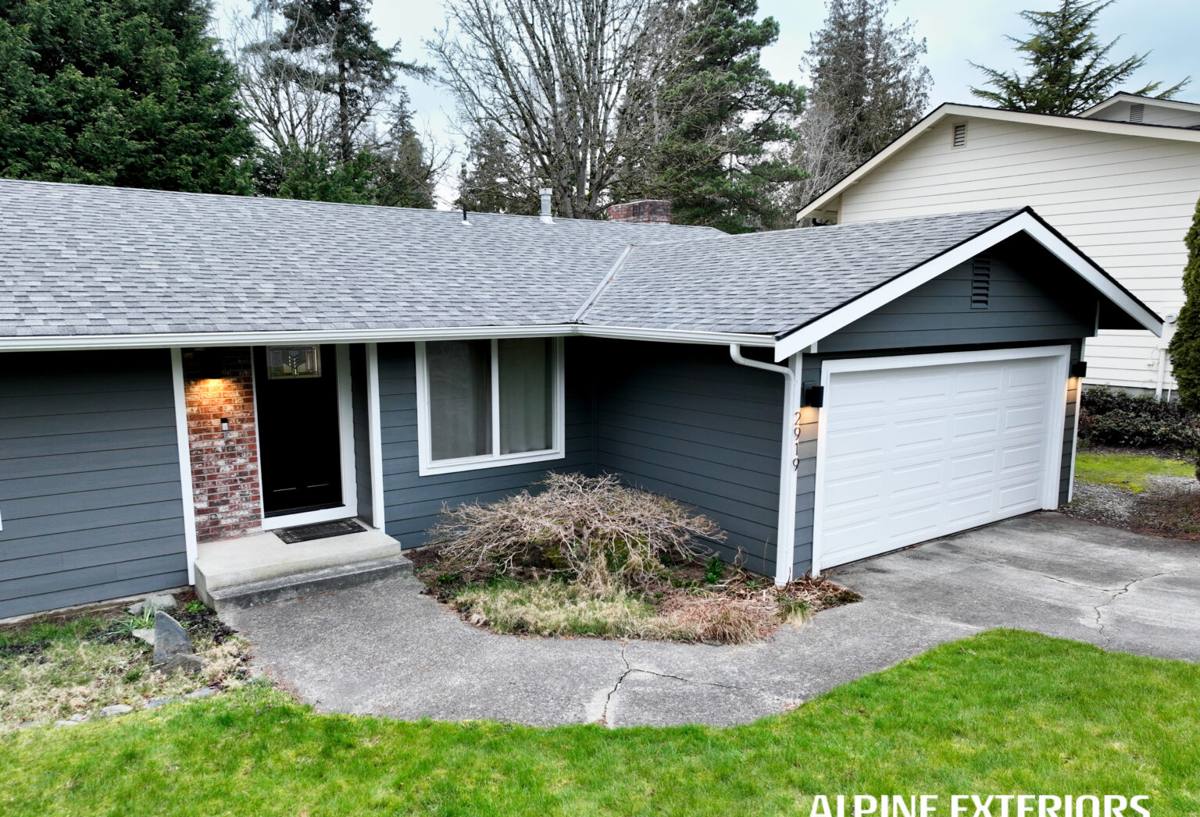
The Core Problem: Wood Wants to Move With Moisture
Spruce, like any solid-sawn wood siding, is dimensionally reactive. It swells when it absorbs moisture and shrinks as it dries out. That movement happens across the width of the board, along its length, and through its thickness — all at slightly different rates, because wood grain isn't uniform. A factory primer coat gives the board a head start on protection, but primer is not a sealed shell. It's a base layer that still depends on a field-applied topcoat, correct back-priming, and tight caulking at every joint to keep water out.
Once moisture gets past that finish system — through a hairline check in the grain, a nail hole, a butt joint that opens up as the board moves, or a scratch from a ladder or a weed trimmer — it doesn't evaporate quickly. Wood holds water. And wood that stays wet for extended periods is exactly where you start seeing cupping, checking, soft spots, and eventually rot, usually starting at the bottom edge of each board and at the corners.
Why This Matters More Here Than in Drier Climates
In a low-humidity inland climate, primed spruce can go a long time between problems, because it gets long dry stretches to shed whatever moisture it picks up. Semiahmoo doesn't offer that luxury. Whatcom County's coastal weather pattern is built around wet, mild winters, driving rain off the Strait of Georgia, and a marine layer that keeps humidity elevated even on clear days. Wood siding here rarely gets the extended drying window it needs to stay ahead of moisture intake.
Salt Air, Driving Rain, and Moss: The Three Things This Coast Throws at Siding
We install siding up and down this stretch of coastline, and three regional factors show up in almost every service call we get on wood-based products:
- Salt air: Semiahmoo's proximity to Drayton Harbor and the Strait means airborne salt settles on exterior surfaces regularly. Salt is hygroscopic — it actually pulls moisture out of the air and holds it against the surface it's sitting on, which keeps painted wood damper, longer, than the same board would be a few miles inland.
- Driving rain: Storms here frequently come with sustained wind, which pushes rain sideways into lap joints, butt seams, and any spot where caulk has started to crack. Wood siding depends heavily on that caulk line staying intact; once it fails, wind-driven rain finds the gap.
- A long moss season: Shaded, north-facing, and tree-sheltered walls around Semiahmoo can stay damp for months at a time. Moss and algae don't just look bad on painted wood — they hold moisture against the surface and accelerate the same cycle of swelling, cracking, and paint failure.
None of these factors are unique to us describing a problem with the spruce product itself — they're just the honest reality of what this particular stretch of Whatcom County coastline does to any wood-based exterior cladding, primed or not.
Where Primed Spruce Actually Runs Into Trouble in the Field
When we've inspected older homes for siding replacement, the failure points are consistent and predictable:
- Butt joints between board ends, where end-grain soaks up water fastest and caulking is hardest to maintain long-term.
- Lower courses near grade, splash zones by patios and downspouts, and anywhere sprinklers hit the wall directly.
- Window and door trim intersections, where flashing details and caulk lines are doing all the work.
- North and west-facing elevations that stay shaded and wind-exposed, which is where moss establishes first.
- Nail heads that were driven through primer without being properly sealed, which become tiny entry points for water over time.
None of this means every primed spruce installation fails early. A well-detailed install, with back-primed boards, correctly lapped joints, and a homeowner who keeps up with repainting on schedule, can perform reasonably well. But that's a lot of "correctly" and "on schedule" stacked up against a coastal climate that doesn't forgive skipped maintenance.
The Maintenance Reality Homeowners Don't Always Get Told Upfront
The sticker price on primed spruce is attractive, but the lifecycle cost is where the picture changes. A finish coat of paint on wood siding in this climate typically needs attention — caulk touch-ups, spot priming, and repainting — well before most homeowners expect it, especially on sun-and-wind-exposed elevations.
| Factor | Primed Spruce Siding | James Hardie Fiber Cement |
|---|---|---|
| Repainting cycle in a coastal climate | Often needed within several years on exposed walls | ColorPlus factory finish is engineered for long intervals between repaints |
| Moisture absorption | Wood substrate swells, shrinks, and can rot if the finish fails | Fiber cement does not swell or rot from moisture exposure |
| Combustibility | Combustible wood substrate | Non-combustible material |
| Moss and algae resistance | Painted wood provides a food source and holding surface for growth | Factory finish resists moss and algae adhesion better than painted wood |
| Salt-air exposure | Accelerates paint film breakdown and end-grain absorption | Engineered product lines built for coastal and high-moisture climates |
| Warranty structure | Typically limited to the paint or primer manufacturer's terms | Manufacturer-backed, transferable warranty on the siding itself |
Factory Finish vs. Field-Applied Paint: Why the Difference Matters
A lot of the wood-versus-fiber-cement conversation actually comes down to where the finish is applied, not just what material sits underneath it. Primed spruce still needs a field-applied topcoat — and field conditions are never as controlled as a factory line. Temperature, humidity, application technique, and cure time all vary job to job and painter to painter.
James Hardie's ColorPlus finish is baked on in a factory setting under consistent conditions, with a finish system engineered specifically to handle UV exposure and moisture cycling. That's not a marketing distinction — it's a real difference in how consistently the finish bonds to the substrate and how it ages over the following years, especially somewhere like Semiahmoo where the finish is fighting salt air and driving rain from day one.
What We Install Instead, and Why
We standardized on James Hardie fiber cement siding for every home we side, full stop. It's not because primed spruce is a scam or a bad product on paper — it's because we've stood behind our installs long enough to know which material holds up to this specific coastline without asking the homeowner to babysit it.
A few reasons Hardie fits this climate specifically:
- Non-combustible core — a meaningful consideration as wildfire-season smoke and ember exposure become a more regular part of Pacific Northwest summers.
- Climate-engineered HZ product lines — Hardie manufactures versions of its siding specifically formulated for damp, moisture-heavy climate zones, which includes the marine conditions around Whatcom County.
- Dimensional stability — fiber cement doesn't swell and shrink with humidity the way solid wood does, so joints and caulk lines stay tighter for longer.
- A strong, transferable warranty — backed by the manufacturer, not dependent on a paint brand's separate warranty terms.
- Long-term appearance — the factory finish is built to resist the fading and chalking that painted wood siding shows first.
Cost Factors Worth Weighing Before You Decide
| Consideration | What to Weigh |
|---|---|
| Upfront material and labor cost | Primed spruce is typically less expensive at time of install than fiber cement |
| Repainting and caulk maintenance over 10-20 years | Wood siding's ongoing upkeep cost adds up and is easy to underestimate |
| Resale and inspection concerns | Buyers and inspectors increasingly ask about siding material and maintenance history |
| Insurance and fire-risk considerations | Non-combustible siding can be a relevant factor depending on your insurer and location |
| Replacement timeline | Wood siding with a failed finish system often needs full replacement sooner than fiber cement |
A Practical Checklist Before You Choose a Siding Material
- Ask what climate zone the product was engineered for, and whether that matches a marine, high-moisture coastal environment.
- Ask how the finish is applied — factory-baked, or field-applied after installation.
- Ask what the manufacturer's warranty actually covers, and whether it's transferable if you sell the home.
- Ask what maintenance schedule the manufacturer recommends, and be honest with yourself about whether you'll keep up with it.
- Ask your contractor which product they'd put on their own house on this same stretch of coastline, and why.
We'd rather have this conversation honestly upfront than have a homeowner call us in eight years about soft boards and peeling paint. If you're weighing your siding options for a home in Semiahmoo or anywhere else in Whatcom County, we're happy to walk your house, point out what your current siding is telling us, and put together a free, no-pressure estimate for James Hardie fiber cement done right.