 Semiahmoo
 Why This Decision Is Harder Than It Looks
Every siding call we go on in Semiahmoo starts with the same question from the homeowner: "Can you just patch this, or do I need the whole thing replaced?" It's a fair question, and the honest answer is usually "it depends" — not because contractors like to keep things vague, but because siding failure is rarely as simple as the visible damage suggests. A cracked board on the south wall might be an isolated impact. It might also be the first visible sign of moisture that's been working behind the wall for years. Deciding correctly requires looking past the symptom to what's actually happening underneath, and understanding how our local climate accelerates or hides that damage.
This page walks through the factors we actually weigh when we're standing in front of a house making this call — not a sales pitch, just the same logic we'd use on our own homes.
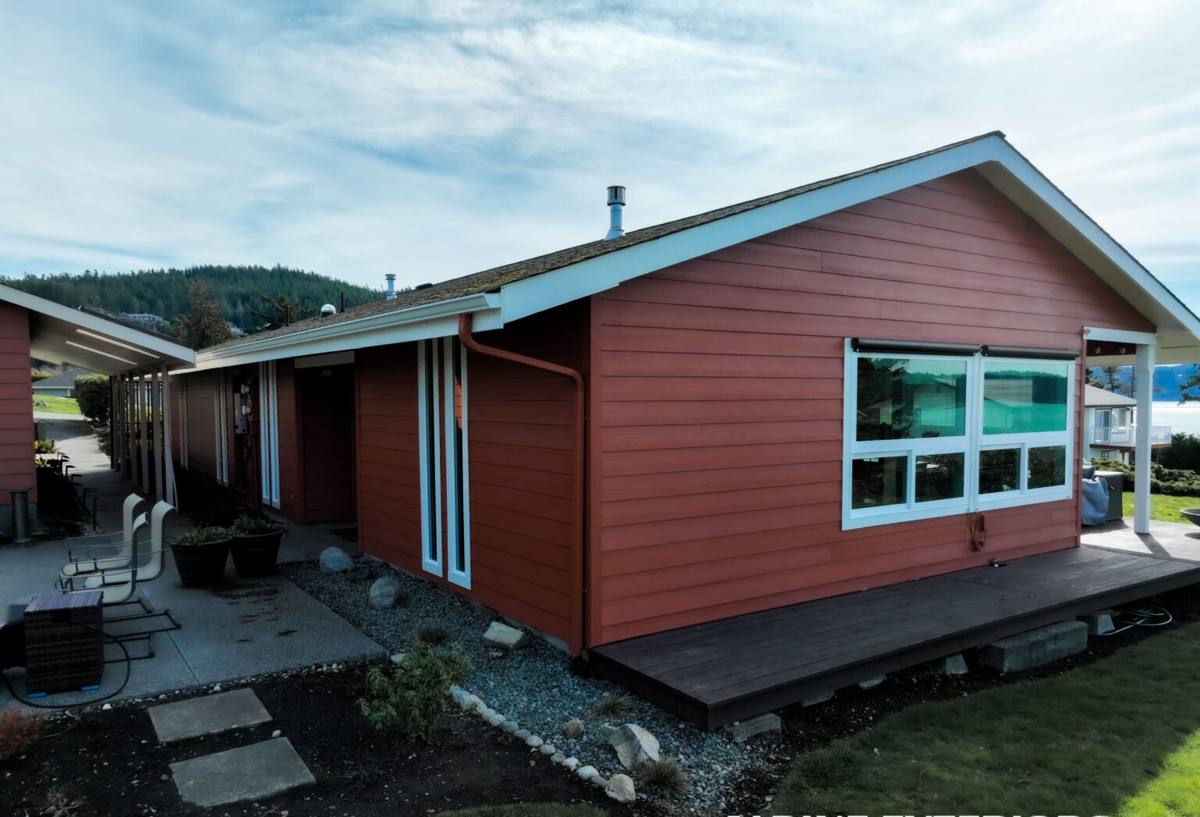
When Repair Is the Right Call
Isolated, Recent Damage
If the siding is otherwise in good shape and the damage is limited to one or two boards — a lawnmower strike, a fallen branch, a single cracked panel — repair is almost always the right move. There's no reason to replace a whole wall over damage that's contained and recent, especially if the siding underneath is still performing well.
Siding Under 10-15 Years Old
Newer siding, especially if it was installed correctly with proper flashing and clearances, generally has plenty of service life left. A localized repair on siding this age is a reasonable investment because the rest of the system still has years of protection ahead of it.
Cosmetic-Only Issues
Caulk that's failed at a few trim joints, a piece that's come loose from a fastener backing out, or minor color fading on one exposure — these are maintenance items, not replacement triggers. Left alone too long they can turn into bigger problems, but caught early they're a quick fix.
When Replacement Is the Smarter Call
Damage That Keeps Coming Back
If you've repaired the same section of wall more than once, that's a signal, not a coincidence. Recurring failure in the same spot almost always means there's a structural or moisture issue behind the siding that a surface patch can't fix. Repairing it again just delays finding the real cause.
Soft Spots, Bubbling, or Staining Across Multiple Areas
When you find soft or spongy siding, paint that's bubbling, or dark staining in more than one location, that's usually evidence of moisture intrusion that's spread beyond what you can see. At that point, patching individual spots means you're guessing at where the problem stops — and in our climate, it often hasn't stopped.
Siding at or Beyond Its Expected Lifespan
Wood and engineered wood siding products typically start showing their age around 15-20 years, especially on exposures that take direct weather. Once you're replacing trim, caulking joints, and repainting every few years just to keep ahead of deterioration, you're already paying for a slow-motion replacement — just without the benefit of a fresh warranty or improved performance.
Multiple Elevations Affected
If the damage isn't confined to one wall but shows up on two or three exposures, that usually points to a systemic issue — original installation quality, product-wide moisture behavior, or age catching up with the whole house at once. Piecemeal repair across multiple walls often costs more in the long run than one coordinated replacement, and it leaves you with a visibly patchwork exterior.
The Semiahmoo Factor: What Our Climate Does to Siding
Semiahmoo sits right on the water, and that proximity shapes how siding ages here in ways that inland Whatcom County homes don't deal with as much.
- Salt air: Airborne salt accelerates corrosion on fasteners, flashing, and any exposed metal trim. Once fasteners start failing, siding panels loosen and gaps open up for water to get behind the cladding.
- Driving rain off the water: Wind-driven rain doesn't just hit siding — it gets pushed sideways into laps, seams, and butt joints that were designed for vertical rainfall, not horizontal pressure. Product and detailing that work fine a few miles inland can underperform on an exposed waterfront lot.
- A long moss and mildew season: Our extended damp season keeps siding surfaces wet longer than drier climates, which feeds moss and mildew growth. Beyond the cosmetic issue, sustained moisture at the surface is exactly the condition that finds any weak point in a coating or a seam.
None of this means siding here is doomed to fail early — it means the margin for installation mistakes and product limitations is smaller. A product or detail that's marginal in a mild climate can fail years sooner on a Semiahmoo waterfront exposure.
How to Inspect Your Own Siding Before Calling Anyone
You don't need to be a contractor to do a useful first pass. Walk the perimeter of the house, paying particular attention to the sides that face prevailing wind and rain, and check for the following:
- Soft or spongy spots when you press on the siding with your palm
- Visible gaps, warping, or buckling in panels or boards
- Peeling or bubbling paint, especially in localized patches
- Dark streaking or staining, particularly below seams and around windows
- Moss or heavy mildew buildup concentrated in shaded, damp areas
- Corroded or backed-out fasteners
- Cracked or missing caulk at trim joints, windows, and corners
- Any musty smell or visible staining on interior walls that back up to exterior siding
One or two items on this list, isolated to a small area, usually points to repair. Several items, spread across more than one wall, is a strong signal that a full inspection — and likely replacement — is worth pursuing.
Repair vs. Replacement: Weighing the Real Factors
| Factor | Leans Toward Repair | Leans Toward Replacement |
|---|---|---|
| Extent of damage | One or two isolated spots | Multiple areas or elevations |
| Siding age | Under 10-15 years | Approaching or past expected lifespan |
| Repair history | First repair in this area | Same spot repaired more than once |
| Moisture evidence | None found behind siding | Soft sheathing, staining, or musty odor found |
| Ongoing maintenance cost | Manageable, infrequent | Repainting/caulking every 2-3 years |
| Product performance in salt air/driving rain | Holding up as designed | Showing accelerated wear for its age |
Cost is obviously part of every homeowner's decision, and we won't pretend otherwise — but the table above is really about avoiding the more expensive mistake, which is spending repair money on a wall that needed replacement, or replacing siding that genuinely only needed a patch.
What's Behind the Siding Matters as Much as the Siding Itself
A siding inspection that only looks at the surface is incomplete. When we pull a damaged section, we're checking the sheathing, the house wrap or building paper, and the flashing details around windows and penetrations. If the sheathing is soft or delaminating, or the water-resistive barrier has failed, replacing the siding on top of that problem just seals moisture back in. This is especially important on waterfront and near-waterfront properties around Semiahmoo, where wind-driven rain puts more pressure on those hidden layers than a typical inland installation ever sees.
This is also why "just replace the boards that are bad" isn't always cheaper in practice. If we find compromised sheathing or a failed weather barrier during what was meant to be a spot repair, fixing it properly may require opening up more of the wall than originally planned — which is worth knowing going in, not discovering halfway through the job.
If You Do Replace: What We Recommend and Why
When a homeowner is past the repair stage, the material decision matters as much as the labor. We install James Hardie fiber cement siding exclusively, for reasons that are directly relevant to a climate like ours: it's non-combustible, it's engineered for moisture and climate exposure through Hardie's HZ product lines, and the factory-applied ColorPlus finish holds up to UV and salt air better than field-applied paint on wood or engineered wood products. It also carries a strong transferable warranty, which matters on a coastal property where the next owner will care just as much about siding performance as you do.
We won't tell you every other product on the market is unusable — vinyl, LP SmartSide, and other engineered products all have their place. But given what salt air, driving rain, and a long moss season do to a home's exterior over 20-plus years, fiber cement installed to spec is what we're willing to put our name behind, and it's what we recommend when a Semiahmoo homeowner asks us to start fresh.
Working With a Contractor on This Decision
Whoever you hire, get a straight answer on how they're making the repair-vs-replacement call — not just a visual guess from the driveway. A contractor should be willing to pull a board or panel in a suspect area, check the sheathing and moisture barrier, and explain what they found in plain language. If a contractor pushes full replacement without ever inspecting behind the siding, or pushes repair on a house with clear multi-elevation moisture damage, get a second opinion.
If you're seeing damage, recurring repairs, or you're just not sure which side of this decision your house is on, we're happy to take a look and give you a straight answer — no pressure either way. Reach out for a free estimate and inspection using the form below.