 Semiahmoo
 Two Very Different Materials, Not Just Two Price Points
When homeowners in Semiahmoo start pricing out a siding replacement, the conversation usually comes down to James Hardie fiber cement versus vinyl. On paper they can look like variations on the same idea: long horizontal boards that shed water and give a house a finished look. In practice, they're built from different raw materials, they respond to weather differently, and they age on a house in very different ways. Vinyl is an extruded PVC plastic product, formed and colored in a single step. James Hardie siding is fiber cement — a mix of cellulose fiber, sand, and portland cement that's cured into a rigid board and then finished with a factory-applied ColorPlus coating. That difference in raw material is the reason the two products behave so differently once they're actually on a house facing Semiahmoo weather.
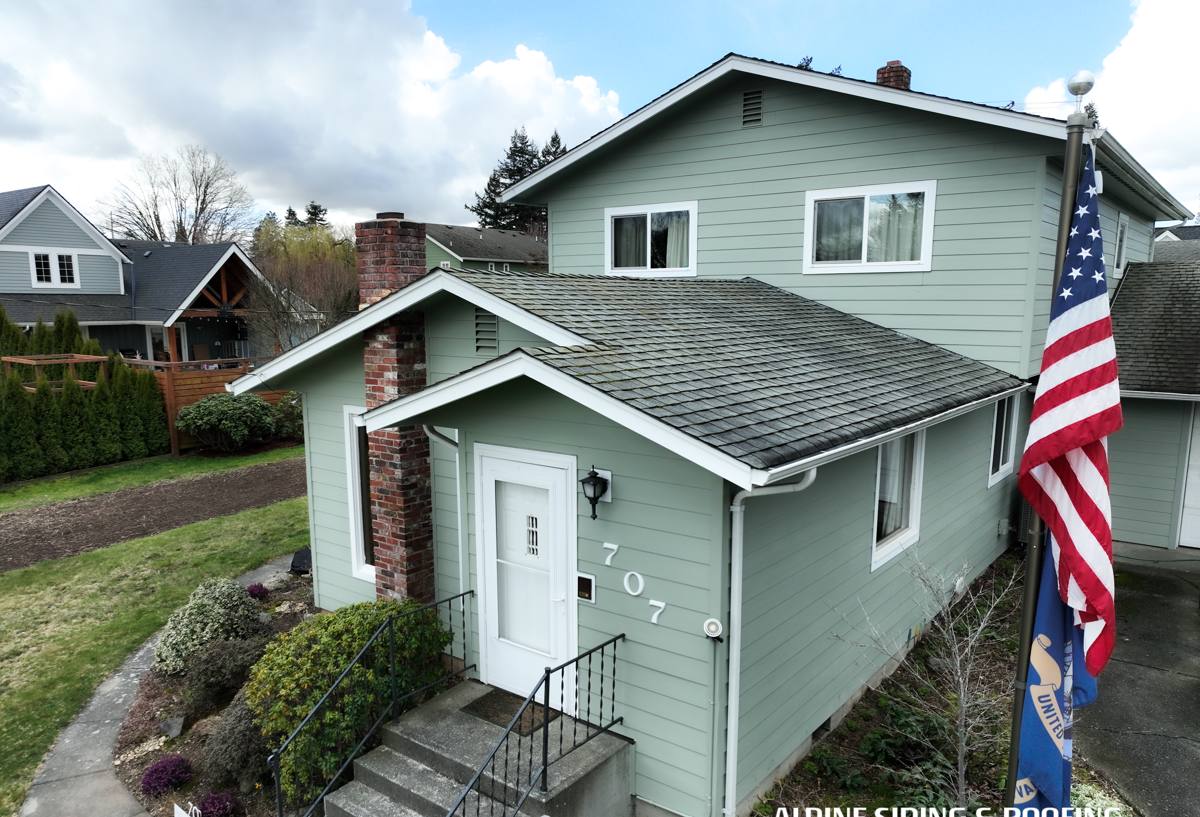
How Each One Handles Salt Air, Driving Rain, and Moss
Semiahmoo sits right on Semiahmoo Bay, which means salt-laden air is a daily fact of life for anything on the exterior of a house — fasteners, trim, siding, paint. Add Whatcom County's long stretch of driving rain each fall and winter, plus a moss season that can run from October well into spring on shaded north- and west-facing walls, and you've got a climate that's genuinely tough on exterior materials.
Vinyl in This Climate
Vinyl siding sheds rain reasonably well when it's installed correctly, and it doesn't rot. But it's a plastic product, and plastic has known weak points here. It expands and contracts with temperature swings, which over years can work fasteners loose and open gaps at seams and corners — exactly where wind-driven rain wants to get behind the panel. Salt air doesn't corrode vinyl the way it does metal, but it does accelerate UV breakdown, and vinyl that's spent a couple of decades facing the bay tends to go chalky and brittle faster than the same product would inland. Moss and algae growth on vinyl is mostly a surface issue — it grows on the film of grime that collects in the panel's grooves and laps, and it comes back quickly after cleaning because the surface texture gives it something to hold onto.
James Hardie in This Climate
Fiber cement doesn't expand and contract nearly as much as vinyl, so the seams and fastening stay tighter over time, which matters when the wind is driving rain sideways off the bay. It's also inorganic — cement and sand don't rot, and moss doesn't feed on it the way it can find purchase in wood grain. The ColorPlus finish is baked on in a factory-controlled process rather than applied on site, which gives it better adhesion and fade resistance than field-applied paint, including through repeated wet-dry salt cycles. None of this means Hardie is maintenance-free in a coastal, moss-prone climate — it still needs periodic washing and the caulk joints still need to be checked — but the board itself isn't the part that degrades first.
Long-Term Maintenance: What You're Actually Signing Up For
Every siding product sold as "low maintenance" still needs some care in this climate. The honest comparison is what that maintenance looks like over 20-30 years.
- Vinyl: Periodic soft-washing to keep salt film and algae from building up; watch for panels that have bowed, cracked, or popped loose from thermal cycling; damaged sections are hard to color-match once a run is discontinued.
- James Hardie: Periodic washing to keep moss and salt residue from staining the ColorPlus finish; inspect and refresh caulk at trim and penetrations every several years; no repainting needed within the coating's rated life if the finish stays intact.
The vinyl color-match problem is worth calling out specifically for this area. If a section of vinyl siding gets damaged by a falling branch or a pressure-washer mistake, and the original color run has been discontinued (which happens often with vinyl), you're often looking at re-siding an entire wall to avoid a visible patch. Hardie's ColorPlus lines are more consistent long-term, and because it's factory-finished board rather than a single molded color run, replacement boards are easier to match.
Fire and Impact Resistance
This isn't a wildfire-prone corner of the state the way parts of eastern Washington are, but fire performance is still a legitimate part of the comparison. Vinyl is a petroleum-based plastic — it will soften, deform, and burn under enough heat. James Hardie fiber cement is non-combustible; it doesn't contribute fuel to a fire. On the impact side, vinyl can crack in a hard freeze if struck, and it dents from things like ladders or errant baseballs. Fiber cement is considerably more rigid and resists denting and cracking from routine impact, though like any rigid material it can chip or crack under a hard enough blow.
Appearance and How It Ages
Up close, the two products read differently. Vinyl has a slight flex and a visible seam-and-lap pattern that most people can recognize as vinyl on sight, especially once panels start to wave or bow with age. James Hardie's HardiePlank and other lines are engineered to replicate the look of cedar lap, board-and-batten, or shingle siding with a crisper, more rigid profile that holds its shape and its color line over time. Twenty years in, a well-maintained Hardie home generally still looks like a well-built, freshly painted home. A twenty-year-old vinyl installation, even a well-maintained one, usually shows its age in the form of fading, slight warping, and a duller sheen that no amount of washing fully corrects.
What It Actually Costs Over Time
Vinyl almost always wins on installed cost up front — that's real, and it's the main reason it remains popular. The comparison changes when you look at the full ownership picture rather than just the invoice at installation.
| Factor | Vinyl Siding | James Hardie |
|---|---|---|
| Upfront installed cost | Lower | Higher |
| Repainting needed | No, but fading is permanent once it starts | Not within coating's rated life |
| Typical replacement cycle in this climate | Shorter, especially on sun/bay-facing walls | Longer, engineered for coastal exposure |
| Resale/appraisal perception | Treated as a standard, expected feature | Often viewed as a premium, value-adding upgrade |
| Damage repair/color match | Can be difficult if a color run is discontinued | Generally easier to match and patch |
None of these figures are guarantees — actual lifespan depends heavily on installation quality, sun exposure, and how consistently a homeowner keeps up with basic washing and caulk maintenance. But the general pattern — lower cost now versus lower cost per year of ownership — holds up across most coastal Whatcom County homes we've looked at.
Warranty Structure
Vinyl siding warranties vary a lot by manufacturer and are frequently prorated, meaning the payout for a failure shrinks the longer you've owned the siding — a 30-year warranty that's prorated after year five isn't worth what it sounds like on the brochure. James Hardie backs its fiber cement products with a non-prorated limited warranty and a separate warranty on the ColorPlus finish, and both are transferable to a subsequent homeowner if the home sells, which is a real factor for buyers evaluating the exterior during a home purchase.
Why Installation Sensitivity Matters More Than People Expect
Both products perform worse than their potential if they're installed wrong, but the failure modes differ. Vinyl installed too tight, without room for thermal expansion, will buckle and wave — a problem that shows up as a visible defect but usually isn't a structural or moisture issue. Hardie installed wrong is a bigger deal: it requires correct fastener placement, proper clearances from grade and roof lines, and correctly sealed and flashed joints and penetrations. Get those wrong on a house exposed to Semiahmoo's driving rain and you can end up with moisture getting behind the board, which defeats the whole point of choosing a more durable material in the first place. This is exactly why we only install James Hardie rather than carrying multiple product lines — a crew that installs one system, to spec, on every job develops a level of consistency that's hard to match when switching between products and their different installation requirements.
Questions Worth Asking Before You Decide
- How is the wall facing prevailing wind and driving rain — is it more exposed to bay weather or more sheltered?
- Does the wall get shaded enough, long enough, to be a moss risk, and how easy will it be to keep clean?
- Is the warranty on the product prorated, and is it transferable if you sell the home?
- What does the installer's flashing and sealing detail look like at windows, doors, and trim?
- How do you weigh a lower cost today against a longer replacement cycle and less repainting later?
- If a section gets damaged in ten years, how easily can it be matched and repaired?
We've made James Hardie the only siding system we install because, on homes facing this stretch of coastline, it's held up to the combination of salt, rain, and moss better than the alternatives we used to carry. If you're weighing your options for a home in Semiahmoo or elsewhere in Whatcom County, we're glad to take a look at your specific walls and exposure and give you a straight, no-pressure estimate.