 Semiahmoo
 Why Color Choice Is a Bigger Decision With Fiber Cement
When you side a house in vinyl, color is mostly a style question — the material itself doesn't change much from one shade to the next. Fiber cement is different. James Hardie's ColorPlus Technology is a factory-applied finish system, and the color you pick determines the finish batch, the touch-up products your installer will need, and in some cases the specific board line available to you. Getting the color decision right at the start saves headaches later, especially in a climate like ours where the siding is going to be tested by weather every single month of the year.
Semiahmoo sits right on the water in Whatcom County, which means every color decision here has to account for salt-laden air, near-constant driving rain off the Strait, and a moss season that can run from October through May. Some colors and sheens simply perform better than others under those conditions. This page walks through how the ColorPlus system works, what the color lines actually offer, and how to think about color choice specific to our stretch of coastline.
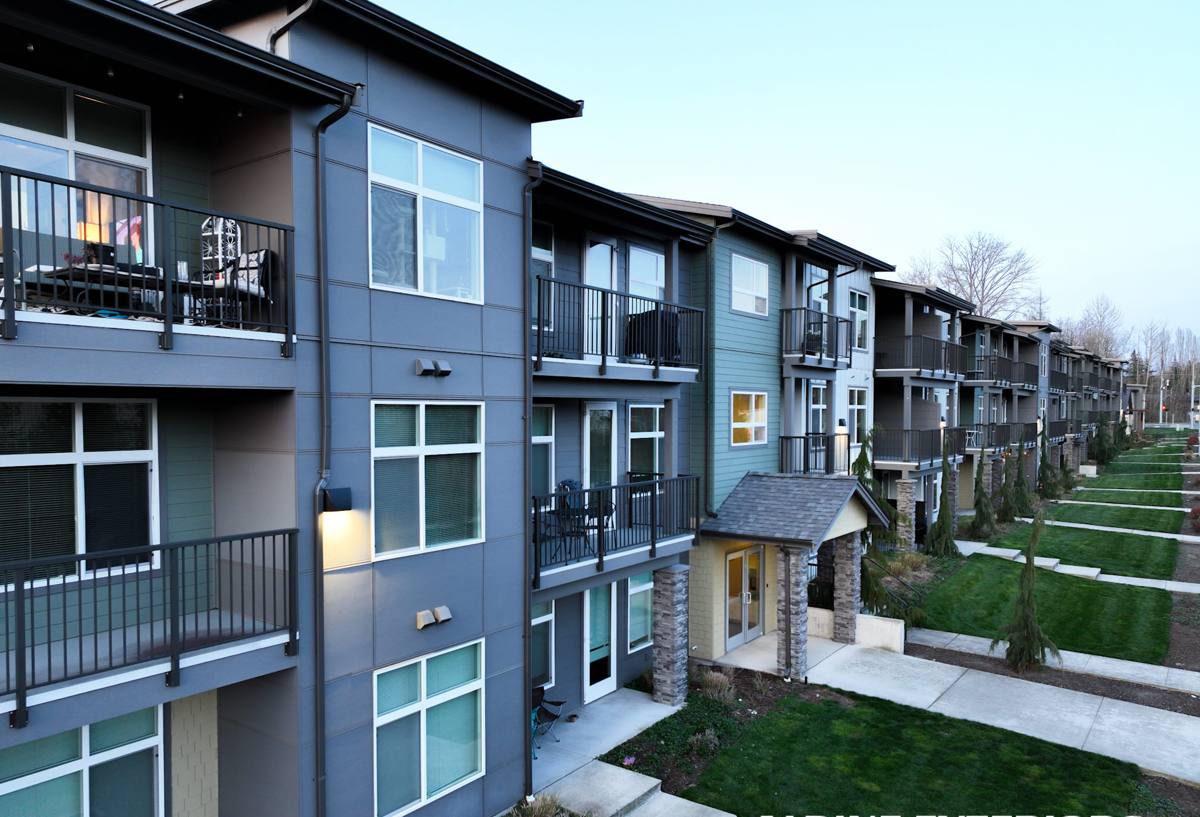
How ColorPlus Factory Finish Actually Works
ColorPlus siding isn't primed at the factory and painted on site — it's fully finished before it ever reaches the job. The color coats are baked onto the board in a controlled factory environment, cured, and then a clear coat is applied over the top. That process is what gives ColorPlus its 30-year limited finish warranty against fading and peeling, which is meaningfully stronger than what a field-applied paint job can offer no matter how good the painter is.
Why This Matters for Coastal Homes
Field-applied paint has to bond to fiber cement on site, in whatever weather and humidity happen to show up that week. On a job near the water, that's a real variable — paint applied on a damp, salt-humid day doesn't cure the same way as paint applied in a controlled factory line. ColorPlus removes that variable entirely. The color and clear coat are already cured and tested before the boards ever arrive at your house, which is one reason we install exclusively factory-finished Hardie board rather than primed siding that gets painted after installation.
Touch-Up and Repair
Hardie sells matched ColorPlus touch-up kits for every ColorPlus color, so small nicks from a ladder, a gutter guy, or storm debris can be spot-repaired without repainting a whole wall. This is one more reason to pick from the standard ColorPlus palette rather than a custom field-mixed color — touch-up availability and warranty coverage both depend on staying inside the ColorPlus system.
The Color Lines: What's Actually Available
James Hardie organizes its ColorPlus palette into a few tiers. The lineup changes periodically, but the structure is consistent enough to plan around.
| Line | What It Offers | Typical Use |
|---|---|---|
| Statement Collection | Bolder, more saturated colors, often reserved for specific board profiles | Accent walls, board-and-batten sections, modern facades |
| Dream Collection / Core Palette | Broad range of neutrals, warm tones, and muted colors | Full-house siding on most residential projects |
| Primed for Paint | Unfinished board, painted after install | Custom colors outside the ColorPlus palette, at the cost of the factory warranty |
Common ColorPlus colors homeowners in our area gravitate toward include Iron Gray, Aged Pewter, Arctic White, Boothbay Blue, Mountain Sage, and Countrylane Red — but availability by board profile and lap style varies, so the right move is always to look at current physical samples rather than a color chip on a screen or a photo from another climate.
How Semiahmoo's Climate Should Influence Your Choice
Salt Air and Color Longevity
Salt air doesn't damage the ColorPlus finish the way it can damage bare wood or unsealed masonry, but it does accelerate the buildup of a fine film on any exterior surface, siding included. Darker, matte-finish colors tend to show that film less than very light or high-gloss colors, simply because the contrast is lower. This isn't a reason to avoid light colors — Arctic White is one of the most popular ColorPlus colors for exactly this kind of coastal setting — but it is a reason to expect a light-colored home to need a garden-hose rinse-down more often than a mid-tone one.
Driving Rain and Streaking
Wind-driven rain off the Strait of Georgia hits west- and southwest-facing walls harder than the other elevations of a house. Over years, that can create faint streaking below window heads, gutters, and roof-to-wall transitions, especially where a downspout or gutter isn't doing its job. Mid-tone colors tend to hide this kind of streaking better than pure white or very dark charcoal, where any mineral streaking reads as a sharper contrast. This is a detail worth discussing wall-by-wall, not just for the house as a whole, since your water-facing elevation may benefit from a different tone than a sheltered side yard.
Moss Season
Whatcom County's long, wet moss season affects roofs more visibly than walls, but siding in shaded, damp corners of a lot — under mature trees, along a north-facing wall that never gets direct sun — can develop a light green cast over time from algae and moss spores, the same way a deck or fence would. ColorPlus's baked-on finish is far more resistant to this than raw wood siding, and it cleans off easily with a gentle wash rather than requiring re-staining. Still, if you know a particular wall of your home sits in near-permanent shade, a mid-tone color will show that green cast less than a stark white or very dark color.
Working With Pacific Northwest Light
Color samples read differently under our region's soft, overcast light than they do under direct sun, and that catches a lot of homeowners off guard. A warm greige that looks neutral in a sunny photo can read distinctly cool and gray under Semiahmoo's typical cloud cover, and vice versa for cooler tones that can look almost blue-gray on an overcast day.
How to Test a Color Before Committing
- Get a physical ColorPlus sample chip or board section — never decide from a screen or a printed brochure
- View it outdoors, against your actual house, at more than one time of day
- Check it on both a bright day and an overcast day if you can — our weather gives you plenty of chances
- Hold it against your roofing, stonework, and any brick or masonry that will stay unchanged
- Look at it from across the street, not just up close — color perception shifts with distance
Coordinating Color With Trim, Roof, and Accents
ColorPlus siding is usually paired with a trim color, and sometimes a third accent color for shutters, a front door, or a gable feature. Hardie's trim boards come in a smaller, complementary set of ColorPlus colors designed to pair with the field siding lines, which takes some of the guesswork out of matching. The bigger variable is usually the roof — a cool-gray composition roof will pull warm siding colors in a different direction than a brown or black roof will, so it's worth locking in your roof color (or confirming your existing one isn't being replaced) before finalizing the siding color.
Common Pairings That Hold Up Locally
Mid-tone grays and greiges paired with a white or off-white trim are the most common combination we see specified in this area, largely because they perform well against both our gray-sky winters and the brighter, greener summer landscape. Deeper colors like Iron Gray or a navy-leaning blue tend to be reserved for smaller sections — a lower band, a garage, an accent gable — rather than full four-sided coverage, partly for visual interest and partly because a smaller surface area is easier to keep looking clean between washes.
Cost Factors Tied to Color Selection
| Factor | How It Affects Cost |
|---|---|
| Standard ColorPlus vs. Statement Collection | Statement colors and certain profiles can carry a modest premium over core palette colors |
| ColorPlus vs. Primed-for-Paint | Field painting adds labor cost and forfeits the factory finish warranty, often costing more over the life of the siding |
| Multiple colors / accent bands | Additional cut lines, transitions, and material ordering add labor time |
| Touch-up kits | Minor added cost at install, but avoids future repainting expense |
Warranty and Why Staying Inside the ColorPlus System Matters
James Hardie backs ColorPlus finishes with a 30-year limited finish warranty covering fading and peeling, separate from the product warranty on the board itself. That warranty is tied to using the factory finish system as designed — factory color, factory clear coat, factory touch-up products — and to installation that follows Hardie's published specifications, including proper fastening, clearances, and caulking at joints. A color choice made outside that system, such as a custom field-painted color, steps outside the warranty structure entirely. This is part of why we install Hardie board exclusively rather than mixing in primed spruce or other siding that requires field painting — it keeps the whole system, color included, under one manufacturer's warranty.
A Practical Checklist for Choosing Your Color
- Pull physical ColorPlus samples, not digital swatches, and view them against your actual house
- Check samples in overcast and bright light — our climate gives you both regularly
- Consider each elevation separately if one side takes more direct rain or sits in more shade
- Lock in your roof color before finalizing siding color
- Confirm your chosen color and profile are in current production before you fall in love with it
- Ask about matched touch-up kit availability for your final color choice
- Stay inside the ColorPlus palette if keeping the 30-year finish warranty intact matters to you
Picking a color is one of the more enjoyable parts of a siding project, and it's worth taking the time to get it right for a material that's going to be on your home for decades. If you'd like to see current ColorPlus samples against your own house here in Semiahmoo, we're happy to bring them out for a free, no-pressure estimate and walk the property with you.