 Semiahmoo
 Siding Built for Life on Drayton Harbor
Drayton Harbor sits right where the fresh water draining off the Whatcom County hills meets the salt water of the Strait of Georgia. That mix of geography is exactly what makes exterior maintenance here different from a typical inland home. Houses along the harbor and the surrounding shoreline deal with salt-laden air, wind-driven rain coming straight off the water, and a wet season that can stretch for months at a time. Siding that works fine forty miles inland can fail early out here, and we've built our entire business around installing one product system that's engineered to handle it.
We install James Hardie fiber cement siding exclusively. Not because it's the only siding on the market, but because after years of working on homes in this exact climate, it's the only exterior product we're willing to put our name behind in a harbor environment.
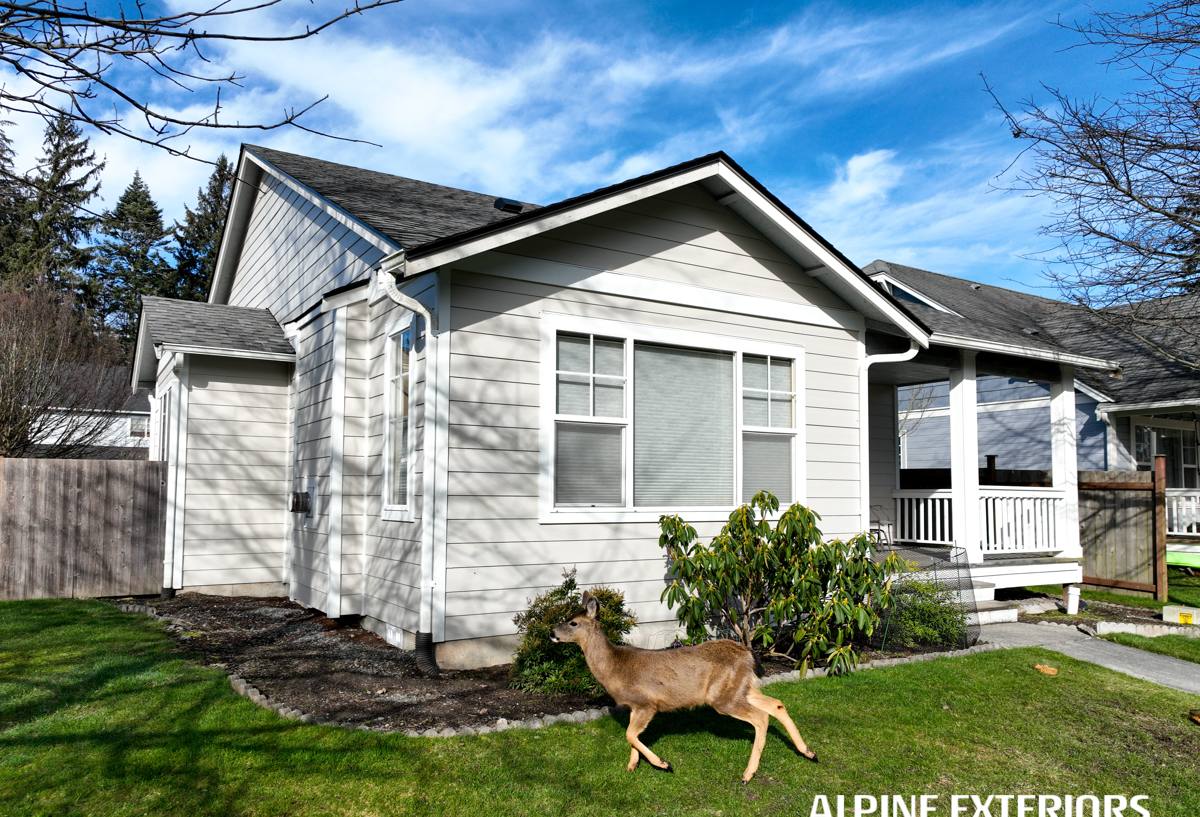
What Drayton Harbor's Climate Actually Does to a House
Salt Air and Corrosion
Homes close to the water take on airborne salt that settles into every crevice of the exterior — siding seams, fastener heads, trim joints. Over time, salt exposure accelerates corrosion in fasteners and speeds up the breakdown of coatings that aren't formulated for a marine-influenced environment. It also tends to draw moisture, keeping surfaces damp longer than they would be a few miles inland.
Driving Rain
Storms coming off the strait don't just drop rain straight down — wind pushes it sideways into wall assemblies, lap joints, and anywhere there's a gap in the water-resistive barrier. A siding product's dimensional stability and how tightly it can be installed against a home's weather barrier matters more here than in a calm, dry climate.
Moss, Algae, and a Long Wet Season
Whatcom County's wet season runs long, and homes shaded by trees or facing north toward the water can stay damp for weeks without a real drying window. That's ideal growing conditions for moss and algae on any exterior surface that holds moisture, especially wood-based products and their coatings.
Wind Exposure
Open water means fewer windbreaks. Homes along the harbor and spit see higher sustained wind loads than sheltered inland lots, which puts more stress on fastening patterns and how well siding panels stay flat and secured over time.
Why We Standardized on James Hardie
James Hardie fiber cement is manufactured from cement, sand, and cellulose fiber — materials that don't feed mold, don't absorb water the way wood-based products can, and won't ignite. For a harbor environment, the practical benefits are straightforward:
- Fiber cement doesn't swell, rot, or delaminate from repeated wetting and drying cycles the way wood-based siding can
- The ColorPlus factory finish is baked on under controlled conditions, giving it better adhesion and UV resistance than field-applied paint, which matters when a house is getting hit with salt air and long stretches of damp weather
- Hardie's HZ5 product line is engineered specifically for cold, wet, coastal climates like ours — it's not a generic siding pulled from a national catalog
- It's non-combustible, which matters more each year given regional wildfire smoke and ember exposure during dry summer stretches
- The product carries a strong, transferable warranty backed by a company that's been making fiber cement siding for decades
We don't install LP SmartSide, vinyl, Cemplank, Allura, primed spruce, or cedar. Some of those products have real strengths in the right application — but none of them, in our professional judgment, hold up to Drayton Harbor's combination of salt exposure, wind-driven rain, and extended moss season as well as correctly installed Hardie fiber cement. Vinyl can warp and fade under UV and temperature swings and offers limited protection at seams. Wood-based products, even engineered ones, are more vulnerable to moisture intrusion at cut edges and fastener penetrations if the coating or sealant isn't maintained perfectly. Cedar is beautiful but demands an ongoing maintenance commitment — restaining, resealing, and moss treatment — that most homeowners underestimate until the labor and cost catch up with them.
How Correct Installation Protects the Investment
Fiber cement siding is only as good as the installation behind it. In a wet, coastal climate, the details that get skipped on a rushed job are exactly the ones that cause problems five or ten years down the road:
- Proper water-resistive barrier and flashing integration behind every panel, window, and door opening
- Correct fastener type, spacing, and placement to Hardie's published specifications — not generic siding nailing patterns
- Adequate clearance between siding and grade, decks, roofing, and any other surface where water can pool or wick upward
- Properly caulked and sealed joints in locations exposed to direct, wind-driven rain
- Correct starter strips and trim details at inside and outside corners, where wind-driven rain finds the most vulnerable seams
We install to Hardie's manufacturer specifications on every project, which is also what keeps the product warranty intact. A siding job that looks right from the curb but skips flashing or fastener details can still fail behind the wall where nobody sees it until there's a real problem.
Comparing Siding Options for a Harbor-Exposed Home
| Factor | James Hardie Fiber Cement | Vinyl | Wood / Engineered Wood |
|---|---|---|---|
| Moisture resistance | Excellent — won't rot or delaminate | Good, but seams and gaps allow water behind panels | Moderate — vulnerable at cut edges and fasteners |
| Salt air / corrosion resistance | Strong; non-corrosive material | Can become brittle and discolor over time | Coatings break down faster near salt air |
| Moss and algae resistance | Low absorption limits growth | Growth possible in shaded, damp areas | Higher risk, especially on north-facing walls |
| Fire resistance | Non-combustible | Melts/deforms under heat | Combustible |
| Finish durability | Factory-baked ColorPlus finish | Color molded in, can fade/chalk | Requires repainting/restaining on a cycle |
| Typical maintenance | Occasional wash, inspect caulking | Occasional wash | Regular sealing, staining, or painting |
Roofing, Windows, and Decks Along the Harbor
Siding rarely fails in isolation — it fails alongside a roof that's letting water into the wall assembly, windows that aren't flashed correctly, or a deck ledger that's trapping moisture against the house. We handle roofing, windows, and decks in addition to siding, which means we can look at a Drayton Harbor home as one connected exterior system rather than a series of separate trades. A window replacement done without attention to the surrounding siding and flashing can undo the protection a new Hardie installation is supposed to provide, and vice versa.
Signs Your Exterior Needs Attention
- Moss or dark streaking building up on north- or shade-facing walls
- Soft spots, bubbling, or visible warping in existing siding
- Peeling or chalking paint that returns quickly after repainting
- Gaps opening up around window and door trim
- Visible rust staining around fastener heads
- Musty smell or discoloration on interior walls near exterior corners
Working With a Local Crew
A crew that works Whatcom County's coastal properties regularly knows which walls take the worst of the wind-driven rain, how far moss creep tends to travel in a season, and where salt exposure hits hardest on a given lot. That local knowledge shows up in small decisions — flashing details, fastener choices, where to prioritize caulking — that a crew unfamiliar with harbor conditions might not think twice about. It also means someone local is available if a warranty question or maintenance issue comes up years after the install, rather than a company that did one job in the area and moved on.
Planning a Siding Project in Drayton Harbor
Every home is different — sun exposure, tree cover, wind direction, and how close a lot sits to the water all affect how fast an exterior wears and what it needs. A few things that typically factor into scope and cost for this area:
| Factor | Why It Matters Here |
|---|---|
| Distance from shoreline | Closer lots see more salt exposure and wind load |
| Sun and shade exposure | Shaded, north-facing walls hold moisture longer and see more moss growth |
| Existing siding condition | Hidden moisture damage behind old siding can add repair scope |
| Home size and complexity | More corners, dormers, and trim details increase installation time |
| Trim and color selections | ColorPlus factory finishes and trim profiles affect material cost |
Get a Free, No-Pressure Estimate
If you own a home in Drayton Harbor and you're seeing early signs of wear — moss, soft spots, peeling paint, or gaps opening up around trim — it's worth having a local crew take a look before small issues turn into structural repairs. We'll walk the exterior, explain what we're seeing, and give you a straightforward estimate for James Hardie siding, roofing, windows, or decks. No pressure, no sales script — just a clear look at what your home actually needs. Use the form below to request your free estimate.