 Semiahmoo
 Why Point Roberts Roofs Wear on Their Own Timeline
Point Roberts sits on a small peninsula that catches weather from nearly every direction. Homes here deal with a combination that inland Whatcom County properties simply don't see as intensely: near-constant salt-laden air off the water, driving rain that comes in sideways during winter storms, and a moss season that can stretch from October well into spring. Any one of these factors will shorten a roof's life. Together, they compound each other, and that's why a roof that might get another five years out of it in a sheltered inland neighborhood can already be failing in Point Roberts.
Salt air is corrosive to exposed metal fasteners, flashing, and roof vents. Once galvanized coatings start to break down, rust works fast, and a single failed nail or a corroded flashing seam is often the actual point of entry for a leak that shows up somewhere else entirely. Driving rain doesn't just test the shingles themselves — it tests every lap, seam, and penetration on the roof, because wind-driven water finds the smallest gap and pushes through it rather than running off. And moss doesn't just look bad. It holds moisture against the roofing material around the clock, works its root structure under shingle edges, and lifts tabs just enough to let water underneath.
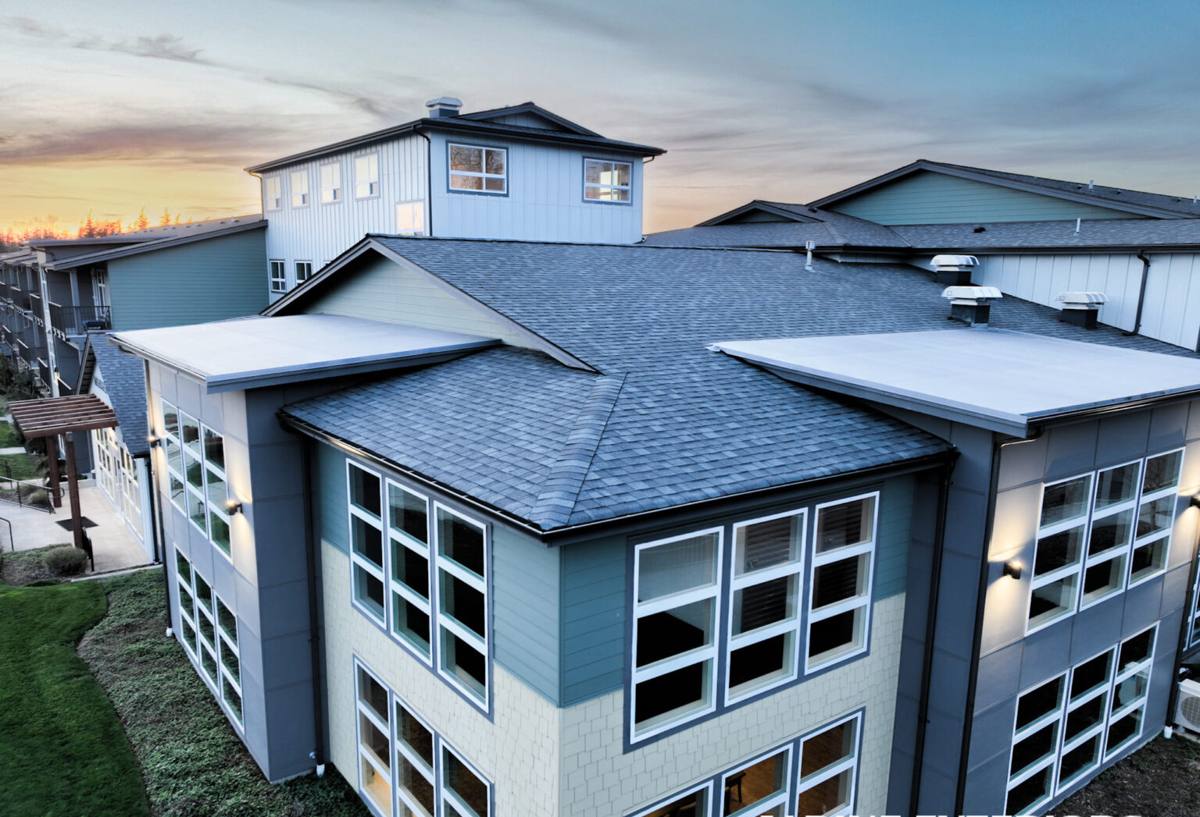
Signs a Point Roberts Roof Needs Replacement, Not Just Repair
Not every roof problem calls for a full replacement, and a straight shooter will tell you when a repair is the honest answer. But there are signs that point to a roof at the end of its useful life rather than one with an isolated problem:
- Granule loss heavy enough that you're finding sand-like debris in gutters and downspouts every season
- Shingles that are cupping, curling, or cracking across large sections rather than in one isolated spot
- Moss coverage thick enough that it's holding a wet mat against the roof deck rather than sitting on the surface
- Rusted or deteriorating flashing around chimneys, vents, and valleys
- Daylight visible through the roof deck from inside the attic, or soft, spongy decking underfoot
- Repeated leaks in different locations after the roof has already been patched more than once
If you're only seeing one or two of these, a targeted repair may buy you real time. If you're seeing several at once, that's usually the roof telling you it's done absorbing Point Roberts weather.
What a Correct Roof Replacement Actually Involves
Tear-Off and Deck Inspection
A proper replacement starts with a full tear-off down to the deck, not a layover on top of existing shingles. Layering saves a day of labor but traps moisture and hides deck damage — and given how much moisture Point Roberts roofs are already exposed to, that's a bad trade. Once the old roofing is off, the deck gets inspected board by board. Any wood that's soft, delaminated, or water-stained needs to be replaced before anything new goes down. Skipping this step is the single most common reason a "new" roof still leaks within a year or two.
Underlayment
Underlayment is the roof's backup line of defense, and it matters more here than in drier parts of the state. A synthetic underlayment with strong water resistance, combined with self-adhering ice-and-water membrane at eaves, valleys, and around penetrations, gives the roof a real second barrier against wind-driven rain that gets past the shingle surface.
Flashing
Flashing around chimneys, skylights, sidewalls, and roof-to-wall transitions is where most leaks originate, not the open field of shingles. Given the corrosive effect of salt air, flashing material choice and installation quality both matter — corroded or improperly lapped flashing is a leak waiting to happen, regardless of how good the shingles above it look.
Ventilation
Balanced intake and exhaust ventilation keeps the attic dry and temperature-regulated, which does two things: it extends shingle life from underneath, and it reduces the moisture buildup that helps moss and algae take hold in the first place. A roof replacement is the right time to correct ventilation problems, since the deck is already exposed.
Material Choices and Cost Factors
There's no single "best" roofing material for every home — the right choice depends on budget, roof pitch, how long you plan to own the home, and how much long-term maintenance you're willing to take on. Here's how the common options compare for a coastal, moss-prone climate like Point Roberts:
| Material | Typical Lifespan | Moss/Moisture Behavior | Maintenance Burden |
|---|---|---|---|
| Architectural asphalt shingle | 20-30 years | Algae-resistant granule options help; still needs periodic moss treatment | Low to moderate |
| Standing seam metal | 40-50+ years | Sheds moisture fast; moss struggles to hold on smooth panels | Low, but fasteners need salt-air-rated coatings |
| Cedar shake | 20-30 years with upkeep | Absorbs moisture readily; high moss/rot risk without regular treatment | High |
| Composite/synthetic shake | 30-50 years | Does not absorb moisture like real wood; resists moss better | Low to moderate |
We're upfront that we steer most Point Roberts clients away from untreated cedar shake as a primary roofing choice. It's not that cedar can't look great — it's that its moisture-absorbing nature is a poor match for a climate that already keeps roofs wet for long stretches, and the maintenance schedule needed to keep it healthy here is more demanding than most homeowners want to commit to. That's a professional judgment about trade-offs, not a knock on the material itself.
The Logistics of Working on a Point Roberts Roof
Point Roberts has a quirk that affects every construction project there: it's only reachable by land through Canada, or by water. That means material deliveries, dumpster drop-offs, and crew scheduling all have to account for a border crossing, not just a drive across town. A contractor who hasn't planned for this will either pad your timeline with delays or, worse, discover the problem mid-project. Crews that already work in Point Roberts regularly build the crossing time and customs logistics into the schedule from day one, order materials with enough lead time to avoid a mid-job scramble, and know how to stage a job site efficiently on a property where a forgotten tool or missing bundle of shingles isn't a quick trip back to the shop.
Our Process, Start to Finish
- On-site inspection. We walk the roof and the attic, check the deck condition where accessible, and document flashing, ventilation, and moss/moisture issues.
- Written estimate. You get a clear scope of work and pricing before anything is scheduled — no surprise change orders for things we could have caught up front.
- Material and logistics planning. Because of Point Roberts' access, we order and stage materials with the crossing and delivery window built into the plan.
- Tear-off and deck repair. Full removal of old roofing, deck inspection, and replacement of any compromised sheathing.
- Underlayment, flashing, and ventilation work. This is where the roof's actual weather resistance gets built — it's not visible once the shingles go on, which is exactly why it has to be done right the first time.
- Final roofing installation. Shingles, panels, or shakes installed to manufacturer spec and local building code.
- Cleanup and walk-through. Site cleaned of debris and fasteners, and we walk the finished roof with you before calling the job done.
Moss Prevention Doesn't End at Installation
A new roof in Point Roberts will still be exposed to the same moss-friendly conditions as the old one — shaded areas, north-facing slopes, and overhanging trees don't change because the shingles did. Zinc or copper control strips near the ridge can help suppress moss regrowth over time, and keeping gutters and valleys clear of debris prevents the standing moisture that gives moss a foothold in the first place. We'll flag the areas of your roof most likely to need this kind of ongoing attention so you're not caught off guard a few years down the line.
Questions Worth Asking Before You Hire
Whatcom County has no shortage of roofing contractors, but not all of them regularly work the coastal, border-access conditions specific to Point Roberts. Before signing a contract, it's worth confirming:
- Do they have current experience working on Point Roberts specifically, including the logistics of crossing and material delivery?
- Is the estimate a full tear-off, or does it quietly assume a layover installation?
- What underlayment and ice-and-water membrane are included, and where will they be used on your roof?
- How is deck damage handled if it's found once tear-off begins — priced separately, or built into a contingency up front?
- Are they licensed and insured to do roofing work in Washington State, and can they provide proof of both?
- What's the manufacturer's warranty on materials, and what's covered under their own workmanship warranty?
A contractor who answers these clearly and without hesitation is one who's done this enough times to have real answers, not guesses.
Why a Locally Experienced Crew Matters Here
Roofing is roofing anywhere in the Pacific Northwest, but the details that separate a roof that lasts from one that fails early are shaped by local conditions. A crew that already works Point Roberts and the broader Whatcom County coastline knows which flashing details hold up against driving rain off the water, which fastener coatings actually resist salt air over time, and how to plan a job around the peninsula's access constraints without letting that turn into wasted days or rushed work. That experience doesn't show up as a line item on an estimate, but it shows up in whether the roof is still doing its job in fifteen years.
If your roof is showing its age or you're just not sure whether it needs repair or replacement, we're happy to take a look. Reach out for a free, no-pressure estimate using the form below.