 Semiahmoo
 Semiahmoo Resort: A Beautiful Place to Live, A Tough Place to Own a House
Semiahmoo Resort sits out on its own spit of land in northwest Whatcom County, wrapped by Semiahmoo Bay and Drayton Harbor with a straight shot of open water and wind on multiple sides. It's one of the most striking places to own a home in the county — and one of the more demanding on the building envelope. Homes here aren't dealing with typical inland Pacific Northwest weather. They're dealing with a marine exposure that inland Bellingham or Ferndale properties simply don't see: salt-laden air moving off the Strait of Georgia, driving rain that comes in sideways off the water, and long stretches of gray, damp months where nothing on the exterior gets a real chance to dry out.
We've worked on homes up and down this stretch of Whatcom County, and Semiahmoo Resort consistently shows the same pattern: siding, trim, and paint that would hold up fine in a more sheltered inland setting starts breaking down years ahead of schedule out here. That's not bad luck. It's physics. Salt air accelerates corrosion on fasteners and metal flashing, wind-driven rain pushes moisture into joints and seams that would stay dry elsewhere, and a long moss season means organic growth gets a foothold on north-facing and shaded walls almost every year. If you own a home out on the point, your exterior has a harder job than most houses in the county.
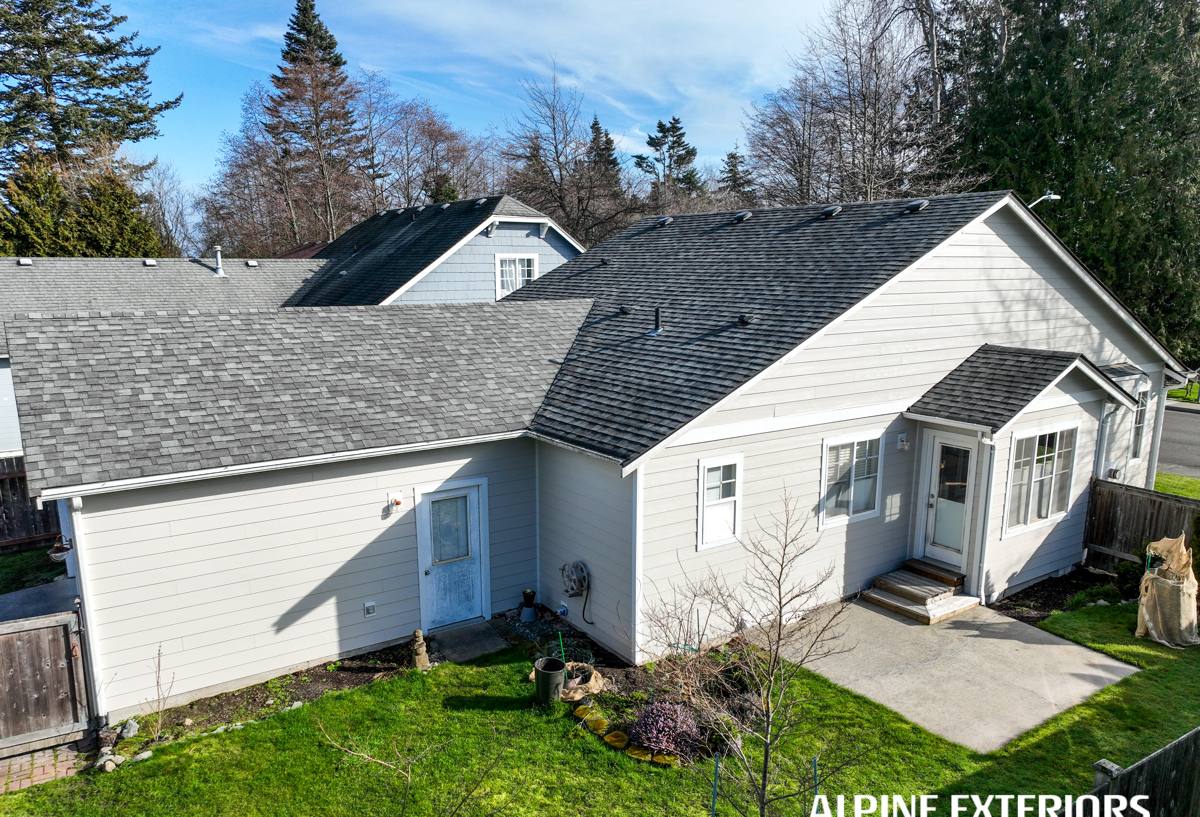
What the Semiahmoo Climate Actually Does to a House
Salt Air
Proximity to saltwater means airborne salt settles on every exterior surface — siding, trim, gutters, fasteners, even window frames. Over years, that salt exposure speeds up corrosion of anything metal that isn't properly rated for a marine environment, and it can degrade paint films and caulk faster than the same products would wear inland. Homes closer to the water's edge see this more aggressively than those set back, but the whole resort area gets more salt exposure than a typical Whatcom County lot.
Driving Rain and Wind
Open water exposure means wind isn't gentle here — it pushes rain horizontally into wall assemblies rather than letting it fall straight down and shed off. That matters enormously for siding performance. A product or installation detail that handles vertical rainfall fine can still let water intrude when rain is being driven sideways into seams, laps, and penetrations. Flashing details, caulking, and the water-resistive barrier behind the siding all carry more of the load in a wind-driven-rain environment like this one.
Moss and Prolonged Dampness
Whatcom County's marine climate already runs a long wet season, and Semiahmoo's exposure — combined with mature tree cover on many lots — keeps shaded and north-facing walls damp longer than sun-exposed sides. That's exactly the condition moss and algae need to establish. Once organic growth gets into a siding surface, it holds moisture against the substrate, which is a slow but real threat to anything that isn't dimensionally stable and rot-resistant.
Why We Standardized on James Hardie Fiber Cement
We install James Hardie fiber cement siding exclusively. We don't install vinyl, LP SmartSide, primed spruce, cedar, or other fiber cement brands like Cemplank or Allura. That's a deliberate standard, not a lack of options, and in a climate like Semiahmoo's the reasoning holds up especially well.
Fiber cement is cement, sand, and cellulose fibers — it doesn't absorb and swell the way wood-based siding products can, and it isn't a petroleum-based product that softens, warps, or becomes brittle with UV and temperature swings the way vinyl can over a long service life. It's also non-combustible, which matters more each year as wildfire smoke and ember exposure become a broader Pacific Northwest concern, even in a wet coastal county like Whatcom.
James Hardie also engineers regional product lines (their "HZ5" formulation is built for the Pacific Northwest's wet climate specifically), which is a meaningful difference from a generic fiber cement product not engineered for a specific moisture zone. And Hardie's ColorPlus factory-applied finish is baked on and warrantied against fading and peeling in a way field-applied paint jobs on wood or engineered wood siding generally are not — a real advantage in a spot where salt air and sun both work against a paint film.
What We Won't Install, and Why
| Product | Where it struggles in a Semiahmoo-type environment |
|---|---|
| Vinyl siding | Can warp, fade, or become brittle with sustained UV and temperature cycling; seams and panels are more vulnerable to wind-driven rain intrusion than a properly lapped fiber cement system |
| LP SmartSide (engineered wood) | Wood-based substrate is more moisture-sensitive at cut edges and fastener penetrations; requires diligent field caulking and paint maintenance to keep water out long-term |
| Primed spruce / cedar | Natural wood movement, rot risk, and repaint cycles are all amplified by sustained dampness and moss-friendly shade |
| Other fiber cement brands (Cemplank, Allura) | Not necessarily poor products, but we standardized on one system, one factory finish warranty, and one set of installation details we know cold — consistency reduces callback risk |
None of these are "bad" products in every setting. They're just products whose weak points line up unfavorably with exactly the conditions Semiahmoo Resort throws at a house every year — sustained moisture, salt, and wind.
How We Approach a Siding Job on the Peninsula
A siding installation out at Semiahmoo isn't the same job as one three miles inland, and we treat it that way.
- Water-resistive barrier and flashing first. The siding is the visible layer, but the drainage plane behind it does the real work of keeping wind-driven rain out of the wall assembly. We pay close attention to window and door flashing, kick-out flashing at roof-wall intersections, and proper laps in the weather barrier before a single piece of siding goes up.
- Fastener selection matters more here. In a salt-air environment, corrosion-resistant fasteners aren't optional — they're the difference between trim that stays tight for decades and streaking, staining, or loosening years ahead of schedule.
- Rainscreen and ventilation gaps where they make sense. Giving the back side of the siding a way to dry out, rather than sitting flush against a damp sheathing surface, matters more in a climate that doesn't offer many fully dry stretches.
- Caulk and sealant joints get real attention — not as an afterthought, but as a deliberate part of keeping wind-driven rain from finding its way behind trim and panel joints.
- Factory-finished color means less field painting to get wrong. ColorPlus siding arrives finished, so there's far less reliance on job-site paint application holding up against sun and salt for the next decade.
Roofing, Windows, and Decks Face the Same Exposure
Siding isn't the only part of a Semiahmoo home under pressure from this climate, and we handle the rest of the exterior envelope for exactly that reason. A roof out here deals with the same wind-driven rain and salt exposure — flashing details around chimneys, vents, and valleys need the same careful attention as siding flashing, and roofing materials and fasteners need to hold up to the same corrosive air. Windows facing the open water take a steady beating from both UV and salt spray, and window flashing integration with the siding is one of the most common places we find water intrusion problems on older homes when we're called out for an inspection. Decks exposed to driving rain and standing dampness need materials and fastening details that account for slower drying times than a sheltered inland deck would ever see.
Treating these as one connected exterior system — rather than four separate trades that don't talk to each other — is part of why we handle all four. A roof-to-wall flashing detail, a window-to-siding integration, and a deck ledger connection are all places where two trades' work meets, and that's exactly where problems show up if nobody owns the whole picture.
Cost Factors for a Semiahmoo Resort Exterior Project
Every home is different, and we don't quote sight unseen, but these are the real factors that move a project's scope and cost in this specific area:
| Factor | Why it matters here |
|---|---|
| Water-side exposure | Homes directly facing open water generally need more robust flashing and fastening details than homes set back or shielded by other structures |
| Existing siding condition | Moisture damage hidden behind old siding is more common in long-term coastal exposure and can add sheathing repair to the scope |
| Home size and complexity | Roofline complexity, number of window and door openings, and wall height all affect both material and labor |
| Access and staging | Some Semiahmoo lots have tighter access or landscaping considerations that affect equipment staging and timeline |
| Scope — siding only vs. full exterior | Bundling siding with roofing, window, or deck work in one project often reduces redundant setup and coordination costs versus separate projects over time |
Why a Local Crew Matters Out Here
Semiahmoo Resort is a distinct environment even within Whatcom County — different from Blaine's more sheltered residential streets, different from Bellingham, different from inland Ferndale. A crew that mostly works inland jobs and treats this as "just another siding project" is more likely to underestimate flashing detail, fastener spec, or drying-time considerations that a house on open water actually needs. We've built our installation approach around what this specific climate does to a house over years, not just what looks right on installation day.
That local knowledge also shows up in smaller ways — knowing which sides of a house need the most moss-prevention attention, understanding how the wind typically hits a lot depending on its orientation to the water, and recognizing early signs of salt-related wear before they become a bigger repair. It's the kind of judgment that only comes from doing this work in this specific place, repeatedly, over time.
A Practical Checklist Before You Commit to a Siding Contractor Out Here
- Ask what specific flashing details they use at windows, doors, and roof-wall intersections — vague answers are a red flag in a wind-driven-rain environment
- Ask what fastener type they use and whether it's rated for coastal/salt-air exposure
- Ask whether they've worked on other Semiahmoo or comparable open-water Whatcom County homes before
- Ask what siding material they install and why — and whether they've considered how it performs specifically in sustained coastal moisture
- Ask about rainscreen or drainage gap details behind the siding, not just the finished look
- Get the manufacturer warranty terms in writing, including whether it's transferable if you sell the home
Let's Talk About Your Home
If you own a home at Semiahmoo Resort and you're noticing paint failure, moss buildup, soft trim, or siding that just looks tired ahead of schedule, that's worth a second look before it becomes a bigger repair. We're happy to come out, take a real look at your siding, roof, windows, or deck, and give you an honest, no-pressure assessment — including whether James Hardie fiber cement makes sense for your specific home. Use the form below to request a free estimate.