 Semiahmoo
 Two Very Different Materials Wearing Similar Clothes
From the curb, James Hardie fiber cement and LP SmartSide engineered wood siding can look surprisingly alike — both come in lap and panel profiles, both take paint or factory color well, both are marketed as upgrades over vinyl. But the material underneath the surface is fundamentally different, and on a Semiahmoo property that difference matters more than the brochure photos suggest. This page walks through what each product actually is, how each behaves in Whatcom County's marine climate, and why our crews install only James Hardie.
What James Hardie Is Made Of
James Hardie siding is fiber cement: a mix of Portland cement, sand, and cellulose fibers, cured and formed into planks and panels. It's an inorganic, non-combustible material. It doesn't have wood grain to swell, wood sugars to feed mold, or resin to break down under UV. It's heavy, dense, and dimensionally stable once it's on the wall.
What LP SmartSide Is Made Of
LP SmartSide is an engineered wood product — strand board (similar in concept to OSB) treated with zinc borate for insect and fungal resistance, then coated with a resin-saturated overlay and primer. It's still wood at its core. That gives it a lighter weight and a warmer, more traditional look and feel, but it also means the base material is organic and will absorb moisture if the protective coatings are ever compromised.
How Each Holds Up in Semiahmoo's Climate
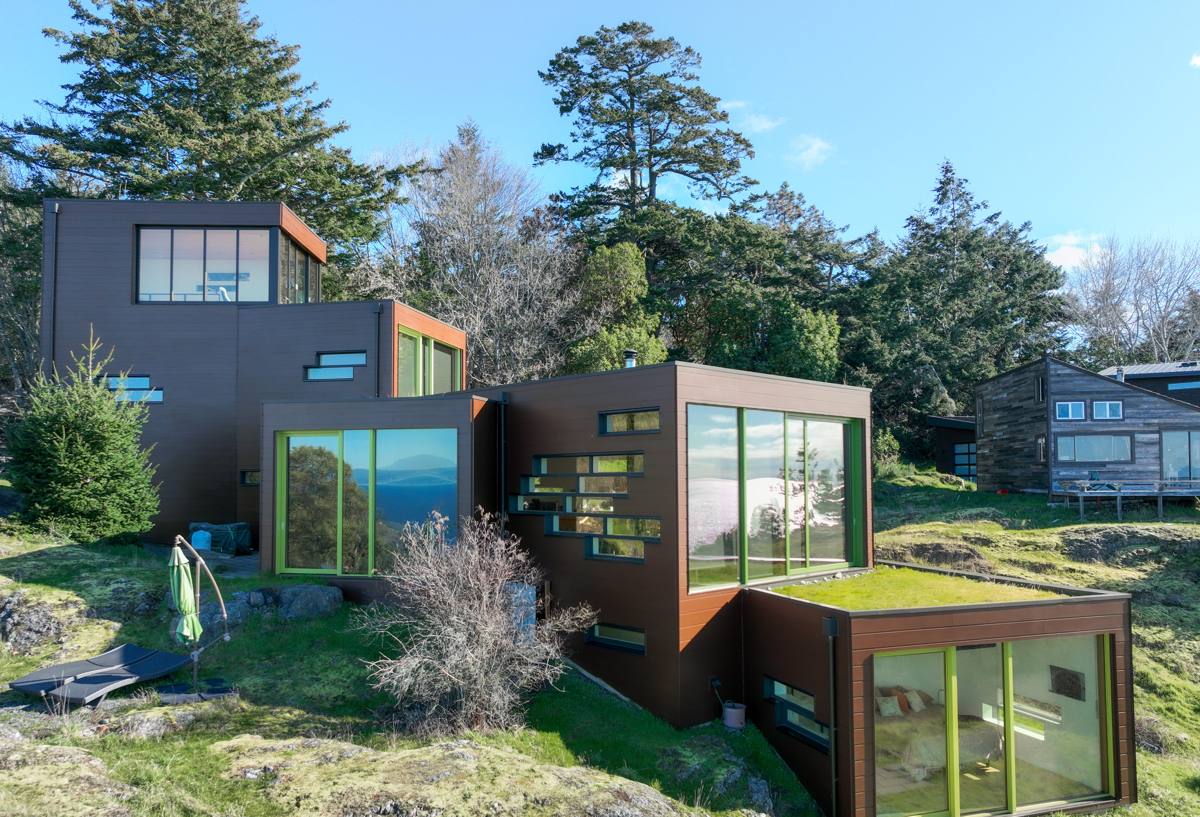
Semiahmoo sits right on the water, which means siding here deals with three things at once: salt-laden air off Semiahmoo Bay and Drayton Harbor, driving wind-blown rain for much of the year, and a long moss and algae season that keeps north-facing and shaded walls damp long after a storm passes. Any siding product will eventually get wet here. What matters is what happens after.
Moisture and Rot Resistance
Fiber cement doesn't rot. Water sitting against a Hardie plank doesn't feed anything — it just evaporates once conditions dry out. Engineered wood products like LP SmartSide are manufactured with borate treatment and resin overlays specifically to resist the moisture problems that plague untreated wood siding, and that engineering genuinely works when the product is installed correctly and the coatings stay intact. The catch is that the entire moisture defense lives in that outer layer. Once caulking fails at a seam, a fastener backs out, or a corner trim joint opens up — all things that happen over years of expansion and contraction — water can reach the wood substrate underneath, and that's where an organic material starts to lose the fight against a wet Whatcom County winter.
Salt Air and Coastal Exposure
Salt air accelerates corrosion on fasteners and trim, and it speeds up the breakdown of surface coatings generally. Fiber cement's mineral composition doesn't give salt exposure anything organic to work on. With engineered wood, the practical concern isn't the salt attacking the wood directly — it's that salt-laden moisture cycling on and off the surface stresses the factory coating faster than it would in a drier inland climate, which shortens the window before recoating or resealing becomes necessary.
Fire Resistance: A Real, Practical Difference
James Hardie siding is non-combustible — it's cement-based, not wood-based, and it doesn't contribute fuel to a fire. LP SmartSide, being an engineered wood product, is combustible, even with its treatments. For most Semiahmoo homeowners this isn't a wildfire-zone concern the way it is east of the Cascades, but it's still a real difference in the products, it affects some insurance conversations, and it's part of why fire-conscious builders across the Pacific Northwest have shifted toward fiber cement over the last two decades.
Finish and Long-Term Maintenance
ColorPlus Factory Finish
James Hardie's ColorPlus finish is baked on in a controlled factory environment through multiple coats, backed by its own dedicated finish warranty separate from the product warranty. It resists fading and chalking far longer than field-applied paint, and touch-up product is formulated to match. Homeowners are typically looking at a decade or more before repainting becomes a consideration, and even then it's often about refreshing color choice rather than fixing failure.
LP's Factory Primed and Prefinished Options
LP SmartSide is available primed or prefinished depending on the product line, and the factory coatings have improved significantly over the product's history. But because the substrate is wood, the coating is doing double duty — protecting appearance and protecting the wood from moisture intrusion at the same time. That raises the stakes of maintenance: staying ahead of caulk lines, touch-up paint, and coating wear isn't just cosmetic upkeep, it's part of keeping water out of the substrate.
Installation Sensitivity: Where Products Succeed or Fail
Both products are only as good as their installation, but they fail differently when installation is off. With fiber cement, the main risks are around cutting technique (silica dust management), fastener placement, and clearances at grade and roof lines. With engineered wood, those same details matter, but there's an added layer: every joint, corner, and butt seam needs to be properly caulked and sealed, because that seal is standing between the elements and an organic substrate. Skipped or degraded sealant is a bigger long-term liability on wood-based siding than on cement-based siding, which is one more reason installation crew experience and discipline matters as much as the product choice itself.
Warranty Comparison
Warranty structure is one of the clearest ways to compare the two products on paper. Read the fine print on any warranty — especially around what's prorated, what requires proof of maintenance, and what happens on a resale.
| Factor | James Hardie | LP SmartSide |
|---|---|---|
| Substrate | Fiber cement (non-combustible) | Engineered wood strand (combustible) |
| Product warranty | Long-term, non-prorated in most cases | Multi-year, often prorated after an initial period |
| Finish warranty | Separate ColorPlus finish warranty | Coating warranty tied to primary product warranty |
| Transferability | Transferable to new owners with conditions | Transferable with conditions, varies by line |
| Moisture failure mode | Does not rot; surface can weather | Substrate can rot if coating/seals fail |
Warranty terms change over time and by product line, so always confirm current details directly with the manufacturer before comparing bids — but the structural pattern above has held consistent for years and is a fair guide to what you're actually comparing.
Cost Considerations
LP SmartSide is generally the less expensive material up front, which is a real and understandable draw for a lot of homeowners. James Hardie typically costs more at installation. The honest way to think about that gap isn't just sticker price — it's price against expected maintenance frequency, recoat/reseal cycles, and how long the siding is likely to perform before major work is needed again. On a Semiahmoo home exposed to salt air and sustained wet weather, we've found that gap narrows considerably once you account for the maintenance a wood-based product asks for over 15-20 years.
Why We Standardized on James Hardie
We made a decision as a company to install James Hardie exclusively rather than offer a menu of siding materials. That's not because LP SmartSide is a poorly engineered product — it isn't, and plenty of homes around the country wear it well. It's because our climate here in Whatcom County is unusually demanding on siding: near-constant moisture, salt exposure, and a moss season that keeps walls damp for months at a stretch. Fiber cement's non-organic composition removes an entire category of long-term risk from that equation, and it lets us stand behind a single product system we know inside and out, install to spec every time, and back with confidence. That consistency is worth more to us — and we think to our customers — than offering a lower up-front price point on a product we'd have to caveat.
What to Compare When You're Getting Quotes
- Ask what substrate is actually behind the finish — cement, engineered wood, or something else
- Get the manufacturer's current written warranty, not a verbal summary, and read the maintenance requirements that keep it valid
- Ask how the crew details moisture-prone areas: roof-to-wall transitions, deck ledgers, window and door trim
- Ask about expected maintenance intervals — repainting, resealing, caulk inspection — and get it in writing if possible
- Confirm whether the finish is factory-applied or field-applied, and what that means for color consistency and longevity
- Ask how the product performs specifically in coastal, high-moisture climates like this one, not just in general marketing claims
If you're weighing siding options for a home in Semiahmoo, we're happy to walk your property, look at your exposure to wind, rain, and salt air, and give you a straight answer about what we'd install and why — no pressure, no sales script. Reach out for a free estimate using the form below.