 Semiahmoo
 Cherry Point's Exterior Climate Challenge
Cherry Point sits along the Salish Sea shoreline in Whatcom County, in the same stretch of coastline as Semiahmoo and Blaine. Homes out here don't deal with the same weather as a house twenty miles inland. Marine air carries salt and moisture onto every exposed surface, wind off the water drives rain sideways into wall assemblies, and the region's long, damp winters give moss and algae months at a time to take hold on north-facing walls and shaded rooflines. None of this is unusual for Whatcom County's coastline, but it means the exterior materials on a Cherry Point home have to work harder, and for longer stretches of the year, than materials on a home even a short drive inland.
We've worked on homes throughout the Semiahmoo area long enough to know which parts of a house show wear first out here, and why. This page covers what that climate actually does to siding, roofing, windows, and decks, and how our crew builds and maintains exteriors to hold up against it.
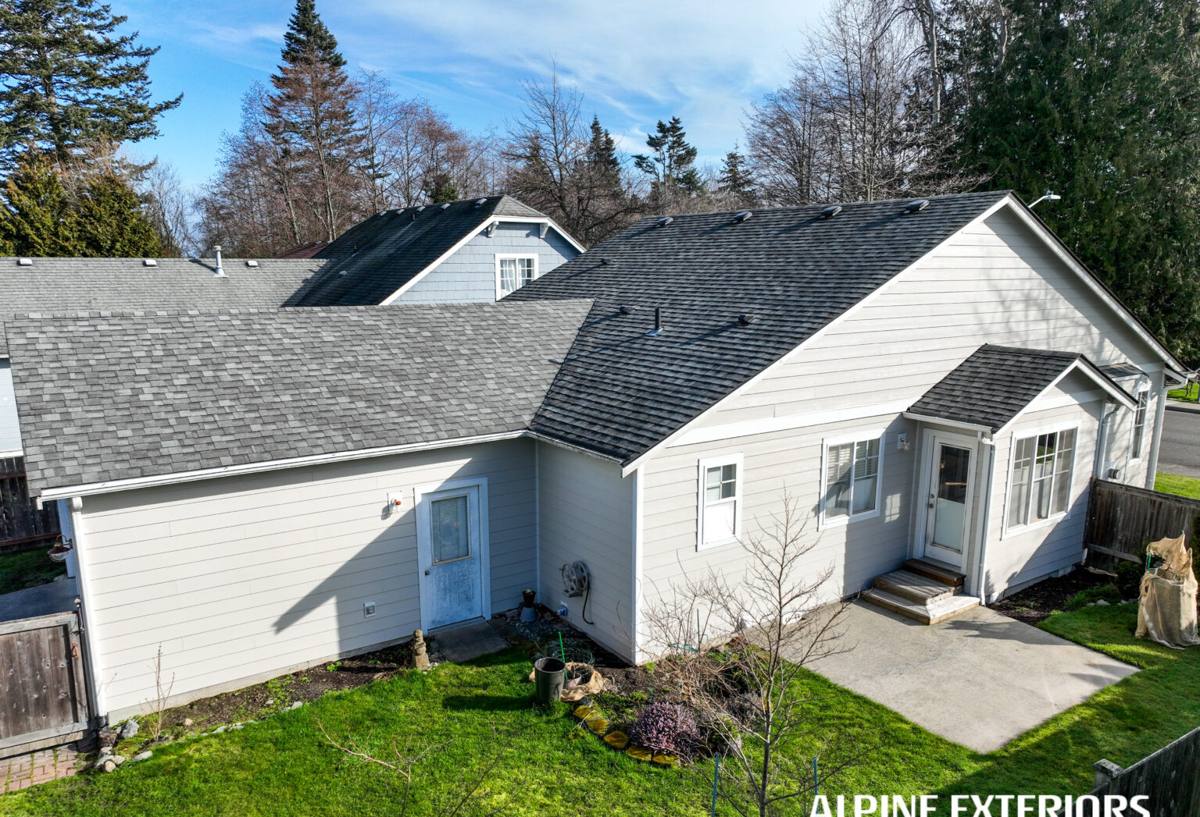
What Salt Air and Marine Exposure Actually Do
Corrosion of Fasteners and Trim
Airborne salt accelerates corrosion on anything metal — nail heads, flashing, hose bibs, light fixtures, even the fasteners holding siding panels in place. Left unaddressed over years, corroded fasteners can stain siding, loosen panels, and create small gaps where water gets behind the cladding. This is a bigger factor for homes closer to the water, but Cherry Point's exposure is enough that it should factor into material and fastener choices, not just paint color.
Wood Rot and Paint Failure
Wood-based siding and trim absorb moisture from salt-laden air and driving rain, and salt itself holds moisture against the surface longer than plain rainwater would. That combination — constant low-grade dampness plus salt — is exactly what accelerates rot in untreated or poorly sealed wood, and it's why paint on wood siding near the coast tends to blister and peel faster than the same paint job would inland.
Moss, Algae, and Prolonged Dampness
Whatcom County's marine climate means long stretches where surfaces simply don't fully dry out — mornings start damp, afternoons don't get hot enough or sunny enough to drive the moisture off, and shaded or north-facing walls can stay wet for days. Moss and algae thrive in exactly that environment. On some siding materials this is cosmetic. On others, trapped moisture underneath moss growth is what actually causes damage over time.
Why We Standardized on James Hardie Fiber Cement
We install James Hardie fiber cement siding exclusively — not vinyl, not LP SmartSide, not cedar, not primed spruce, not other fiber cement brands. That's a deliberate standard, not a default, and it matters more in a climate like Cherry Point's than it would somewhere dry and mild.
Fiber cement is non-combustible, dimensionally stable, and doesn't absorb and swell with moisture the way wood-based products do. James Hardie's HZ product lines are specifically engineered for different climate zones, and the Pacific Northwest falls into their HZ5 designation — formulated for regions with more moisture exposure and freeze-thaw cycling than the milder zones the company also serves. The factory-applied ColorPlus finish is baked on under controlled conditions and backed by its own finish warranty, which matters directly here: field-applied paint is one of the first things to fail under repeated salt-and-damp cycling, and a factory finish sidesteps that failure point entirely.
None of this means other products are junk — vinyl, LP SmartSide, and wood siding all have legitimate uses and plenty of homes wearing them look fine for years. Our position is narrower: for the specific combination of salt air, driving rain, and extended damp seasons that Cherry Point sees, we think fiber cement is the more defensible long-term choice, and we'd rather install one product well than offer several we're less confident in for this climate.
Material Comparison for a Marine, Moss-Prone Climate
| Material | Moisture Behavior | Maintenance in This Climate | Typical Finish Life |
|---|---|---|---|
| James Hardie fiber cement | Does not swell, warp, or rot from moisture absorption | Occasional cleaning; no repainting under normal use | Factory finish warranty measured in decades |
| Vinyl siding | Sheds water but can trap moisture behind panels; can warp under heat or impact | Low, but seams and J-channels can hold moisture and grime | Color can fade; not repaintable in the true sense |
| LP SmartSide (engineered wood) | Treated to resist moisture, but still wood-based and vulnerable at cut edges and unsealed joints | Requires diligent caulking and edge sealing near the coast | Field-applied or factory finish, shorter than fiber cement |
| Cedar / primed spruce | Absorbs moisture readily; most vulnerable to rot of the group | Regular repainting or staining, especially in shaded, damp areas | Repaint cycle typically every few years near the water |
This table reflects general material behavior, not a claim that any one product fails outright — it's about which trade-offs a homeowner is signing up for in a climate that stays damp longer than most.
Beyond Siding: The Full Exterior Envelope
Siding doesn't work in isolation, and on a coastal property like Cherry Point, the roof, windows, and any exterior decking all face the same salt air and moisture load. We handle all four as one crew because they interact — a roof leak can rot the wall sheathing behind good siding, a failed window seal can let moisture into the wall cavity no matter how good the cladding is, and a deck built with the wrong fastener hardware will corrode and stain long before the structure itself is a concern.
Roofing
Roof coverings and their flashing details take the brunt of driving rain and salt exposure. Proper flashing at penetrations and valleys, and materials rated for the moisture load, matter more here than in a drier climate.
Windows
Window flashing and seal integrity are what actually keep wind-driven rain out of the wall assembly. On coastal properties we pay particular attention to head flashing and sill pan details during installation, since that's where most water intrusion problems start.
Decks
Exterior decks near the water need corrosion-resistant fasteners and hardware as a baseline, not an upgrade. Standard hardware can show rust staining within a season or two in this air.
How Our Cherry Point Installations Work
A siding project starts with an on-site assessment — not just measuring walls, but checking for existing moisture damage, evaluating the current weather barrier, and looking at how the house is oriented relative to prevailing wind and rain. Homes with more exposed, water-facing walls sometimes need more attention to flashing and water-resistive barrier detailing before a single piece of siding goes up.
From there, installation follows manufacturer specifications closely: correct fastener type and placement, proper clearances at grade and roof lines, and sealed joints at penetrations. In a marine climate, installation quality is what separates siding that performs for decades from siding that develops problems in five years — the material only performs as well as the install behind it.
- On-site assessment of existing moisture damage and weather barrier condition
- Fastener and flashing detailing appropriate for salt air exposure
- Manufacturer-spec installation, not shortcuts on clearances or overlaps
- Attention to water-facing walls and shaded, moss-prone elevations
- A final walk-through before we consider the job finished
Why a Local Crew Matters Here
A contractor who works Whatcom County's coastline regularly has already seen how Cherry Point's specific combination of salt air, wind exposure, and prolonged dampness plays out on real houses over real years. That's different from general regional experience. It shows up in small decisions — which elevations get extra flashing attention, which fastener hardware holds up, how much ventilation a wall assembly needs — that aren't always obvious from a spec sheet alone. It also means someone who's easy to reach if a question comes up after the job is done, rather than a crew that worked the area once and moved on.
Ongoing Maintenance for Cherry Point Homes
Even the right material benefits from a little seasonal attention in this climate. None of the following is difficult or expensive, but skipping it for years is how small issues turn into bigger ones.
- Rinse siding periodically to clear salt residue and organic buildup, especially on water-facing walls
- Keep gutters clear so overflow doesn't run down siding and feed moss growth
- Trim back vegetation and tree cover that keeps walls shaded and damp longer than necessary
- Check caulking at trim, window, and door junctions annually for cracking or gaps
- Address any moss or algae growth before it spreads across a full wall section
- Have flashing and roof-to-wall transitions inspected periodically, since that's where hidden leaks usually start
Cost Factors to Expect
Pricing on any exterior project depends on the specifics of the house, but a few factors consistently move the number for Cherry Point properties:
| Factor | Why It Affects Cost |
|---|---|
| Extent of existing moisture damage | Rot or compromised sheathing found during tear-off has to be repaired before new siding goes on |
| Wall exposure and orientation | Water-facing and wind-exposed elevations may need additional flashing and detailing work |
| Home size and complexity | More corners, penetrations, and trim details mean more labor regardless of material |
| Scope — siding only vs. full envelope | Bundling roofing, windows, or decks with siding work can be more efficient than separate projects |
| Access and site conditions | Waterfront lots, slopes, or limited access can add setup time |
Vetting a Contractor for Coastal Whatcom County Work
Whatever contractor a Cherry Point homeowner chooses, a few basics are worth confirming before signing anything: active Washington contractor licensing, current liability insurance, and a clear, written scope of work that specifies materials, fastener types, and flashing details rather than vague line items. For coastal properties specifically, it's worth asking directly how a contractor's crew handles moisture detailing and fastener corrosion — the answer tells you a lot about whether they've actually worked this kind of exposure before.
If you're weighing a siding, roofing, window, or deck project for a Cherry Point property, we're glad to walk the house with you and talk through what your specific exposure and existing conditions call for. Reach out for a free, no-pressure estimate — there's no obligation, and it's a straightforward way to get a second, local opinion on your home's exterior.