 Semiahmoo
 Siding Built for Sumas's Weather
Sumas sits tucked against the Canadian border at the base of the Sumas Gap, in the Nooksack River valley in northern Whatcom County. Homes here deal with a different mix of weather than you'll find just a few miles away — long stretches of driving rain, valley humidity that hangs around longer than it does on higher ground, and a moss season that can stretch nine or ten months out of the year on north-facing walls and anywhere shaded by trees. When cold air funnels down out of the Fraser Valley in winter, it can push wind-driven rain and temperature swings against exterior walls in a way that finds every weak seam, gap, or piece of failing caulk. Add in the moist, salt-tinged marine air that moves through greater Whatcom County off the Salish Sea, and you've got an exterior environment that wears down the wrong siding material faster than most homeowners expect.
We've been doing exterior work in this part of Washington long enough to know which materials actually hold up here and which ones look fine for a few years before the problems start. That experience is why we made a deliberate choice about what we install.
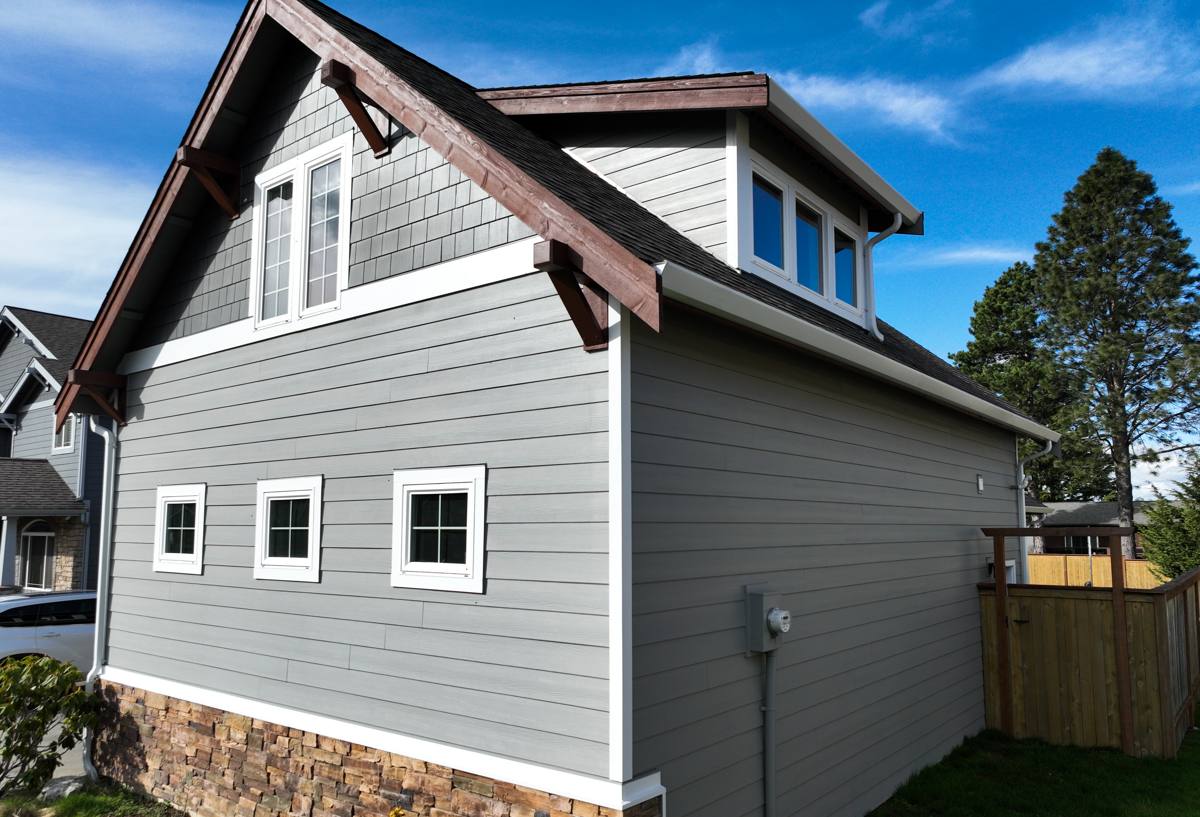
Why We Only Install James Hardie Fiber Cement Siding
We are a James Hardie-only siding contractor. We don't install vinyl, LP SmartSide, Cemplank, Allura, primed spruce, or cedar lap siding, and we're upfront with every Sumas homeowner about why. It comes down to what happens to a material after five, ten, and twenty years of Whatcom County weather, not just how it looks on installation day.
James Hardie fiber cement is non-combustible, doesn't feed moisture through wood fibers the way engineered wood products can, and holds a factory-applied ColorPlus finish that's built to handle years of UV exposure and driving rain without the touch-up painting cedar and primed wood eventually demand. Hardie's HZ5 product line is specifically engineered for the freeze-thaw cycles and moisture load of our climate zone, which matters a lot more in a valley community like Sumas than it does in a drier part of the state. We're not saying every other siding product is worthless — vinyl and engineered wood both have a place in the market. We're saying that after years of installing and repairing exteriors in this region, Hardie is the one product we're willing to put our name behind and back with a real installation warranty.
What This Means for Your Options
If you're set on vinyl siding or an engineered wood product, we're not the right contractor for your project, and we'll tell you that plainly instead of installing something we don't stand behind. If you want a siding system that's built for the long haul in a wet valley climate, that's exactly what we do all day.
Signs Your Sumas Home's Siding Is Struggling
Because of the moisture and moss exposure typical to this area, siding problems here tend to show up in predictable places. Walk your exterior and look for:
- Dark green or black staining on north- and shade-facing walls — early moss and algae growth
- Soft or spongy spots when you press on wood-based siding, especially near the bottom courses
- Paint that's peeling, bubbling, or chalking well before you'd expect a repaint
- Visible gaps or separation at seams, corners, and trim boards
- Warping, cupping, or bowing panels, particularly on the side of the house that takes the most wind-driven rain
- Rising energy bills that suggest moisture or air infiltration behind the siding
- Rot or staining around window and door trim where flashing may have failed
Any one of these on its own isn't necessarily an emergency. Several of them together, especially on an older cedar or engineered wood exterior, usually mean moisture has been getting behind the siding for a while.
How Our Siding Installation Process Works
Every Sumas project starts with an honest look at your existing exterior, not a sales pitch. Our process generally runs like this:
- On-site assessment. We inspect the current siding, sheathing, trim, and any visible moisture damage, and talk through what we find in plain language.
- Water management review. Given how much rain this valley sees, we pay close attention to house wrap, flashing details around windows and doors, and drainage planes — the parts of the job that don't show once the siding's up but determine how the house performs for the next thirty years.
- Tear-off and prep. Old siding comes off, sheathing gets inspected and repaired where needed, and any rot or hidden moisture damage gets addressed before anything new goes on.
- James Hardie installation to manufacturer spec. Correct fastening, clearances, and caulking joints matter as much as the product itself — a lot of Hardie warranty issues trace back to installation shortcuts, not the material.
- Final walkthrough. We go over the finished exterior with you before calling the job done.
James Hardie Product Lines We Install
Hardie makes several product lines, and picking the right one depends on the style of your home and how exposed it is to weather:
- HardiePlank lap siding — the most common choice, available in several textures and exposure widths, for a traditional lap-siding look
- HardiePanel vertical siding — often used for a board-and-batten look or on accent walls and gables
- HardieShingle siding — a shingle-style option for homes that want that look without cedar's maintenance demands
- HardieTrim boards — matched trim for a finished, consistent look around windows, corners, and fascia
All of it comes with Hardie's ColorPlus factory finish in a range of colors engineered to resist fading, or in a primed finish if you'd rather have it painted on-site to match specific trim or accent colors.
Cost Factors When Replacing Siding in Sumas
Every home is different, but the biggest cost drivers on siding projects in this area tend to be the same handful of factors:
| Factor | Why It Affects Cost |
|---|---|
| Home size and complexity | More square footage and more corners, gables, and dormers mean more labor and material |
| Tear-off and disposal | Removing old siding (especially damaged cedar or vinyl) adds labor and dump costs |
| Sheathing and framing repair | Hidden rot found once old siding comes off can add scope — this is common on older Sumas-area homes |
| Water management upgrades | Improved house wrap and flashing at windows/doors adds cost but pays off in a wet climate |
| Story height and access | Two-story walls and steep sites take longer and require more equipment |
| Product line and finish | Factory ColorPlus finish costs more upfront than primed board but eliminates early repainting |
We'll walk through which of these apply to your home during a free estimate, so you know what you're paying for and why, rather than getting a number with no explanation behind it.
More Than Siding: Roofing, Windows, and Decks
Siding doesn't work in isolation — it's one piece of the exterior envelope, and problems in one area often show up as damage in another. A roof that's shedding water improperly, windows with failed flashing, or a deck ledger board that's trapping moisture against the house can all undermine even a well-installed siding job. Because we also handle roofing, window replacement, and deck construction, we look at your home's exterior as a system rather than treating siding as a standalone item. If we spot an issue with your roofline or window flashing while we're up on a ladder, we'll tell you, whether or not it's part of the current job.
Choosing a Local Contractor: What to Look For
Whatcom County has no shortage of contractors who'll quote a siding job. A few things worth checking before you hire one for a Sumas project:
- Washington state contractor license and current insurance, verifiable through the state's licensing lookup
- A written scope of work that specifies the exact siding product, not just "Hardie" or "fiber cement" as a category
- Manufacturer training or certification for the specific product being installed
- A clear explanation of how they'll handle water management details — house wrap, flashing, and seam treatment
- Willingness to explain what's under your existing siding before assuming a straightforward install
- A real local presence, not a crew that's passing through the area for one job
Maintenance After Installation
One of the practical advantages of James Hardie in a valley climate like Sumas is how little upkeep it needs compared to wood-based siding. A rinse to knock off moss and pollen buildup once or twice a year, prompt attention to any caulking that starts to separate at trim joints, and periodic inspection after major windstorms are about all it takes. You won't be scraping and repainting on the schedule that cedar or primed spruce demands, which matters in an area that gets as much rain and moss pressure as this one does.
If you're weighing a siding project for your Sumas home — whether it's a full replacement, storm damage repair, or a new addition that needs matching exterior work — we're glad to come take a look and put together a free, no-pressure estimate based on what your home actually needs.