 Semiahmoo
 Why Moisture Is the Real Enemy of Your Siding
Homeowners tend to think about siding in terms of looks — color, style, curb appeal. But the thing that actually determines how long siding lasts, and how much it costs you down the road, is how it handles water. Sun fades paint. Wind can loosen a panel here and there. But moisture that gets trapped against wood, sheathing, or framing is what causes real structural damage: soft spots, swelling, mold, and eventually rot that spreads into the wall itself.
Most siding failures we get called out to inspect aren't failures of the siding material sitting on the surface — they're failures of what's happening behind it. By the time paint is bubbling or a board feels spongy under your hand, moisture has usually been doing quiet damage for a season or two already.
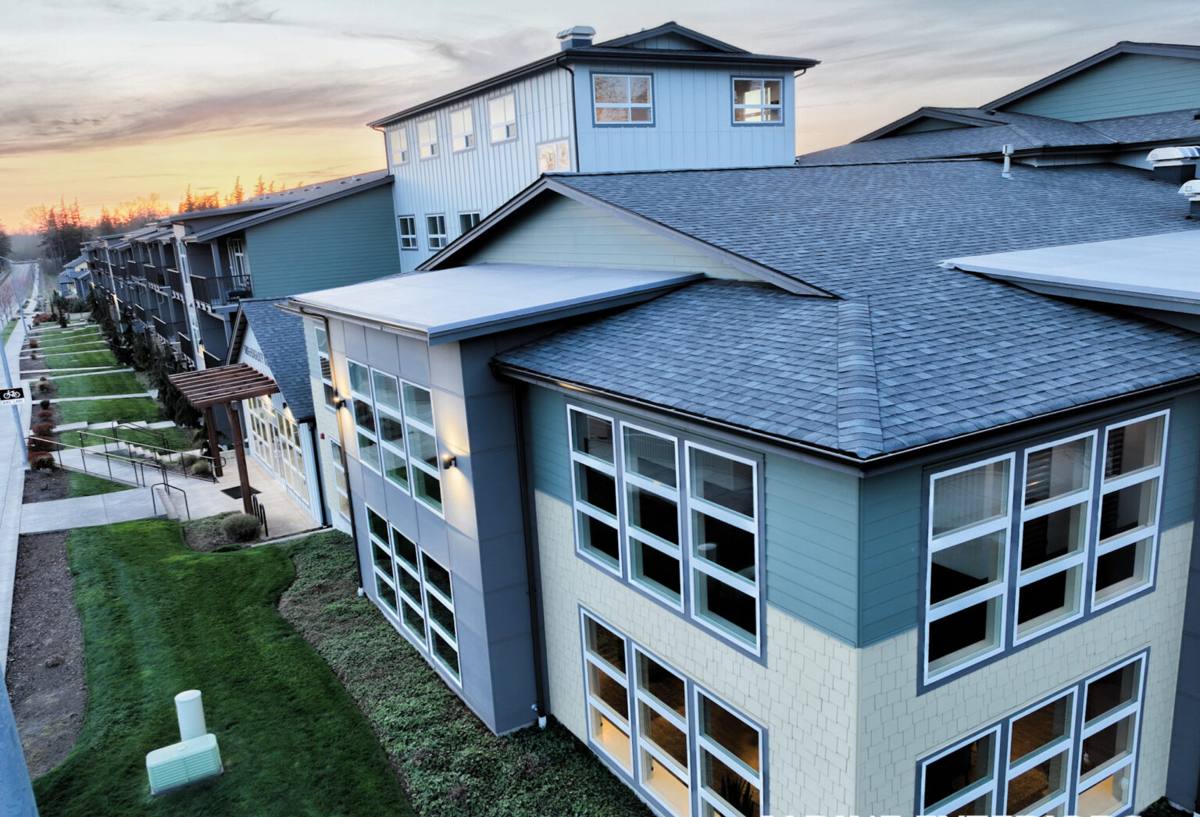
Semiahmoo's Climate: Salt Air, Driving Rain, and a Long Moss Season
Semiahmoo sits right on the water, and that location cuts both ways. The views are part of why people build here, but the same exposure that gives you a waterfront lot also gives your siding a harder job than it would have a few miles inland. Three things stack up against exterior surfaces here:
- Salt air: Airborne salt from Boundary Bay and Semiahmoo Bay settles on siding, trim, and fasteners. It doesn't rot wood by itself, but it accelerates corrosion of metal components and can work into micro-cracks in paint and caulk faster than dry inland air would.
- Driving rain: Whatcom County storms often come in sideways off the water, not straight down. Wind-driven rain finds horizontal seams, window trim, and butt joints that would stay dry in a calmer climate, pushing water into places siding systems aren't always designed to handle.
- A long moss season: Cool, wet conditions run from fall through spring here, and shaded north- and west-facing walls under tree cover barely get a chance to dry out between rain events. That's exactly the environment moss and algae need to take hold.
None of this means siding is doomed in Semiahmoo. It means the margin for error — in materials, installation, and maintenance — is thinner here than it is in a drier climate, and it's worth understanding why.
How Water Actually Gets Behind Siding
Siding isn't a waterproof shell — no siding system is, by design. Every product on the market is built to shed the majority of water while a secondary barrier (housewrap, building paper, and correct flashing) handles what gets past it. Problems start when that second layer is missing, damaged, or was never installed correctly in the first place. Common entry points we see:
- Missing or poorly lapped flashing above windows, doors, and trim boards
- Caulk joints that were never meant to be a primary water barrier, cracking and opening a path inward
- Siding installed tight to the ground or to a deck surface, wicking moisture up from grade
- Panel or board seams that weren't back-primed or sealed on cut edges
- No rainscreen gap, so siding sits flush against the water-resistive barrier with nowhere for incidental moisture to drain or dry
This is why two houses with the same siding brand can age completely differently — one installed to spec with proper flashing and drainage, the other cutting corners that don't show up until years later.
Materials Behave Differently When They Get Wet
Once water does get behind or into siding, what happens next depends heavily on what the siding is made of. This is the core of why we made the call to install only James Hardie fiber cement and stopped installing several other common products.
| Material | What happens when it gets and stays wet |
|---|---|
| Cedar / primed spruce | Organic wood fiber — absorbs moisture, swells, and is a food source for the fungi that cause rot. Untreated or exposed cut ends are especially vulnerable. |
| LP SmartSide (engineered wood) | Wood-strand core with a resin coating. Performs well when the factory-sealed edges stay intact, but a cut edge, nail hole, or coating breach that isn't properly sealed becomes a direct path for moisture into the strand core. |
| Vinyl | The material itself doesn't rot or absorb water, but it's not a moisture barrier — it's designed to let some water pass behind it and drain out the bottom. If that drainage path is blocked or the wall assembly behind it is compromised, vinyl can trap moisture against the sheathing without showing any sign of a problem on the surface. |
| James Hardie fiber cement | Cement, sand, and cellulose fiber — non-organic, so it doesn't feed rot or mold the way wood products can. Factory-applied ColorPlus finish resists moisture intrusion at the surface, and the HZ5 product line is specifically formulated for wet, moderate climates like ours. |
The point here isn't that wood siding or engineered wood products are automatically going to fail — plenty perform fine for years with diligent maintenance. It's that they demand more ongoing attention (repainting, caulk inspection, edge sealing) in a climate that gives you less of a dry-out window than most. That's a real cost, even if it's not a bill you get in the mail.
Moss, Algae, and the North-Facing Wall Problem
If you've owned a home in Whatcom County for more than a season, you've seen moss creeping onto a roof or a shaded wall. Moss and algae aren't just cosmetic — where they colonize, they hold moisture against the surface underneath far longer than an exposed, sun-drying wall would. On wood-based siding, that sustained dampness is exactly the condition that lets rot get started at seams and fastener points.
North-facing walls, areas under tree canopy, and sections of the house that don't get much wind or afternoon sun are the highest-risk spots. If you notice green or black streaking concentrated in one area of the house rather than spread evenly, that's usually telling you something about drainage or sun exposure in that specific zone — worth a closer look rather than just a pressure wash and moving on.
Salt Air and Metal: The Coastal Corrosion Factor
The other piece of Semiahmoo's exposure that's easy to overlook is what salt air does to fasteners, flashing, and trim hardware. Standard galvanized nails and untreated metal flashing can corrode faster near the water than they would a few miles inland. Once a fastener starts rusting, it can streak the siding around it, weaken its hold, and eventually create a small gap right where you don't want one.
This is a detail that matters more in material selection and installation than most homeowners realize — using corrosion-resistant fasteners and properly coated flashing on a waterfront or near-waterfront property isn't an upsell, it's matching the hardware to the actual environment the house sits in.
Signs of Trouble: A Homeowner's Inspection Checklist
You don't need a ladder or special tools to catch most moisture problems early. A walk around the house twice a year — once after the wettest stretch of winter, once in late summer — covers most of it. Look for:
- Paint that's bubbling, peeling, or alligatoring, especially near seams and trim
- Boards or panels that feel soft, spongy, or flex when you press on them
- Dark staining or streaking running down from seams, nail heads, or flashing
- Visible gaps where caulk has cracked or pulled away from joints
- Moss or algae buildup concentrated on shaded or north-facing sections
- A musty smell in an interior room along an exterior wall
- Warping, buckling, or separation at butt joints and corner boards
- Siding sitting directly on soil, mulch, or a deck surface with no visible gap
Any one of these on its own isn't necessarily an emergency, but they're worth a professional look rather than waiting to see if it gets worse — moisture damage almost never resolves itself, and it's cheaper to address at the "soft spot" stage than after it's spread into framing.
Repair, Recoat, or Replace?
Not every moisture issue means new siding. A localized failure — one bad seam, one section behind a downspout that was never flashed right — can often be repaired without touching the rest of the house. Recoating or repainting can extend the life of sound wood or engineered wood siding if the substrate underneath is still solid. The decision point is usually: is the damage isolated, or is it a pattern showing up in multiple places, which usually points to a systemic issue with the original installation or the material itself reaching the end of what it can handle in this climate.
When we're called out to look at siding that's failing in multiple spots, especially on an older wood or engineered wood installation, replacement with a moisture-resistant, non-organic material is usually the more honest long-term answer than another round of patching and repainting.
What Correct Installation Looks Like, Regardless of Material
Even the most moisture-resistant siding on the market will fail early if it's installed wrong. The details that actually keep water out matter more than the brand name on the product:
- Housewrap or building paper installed and lapped correctly, with no gaps at seams
- Flashing above every window, door, and horizontal trim board, properly integrated with the water-resistive barrier
- A rainscreen gap so any incidental moisture behind the siding can drain and the wall assembly can dry
- Correct clearance between the bottom of the siding and grade, decks, and roof lines
- Fasteners and hardware matched to a coastal environment, not just whatever's standard inland
- Caulk used only where the manufacturer specifies it — not as a substitute for proper flashing
This is a big part of why we standardized on James Hardie for every job: it lets us pair a material engineered for wet climates with a consistent, spec-correct installation process, rather than juggling different moisture-management rules for different products.
If you're seeing any of the warning signs above, or you'd just like an honest read on how your siding is holding up against Semiahmoo's salt air and rain, we're happy to take a look. Reach out for a free, no-pressure estimate — no obligation, just a straight answer about what you're dealing with.