 Semiahmoo
 Roofing on a Point Roberts Home Is Its Own Problem
Point Roberts sits out on its own peninsula at the bottom of the Semiahmoo/Boundary Bay area, surrounded by water on three sides. That location is part of what makes it a great place to live, and it's also exactly why roofs here take more punishment than roofs a few miles inland. Salt-laden air off the water, driving rain that comes in sideways during winter storms, and a wet season that stretches for months all work on a roof at the same time, year after year. A roofing system that's fine in a drier, more sheltered part of Whatcom County can fall short here.
Metal roofing, done correctly, holds up well against all three of those pressures. Done poorly — wrong fastener metal, wrong panel system, skipped flashing details — it can fail faster than the asphalt shingles it replaced. This page is about what a metal roof actually needs to succeed on a Point Roberts home, and what separates a correct installation from one that just looks right on install day.
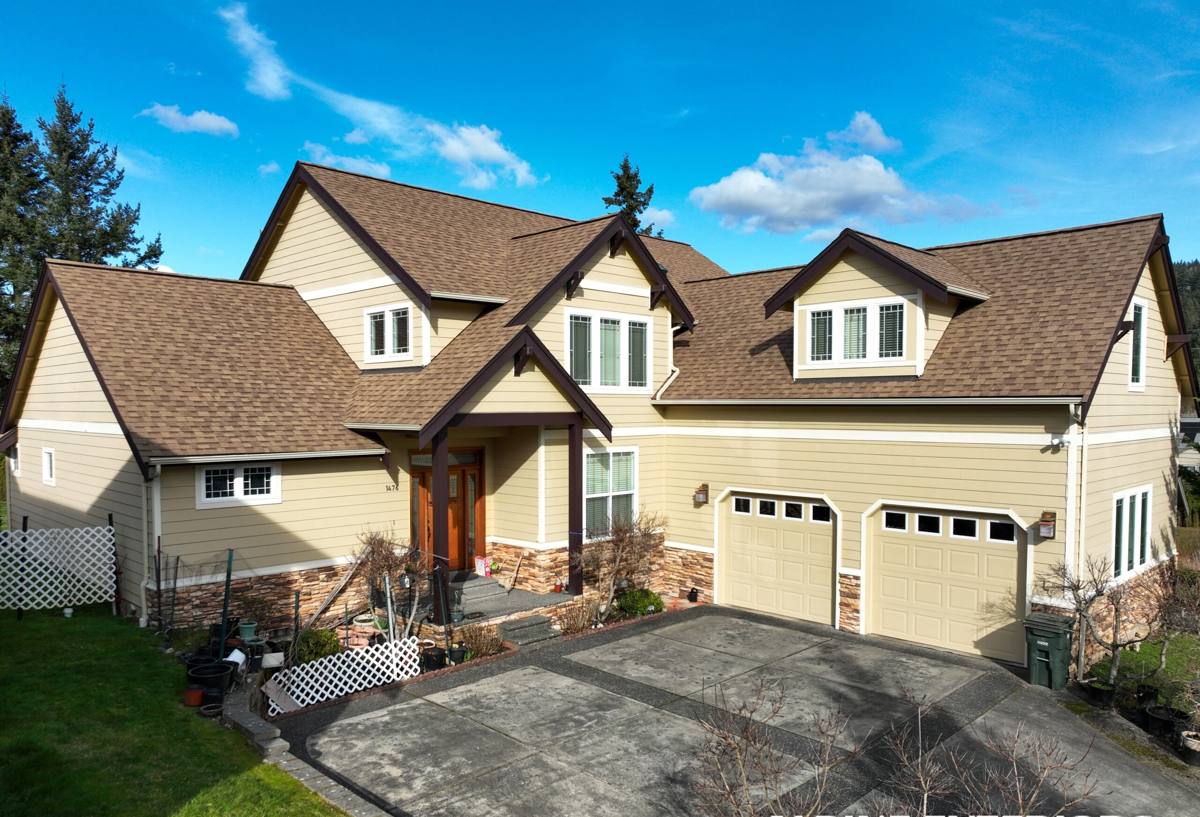
What Salt Air Actually Does to a Metal Roof
Airborne salt is corrosive, and it doesn't need to be a stiff wind off the bay to matter — a steady, low-level exposure over years adds up. On a metal roof, the two places this shows up first are the fasteners and any point where two different metals touch.
Fastener and Metal Compatibility
When a fastener is a different metal than the panel it's driven into, moisture creates a small electrical reaction between the two (galvanic corrosion), and the less noble metal degrades — sometimes just around the fastener, sometimes enough to loosen it and open a leak path. Near the water, this isn't a minor detail; it's one of the most common reasons a metal roof develops rust streaks or loose panels years before it should.
Coatings Matter More Here Than Inland
The paint or coating system on a metal panel is what actually stands between the metal and salt-laden moisture. Coatings vary in how well they resist chalking, fading, and pinholing under constant salt exposure. On a coastal job we pay attention to coating quality the same way we pay attention to the metal gauge — a heavier panel with a weak coating can underperform a properly coated one.
Driving Rain Means the Details Carry the Job
Whatcom County storms don't always drop rain straight down. Wind-driven rain off the water can push moisture sideways and upward under laps, around penetrations, and along ridges — spots that a calm-weather installation might get away with cutting corners on, but a real coastal storm will find immediately.
Where Wind-Driven Rain Gets In
- Ridge and hip caps that aren't properly closed or vented against wind-driven moisture
- Valleys where two roof planes meet and water volume concentrates
- Panel end laps and side laps that are under-lapped for the local wind exposure
- Flashing around chimneys, vents, and skylights that relies on caulk instead of proper metal detailing
- Underlayment gaps or seams left unsealed beneath the panels themselves
A correct installation treats underlayment as the real waterproofing layer and the metal panels as the primary defense on top of it — not the other way around. If the underlayment and flashing details are right, the roof stays dry even if wind-driven rain gets past the surface panels temporarily.
The Long Moss Season and Why It Matters
Western Whatcom County's wet season runs long, and constant moisture combined with shade from trees is exactly what moss and lichen need to take hold. On an asphalt shingle roof, moss works its way under the shingle edges, holds moisture against the roof deck, and gradually lifts and degrades the shingles from underneath. It's one of the most common causes of premature roof failure in this part of the state.
Metal roofing has a real, practical advantage here: its smooth, hard surface and steeper effective shed rate give moss and lichen far less to grip onto compared with a textured shingle surface. That doesn't mean a metal roof is immune — moss and organic debris can still build up in valleys, behind chimneys, or anywhere debris collects and stays damp — but it dramatically reduces the moss problem compared to shingles on the same house.
What Still Needs Attention on a Metal Roof
- Keeping gutters and valleys clear of needles and leaf debris that trap moisture against the panel
- Trimming back overhanging branches that keep sections of roof shaded and damp
- Checking that roof slope and panel layout don't create low spots where debris and water can pool
Choosing the Right Metal Roofing System
Not all metal roofing is the same product wearing different colors. The two main categories homeowners choose between are standing seam and exposed-fastener panels, and the right one depends on budget, roof pitch, and how long you want to go before any maintenance is needed.
| Factor | Standing Seam | Exposed Fastener |
|---|---|---|
| Fasteners | Hidden under interlocking seams — no exposed screws to maintain | Visible screws through the panel face, sealed with washers |
| Coastal durability | Fewer penetration points for moisture; strong long-term choice near salt air | Can perform well but exposed fasteners need periodic inspection as gaskets age |
| Upfront cost | Higher material and labor cost | More budget-friendly upfront |
| Maintenance | Minimal once installed correctly | Occasional fastener/gasket check-ups over the roof's life |
| Best fit | Long-term coastal homes, homeowners who want the lowest-maintenance option | Budget-conscious projects, secondary structures, shorter ownership horizons |
We'll walk through both options honestly during an estimate rather than steering every job toward the more expensive system — for some outbuildings and shorter-term ownership situations, exposed-fastener panels are a perfectly reasonable choice.
What a Correct Installation Actually Involves
A metal roof is only as good as what's underneath it and how the details are handled. On a Point Roberts job, our process focuses on the parts of the job that don't show up in a quick visual inspection later but determine whether the roof lasts.
Our Process
- On-site inspection of the existing roof deck, flashing points, and any moisture or moss damage already present
- Confirming the right panel system, gauge, and coating for the home's exposure and budget
- Removing old roofing and inspecting/repairing the deck before anything new goes down — a metal roof over a compromised deck is a problem waiting to surface
- Installing a full underlayment system suited to wind-driven rain conditions, not just a minimum-code layer
- Installing panels with fastener and flashing hardware matched to the panel metal to avoid galvanic corrosion
- Detailing every ridge, valley, and penetration by hand rather than relying on sealant to make up for a rushed cut
- Final walk-through covering gutter tie-ins and any maintenance points specific to the home's layout
Why a Local Semiahmoo-Based Crew Matters Here
Point Roberts is geographically part of Whatcom County but physically cut off from the rest of the mainland U.S. — reaching it by road means crossing an international border. That's a minor inconvenience for a homeowner but a real logistical factor for a roofing crew: material deliveries, equipment, and scheduling all have to account for it, and a crew that doesn't regularly work the area can end up quoting extra costs or losing a day to something a locally based crew already has a routine for.
A crew that works Semiahmoo and the surrounding coastline regularly also has a practical feel for how the local climate actually behaves on a roof — which panel systems have held up, where moss tends to build up fastest, and which flashing details matter most given the wind and rain patterns specific to this stretch of coast. That's not something a crew based hours away, working the area once, picks up on the first visit.
What Drives the Cost of a Metal Roof Here
| Cost Factor | Why It Matters |
|---|---|
| Panel system (standing seam vs. exposed fastener) | Standing seam costs more upfront but needs less long-term maintenance |
| Roof size and complexity | More valleys, penetrations, and roof planes mean more flashing labor |
| Existing deck condition | Rot or moisture damage found during tear-off adds repair cost before installation |
| Coating/finish quality | Higher-grade coatings cost more but resist salt exposure and fading longer |
| Access and logistics | Steep roofs or limited site access add labor and equipment time |
Metal roofing generally costs more upfront than asphalt shingles, and pricing on a specific home depends on the factors above — we'd rather walk your roof and give you real numbers than quote a range that doesn't mean much for your situation.
Maintenance and What to Expect Long-Term
A correctly installed metal roof on a Point Roberts home is genuinely low-maintenance compared to shingles, but "low-maintenance" isn't "no-maintenance." Plan on:
- An annual visual check of gutters, valleys, and any spots where debris collects
- Clearing overhanging branches that keep sections of the roof shaded and damp
- Checking exposed fasteners (if that's the system you have) every few years as gaskets age
- A quick look after major windstorms for any lifted flashing or debris impact
Beyond that, a well-installed metal roof in this climate is built to go a long time between any real work being needed — which is the whole point of paying more for it upfront.
If you're weighing a metal roof for a Point Roberts home, we're happy to walk the roof with you, talk through what your specific exposure and roofline actually need, and give you a straightforward, no-pressure estimate — just fill out the form below.