 Semiahmoo
 Point Roberts' Siding Problem Isn't Like Most of the Country's
Point Roberts sits at the tip of a peninsula that hangs off the rest of Whatcom County, surrounded on three sides by saltwater and cut off by land from the rest of Washington State. That geography is charming to live in and hard on exterior building materials. Siding here takes a steady diet of salt-laden air off Boundary Bay and the Strait of Georgia, long stretches of driving rain that comes in sideways off the water, and a moss and algae season that can run most of the year in the shaded, damp spots on a house. None of that is unique to Point Roberts by itself, but the combination — salt exposure plus persistent moisture plus limited sun on north and west walls — accelerates problems that a drier, inland Whatcom County home might not see for another decade.
Siding repair in this environment isn't just about patching a hole or replacing a cracked board. It's about understanding why that section failed in the first place, because if the underlying moisture path or fastening issue isn't corrected, whatever goes back up will fail again on the same timeline.
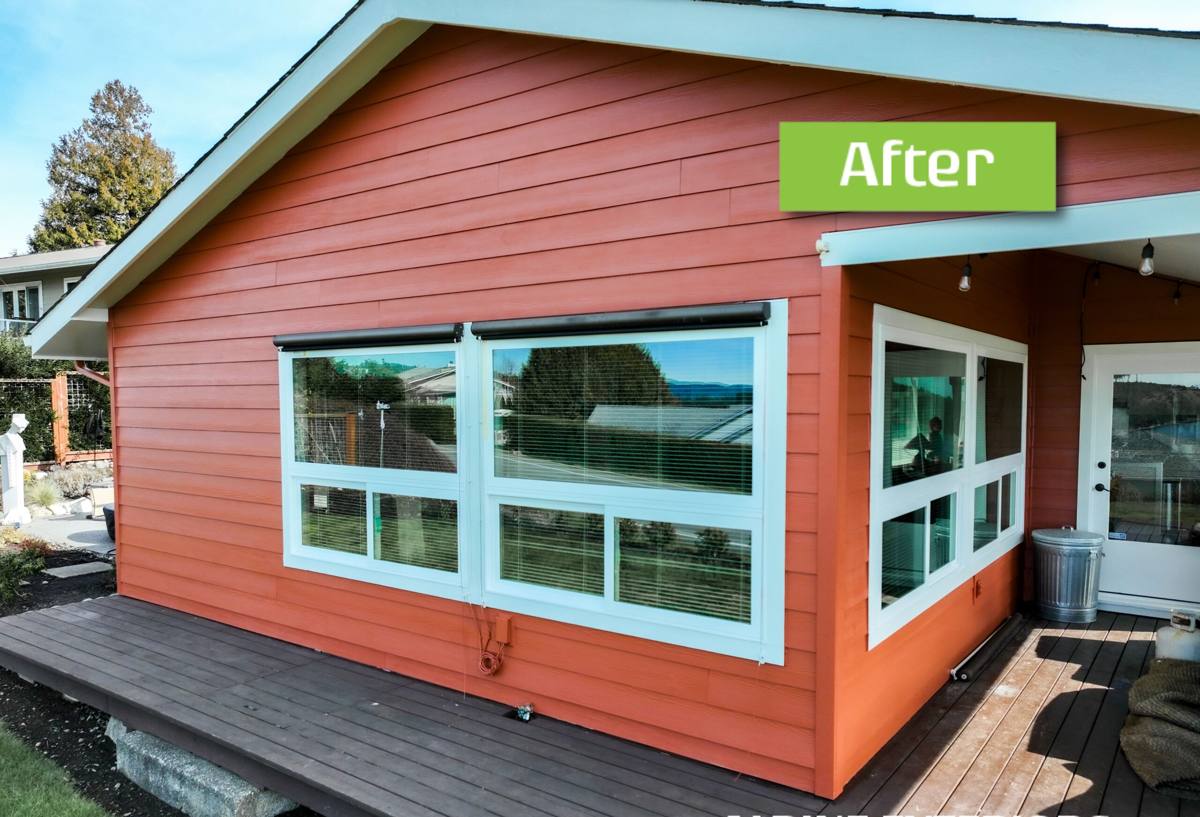
Signs Point Roberts Homes Actually Need Siding Repair
Homeowners often wait until damage is visible from the street, but the earlier signs usually show up at seams, corners, and low sections closest to grade or landscaping — the places that hold moisture longest.
- Soft or spongy spots when you press on the siding near the bottom courses or under windows
- Persistent green or black staining that comes back within weeks of cleaning, especially on north- and west-facing walls
- Visible gaps, buckling, or separation at butt joints and corner boards
- Paint or finish that's peeling, chalking, or bubbling in patches rather than evenly across the wall
- Swelling or delamination at the bottom edge of individual boards or panels
- Interior signs — a musty smell, a damp patch on drywall, or peeling interior paint on an exterior wall
Any one of these can be a localized, inexpensive fix. Several of them together, especially combined with soft sheathing underneath, usually mean water has been getting behind the siding for a while and the repair needs to address the water barrier, not just the visible board.
What a Correct Repair Actually Involves
Diagnosis before demolition
The first step on any repair call is figuring out how water is getting in, not just where it's showing up. Siding damage often shows up several feet from the actual entry point — water running down behind the panel from a failed flashing detail, a caulk joint that's opened up, or a fastener that was driven wrong. Cutting out and replacing the visibly damaged board without tracing the water path just buys a year or two before the same spot fails again.
Checking what's behind the siding
Once a section is opened up, the sheathing, house wrap or building paper, and flashing underneath get inspected. In a salt-air, high-rainfall environment like Point Roberts, we're looking specifically for soft or delaminated sheathing, torn or improperly lapped weather-resistive barrier, and corrosion on fasteners or metal flashing. Any of that needs to be corrected before new siding goes back on — otherwise the repair is cosmetic, not structural.
Matching and integrating the repair
A repair that looks obviously patched is a bad repair even if it's watertight. Matching board width, reveal, and finish — or making a deliberate, clean transition where an exact match isn't available — is part of doing the job right, not an afterthought.
Repair or Replace? How We Help You Decide
| Factor | Leans toward repair | Leans toward replacement |
|---|---|---|
| Extent of damage | Isolated to one or two walls or sections | Present on most elevations, especially south/west and north walls both |
| Sheathing condition | Solid, dry sheathing found once siding is opened | Soft, delaminated, or stained sheathing in multiple spots |
| Age of existing siding | Mid-life, otherwise sound material | At or past its expected service life for the material type |
| Material match | Discontinued or mismatched material is a minor issue | No way to match existing material without a visibly patchy result |
| Repeat failures | First time this section has needed attention | Same area has been repaired more than once |
We'll tell you honestly which side of that table your home falls on. A lot of Point Roberts repair calls really are repairs — a section of trim, a few damaged boards, a corner that took water. But when the underlying moisture problem is widespread, patching it section by section usually costs more over a few years than doing a proper replacement of the affected elevation once.
Why We Use James Hardie Fiber Cement for Any Section We Replace
When a repair requires new material — whether that's a few boards or a full wall — we install James Hardie fiber cement, and only James Hardie. It's the one product we've standardized on across every job we do, and there's a specific reason it matters in a place like Point Roberts: fiber cement doesn't absorb water and swell the way wood-based products can, and it doesn't rely on a factory or field-applied coating that has to hold up to salt spray the way vinyl's color layer does. Hardie's engineered HZ5 product line is built specifically for climates with heavy moisture exposure, and the ColorPlus factory finish is baked on under controlled conditions rather than sprayed on site, which matters when the finish is going to spend years fighting salt air and algae growth.
We won't tell you a repair patch has to be Hardie if a smaller cosmetic fix on existing material makes more sense — that's a waste of your money. But once we're opening up a wall and putting new siding on it, we're not going to install something we don't stand behind for this climate, and that's fiber cement, not vinyl, not primed wood, not an engineered wood panel product.
Our Point Roberts Repair Process
- Inspection and diagnosis — We look at the visible damage and probe the surrounding area to find how far the problem actually extends, not just what's obvious.
- Honest scope and estimate — You get a clear explanation of what we found, what needs to happen, and a written estimate before any work starts.
- Opening the affected area — Damaged siding comes off carefully to protect adjacent material that's staying.
- Correcting the water path — Flashing, house wrap, and fastening issues get fixed before anything new goes back on. This is the step that actually stops the problem from recurring.
- Installing and finishing new material — New siding is cut, fastened, and finished to manufacturer spec, with attention to matching reveal and trim lines with the surrounding wall.
- Final walkthrough — We go over the completed work with you before we consider the job done.
Why It Matters That We Already Work in Point Roberts
Point Roberts is a practical exception to how most contractors schedule work in Whatcom County. It's a U.S. exclave reachable by land only by driving through Canada, which means material deliveries, crew scheduling, and even simple things like a same-day follow-up visit take real planning that a crew unfamiliar with the area doesn't budget for. A contractor who treats Point Roberts as an occasional add-on to their regular route tends to either quote it high to cover the hassle, or under-plan it and leave a job half-finished when the logistics get complicated.
Because we already work this area regularly, materials get ordered and staged with the border crossing accounted for, crew time is scheduled realistically, and we're not learning the local quirks — moisture patterns by elevation, which walls take the worst of the weather, how HOA or community guidelines here tend to run — on your job. That's the practical value of hiring a crew that already knows the peninsula rather than one commuting in for a one-off repair.
What Point Roberts Siding Repair Typically Costs
| Cost factor | Why it matters here |
|---|---|
| Extent of hidden damage | Sheathing or framing repair behind the siding adds cost beyond the visible board replacement |
| Wall exposure | North- and west-facing walls exposed to driving rain and salt spray often need more thorough moisture correction |
| Material match | Matching existing siding profile and finish, or transitioning cleanly to new material, affects labor time |
| Access and scheduling | Point Roberts logistics (delivery timing, crew scheduling) are already built into how we plan a job, which keeps this predictable rather than a surprise add-on |
| Height and complexity | Second-story sections, tight eaves, or complicated trim details take longer to do correctly |
We won't quote a number without seeing the actual damage — anyone who does is either guessing or padding the estimate. What we can tell you is that a straightforward, localized repair with sound sheathing underneath is a modest job, while a repair that turns up widespread moisture damage behind the siding is a different scope entirely, and we'll walk you through exactly why before we ask you to commit to anything.
Between Repairs: Maintenance That Actually Helps in This Climate
- Rinse siding periodically to reduce salt buildup, especially on walls facing the water
- Keep gutters clear so water isn't sheeting down the face of the siding
- Trim back vegetation and landscaping that keeps a wall shaded and damp
- Address peeling paint or caulk gaps early, before water gets behind the board
- Have visible moss or algae treated rather than just power-washed, since power-washing alone can force water behind the siding if done incorrectly
- Walk the exterior once or twice a year and press-test any section that looks discolored or swollen
None of this prevents every repair — Point Roberts' climate is what it is — but it stretches the time between them and keeps small issues from turning into sheathing replacement.
If you're seeing staining, soft spots, or gaps in your siding, we're glad to come take a look. A free, no-pressure estimate gets you an honest read on whether you're looking at a simple repair or something bigger, with no obligation either way — just use the form below to get started.