 Semiahmoo
 Roofing in an Exclave: Why Point Roberts Takes a Different Approach
Point Roberts sits at the tip of a peninsula that's cut off from the rest of Whatcom County by land — you either come in by water or drive up through Canada to reach it. That geography matters for roofing more than most homeowners realize. Every house on this small point faces wind and salt spray off the water from more than one direction, since the point has open water on multiple sides rather than the single prevailing exposure a mainland lot usually deals with. Every crew that works here also has to plan material deliveries and scheduling around that same isolation. An asphalt shingle roof installed the way it would be in an inland neighborhood doesn't hold up the same way out here, and a roofer who's never worked the point tends to learn that lesson on your roof, not on paper.
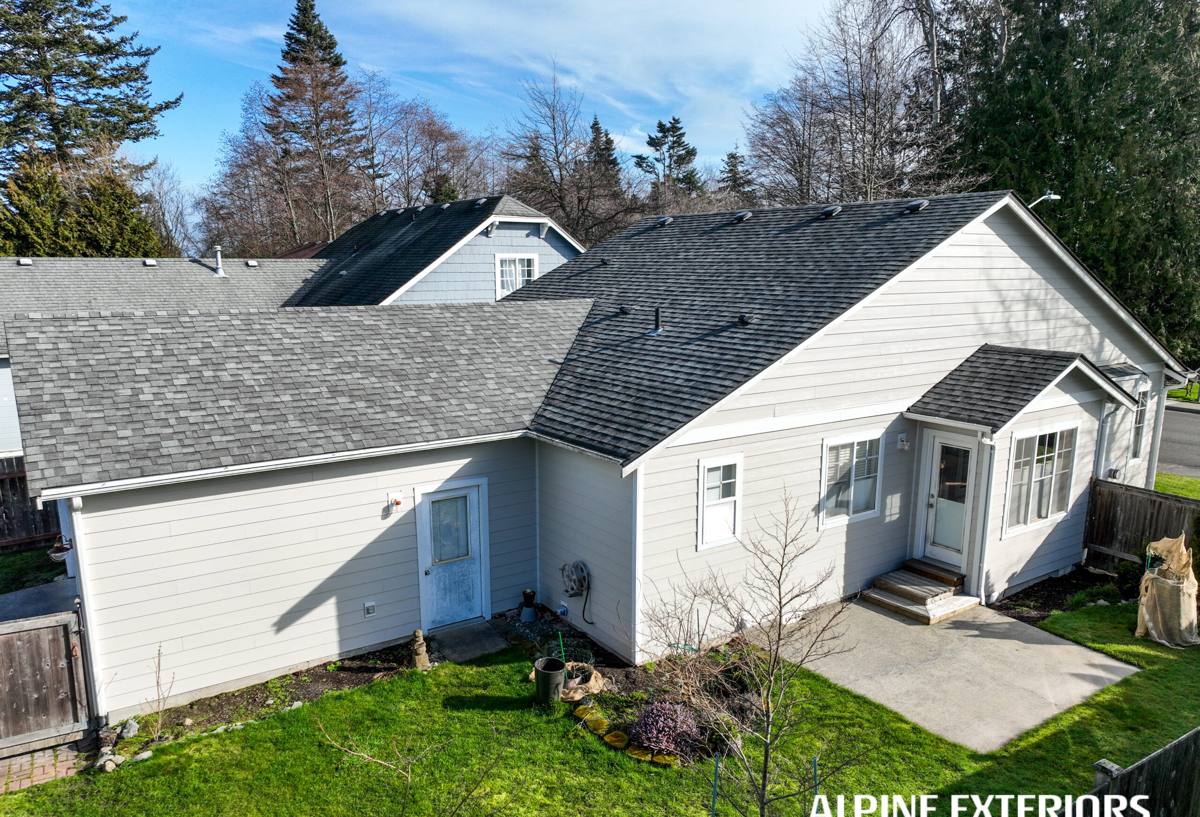
What Salt Air, Driving Rain, and Moss Actually Do to a Roof
The three things that shorten a roof's life in this part of Whatcom County aren't mysterious on their own, but they compound in ways that surprise people.
Salt air and fasteners
Salt-laden air corrodes exposed metal faster than it does a few miles inland. Roofing nails, drip edge, flashing, and exposed fastener heads are all vulnerable if they aren't rated for coastal exposure. Once a fastener starts to corrode, it loses grip, and a shingle that's supposed to stay locked down in wind starts to lift at the tab first, then at the seam.
Wind-driven rain and underlayment
Storms off the water don't just drop rain straight down — they push it sideways, under shingle tabs and into seams that would stay dry in a calmer climate. That's why underlayment choice and lap direction matter as much here as the shingle itself. A roof that relies on the shingles alone to keep water out, with thin or poorly lapped underlayment beneath, will eventually leak at a valley or a wall intersection even while every shingle above still looks intact.
Moss and granule loss
The long wet season on this side of the state keeps roofs damp for months at a stretch, and shaded or north-facing slopes grow moss readily. Moss holds moisture against the shingle surface, works its way under the tabs, and physically lifts them over time. As it spreads it also traps grit and organic debris that erodes the protective granules on the shingle face — the same granules that block UV and shed water. A roof that has lost its granules ages years in a single wet season. Unlike a hard freeze-thaw climate, the bigger long-term threat here isn't ice, it's sustained dampness that never fully dries between storms, which is exactly the condition moss needs to establish.
Choosing an Asphalt Shingle That Can Actually Handle This Exposure
Not every asphalt shingle is built the same, and on a peninsula like this the differences show up faster than they would somewhere drier. The table below compares the three broad categories homeowners usually ask us about.
| Shingle Type | Wind Rating | Algae/Moss Resistance | Typical Lifespan Here | Relative Cost |
|---|---|---|---|---|
| 3-tab | Lower (roughly 60-70 mph) | Basic unless AR-rated | 12-18 years | Lowest |
| Architectural / laminate | Higher (roughly 110-130 mph) | Algae-resistant granules usually standard | 20-30 years | Moderate |
| Impact-rated / premium laminate | Highest available in asphalt | Algae-resistant, heavier granule bed | 25-30+ years | Highest |
For most Point Roberts homes we steer people toward an architectural shingle with algae-resistant (AR) granules as the starting point, not the upgrade. The extra thickness and the copper- or zinc-infused granules that resist algae and moss growth cost more up front but pay for themselves in fewer moss treatments and a longer service life. We'll walk you through the manufacturer warranty terms for whatever line you're considering, since those vary by product line and not just by brand — it's worth reading the fine print together rather than assuming one number applies across the board.
What a Correct Installation Involves
A shingle roof is only as good as the layers underneath it. Here's what we treat as non-negotiable on a Point Roberts re-roof:
- Deck inspection after tear-off. Any soft, delaminated, or water-stained sheathing gets replaced before a single shingle goes down — covering rot with new roofing just hides the problem for a few years.
- Ice-and-water shield at eaves and valleys. These are the spots where wind-driven rain does the most damage, and they get a self-adhering waterproof membrane, not just felt.
- Synthetic underlayment across the field. It sheds water better than old-style felt and holds up longer to sustained damp exposure before the shingles even go on.
- Properly lapped flashing at every chimney, skylight, and wall intersection, with new step and counter-flashing rather than reused old pieces.
- A nailing pattern matched to the shingle's wind rating — not just "enough nails," but the placement and pattern the manufacturer specifies to keep the warranty valid under this exposure.
- Balanced ventilation at the ridge and soffit, so moisture from inside the house doesn't get trapped under the deck and feed the same dampness that grows moss on top.
Skip any one of these and the roof will still look fine on installation day. The failures that come from cutting corners here usually show up two, five, or ten years later, and typically at the worst possible time.
How Our Process Works
- On-site inspection. We look at the current roof, deck condition where visible, ventilation, and which slopes take the worst of the wind and moss exposure.
- Written estimate and shingle selection. You get a clear scope of work and a price, and we talk through shingle grade options like the ones above instead of defaulting to whatever is cheapest.
- Permitting and scheduling. Roofing work in Whatcom County generally requires a permit; we handle that paperwork and build the schedule around weather windows and material delivery, which out here means planning further ahead than a typical mainland job.
- Tear-off and deck check. Old roofing comes off down to the deck, we inspect and repair sheathing as needed, and debris is hauled off site the same day wherever possible.
- Installation. Underlayment, flashing, and shingles go on in the sequence described above, with attention paid to the wind and rain exposure specific to your roof's orientation.
- Final walkthrough. We go over the finished roof with you, confirm ventilation is working as intended, and hand over your warranty paperwork.
Repair, Partial Re-Roof, or Full Replacement?
Not every roof problem on this peninsula calls for a full tear-off. The right call depends on how much service life the roof has left, how localized the damage is, and how many separate problem areas you're actually dealing with.
| Situation | Usually Points Toward |
|---|---|
| One or two isolated leaks, shingles otherwise sound, roof under 10-12 years old | Targeted repair |
| Moss and granule loss concentrated on one shaded slope, rest of roof sound | Slope-specific re-roof or treatment |
| Multiple leak points, widespread granule loss, curling shingles on several slopes | Full replacement |
| Roof at or past the shingle's rated lifespan, regardless of current leak status | Full replacement |
Patching is the right answer more often than a full-replacement quote might suggest, and we'll say so even when a repair is a smaller job for us than a re-roof would be. What we won't do is keep patching a roof that's failing broadly just to avoid the bigger conversation — a string of repeat repairs spread across several wet seasons usually ends up costing more than doing the replacement once, correctly.
Maintenance That Actually Matters Out Here
An asphalt shingle roof isn't maintenance-free, and on this peninsula a little regular attention goes a long way toward getting the full lifespan out of the shingle you paid for.
- Clear gutters and downspouts at least twice a year so wind-driven rain has somewhere to go instead of backing up under the shingle edge.
- Have moss treated before it forms thick mats, not after — a light application on a shaded slope is a much smaller job than scraping established moss without damaging granules.
- Trim back branches that shade the roof or drop debris; shaded, debris-covered areas are exactly where moss takes hold first.
- Check the attic, or have us check it, after major windstorms for new daylight, staining, or damp insulation near valleys and chimneys.
- Keep ridge and soffit vents clear of insulation, paint, or debris so the roof deck can dry out between wet stretches instead of staying damp.
Signs Your Roof Needs a Look
Most shingle failures give warning signs well before a leak shows up inside the house:
- Granules collecting in the gutters or at the base of downspouts
- Dark streaking or thick moss mats on shaded or north-facing slopes
- Shingle tabs curling, cupping, or lifting at the edges
- Visible daylight or damp spots in the attic, especially near valleys and chimneys
- Soft or spongy spots underfoot when walking the roof
Any one of these is worth a professional look before it turns into a deck repair or an interior repair bill.
Why It's Worth Hiring a Crew That Already Works in Point Roberts
A roofing crew that treats this peninsula like any other job site tends to underestimate two things: the exposure and the logistics. Because Point Roberts is only reachable by water or by driving through Canada, material orders, permit runs, and crew scheduling all take more lead time than they would for a job a few miles down the road on the mainland. A crew that already works this area builds that lead time into the schedule instead of discovering it mid-project. They also know, from having been on enough roofs out here, which slopes typically take the worst wind-driven rain and which ones grow moss first — knowledge that shapes real decisions about underlayment, flashing detail, and shingle grade rather than serving as a generic sales pitch.
Tear-off debris has to leave the peninsula the same limited way everything else does, so hauling and disposal get planned into the job from the start instead of becoming a scramble on the last day. Local experience also matters when something needs a warranty call later on: a crew that's still around next year, working the same peninsula, has every reason to stand behind the work they did last year.
If your Point Roberts roof is showing its age, growing moss it didn't used to grow, or you're simply planning ahead, we're happy to take a look and give you a straightforward, no-pressure estimate — no inflated urgency, just an honest read on what your roof needs and what it will cost to do right. The form below gets you started.