 Semiahmoo
 Why Window Installation Is Different Around Wiser Lake
Homes near Wiser Lake sit in a part of Whatcom County that takes weather seriously. You're close enough to the coast to get salt-laden air working on metal fasteners and finishes, far enough into the county to catch heavy, sideways rain off Pacific storm systems, and shaded enough by mature trees and long wet winters to grow moss on anything that stays damp for more than a few days. None of that is a problem a window itself can fully solve. It's a problem the installation has to solve, because a window is only as good as the flashing, sealant, and framing details built around it.
We see the same pattern on a lot of Wiser Lake homes: the glass and hardware still work fine, but the installation underneath has failed quietly for years. Water gets behind the trim, wood framing stays wet longer than it should, and by the time anyone notices a soft spot on the interior sill, the damage has been building for a while. Good window work out here isn't about picking a fancier window. It's about getting the water management right the first time.
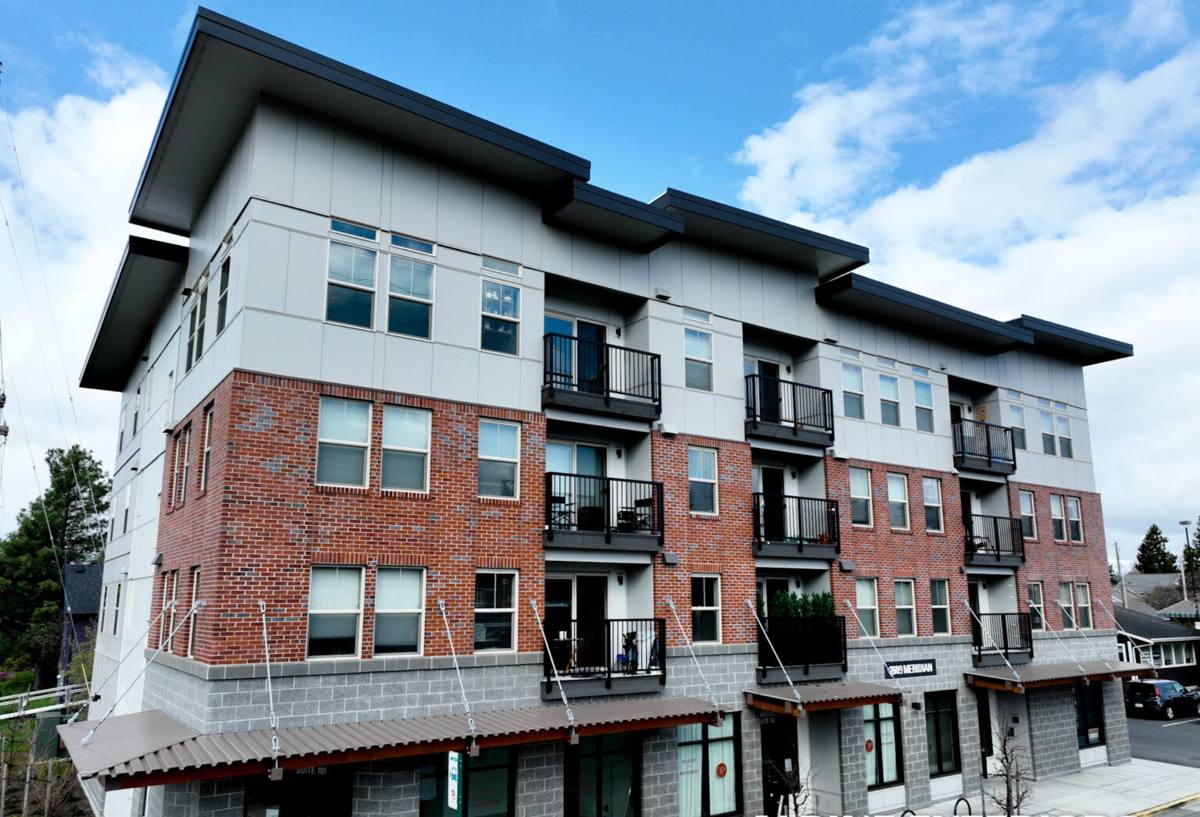
What Salt Air, Driving Rain, and Moss Season Actually Do to Windows
Salt air
Salt-carrying air accelerates corrosion on exposed screws, hinges, and lesser-grade cladding. Over time this shows up as staining, pitted hardware, or fasteners that back out or snap when a window needs adjustment. It's a slow process, which is exactly why it goes unnoticed until a window won't latch properly.
Driving rain
Wind-driven rain doesn't fall straight down — it gets pushed sideways and upward under trim, sills, and poorly lapped flashing. A window that would be fine in a calm rain can leak in a Whatcom County wind event if the water-resistive barrier and flashing weren't lapped correctly, shingle-style, from the bottom up.
Moss and prolonged dampness
Long stretches of overcast, wet weather mean anything that traps moisture stays wet for days at a time. Moss doesn't just grow on roofs — it takes hold on north-facing trim, window sills, and any horizontal surface where water sits instead of shedding. Trapped moisture behind trim or in a poorly sealed nailing flange is one of the more common causes of hidden rot we find on older installations in this area.
Signs a Wiser Lake Home Needs Window Attention
Most homeowners notice a problem window well after the underlying issue started. A few things worth checking before it gets worse:
- Soft, spongy, or discolored wood at the interior sill or the bottom corners of the frame
- Visible daylight, drafts, or whistling around the sash when it's windy
- Fogging or moisture between panes on double- or triple-glazed units — a sign the seal has failed
- Paint bubbling, peeling, or staining on exterior trim near the window
- Moss or dark streaking building up on horizontal trim or sills
- Windows that stick, won't latch fully, or have hardware that's corroded or seized
- Noticeably higher heating bills without any other explanation
What a Correct Window Installation Actually Involves
The window unit itself is a small part of the job. The details that keep water out for the next 20-plus years are:
- Sill pan flashing — a sloped, sealed pan under the window opening that directs any water that does get in back outside, instead of into the wall cavity
- Shingle-lapped flashing — housewrap and flashing tape installed in the correct order so water always drains down and over the layer below it, never into a seam
- Proper sealant placement — sealed where it needs to be (head and side jambs) and left open where it needs to drain (weep points at the sill), not caulked solid all the way around, which traps water instead of releasing it
- Correct shimming and fastening — a window that's square, plumb, and fastened per the manufacturer's schedule so it operates smoothly and doesn't rack over time
- Interior air sealing — foam or backer rod at the gap between frame and rough opening to stop drafts and control condensation
Skip any one of these and the window can look fine for years while water quietly works on the framing behind it — which is exactly the failure pattern this area's weather rewards if the details are wrong.
Choosing the Right Window for a Wiser Lake Property
There's no single "best" window — the right call depends on sun exposure, wind exposure, tree cover, and how much upkeep you want to take on. Here's how the common options generally compare for this climate:
| Frame Material | Moisture/Salt Air Resistance | Maintenance | Typical Trade-Off |
|---|---|---|---|
| Vinyl | Very good — won't rot or corrode | Low — occasional cleaning | Fewer color/finish options; can flex on very large sizes |
| Fiberglass | Excellent — stable in wide temperature and moisture swings | Low | Higher upfront cost |
| Wood | Needs protection — vulnerable if finish fails | High — regular refinishing | Classic look, but the most exposed to this area's damp/moss conditions |
| Aluminum-clad wood | Good exterior protection, wood interior still needs care | Moderate | Good look, but relies on the cladding seal staying intact |
We're honest about this trade-off: an all-wood exterior window in an area with this much sustained moisture and moss pressure asks a lot of the homeowner in upkeep. That's not a knock on wood as a material — it's why we steer most Wiser Lake homeowners toward vinyl, fiberglass, or clad options for anything exposed to weather, and reserve solid wood for protected or interior-facing openings where it makes sense.
New Construction vs. Retrofit (Pocket) Replacement
On older Wiser Lake homes, the bigger decision is often not the window brand but the installation method:
- Full-frame (new construction) replacement — the old frame comes out entirely, exposing the rough opening so we can inspect and re-flash it properly. This is the right call any time there's evidence of past leaking, soft framing, or failed flashing.
- Retrofit (pocket) replacement — the new window is installed into the existing frame, which is faster and less invasive, but only appropriate when the existing frame and flashing are confirmed sound.
A pocket replacement over a compromised frame just seals a moisture problem behind a new window instead of fixing it. We check the opening before recommending either approach.
Our Process
- On-site assessment — we look at each window's exposure (sun, wind, tree cover), current condition, and any signs of past water intrusion
- Honest scope — we tell you which windows genuinely need full-frame work versus which can be a simpler retrofit, and why
- Opening prep — where the frame comes out, we inspect the sheathing and framing underneath before anything new goes in
- Correct flashing sequence — sill pan, then window, then jamb and head flashing lapped in the right order
- Air seal and finish — interior sealing, exterior trim, and a final operational check on every unit
- Walkthrough — we show you what was done and what to watch for going forward
Energy Efficiency and Condensation
Whatcom County's mild but damp climate makes condensation a bigger practical issue for a lot of homeowners than raw R-value. A window with a poor air seal or a cold aluminum frame will fog and sweat on cold mornings well before the glass itself is the problem. Proper installation — tight air sealing between frame and rough opening, correct low-E glazing selection for your home's orientation — does more for comfort and condensation control than chasing the highest-rated glass package. We size and spec windows based on how a given wall actually performs, not just a catalog number.
Why a Crew That Already Works This Area Matters
Flashing details that hold up fine in a drier inland climate can fail here within a few seasons if they're not adapted to how much wind-driven rain and prolonged dampness this part of Whatcom County actually sees. A crew that regularly works Wiser Lake and the surrounding Semiahmoo area already knows which exposures need extra attention, which framing conditions are common in homes of this age, and how to sequence flashing so it actually sheds water instead of just looking finished. That local pattern recognition is worth more than any single product spec.
If you're noticing drafts, moisture, or moss buildup around your windows, or you're planning ahead of a remodel, we're happy to take a look and give you a straight assessment — no pressure, no upsell, just what your windows actually need. Reach out for a free estimate using the form below.