 Semiahmoo
 Why Blaine Harbor Roofs Take a Different Kind of Beating
Blaine Harbor sits close enough to the water that every roof in the area is doing double duty: shedding the wind-driven rain that rolls off Semiahmoo Bay and standing up to the salt-laden air that comes with it. That combination is harder on a roof than inland wind and rain alone. Salt air accelerates corrosion on exposed metal fasteners, flashing, and vent stacks, while the near-constant marine moisture keeps roof surfaces damp longer than homes just a few miles inland. Add Whatcom County's long, gray moss season and you have a roof that's under low-grade attack almost year-round, punctuated by the occasional windstorm that turns small weaknesses into real leaks.
When we get called out to Blaine Harbor after a storm, we're rarely looking at a roof that failed all at once. Most of the time, the storm exposed a weak point that had been quietly developing for a season or two — a flashing seam loosened by corrosion, shingles lifted by repeated wind gusts, or moss holding moisture against a section of roof long enough to soften the decking underneath. Understanding that pattern is the whole reason a storm damage repair on this stretch of the coast needs a different eye than a generic patch job.
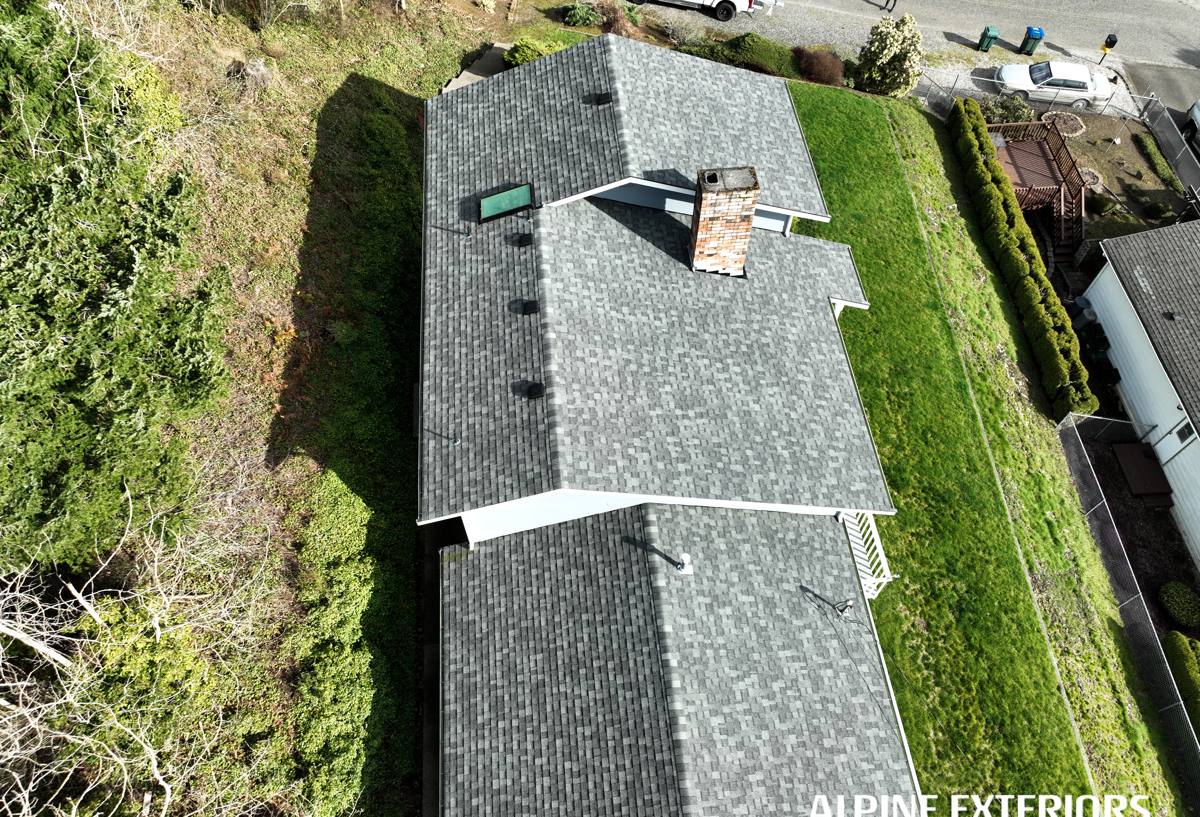
What Actually Damages Roofs in a Blaine Harbor Storm
Wind-Driven Rain
Straight-down rain rarely causes leaks on a roof in good condition. It's rain pushed sideways by wind — common off the water here — that finds its way under shingle edges, through marginal flashing, and around vent boots that have started to crack. Wind-driven rain is also what turns a small, previously invisible gap into an active leak during a single storm event.
Salt Air Corrosion
Metal components — nail heads, drip edge, step flashing, valley metal — corrode faster this close to Semiahmoo Bay than they would inland. Corroded fasteners lose their grip, and corroded flashing can develop pinholes that let water through even without any wind event. This is a slow process, but storms are usually what expose the result.
Wind Gusts and Uplift
Coastal gusts don't need to be dramatic to do damage. Repeated moderate gusts work shingle tabs and ridge caps loose over time, and a single stronger gust can be enough to peel back a section that was already compromised. Uplift damage often starts at roof edges, ridges, and around penetrations — the same spots wind naturally concentrates force.
Moss and Trapped Moisture
Whatcom County's moss season is long, and moss doesn't just look bad — it holds water against the roof surface and lifts shingle edges as it grows, creating entry points for wind-driven rain. A storm can push water through a spot that moss has already been softening for months.
How to Tell If Your Roof Has Storm Damage
Not all storm damage is obvious from the ground, and some of it isn't obvious from a ladder either unless you know what you're looking for. Here's what we check, and what homeowners can reasonably spot themselves before calling for an inspection:
- Missing, cracked, or curled shingles, especially near edges, ridges, and valleys
- Granules collecting in gutters or at downspout outlets after a storm
- Visible gaps or lifted edges in flashing around chimneys, skylights, or vent stacks
- Water stains or discoloration on interior ceilings, especially near exterior walls
- Soft or spongy spots when walking the roof (we check this — homeowners shouldn't)
- Moss buildup along ridges or in shaded, north-facing sections
- Sagging or uneven rooflines, which can indicate deck-level moisture damage
- Debris on the roof or damaged gutters, which often correlates with impact damage
If you see any of these after a storm, the safest move is a prompt inspection rather than waiting to see if it gets worse. A small leak caught early is a repair. The same leak left through another storm cycle is often a decking replacement.
What a Correct Storm Damage Repair Actually Involves
A storm damage repair that holds up in this climate isn't just "replace what blew off." It has a few distinct stages, and skipping any of them is how repairs end up needing to be redone within a season or two.
1. Full Inspection, Not Just a Spot Check
We inspect the whole roof, not only the area a homeowner points to. Wind and salt air damage doesn't confine itself to one spot, and a repair that only addresses the visible symptom often leaves an adjacent weak point untouched.
2. Deck-Level Assessment
Before any new roofing material goes down, we check the condition of the decking underneath. Marine moisture and moss can soften decking in ways that aren't visible from the surface. Replacing shingles over compromised decking is a short-term fix that fails again quickly.
3. Flashing and Fastener Review
Given how much salt air corrosion affects metal components here, we don't just re-use existing flashing and fasteners by default. Corroded flashing gets replaced, not patched, and we use fasteners rated for coastal exposure rather than standard-grade hardware.
4. Matched Material Repair
We repair with materials that match the existing roof's age, style, and manufacturer specifications as closely as possible, so the repaired section performs — and weathers — consistently with the rest of the roof rather than aging at a different rate.
5. Moss and Drainage Follow-Up
Since moss is a recurring cause of hidden moisture damage in this area, we address any moss buildup contributing to the original problem and make sure drainage paths (valleys, gutters, downspouts) are clear so water isn't pooling against the repaired area going forward.
Repair Cost Factors for Blaine Harbor Homes
Every storm damage job is different, but the factors that move the price up or down are consistent. This isn't a quote — it's a guide to what actually drives cost so you can ask informed questions of any contractor.
| Factor | Why It Matters Here |
|---|---|
| Extent of wind/rain intrusion | A single lifted section costs far less than a leak that's had time to spread under multiple courses of shingles |
| Decking condition | Marine moisture can soften decking beneath an otherwise minor-looking leak, adding material and labor |
| Flashing and fastener corrosion | Salt air often means more flashing needs replacing than the storm damage alone would suggest |
| Moss removal and treatment | Roofs with heavy moss buildup usually need cleanup before or during repair to prevent immediate recurrence |
| Roof pitch and access | Steeper roofs and harder-to-access sections take longer and require more safety setup |
| Age and material of existing roof | Older roofs may need broader repair to blend safely with existing material, especially if exact matches are discontinued |
As a broad rule, isolated storm repairs on a Blaine Harbor home tend to run from a few hundred dollars for a contained flashing or shingle fix up to several thousand for jobs involving deck repair or extensive flashing replacement. The only way to know which end of that range applies is an actual inspection — we won't quote a number over the phone before we've seen the roof.
Insurance and Documentation
If your storm damage is significant enough to involve a homeowner's insurance claim, documentation matters. We photograph the damage before starting repairs, note the likely cause (wind, impact, or long-term moisture contribution), and can provide a written scope of work that adjusters typically want to see. We're not a public adjuster and don't negotiate claims on your behalf, but we make sure the physical evidence and repair scope are clearly documented so your claim isn't held up by missing information.
Why Local Storm Experience Matters for This Job
A roofing crew that mostly works inland can absolutely install a repair correctly on paper and still miss what matters here: which flashing details fail first in salt air, how far moss tends to spread on north-facing Whatcom County roofs before it's visible from the ground, and which fastener grades actually hold up long-term this close to Semiahmoo Bay. That's not a knock on general roofing skill — it's just a different set of conditions than most of Washington sees.
Working Blaine Harbor regularly means we've seen how storm damage progresses in this specific environment across multiple seasons, not just how it looks on the day of the call. That shapes decisions during a repair — like whether to replace an extra course of flashing preemptively, or whether a soft spot in the decking is isolated or a sign of wider moisture intrusion — that a one-time visit from an unfamiliar crew is more likely to get wrong.
Our Process for Blaine Harbor Storm Repairs
- Contact us with what you're seeing — visible damage, a leak, or just a request for a post-storm check
- We schedule an inspection and walk the full roof, not just the reported problem area
- You get a straightforward explanation of what we found, what's causing it, and what repair options make sense
- We provide a written scope and estimate before any work begins
- Repairs are completed using materials matched to your existing roof and hardware rated for coastal exposure
- We document the work, which you can use for insurance purposes if applicable
Preventing the Next Storm From Causing the Same Damage
Part of doing this job right is not just fixing what broke, but reducing the odds of the same failure next winter. For Blaine Harbor homes, that usually comes down to a short list of maintenance habits that matter more here than they would inland:
- Clear moss before it has a full season to establish and lift shingle edges
- Keep gutters and valleys clear so wind-driven rain has somewhere to go
- Have flashing checked periodically for salt air corrosion, not just after visible leaks
- Address minor shingle lifting promptly rather than waiting for the next storm to finish the job
- Get a post-storm inspection after any significant wind event, even without visible interior signs
None of this eliminates the effect of living this close to the water — it just keeps small issues from becoming expensive ones.
If a recent storm has left you with a leak, missing shingles, or just a nagging feeling you should have your roof looked at, we're glad to come out and take a straightforward, no-pressure look. Use the form below to request a free estimate, and we'll tell you honestly what we find.