 Semiahmoo
 Windows Built for the Peace Arch Stretch of Whatcom County
Homes in the Peace Arch area sit close enough to Semiahmoo Bay that salt-laden air is a daily fact of life, not an occasional nuisance. Add Whatcom County's long, wet winters and a moss season that can run from October into May, and you get a set of conditions that wear out windows faster than almost anywhere else in the state. A window that performs fine in a drier inland climate can fail here in half the time if it wasn't specified and installed with this exposure in mind.
This page covers what window replacement actually requires for homes in and around Peace Arch — not generic window buying advice, but the specific material choices, sealing details, and installation practices that matter when a house sits this close to the water and takes this much weather.
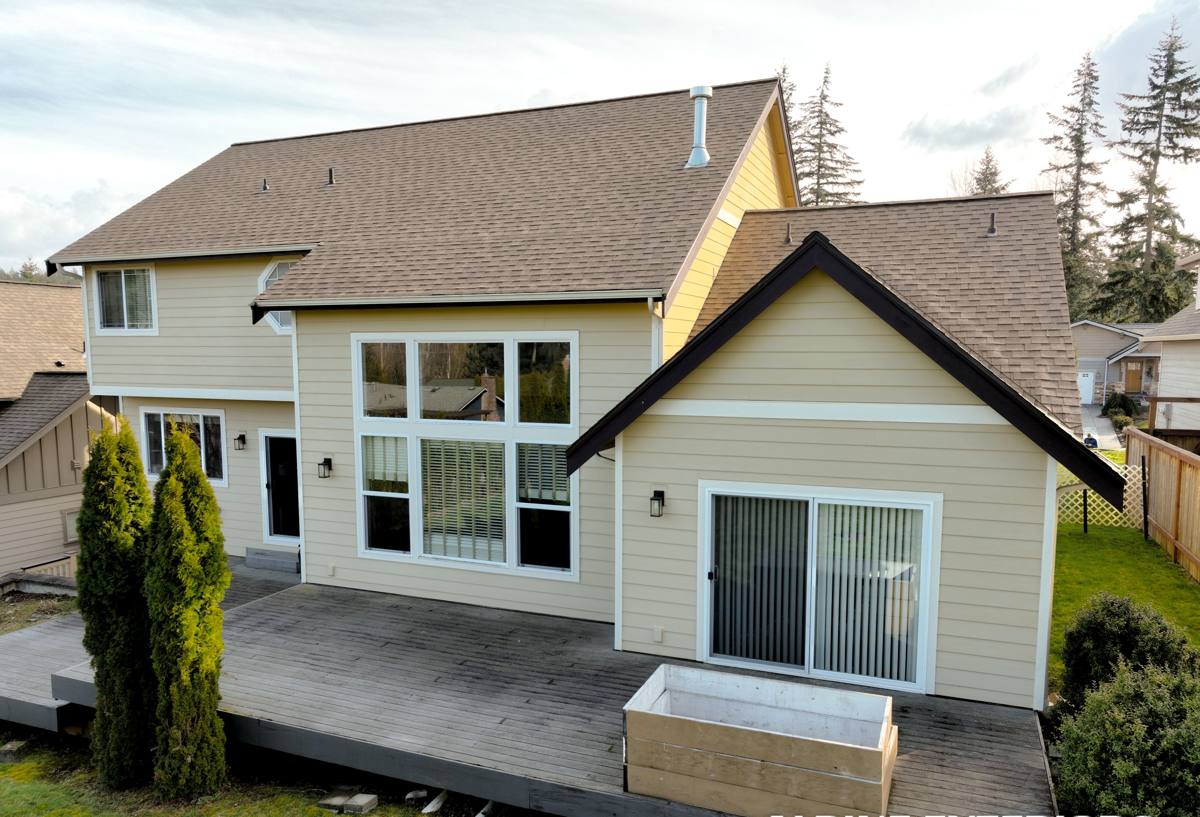
What Salt Air and Driving Rain Actually Do to a Window
Salt air doesn't just look bad on metal surfaces — it accelerates corrosion in fasteners, hinges, and hardware, and it breaks down certain sealants faster than manufacturers' standard warranty testing accounts for. Combine that with wind-driven rain coming off the bay, and you get water forced sideways and upward into gaps that would stay dry in a more sheltered location.
Over time, this shows up as:
- Hardware (locks, cranks, hinges) that stiffens, pits, or seizes years before it should
- Soft or discolored trim and sill areas where water has been sitting or wicking inward
- Fogging or moisture between panes on older double-pane units, meaning the seal has failed
- Drafts that seem to appear only during storms with wind out of a particular direction
- Frame corners that have started to separate or show gaps where caulking has shrunk and cracked
Moss and algae growth on north-facing walls and window surrounds is its own warning sign here. It usually means that area stays damp longer than it should, which is exactly the condition that breaks down wood trim, compromises paint or stain protection, and eventually lets moisture behind the window unit itself.
Why "It Still Opens and Closes" Isn't the Right Test
A window can still operate and still be failing. Seal failure, frame rot, and flashing problems usually start well before a window becomes hard to open. By the time operation is affected, moisture has often already reached framing members behind the wall — which turns a window replacement into a repair job for rot as well.
What a Correct Window Replacement Involves in This Climate
A proper replacement here is about more than swapping the sash. The details that make the difference in a high-exposure, high-moisture area like Peace Arch are:
- Full removal to the rough opening when there's any sign of existing water damage, rather than an insert replacement that traps a problem behind new trim
- Correct flashing sequencing — flashing tape and water-resistive barrier integration installed so water sheds outward and down, never trapped behind the new frame
- Marine-grade or corrosion-resistant fasteners and hardware where budget allows, especially on the bay-facing sides of a house
- Sealants rated for the exposure, not just the cheapest tube that meets code minimums
- Proper shimming and squaring so the window operates correctly and the seal isn't stressed unevenly, which is what causes premature failure at the corners
Skipping any one of these doesn't usually cause an immediate, visible problem. It shows up two, five, or eight years later as the exact failures described above — which is why the install matters as much as the product.
Frame Material: What Actually Holds Up Near the Water
There's no single "best" window material for every house — it depends on budget, the home's exposure, and how much maintenance the owner wants to take on. Here's how the common options compare specifically for salt-air, high-moisture conditions like Peace Arch sees:
| Frame Material | Salt Air / Moisture Performance | Maintenance | Notes for This Area |
|---|---|---|---|
| Vinyl | Good — won't corrode or rot, handles moisture well | Low | Solid, cost-effective choice for most of Peace Arch; verify UV and impact rating for coastal wind exposure |
| Fiberglass | Very good — dimensionally stable, resists moisture and corrosion | Low | Strong option for bay-facing walls; higher upfront cost, longer expected service life |
| Wood (unclad) | Poor without diligent upkeep — vulnerable to rot in this moss season | High | We recommend clad options over bare wood for anything facing prevailing weather here |
| Wood-clad (vinyl or aluminum exterior) | Good on the exterior face; interior wood still needs interior humidity control | Moderate | Popular where a wood interior look is wanted; clad exterior handles the weather side |
| Aluminum | Fair — can corrode near salt air unless properly coated/anodized | Moderate | Thermal performance is generally weaker; less common as a primary choice this close to the bay |
For most Peace Arch homes, vinyl or fiberglass frames paired with correctly rated glass and proper flashing give the best balance of upfront cost and long-term durability. Where a home's design calls for a wood interior look, cladding the exterior face is the more sensible long-term choice than exposed wood on walls that take direct weather off the bay.
Glass Packages Worth Considering
Beyond frame material, the glass package affects both comfort and how the window holds up:
- Double-pane with argon fill is the standard baseline for energy performance in this climate and is appropriate for most rooms
- Low-E coatings help manage heat loss through Whatcom County's long, cool, overcast stretches without meaningfully affecting natural light
- Laminated or impact-resistant glass is worth discussing for exposed, bay-facing openings where wind-driven debris is more of a factor
- Triple-pane can be justified on north- or west-facing rooms that take the brunt of the weather, though it's a cost-benefit conversation, not a default recommendation for every opening
Our Process for a Peace Arch Window Replacement
- On-site assessment. We look at each window individually — not just the visible frame, but signs of moisture at the sill, trim, and surrounding siding, since that tells us whether this is a straight replacement or if there's rot to address first.
- Honest scope and options. We walk through frame material, glass package, and install method (full-frame vs. insert) based on that specific window's condition and exposure, not a one-size answer for the whole house.
- Removal and inspection of the rough opening. Once the old window is out, we check framing and flashing behind it before anything new goes in. This is where hidden moisture damage from a long-failed seal usually gets found.
- Flashing and sealing done in the correct order. Water management details go in before the new window, not around it as an afterthought.
- Installation, shimming, and squaring. The window is set plumb and square and fastened so it operates correctly and the seal isn't stressed.
- Final sealing, trim, and cleanup. Exterior sealant rated for the exposure, interior finish work, and a check that the window opens, closes, and locks the way it should.
Why a Crew That Already Works Peace Arch Matters
Window replacement done wrong doesn't usually fail on day one — it fails quietly, two or five years down the line, in ways that are expensive to trace back to a bad install. A crew that regularly works this area already knows:
- Which sides of a house typically take the worst of the wind-driven rain, and which openings deserve extra attention to flashing and sealant
- How fast moss and algae build up on north-facing walls here, and what that tells us about hidden moisture behind trim
- What hardware and fastener grades actually hold up under sustained salt air exposure, versus what looks fine in a showroom but corrodes within a few seasons
- Local permitting and inspection expectations for Whatcom County, so the job doesn't stall on paperwork
That local pattern recognition is the difference between a window that's simply installed and one that's installed correctly for where it actually sits.
Signs You Should Get a Window Looked At Now
Use this as a quick gut-check for windows on a Peace Arch home:
- Fogging, haze, or visible moisture between the panes
- Noticeable drafts during storms, especially with wind off the bay
- Soft, spongy, or discolored trim or sill areas
- Hardware that's stiff, sticking, or showing pitting or corrosion
- Visible gaps at frame corners or shrunken, cracked exterior caulking
- Moss or persistent green staining on the wall surface directly around the window
- Condensation forming on interior glass or frames well before it does elsewhere in the house
Any one of these on its own might just mean routine maintenance is due. Two or more together, especially on a bay-facing wall, usually means it's worth having the window and the wall behind it checked before it becomes a bigger repair.
After the Install: Keeping Windows Performing in This Climate
Even a well-installed window benefits from a little seasonal attention here. Rinsing salt residue off exterior frames periodically, keeping weep holes clear of debris and moss buildup, and checking exterior caulking every year or two for early cracking will extend the service life of any window material — vinyl, fiberglass, or clad wood alike.
If you're seeing any of the warning signs above, or you'd simply like a straight answer on whether your windows are holding up the way they should, we're glad to take a look. We offer free, no-pressure estimates for Peace Arch homeowners — just fill out the form below and we'll get in touch.