 Semiahmoo
 Why Wiser Lake Homes Wear Out Siding Faster Than People Expect
Wiser Lake sits back from the open coastline, tucked among trees and shoreline vegetation that keep the area shaded, humid, and slow to dry out after a storm. That's part of what makes the neighborhood attractive to live in, and it's also exactly the combination that's hard on exterior siding. Homes here don't take a direct hit of salt spray the way properties right on Semiahmoo's shoreline do, but they don't escape Whatcom County's marine climate either. Moist lake air, heavy tree cover, and long stretches of overcast, drizzly weather all add up to siding conditions that are demanding in a different way than a dry, sunny climate would be.
Add in the driving rain that blows through this part of the Pacific Northwest several months of the year and a moss season that can run from fall through spring, and you've got a recipe for siding that looks fine from the street but is quietly failing underneath. Paint holds moisture instead of shedding it, wood siding swells and softens at the joints, and anything with a seam or a fastener hole becomes an entry point for water that has nowhere to evaporate to. By the time damage shows up as a visible problem, it's often been building for a while.
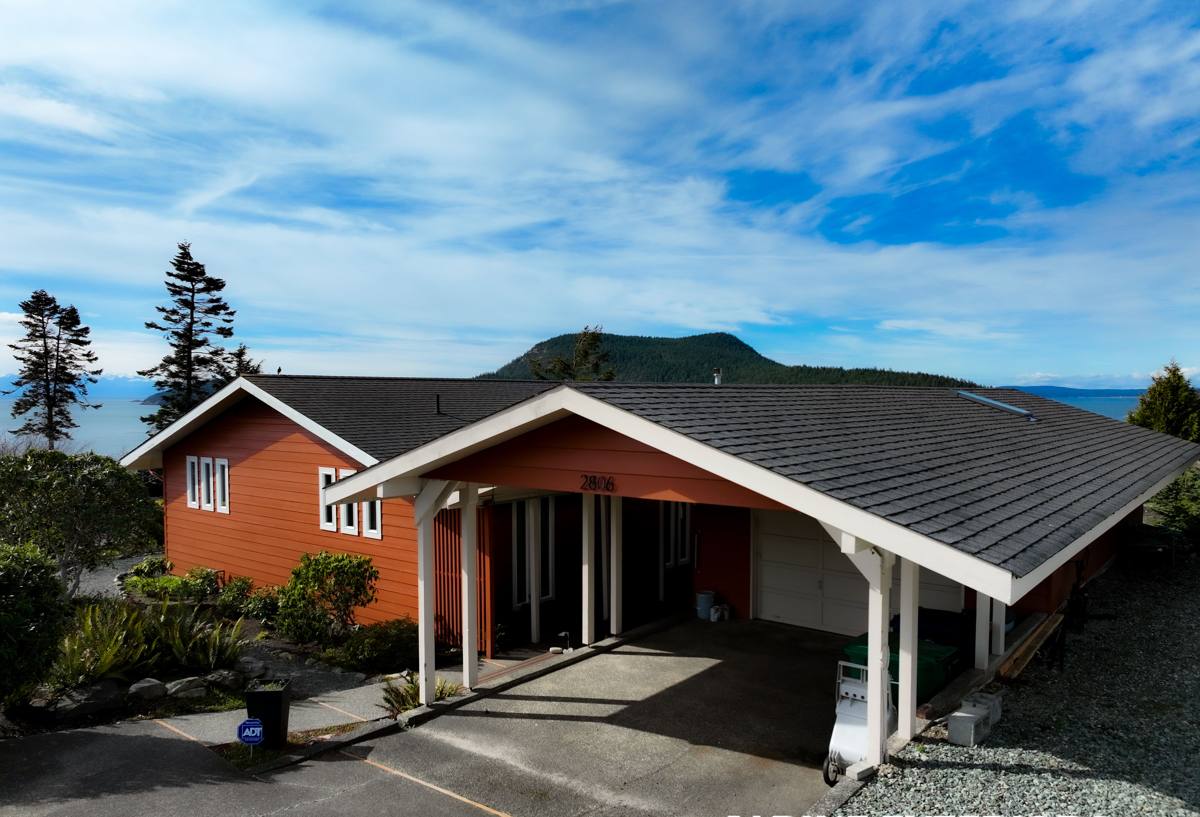
Signs a Wiser Lake Home Needs Siding Replacement, Not Another Repaint
We get calls every year from homeowners who've repainted the same trouble spots two or three times, hoping it will finally stick. In a climate like this one, paint is a symptom fix, not a solution, if the siding material underneath is the actual problem. Here's what we look for during an inspection to tell the difference between "this needs a repair" and "this needs full replacement":
- Boards that feel soft, spongy, or give slightly when pressed, especially near the bottom courses and around window trim
- Paint that bubbles, peels, or fails within a year or two of a fresh coat
- Persistent moss or dark algae staining that comes back within a season of cleaning
- Visible gaps, warping, or cupping in individual boards, particularly on the shaded and north-facing walls
- Rot or soft wood at corner boards, butt joints, and anywhere trim meets siding
- A musty smell or unexplained moisture inside exterior walls
- Rising heating bills that point to compromised insulation behind failing siding
Any one of these on its own might be a spot repair. Several of them together, especially spread across more than one wall, usually mean the siding system as a whole has reached the end of its useful life.
What a Correct Siding Replacement Actually Involves
Siding replacement done right is not just stripping off the old boards and nailing up new ones. In a moisture-heavy environment like Wiser Lake, most of the value in the job happens in the layers you never see once it's finished.
Tear-Off and Inspection
Full removal of the old siding lets us actually see the sheathing underneath, which is the only way to know what's really going on. We check for soft or delaminated sheathing, rot around window and door openings, and any framing that's been compromised by long-term moisture intrusion. This step is non-negotiable — you can't fix what you can't see, and painting over hidden rot just buys a homeowner a bigger repair bill later.
Water-Resistive Barrier and Flashing
A correctly installed weather-resistive barrier, properly lapped and taped, is what actually keeps bulk water out of the wall assembly. Flashing at windows, doors, and every horizontal trim transition has to be detailed so water sheds outward and down, never inward. This is the part of the job that determines whether a home stays dry for the next thirty years or develops the same rot problems again in ten.
Ventilation and Drying Path
Siding needs a way to dry out after it gets wet, and around a shaded, humid site like Wiser Lake that drying path matters more than usual. Proper rainscreen gaps or drainage planes behind the siding give moisture somewhere to go instead of sitting trapped against the sheathing.
Fastening and Finish
Correct fastener type, spacing, and depth affect both how the siding holds up to wind-driven rain and how the factory finish performs over time. Overdriven or underdriven nails are one of the most common causes of premature siding failure we see on re-inspections of other contractors' work.
Why We Install Only James Hardie Fiber Cement
We don't install vinyl, LP SmartSide, primed spruce, cedar, or other fiber cement brands. That's a deliberate standard, not a sales pitch, and it comes down to how each of those materials behaves in exactly the conditions Wiser Lake deals with every year.
How It Holds Up to Moisture and Moss
Fiber cement is not organic material, so it doesn't feed mold or rot the way wood-based products can, and it doesn't soften when it stays damp for extended periods the way engineered wood siding can at cut edges and seams. James Hardie's HZ5 product line is specifically engineered for climates like ours — freeze-thaw cycles, sustained damp weather, and heavy annual rainfall. Moss and algae still need to be cleaned off periodically in a climate like this one; no siding material is immune to that. But the substrate underneath a Hardie board isn't degrading while that surface growth sits there, the way it can with wood-based siding.
ColorPlus Factory Finish
Hardie's ColorPlus finish is baked on at the factory under controlled conditions, which gives it better adhesion and UV resistance than field-applied paint. In a climate with limited dry-weather painting windows, that matters — it means the finish isn't depending on a perfect on-site paint job to perform for the next decade.
Non-Combustible and Backed by a Real Warranty
Fiber cement is non-combustible, which is a genuine advantage regardless of climate. James Hardie also backs its siding with a strong, transferable limited warranty, which matters to homeowners who plan to sell — a documented, reputable warranty is worth something to a buyer's inspector in a way that a discontinued or lesser-known product isn't.
We're not going to tell you vinyl or LP SmartSide are junk — they're not, and they work fine for plenty of homes in plenty of climates. But we've made the call that we won't put our name on an installation using a product we don't believe holds up to Whatcom County's moisture load as reliably, over as long a timeframe, as Hardie does. That's the whole reason we standardized on one material.
Our Siding Replacement Process at Wiser Lake
- On-site assessment — we walk the exterior, check the worst-affected walls first, and look at trim, flashing, and any visible rot before quoting anything
- Written scope and estimate — a clear breakdown of what's being replaced, what Hardie product and profile we're using, and what the sheathing and moisture-barrier work involves
- Tear-off and sheathing repair — full removal, with any compromised sheathing or framing repaired before anything new goes up
- Water-resistive barrier and flashing installation — detailed at every window, door, and penetration
- Hardie siding installation — installed to manufacturer fastening and clearance specs, not shortcuts
- Trim, caulking, and final finish — including gaps and reveals sized correctly so the siding can expand, contract, and drain as designed
- Final walkthrough — we go over the finished job with the homeowner before calling it done
Cost Factors for Siding Replacement at Wiser Lake
Every home is different, so we won't quote a number without seeing the property, but these are the main factors that move a project up or down in scope and cost:
| Factor | Why It Matters at Wiser Lake | Effect on Project |
|---|---|---|
| Extent of hidden moisture damage | Shaded, humid sites often hide rot behind intact-looking siding | Sheathing/framing repair adds cost but is necessary, not optional |
| Home size and wall complexity | Multiple gables, dormers, and trim details take more labor per square foot | Increases both material and labor time |
| Existing siding material | Wood and old fiber cement come off differently than vinyl | Affects tear-off time and disposal |
| Hardie product line and profile | Lap siding, shingle-style panels, and trim options are priced differently | Changes material cost per square foot |
| Site access | Tree cover, slopes, and lake-adjacent lots can limit staging and scaffolding | Can affect labor time and equipment needs |
Why Hiring a Crew That Already Works This Neighborhood Matters
Siding installation isn't one-size-fits-all across Whatcom County. A crew that mostly works dry, open, sunny sites can do technically correct work and still not think about the details that matter around a shaded, damp lake property — drainage planes that actually move water away from a shaded north wall, flashing details that account for slower drying times, or simply knowing which corners of a Wiser Lake home tend to take the worst of the driving rain. Familiarity with the local climate isn't a marketing point, it's the difference between a job that holds up for thirty years and one that needs revisiting in five.
It also means fewer surprises during the estimate. We've seen the moisture patterns typical to this area enough times that we can flag likely problem spots before tear-off even starts, which helps homeowners budget realistically instead of getting blindsided by a change order mid-project.
Maintaining Hardie Siding After Replacement
New siding still needs basic upkeep, even a material as durable as fiber cement. A short annual routine goes a long way in this climate:
- Rinse off moss, algae, and dirt buildup once or twice a year, especially on shaded walls
- Keep gutters clear so water isn't sheeting down the siding face
- Trim back vegetation and tree limbs that keep siding shaded and slow to dry
- Recaulk trim joints if you notice cracking or gaps developing
- Have flashing and caulking spot-checked every few years, particularly around windows and doors
None of this is heavy maintenance — it's the kind of upkeep that takes an afternoon and meaningfully extends the life of the installation.
If your Wiser Lake home is showing any of the signs above, or you just want an honest read on whether repair or full replacement makes sense, we're happy to take a look. Fill out the form below for a free, no-pressure estimate — we'll tell you what we actually see, not just what sells a job.