 Semiahmoo
 The Climate Drayton Harbor Siding Actually Has to Survive
Homes near Drayton Harbor sit right at the edge of the Salish Sea, and that location shapes everything about how exterior siding performs. This isn't a climate where siding just has to look good — it has to hold up to salt-laden air, wind-driven rain coming off the water, and a moss and algae season that runs far longer than it does even a few miles inland in Whatcom County. A siding product and installation that would be perfectly fine in a drier, inland climate can fail early here if it isn't matched to these conditions.
Salt Air and Corrosion
Airborne salt from Drayton Harbor and the surrounding waterways settles on exterior surfaces year-round, not just during storms. Over time it accelerates corrosion on exposed metal fasteners, trim flashing, and hardware. Siding materials and installation details that don't account for this end up with rust streaks, failing fasteners, and premature finish breakdown well before the rest of the house shows its age.
Driving Rain and Wind-Driven Water
This part of Whatcom County sees rain that doesn't just fall straight down — wind off the water drives it sideways into wall assemblies, seams, and corners. Siding that relies on caulk or paint film alone to keep water out will eventually let moisture in behind it. What actually keeps a wall dry is the water-resistive barrier, flashing, and drainage plane working together, with the siding as the outer layer of a complete system.
A Moss Season That Doesn't Really End
Shaded, damp exteriors in this area support moss and algae growth for most of the year, not just in winter. Siding with a porous or absorbent surface holds moisture longer and gives moss and mildew more to grab onto. Once organic growth gets established on a wall, it holds even more moisture against the siding, and the cycle accelerates.
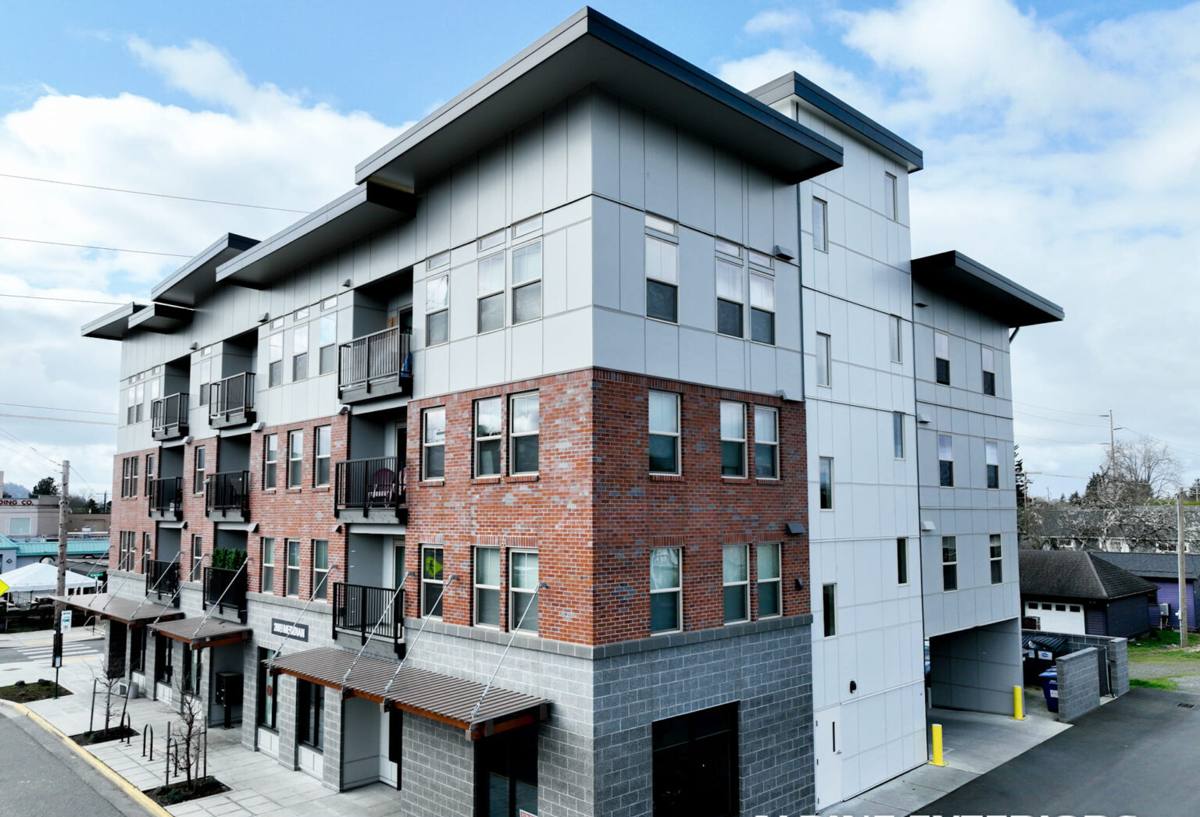
Why We Only Install James Hardie for Homes Like These
We standardized on James Hardie fiber cement siding for one reason: it's the product we trust to hold up to exactly the conditions described above. It's non-combustible, it doesn't absorb and swell with moisture the way wood-based products can, and its factory-applied ColorPlus finish is baked on under controlled conditions rather than field-painted, which matters in a climate that gives paint very little time to fully cure before the next rain. Hardie's HZ5 product line is specifically engineered for climates with more moisture exposure, which is exactly what Drayton Harbor delivers. That's not a marketing detail to us — it's the reason a fiber cement siding job here either lasts for decades or turns into a maintenance headache in half that time, depending on the product and the install.
We don't install vinyl, LP SmartSide, Cemplank, Allura, primed spruce, or cedar. Each of those products has a place in the market, but each also comes with a trade-off — moisture sensitivity, field-finish maintenance, warranty limitations, or long-term appearance — that we're not willing to put on a home in this environment. Standardizing on one product means our crews know it inside and out, on every job, in every kind of weather this coastline throws at us.
Choosing the Right Hardie Product for a Drayton Harbor Home
James Hardie makes several product lines, and the right one for a given home depends on its style, exposure, and how much of the year it faces direct wind and rain off the water.
| Product | Best Suited For | Notes for This Climate |
|---|---|---|
| HardiePlank lap siding | Most home styles, traditional and modern | Most common choice; pairs well with HZ5 for added moisture resistance |
| HardieShingle | Craftsman and cottage-style homes, accent gables | Shingle profile sheds water well but needs careful flashing at butt joints |
| HardiePanel | Modern facades, board-and-batten accents | Vertical joints need extra attention to keep water from tracking behind panels |
| HardieTrim | Corners, window and door surrounds, fascia | Keeps trim consistent with siding lifespan instead of repainting wood trim yearly |
For most full-home projects near Drayton Harbor, we recommend the HZ5 configuration regardless of which profile is chosen, since it's engineered for freeze-thaw and higher-moisture climates rather than the standard HZ10 formulation built for drier regions.
What Correct Installation Looks Like Here
James Hardie siding is only as good as the installation behind it. In a marine climate, a few details matter more than they would elsewhere, and skipping them is where most premature siding failures actually start — not with the siding material itself.
Water Management Behind the Siding
Every project starts with the water-resistive barrier, not the siding. Seams get lapped and taped correctly, and flashing is integrated at every window, door, deck ledger, and roof-to-wall transition so water is directed out and away from the sheathing, not just deflected by the siding surface. This is the layer that actually protects the structure when wind-driven rain gets past the outer surface, which it eventually will in this climate.
Fastening, Clearances, and Caulking
Hardie specifies exact fastener types, spacing, and penetration depth, and those specs exist for a reason — under-driven or over-driven nails, or the wrong fastener material, are a direct path to early corrosion and loosened boards in a salt-air environment. Ground clearance and roof-line clearance also need to be respected so siding isn't sitting in a moisture trap. Caulking is used at trim and penetrations, but it's a supplement to good flashing, not a substitute for it — caulk alone will not keep a wall dry through a wet Whatcom County winter.
Our Process, Start to Finish
We approach every Drayton Harbor project the same methodical way, because skipping steps is exactly how moisture problems get built into a wall:
- On-site assessment of the existing siding, sheathing condition, and any moisture or moss damage already present
- Removal of old siding and inspection of the sheathing and framing underneath before anything new goes up
- Repair of any damaged sheathing or framing found during tear-off
- Installation of a new water-resistive barrier with fully integrated flashing at every opening and transition
- Installation of James Hardie siding, trim, and accessories to manufacturer fastening and clearance specifications
- Final walk-through covering caulking, paint touch-up at cut edges, and site cleanup
That sheathing inspection in step two matters more here than almost anywhere else. A wall that's looked fine from the outside for years can be hiding moisture damage behind old siding that wasn't managing water correctly, and there's no way to know until the old material comes off.
What Drives Cost on a Job Like This
Siding pricing depends on the specific home, but a few factors consistently move the number up or down on projects in this area, and it's worth understanding them before you get quotes.
| Factor | Why It Matters Here |
|---|---|
| Condition of existing sheathing | Hidden moisture damage found during tear-off adds repair work before new siding can go on |
| HZ5 vs. standard product | The climate-engineered line costs somewhat more but is the better fit for a waterfront-adjacent home |
| Trim and detail complexity | Homes with more corners, gables, and window trim take more labor to flash and finish correctly |
| Site access | Waterfront lots and sloped or tight sites can require extra staging and protection time |
| Existing moss or algae buildup | Heavier growth means more prep and cleaning before tear-off can safely begin |
We give straightforward, itemized estimates rather than a single lump number, so you can see exactly what's driving the cost on your specific home.
Maintaining Hardie Siding in a Marine Environment
One of the reasons we recommend Hardie for this area is how little ongoing maintenance it needs compared to wood-based or field-painted alternatives — but "low maintenance" isn't "no maintenance," especially this close to saltwater. A yearly rinse-down to clear salt residue, pollen, and early moss growth from the surface goes a long way. Caulked joints and trim should be checked periodically, since caulk is the one component that does wear out over time even when the siding underneath is fine. Because the color is baked into the ColorPlus finish at the factory, you're not looking at repainting on any regular schedule the way you would with field-finished wood siding — that alone removes one of the biggest recurring costs of siding ownership in this climate.
Why Hiring a Crew That Already Works This Area Matters
A crew that's put Hardie siding on homes around Drayton Harbor already knows how wind off the water behaves against a given exposure, which sheathing conditions are common in older homes here, and how aggressive the moss season really gets on shaded, damp walls. That's not something you can substitute with general siding experience from a drier or more sheltered market. Before hiring anyone for a project like this, it's worth asking a few direct questions:
- Have you installed James Hardie siding on other homes in this specific area, and can you speak to what you found during tear-off on those jobs?
- Do you install to Hardie's published fastening, clearance, and flashing specifications, or to a generalized standard?
- Will you inspect and repair sheathing before installing new siding, not just cover over whatever is underneath?
- What water-resistive barrier and flashing details do you use at windows, doors, and roof-to-wall transitions?
- Is the warranty on both material and labor, and is it transferable if you sell the home?
Straight answers to those questions tell you more about how a siding job will hold up in five or ten years than any brochure will.
If you're weighing a siding replacement or repair on a home near Drayton Harbor, we're happy to take a look and walk you through what we'd actually recommend for your house — no pressure, no obligation. Fill out the form below to schedule a free estimate.