 Semiahmoo
 Why Cherry Point Siding Wears Differently
Cherry Point sits right on the Salish Sea shoreline near Semiahmoo, and that location shapes everything about how siding ages here. Homes get a steady dose of salt-laden air off the water, driving rain that comes in sideways during winter storms, and a moss season that can run eight or nine months out of the year in the shaded, moisture-heavy parts of Whatcom County. That combination is harder on exterior cladding than a typical inland Washington suburb, and it's why a siding replacement done right here looks different from a generic tear-off-and-reinstall job.
Salt air corrodes fasteners and metal trim faster than it would twenty miles inland. Driving rain finds every gap in flashing and house wrap that a calmer climate would never expose. And moss doesn't just sit on the surface — it holds moisture against the siding face and, on the wrong material, that moisture works its way into seams and end cuts. None of this is exotic weather. It's just consistent, and consistency is what wears a house down over fifteen or twenty years.
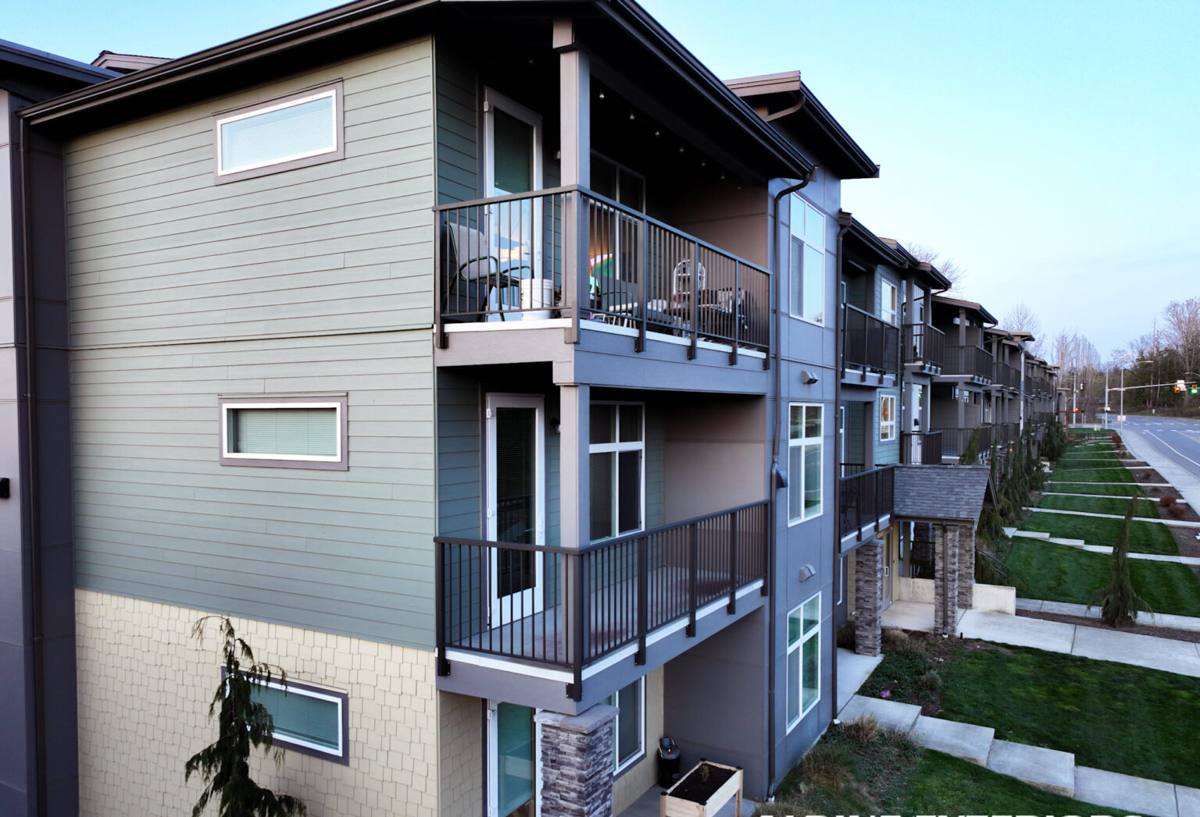
What a Correct Job Looks Like Here
A siding replacement in this area isn't just swapping old boards for new ones. It's an opportunity to fix the water-management details that determine whether the next siding job lasts twenty-five years or falls apart in twelve. That means:
- Full tear-off to inspect the sheathing underneath for rot, soft spots, or prior water damage before anything new goes up
- A correctly lapped weather-resistive barrier, not just a stapled sheet of house wrap
- Properly flashed windows, doors, and any wall penetrations — the single biggest source of hidden leaks on homes near the water
- Rainscreen or drainage gap detailing where the wall assembly calls for it, so bulk water has somewhere to go besides into the wall
- Stainless or coated fasteners appropriate for a marine-exposure environment, not standard-grade hardware that corrodes early
- Ventilation at soffits and any enclosed spaces so trapped moisture can actually dry out between storms
Skip any one of these steps and the new siding may look fine for a few years while the underlying problem keeps building. On a shoreline property, that gap between "looks fine" and "is fine" tends to be shorter than homeowners expect.
Why We Don't Cut This Corner
We've been called out to re-do work on homes in this area where the siding itself wasn't the problem — the flashing and moisture barrier behind it were. Replacing siding without correcting those details just buys a few years before the same issue resurfaces, often with rot damage that costs more to fix than it would have to do the flashing right the first time.
Why We Install Only James Hardie Fiber Cement
We standardized on James Hardie fiber cement siding for every job we do, including here in Cherry Point, and we don't install vinyl, LP SmartSide, or other fiber cement brands. That's not a marketing position — it's a product decision based on how these materials actually perform in a salt-air, high-moisture climate over decades, not just the first few years.
Fiber cement is non-combustible, dimensionally stable, and doesn't feed moss and mildew growth the way wood-based products can. James Hardie's HZ5 product line is specifically engineered for climates with freeze-thaw cycling and sustained moisture exposure — which describes Whatcom County's shoreline communities well. The ColorPlus factory finish is baked on under controlled conditions, which holds color and resists the fading and chalking that field-applied paint goes through faster in direct salt spray and UV exposure. And James Hardie backs the product with a long, transferable limited warranty that matters if you ever sell the house.
Vinyl siding can warp and become brittle with the temperature swings and UV exposure typical here, and its seams give wind-driven rain more opportunities to find a way behind the panel. LP SmartSide and other wood-strand products perform well in many climates, but they rely on intact factory sealing and diligent caulking at every cut edge to keep water out — a maintenance burden that's less forgiving in a place where rain comes from every direction for months at a stretch. Other fiber cement brands may look similar on a spec sheet, but we've standardized on Hardie because of the consistency of the ColorPlus finish and the depth of their climate-specific engineering.
Material Comparison for Marine-Exposure Homes
| Factor | James Hardie Fiber Cement | Vinyl | Wood-Strand (e.g. LP SmartSide) |
|---|---|---|---|
| Salt air / corrosion resistance | Strong — inert material, factory finish | Moderate — can chalk and become brittle over time | Moderate — depends on sealed edges and coating integrity |
| Moss and moisture resistance | Strong — won't rot or feed fungal growth | Doesn't feed growth but seams trap moisture behind panel | Requires vigilant sealing at cuts and joints to prevent swelling |
| Wind-driven rain performance | Strong when properly flashed and lapped | Weaker at seams and butt joints | Good if factory-sealed edges stay intact |
| Finish longevity | ColorPlus baked-on finish, long fade resistance | Color molded in, but can chalk/fade | Field or factory paint, needs repainting over time |
| Fire resistance | Non-combustible | Combustible | Combustible (treated variants exist) |
How the Replacement Process Works
Every Cherry Point job follows the same sequence, adjusted for the specific house:
- On-site assessment — we look at current siding condition, existing flashing, soffit ventilation, and any visible water staining or soft sheathing before quoting anything
- Tear-off — full removal of the old siding and inspection of the sheathing underneath
- Sheathing repair — replace any rotted or compromised sheathing found during tear-off; this is called out and priced transparently, not buried in a change order
- Weather barrier and flashing — install a correctly lapped moisture barrier and properly flash every window, door, and penetration
- Drainage detailing — rainscreen gap or furring where the wall assembly benefits from it
- Hardie installation — install the panels, boards, or trim to James Hardie's published fastening and clearance specifications
- Final detailing — caulking, touch-up, and a walk-through so you know exactly what was done and why
Why a Crew That Already Works This Area Matters
Semiahmoo and the surrounding Whatcom County shoreline have their own set of conditions that a crew based inland doesn't deal with every week — corrosive salt spray, sustained moss growth in shaded lots, and storm patterns that hit from directions a typical framing detail doesn't anticipate. A crew that regularly works Cherry Point knows which flashing details actually hold up here, which fastener grades are worth the extra cost, and where moss tends to build up on a given roofline and wall orientation. That local pattern recognition shows up in fewer callbacks and a longer-lasting job, not just a faster estimate.
It also means we're not learning the area's failure points on your house. We've seen what happens when siding is installed to a generic spec instead of one that accounts for driving rain and salt exposure, and we build every Cherry Point job around avoiding those specific failure modes.
Signs Your Siding Needs Replacing, Not Just Patching
- Soft or spongy spots when you press on the siding, especially near the bottom courses
- Persistent moss or algae staining that comes back within a season of cleaning
- Visible gaps, warping, or buckling at seams and butt joints
- Peeling or bubbling paint that keeps returning in the same spots
- Musty smell or visible staining on interior walls that back up to exterior siding
- Siding that's original to a home built more than 20-25 years ago, especially wood-based products
If you're only seeing one or two of these and the sheathing underneath is sound, targeted repair may be all that's needed. Once several of these show up together, or there's evidence of moisture getting past the siding into the wall assembly, replacement is usually the more cost-effective path — patch jobs on compromised sheathing tend to fail again within a few years.
What to Expect After Installation
James Hardie siding installed to spec needs very little ongoing maintenance — periodic rinsing to keep salt residue and moss spores from building up, and an occasional check of caulking at trim joints and penetrations. That's a meaningfully lighter maintenance load than wood-based siding, which typically needs recaulking and repainting on a recurring schedule to keep water out at the seams. The factory-applied ColorPlus finish is designed to hold its color for years without a repaint, which matters in an environment where UV and salt exposure would otherwise accelerate fading.
Get a Straight Answer for Your Home
Every Cherry Point property carries slightly different exposure depending on orientation to the water, tree cover, and how the current siding and flashing were installed. If you're seeing early signs of wear, or you just want an honest read on whether repair or full replacement makes sense for your situation, we're happy to take a look. Fill out the form below for a free, no-pressure estimate.