 Semiahmoo
 Siding Installation Built for Wiser Lake's Weather
Wiser Lake sits inland from Semiahmoo Bay, but that doesn't mean the homes around it get a break from Whatcom County's weather. The same marine air that moves off the water pushes across the whole county, and by the time it reaches the lake it's still carrying moisture, still dropping driving rain through the fall and winter, and still leaving enough shade and dampness in tree-lined yards to feed a long moss season. Siding here works year-round in conditions that punish anything installed carelessly or built from the wrong material.
This page is about one thing: what it actually takes to install siding correctly on a Wiser Lake home, and why the material and the crew you choose both matter more here than in a drier climate.
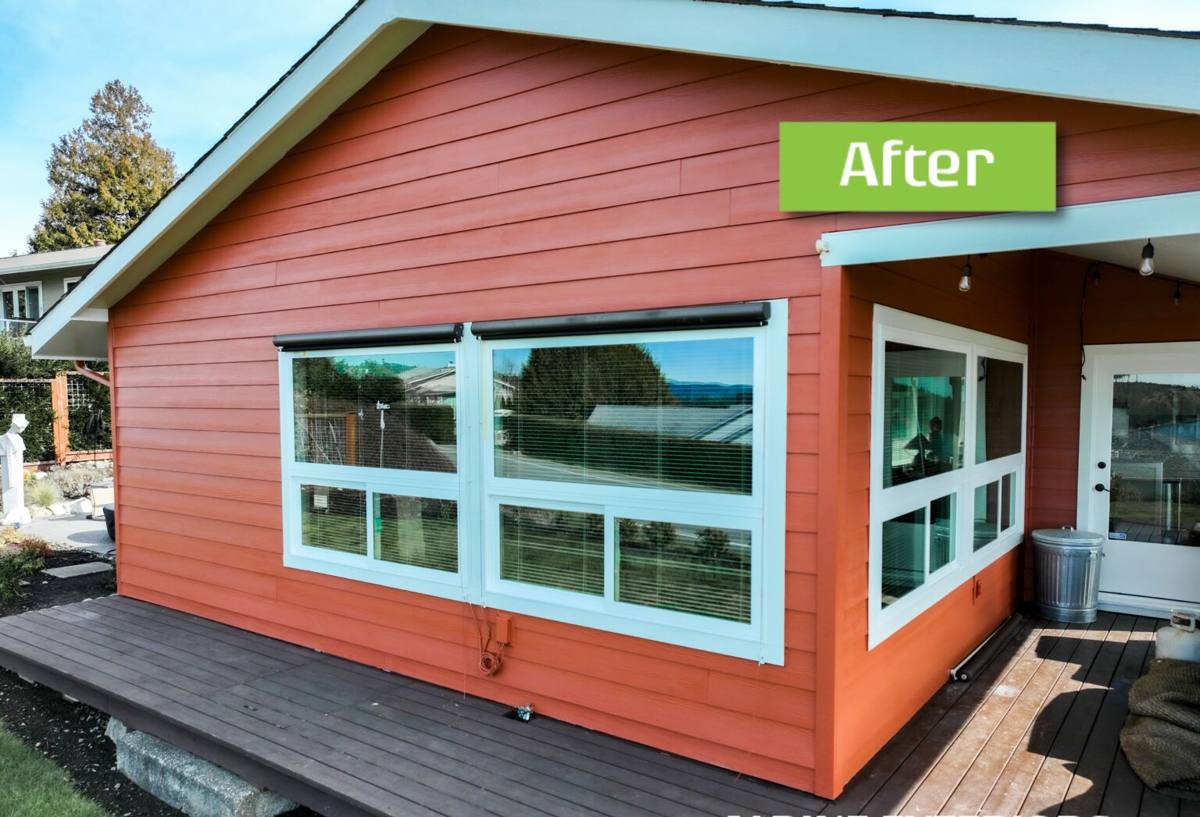
Why the Wrong Siding Job Shows Up Fast Around the Lake
Moisture Doesn't Forgive Shortcuts
Water finds gaps. On a lake-adjacent property with tree cover, sprinkler overspray, and long stretches of damp shade, any weak point in a siding installation — a poorly lapped house wrap, a missed flashing detail, caulk used where flashing should have been — turns into a moisture problem within a few winters, not a few decades. Fiber cement, vinyl, and wood-based products all fail differently when water gets behind them, but they all fail faster when the install itself was rushed.
Moss and Algae Are a Maintenance Reality, Not an Occasional Nuisance
Homes near Wiser Lake that sit under tree canopy or face north often stay damp longer after a rain than an open lot in town. That means algae staining and moss creep on siding, trim, and fascia aren't a rare event — they're a recurring maintenance item. Some siding materials hide this better than others, and some finishes resist it better than others. That's a real factor in choosing what goes on the house, not a minor cosmetic detail.
Temperature Swings Stress Cheap Materials
Whatcom County doesn't get extreme heat, but siding here still goes through repeated wet-to-dry and cold-to-mild cycles across the year. Materials that expand and contract a lot, or that weren't engineered for a wet climate, tend to show gapping at seams, popped fasteners, or fading well before their rated lifespan.
What a Correct Siding Installation Actually Involves
A siding job is only as good as what's underneath it. On every Wiser Lake project, a correct installation includes:
- A continuous, properly lapped weather-resistive barrier — no gaps, no shortcuts at corners or penetrations
- Correct flashing at every window, door, and roof-to-wall transition, installed before the siding goes on, not caulked over afterward
- Manufacturer-specified fastener type, spacing, and penetration depth — under- or over-driven fasteners are one of the most common causes of early siding failure
- Proper clearance between the bottom of the siding and grade, decks, and roof lines so water has somewhere to go
- Correctly sized gaps at butt joints and trim, caulked with a product rated for the material and the climate
- Ventilation behind the cladding where the wall assembly calls for it, so moisture that does get in can dry out
None of this is visible once the job is finished, which is exactly why it matters who does the work. Two houses can look identical from the street and have very different odds of a moisture problem five years later.
Trim and Transitions Are Where Jobs Go Wrong
Inside corners, outside corners, window returns, and the transition where siding meets a chimney, deck ledger, or roofline are the details that separate a durable installation from one that will need repair work in a few years. These are also the details that take the most time and are the easiest to rush on a job priced too low to do them right.
Why We Install Only James Hardie Fiber Cement
We don't install vinyl, LP SmartSide, Cemplank, Allura, or primed wood siding. That's a deliberate standard, not a limitation on what we're capable of installing. Each of those products has a legitimate place in the market, but each also comes with a trade-off — moisture sensitivity, appearance limits, finish durability, or warranty structure — that we're not willing to put our name behind on a Whatcom County home that has to handle this much rain and shade.
James Hardie fiber cement is engineered specifically for wet, variable climates. It's non-combustible, it doesn't rot or delaminate the way wood-based products can when moisture gets in, and its ColorPlus factory finish is baked on under controlled conditions rather than field-applied, which gives it better fade and moss resistance than a job-site paint job. Hardie's HZ5 product line is engineered for exactly the freeze-thaw, high-moisture Pacific Northwest conditions Whatcom County sees. It also carries a strong, transferable warranty — which only means something if the installation meets the manufacturer's specifications, which is the other half of why the crew matters as much as the material.
How Fiber Cement Compares to the Alternatives
| Factor | James Hardie Fiber Cement | Vinyl | LP SmartSide / Wood-Based |
|---|---|---|---|
| Moisture behavior in wet climates | Engineered for it (HZ5 line); doesn't absorb or swell | Sheds water on the surface but can trap moisture behind panels if installed poorly | Wood fiber core is vulnerable if the factory seal is compromised at cuts or damage |
| Fire resistance | Non-combustible | Combustible; can melt or deform near heat | Combustible |
| Finish durability | Factory-baked ColorPlus finish, resists fading and moss staining | Color is in the material but can chalk and fade over time | Field-applied or factory finish, needs repainting on a cycle |
| Typical lifespan when installed to spec | Decades, with strong transferable warranty | Long-lived but more prone to cracking and warping over decades | Shorter if moisture exposure isn't managed carefully |
| Upfront cost | Higher material and labor cost | Lowest | Mid-range |
The lower upfront cost of vinyl or engineered wood siding is real, and for some budgets and some homes it's the right call. Our position is simply that for the moisture and moss conditions around Wiser Lake, fiber cement installed correctly is the material we're willing to warranty our workmanship against.
Our Installation Process
1. On-Site Assessment
We walk the home, check the condition of the existing siding and sheathing, and look specifically for moisture damage around windows, decks, and roof lines — the areas most likely to have hidden problems on a lake-adjacent or tree-shaded lot.
2. Tear-Off and Sheathing Check
Old siding comes off and we inspect the sheathing underneath before anything new goes up. If we find rot or water damage, we address it before installing over it — covering a problem doesn't fix it, it just hides it for a few more years.
3. Weather Barrier and Flashing
We install a continuous weather-resistive barrier and flash every penetration, window, and transition according to manufacturer specifications, not shortcuts.
4. Hardie Installation
Panels or lap siding go on with the correct fastener spacing, clearances, and joint treatment, following James Hardie's published installation requirements — which is also what keeps the manufacturer's warranty valid.
5. Trim, Caulking, and Final Inspection
Trim work, corners, and caulking are finished last, and we walk the completed job before calling it done.
What Affects the Cost of a Wiser Lake Siding Project
Every home is different, so we don't quote sight-unseen, but the main variables that move the price on a project like this are:
| Cost Factor | Why It Matters |
|---|---|
| Home size and number of stories | More square footage and taller walls mean more material, labor, and equipment |
| Condition of the existing sheathing | Rot or water damage found during tear-off requires repair before new siding goes on |
| Trim and architectural detail | Homes with more corners, dormers, or trim work take more labor time per square foot |
| Siding profile chosen | Lap siding, panel siding, and shingle-style Hardie products differ in material and labor cost |
| Access around the lot | Tree cover, slope, or tight lot lines near the lake can affect staging and labor time |
Why Local Experience with Wiser Lake Homes Matters
A crew that already works in and around Semiahmoo and greater Whatcom County knows what this climate does to a home over time — where moss tends to build up, which wall orientations stay damp longest, and how local permitting and inspection expectations work. That's not something a crew from outside the area picks up on their first job here. It shows up in details like where extra flashing attention goes, how ventilation gaps are handled behind the siding, and which trim details need the most care to hold up through a long wet season.
It also means accountability. A local company with a track record in this specific area has a reputation to stand behind here, not somewhere else.
Get a Straight Answer for Your Home
If you're planning a siding project near Wiser Lake, we're happy to take a look, tell you honestly what condition your current siding and sheathing are in, and walk you through what a correct James Hardie installation would involve for your home. There's no pressure and no obligation — just a straightforward estimate based on what we actually see when we're there. Use the form below to get started.