 Semiahmoo
 Composite Decking for Wiser Lake Homes
Wiser Lake sits in a part of Whatcom County where the weather doesn't do a deck any favors. Wind off the water carries salt, rain shows up for months at a stretch, and shaded areas under trees or near the lake hold moisture long after the rest of the yard has dried out. A deck built here needs to shrug off all three, not just look good on the day it's finished. Composite decking, installed correctly, does that. Installed poorly, it fails in the same ways wood does — just more slowly, and with a bigger price tag when it goes wrong.
This page is about composite decking specifically for Wiser Lake properties — what the local conditions demand, what a correct installation actually involves, and how we approach the job when we're out there.
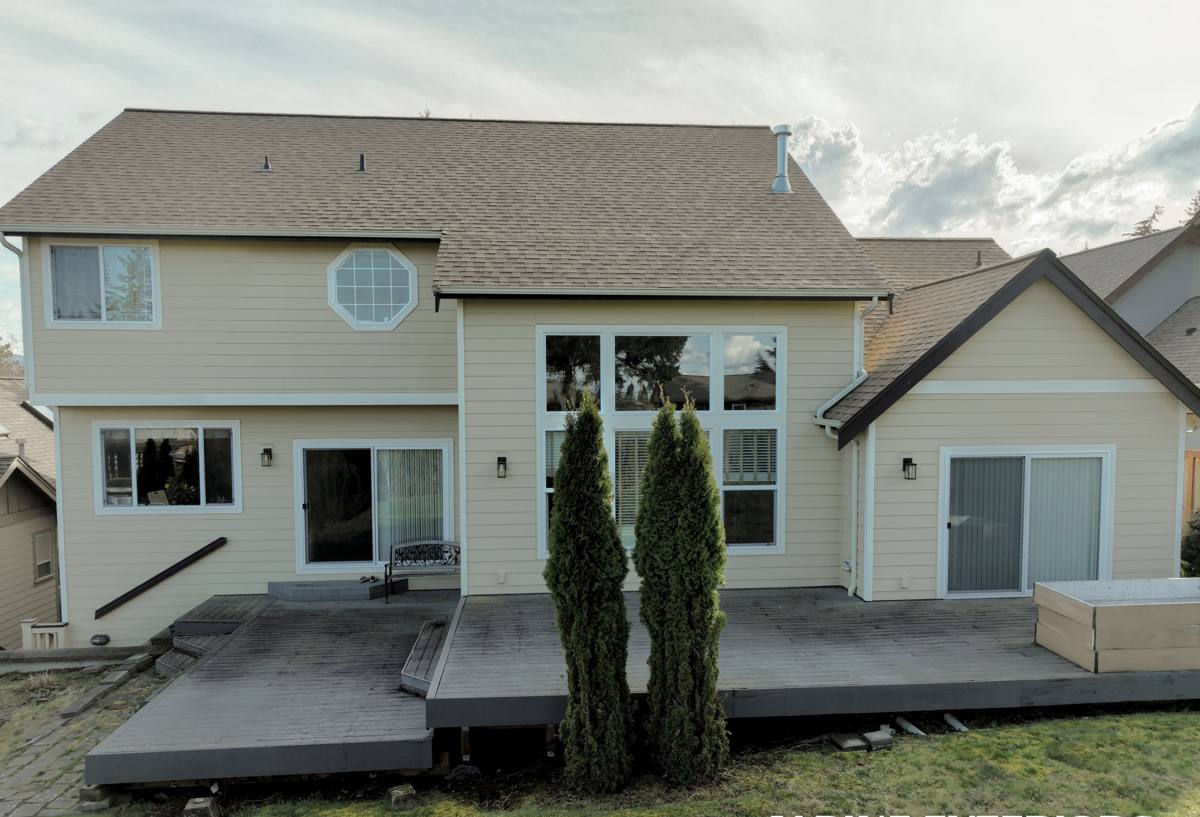
What Salt Air, Rain, and Moss Actually Do to a Deck
It's worth being specific about the failure modes we're building against, because "weatherproofing" as a phrase doesn't tell you much.
Salt Air
Even set back from open water, homes in this corridor get airborne salt on windy days. Salt doesn't rot composite boards the way it can attack raw metal, but it accelerates corrosion on the wrong fasteners and hardware, and it accumulates in board grain and hidden fastener channels where it holds moisture against the material longer than plain rainwater would. The fix isn't a special composite board — it's using stainless or coated fasteners rated for coastal exposure and keeping hardware out of standing water.
Driving Rain
Rain that comes in sideways gets up under rail posts, into end-cuts, and behind ledger boards in ways vertical rain never would. Any cut end of a composite board that isn't capped or sealed is a place water can wick into the core over years. Ledger connections at the house — where the deck meets siding or a rim joist — are the single most common source of hidden rot underneath a deck that looks fine on the surface.
Moss and Algae Season
Whatcom County's wet season runs long, and shaded or lake-adjacent decks stay damp for weeks without direct sun to dry them out. Moss and algae need almost nothing to get started on a damp, low-airflow deck surface — and once established, they turn boards slick and start holding moisture against the surface texture. Composite boards vary a lot in how they handle this: some have surface textures and cap layers that resist growth and clean up easily, others have deep wood-grain embossing that gives moss more to grip onto.
Why Composite Makes Sense Here Specifically
We install wood decking too, and for some budgets and some looks it's still the right call. But for a deck that's going to sit under Whatcom County's rain and moss season year after year, composite has real advantages worth naming plainly:
- No annual staining or sealing — a real time savings over a wood deck's life, not a marketing line
- The board itself won't rot, splinter, or cup the way wood can when it takes on repeated moisture cycles
- Consistent color and texture over time, without the graying and streaking untreated wood shows in a wet climate
- Better resistance to moss gaining a foothold on capped boards versus untreated wood
The trade-off is upfront cost and the fact that composite is less forgiving of installation mistakes — gaps for expansion, fastening patterns, and substructure spacing all matter more than they do with wood, because you can't sand or refinish your way out of a mistake later.
Composite vs. Wood vs. PVC: How They Hold Up Locally
| Material | Maintenance | Moisture Behavior | Typical Lifespan Here | |
|---|---|---|---|---|
| Cedar / pressure-treated wood | Annual cleaning, staining or sealing | Absorbs and releases moisture; prone to cupping, splitting, and moss growth if not maintained | 10–15 years before major repair or replacement | |
| Composite (capped) | Occasional wash-down, no staining | Resists moisture absorption at the surface; cut ends need sealing or capping | 25–30 years, manufacturer-warranty dependent | |
| PVC / cellular decking | Lowest maintenance | Fully synthetic, doesn't absorb moisture at all | 25–30+ years |
We steer most Wiser Lake clients toward capped composite as the balance point: it costs less than full PVC, handles this climate better than wood, and its warranty structure covers the surface issues — fading, staining, mold resistance — that actually show up in this environment.
What a Correct Installation Involves
The composite board is maybe a third of what determines how a deck performs. The rest is substructure and detailing work that's easy to shortcut and hard to inspect once it's covered up.
Framing and Ventilation
Joist spacing has to match the board manufacturer's spec — composite typically needs tighter spacing than wood decking to prevent sagging over time, especially on longer spans. Airflow underneath the deck matters just as much: a low-clearance deck over damp ground with no ventilation traps moisture against the underside of the boards and the joists below, which is where we most often find hidden rot on decks we're asked to repair.
Fasteners and Hardware
Given the salt exposure here, we use stainless steel or coated fasteners rated for coastal/marine use, not standard interior-grade hardware. Hidden fastener systems are worth it on composite — they avoid the small pinholes where water and salt can sit against a screw head over years.
Flashing at the House
The ledger board connection where the deck attaches to the house needs proper flashing, not just a lag bolt through the siding. This is the detail that causes the most expensive hidden damage when it's skipped — water works its way behind the flashing or siding and rots the rim joist or wall framing long before anyone notices from the deck surface.
Board Layout and Expansion Gaps
Composite expands and contracts with temperature more than wood does. Gaps at butt joints, around posts, and at the perimeter need to match manufacturer spec — too tight and boards buckle in warm weather, too loose and the deck looks sloppy and catches debris.
Railings and Post Attachment
Post bases are another common water entry point. We use base plates and blocking that keep end grain and fasteners out of standing water, and we treat any cut ends with the manufacturer's sealant or cap product rather than leaving raw composite exposed at a cut.
Our Process for a Wiser Lake Deck
- On-site assessment — we look at drainage, sun exposure, tree cover, and how the deck will tie into the house before we talk product
- Board and color selection — matched to your budget and how much shade/moisture the deck will see, since darker boards and heavily shaded decks show algae faster
- Framing and structural work — joist spacing, ventilation, and ledger flashing done to spec before a single deck board goes down
- Installation — hidden fasteners where the product supports it, correct expansion gaps, sealed cut ends
- Final walkthrough — we go over cleaning recommendations and what to watch for so the deck actually gets the lifespan it's rated for
Maintenance That Actually Matters Here
Composite is low-maintenance, not no-maintenance. In a climate with this much rain and moss pressure, a few habits go a long way:
- Rinse or sweep debris out of board gaps a few times a year — trapped leaves and needles hold moisture against the surface
- Wash the deck surface with a soft-bristle brush and mild soap when you notice early moss or algae film, before it establishes
- Keep gutters and downspouts near the deck clear so runoff isn't dumping directly onto or under the deck surface
- Check railing posts and stair connections annually for movement — hardware can loosen with seasonal expansion cycles
- Avoid pressure-washing at close range or high pressure, which can damage the cap layer on some composite products
Why Hire a Crew That Already Works This Area
A deck built to a generic spec sheet and a deck built for Whatcom County's actual weather aren't the same job, even if they use the same boards. Knowing how far salt air travels inland around here, how long shaded decks stay wet in the rainy months, and which ledger and flashing details actually get tested by a real Pacific Northwest winter comes from having done this work in this area repeatedly — not from a manufacturer's install guide alone. That's the difference between a deck that needs attention in year six and one that's still solid at year twenty.
If you're planning a new deck or replacing one that's showing its age in Wiser Lake, we're happy to come take a look and give you a straightforward, no-pressure estimate — use the form below to get started.