 Semiahmoo
 Why Sumas Homes Need a Different Approach to Window Replacement
Sumas sits in the Nooksack River valley near the Canadian border, and it doesn't get the same weather as homes ten or fifteen miles south toward Bellingham, let alone the coastal stretch out toward Semiahmoo and Drayton Harbor. Valley towns like Sumas trap cold air and fog in a way open coastline doesn't, and that changes what a window has to survive here. A window system that's fine on a breezy hillside can still struggle in a low-lying valley where moisture sits against the house for hours at a time.
We're based out of Semiahmoo, and a lot of our early work was on homes right along the water dealing with salt-laden air and constant onshore rain. What we learned installing and servicing windows in that environment carries over directly to Sumas: the enemy isn't one dramatic storm, it's the cumulative effect of moisture that never fully dries out, freeze-thaw cycles in the colder valley winters, and years of moss and mildew working into gaps that were never properly sealed in the first place.
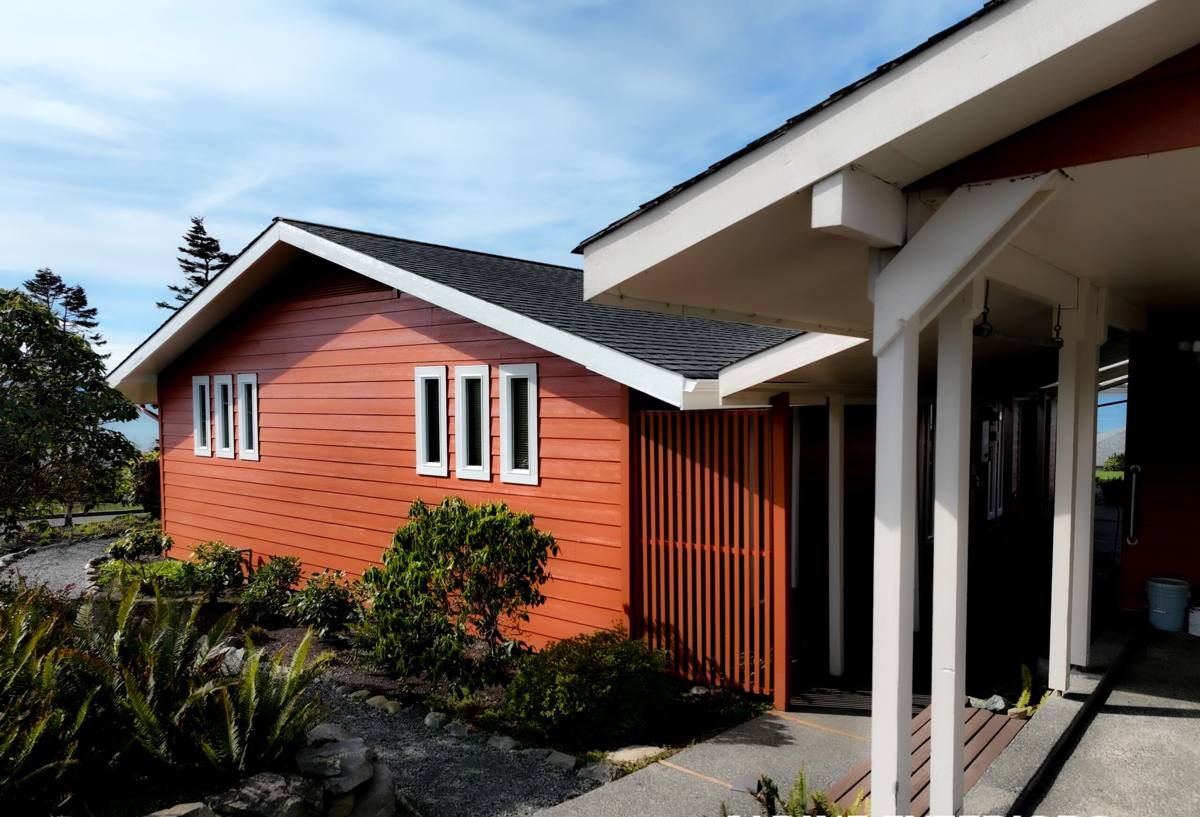
Understanding the Climate Load on Sumas Windows
Driving Rain and Wind-Driven Moisture
Whatcom County gets rain that doesn't just fall straight down — wind pushes it sideways into window frames, sills, and any gap in the flashing. Over years, that wind-driven rain finds every weak point in an old installation. It's rarely a single leak that causes damage; it's slow water intrusion behind trim and siding that rots framing long before a homeowner sees a stain on the wall.
Valley Fog and Standing Humidity
Because Sumas sits low against the foothills, fog and cold, damp air can linger longer than in more exposed parts of the county. That extra dwell time matters for windows — condensation forms more often, wood components stay damp longer, and any organic buildup (dust, pollen, wood fiber) has more time to support mold and rot before the next dry stretch.
A Long Moss Season
From fall through late spring, most of Whatcom County stays wet enough for moss to establish on roofs, siding, and window sills that don't drain or dry quickly. Moss holds moisture directly against wood and vinyl surfaces, which accelerates decay in old wood sills and can stain or degrade even newer vinyl and composite trim if it's never cleared.
Freeze-Thaw Swings
Sumas sees colder winter mornings than the coast, and old single-pane or poorly sealed double-pane windows respond to that with more condensation, more frost buildup on the inside of the glass, and more stress on old seals as materials expand and contract. Over enough cycles, that stress is what causes seal failure and fogging between panes.
Signs Your Sumas Home Needs Window Replacement
Not every issue means a full replacement — some are fixable with re-caulking or hardware repair. But if you're seeing several of these together, it's usually a sign the window itself, not just the seal, has reached the end of its useful life.
- Fogging or a hazy film between the panes of a double-pane window (the seal has failed and the gas fill or dry air pocket is gone)
- Windows that stick, won't stay open, or need force to latch — frames have swollen, warped, or racked out of square
- Visible soft spots, rot, or moss growth directly on wood sills or the bottom rail
- Cold drafts near the frame even with the window fully latched
- Heavy interior condensation or frost on the glass during cold snaps
- Noticeably higher heating bills without any other explanation
- Corroded or pitted hardware — latches, cranks, or balances that no longer move smoothly
- Peeling paint or bubbling trim around the window opening on the exterior
What a Correct Window Replacement Job Actually Involves
Window replacement gets sold as a simple swap, but the part that determines whether a window lasts 20 years or fails in five happens before the new window ever goes in the opening.
Full-Frame vs. Insert Replacement
An insert (or "pocket") replacement drops a new window into the existing frame, leaving the old frame, sill, and flashing in place. It's faster and less invasive, and it's a reasonable option when the existing frame is still structurally sound and properly flashed. A full-frame replacement removes the window down to the rough opening, which lets us inspect and repair the framing, sill, and flashing underneath — something we recommend whenever there's any sign of past water intrusion, which on older Sumas homes is common.
Flashing and Weather Barrier Detail
This is the step that actually keeps water out, and it's the step that gets skipped most often on rushed jobs. Proper flashing integrates with the house's weather-resistive barrier so that any water that does get behind the siding is directed out and away from the framing, not trapped against it. Given how much wind-driven rain this region sees, we treat flashing detail as the most important part of the job, not an afterthought.
Sealing and Insulation
Low-expansion foam and backer rod around the frame perimeter close the gaps that cause drafts and let cold air settle near the glass. Sloppy caulking on the exterior face without proper backer rod or flashing tape underneath looks fine for a season or two, then fails as the caulk ages and moves with the building.
Interior and Exterior Trim
New trim should be back-primed and sealed on all sides before install, not just the visible face — end grain and hidden surfaces are where rot starts on wood trim in a wet climate like this one.
Choosing Window Materials for a Sumas Climate
Material choice matters more here than in a drier climate, because the window has to handle sustained moisture exposure, not just occasional rain.
| Material | Moisture Behavior | Maintenance | Typical Fit for Sumas |
|---|---|---|---|
| Vinyl | Won't rot; can expand/contract with temperature swings | Low — occasional cleaning | Good all-around choice, especially for budget-conscious full-home replacement |
| Fiberglass | Very stable dimensionally, resists moisture well | Low | Strong option where wide temperature swings or higher-end finish is wanted |
| Wood (unclad) | Attractive but absorbs moisture if seals fail | High — repainting/sealing on a cycle | Only recommended with a clear maintenance plan; higher risk in this climate |
| Wood-Clad (aluminum or vinyl exterior) | Exterior face protected; interior wood still needs some care | Moderate | Good if you want a wood interior look with real weather protection outside |
We don't push unclad wood windows on exterior-exposed walls in this climate as a first recommendation — not because wood is a bad material, but because the maintenance burden (repainting and resealing on a strict cycle) is a real commitment, and a missed cycle in a wet valley climate shows up fast as rot. If a homeowner wants the look of wood and is committed to that upkeep, that's a legitimate choice — we just make sure it's an informed one.
Our Process for a Sumas Window Replacement Project
- On-site assessment. We look at every window being considered, check for existing rot, past water staining, and how the current flashing was done — not just measure glass.
- Honest scope and estimate. We tell you which windows genuinely need full-frame replacement versus which can be handled as inserts, and why.
- Material selection. We walk through the trade-offs above based on your budget, the wall's sun/rain exposure, and how the home is used.
- Removal and structural check. On full-frame jobs, we inspect the rough opening and sill for hidden damage before anything new goes in — this is where we catch problems a quick pocket-swap would have buried.
- Flashing, install, and sealing. New window set, flashed to integrate with the wall's weather barrier, sealed and insulated at the perimeter.
- Trim and finish. Back-primed trim, properly caulked, exterior finish matched to the home.
- Final walkthrough. We test operation, check seals, and go over basic maintenance before we consider the job done.
Cost Factors for Window Replacement in Sumas
We won't quote pricing without seeing the actual windows and openings, but these are the factors that move a project up or down in cost, in roughly the order they matter:
| Factor | Why It Matters |
|---|---|
| Full-frame vs. insert | Full-frame costs more up front but is often the right call when framing or flashing has failed |
| Material | Vinyl is typically the most budget-friendly; fiberglass and clad-wood run higher |
| Window size and configuration | Large picture windows, bays, and custom shapes cost more than standard double-hungs |
| Number of windows and access | Whole-house projects have better per-window pricing than one-off replacements; upper-story access adds cost |
| Hidden damage | Rot or framing repair discovered during full-frame removal adds labor and material |
| Glass package | Double vs. triple-pane, Low-E coatings, and gas fills affect both cost and long-term energy performance |
As a general rule, expect a broad range from a few hundred dollars per window for a straightforward vinyl insert replacement up to several thousand for larger full-frame or custom units — the only way to get a real number is a site visit.
Why a Crew That Already Works Sumas and Semiahmoo Matters
Anyone can install a window on a dry, calm day. What separates a good install from a bad one shows up two or three winters later, when the flashing either did its job through a season of driving rain or it didn't. Because we work both the Semiahmoo coastal area and inland communities like Sumas, we've seen how the same window product performs differently depending on exposure — salt-influenced air and constant wind near the water, versus standing valley fog and colder overnight temperatures inland. That experience shapes real decisions on your project: how aggressively we flash a west-facing wall, whether an insert is really appropriate for a given opening, and which materials we'd stand behind for a specific exposure.
A crew that only occasionally works this part of Whatcom County doesn't have that side-by-side experience to draw on. It's not about being from Sumas specifically — it's about having installed and later serviced enough windows across this region's range of conditions to know what actually holds up here versus what looks fine on install day.
Maintaining New Windows Through Whatcom County Seasons
Good installation gets you most of the way to a long-lasting window, but a little seasonal attention extends that life significantly, especially with the long wet season this area gets.
- Clear moss and debris from sills and tracks before it can hold moisture against the frame, especially heading into fall
- Check exterior caulk lines each year for cracking or separation and touch up before winter rains set in
- Wipe down interior condensation during cold snaps so it doesn't sit on sills or wood trim
- Lubricate hardware periodically, particularly if you're closer to the coast where salt air accelerates corrosion
- Keep gutters and downspouts clear so water isn't sheeting down the wall directly above window openings
If you're weighing whether your windows in Sumas need replacement or just some catch-up maintenance, we're glad to take a look and give you a straight answer either way. Reach out for a free, no-pressure estimate — we'll walk the windows with you, point out what we actually see, and let you decide from there.