 Semiahmoo
 Windows in Blaine Harbor: A Different Kind of Wear
Blaine Harbor sits right where the working waterfront meets residential streets, tucked in close to Semiahmoo Bay and Drayton Harbor. Homes here don't get the shelter that inland Whatcom County properties enjoy — the water is close on more than one side, the wind has room to build before it hits a wall, and the air carries salt with it most of the year. Windows are usually the first exterior component to show that wear, because they combine moving parts, seals, and glazing in one assembly that has to keep water and wind out while still opening and closing smoothly.
We replace windows on Blaine Harbor homes regularly, and the failures we see out here follow a pretty consistent pattern: seals that gave out years before they should have, frames that took on moisture from the inside out, and hardware that seized or corroded faster than it would a few miles inland. This page is about that one job — window replacement — for this one stretch of waterfront, not a general overview of what windows do everywhere.
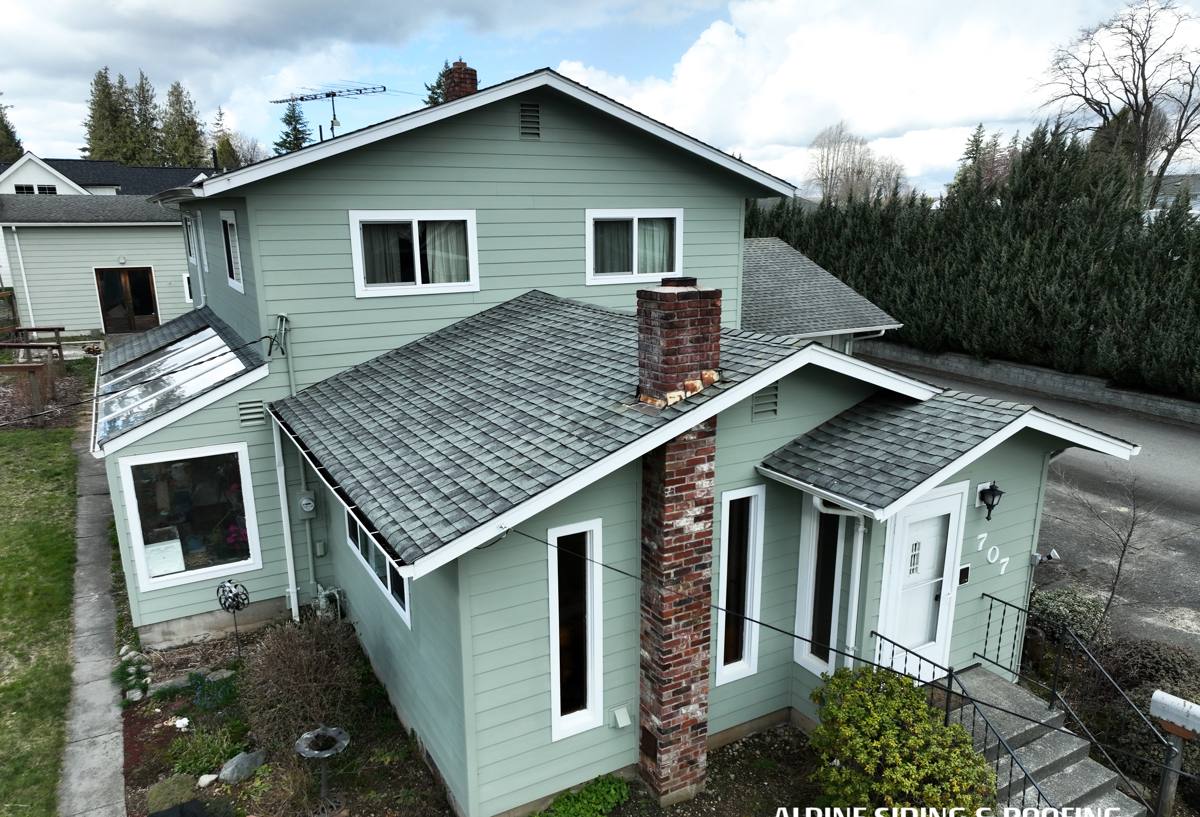
What Salt Air, Driving Rain, and Moss Do to Windows Here
Salt Air and Hardware Corrosion
Salt-laden air moving off Semiahmoo Bay settles on everything, including window hardware that most homeowners never think about — hinges, cranks, balance mechanisms, and the fasteners holding the frame to the rough opening. Lower-grade hardware corrodes faster in this environment than it does inland, and once a crank or balance starts sticking, the window often gets forced or left partly open, which lets even more moisture into the frame.
Wind-Driven Rain and Sideways Water
Blaine Harbor doesn't have much standing between it and open water, so rain here often arrives at an angle instead of falling straight down. That matters for windows specifically because most window leaks aren't failures of the glass or the sash — they're failures of the flashing and the seal between the window and the wall. A window that would perform fine in a sheltered inland yard can leak on a harbor-facing wall simply because the installation wasn't detailed for water hitting it sideways.
A Long Moss and Mildew Season
Mild, humid conditions and shaded north or water-facing walls keep moisture sitting against window frames for long stretches of the year in this part of Whatcom County. Wood-framed windows without a durable factory finish are especially prone to it — moss and mildew take hold in the grain, hold moisture against the wood, and accelerate rot around the sill and lower corners, which is usually where a wood window fails first.
Signs a Blaine Harbor Window Needs Replacing, Not Just Repair
Not every window problem means a full replacement. But on a waterfront property, a handful of signs usually mean the frame or seal system has already been compromised in a way that repair won't fully fix.
- Fogging or a visible haze between panes, which means the seal has failed and the gas fill or insulating air space is gone
- Wood that's soft, discolored, or spongy to the touch at the sill or lower corners
- Drafts you can feel even with the window fully latched and locked
- Cranks, locks, or balances that stick, grind, or no longer hold the sash where you leave it
- Visible daylight or a clear gap between the frame and the surrounding wall or trim
- Paint or finish that keeps failing on the same window no matter how often it's touched up
- Condensation forming on the interior glass or sill during cold, damp stretches
What a Correct Window Replacement Involves on the Harbor
The window unit itself only does part of the job. On an exposed property like this, the installation details around it — flashing, sealant, and how the new window ties into the existing wall assembly — matter as much as the product you choose, and sometimes more.
Flashing and Water Management
Every window replacement here starts with the assumption that wind-driven rain will hit that opening at some point. That means flashing tape or pan flashing at the sill to direct any water that gets past the window back out, proper lapping so water sheds down and out rather than behind the siding, and sealant placed only where it should be — some points in a window assembly need a gap to drain, not a bead of caulk sealing everything shut.
Frame Material Choice
Frame material affects how a window holds up to years of salt air and moisture cycling far more than most homeowners expect. We walk each homeowner through the real trade-offs for a harbor-facing property rather than defaulting to whatever is cheapest to stock.
Matching the Rough Opening
Older Blaine Harbor homes often have rough openings that have shifted slightly over the decades, especially on wood-framed houses that have taken on and released moisture for years. A correct replacement accounts for that instead of forcing a standard-size unit into an opening that's no longer quite square, which is a common source of new leaks after a rushed installation.
Comparing Window Frame Materials for a Waterfront Property
| Frame Material | Moisture Behavior | Salt Air Durability | Maintenance |
|---|---|---|---|
| Vinyl | Won't rot; can expand and contract with temperature swings | Good; no corrosion risk in the frame itself | Low |
| Fiberglass | Dimensionally stable across temperature and moisture changes | Very good; resists both corrosion and expansion issues | Low |
| Wood, factory-clad exterior | Interior wood warmth with a protected exterior face | Good on the clad side; the interior wood still needs a dry, sealed reveal | Moderate |
| Bare or site-finished wood | Absorbs and releases moisture readily | Poor without consistent refinishing in this climate | High |
| Aluminum | Doesn't rot but conducts cold and can corrode without a marine-grade finish | Fair; depends heavily on finish quality | Low to moderate |
Glass Packages Worth Considering Here
Beyond frame material, the glass package itself makes a real difference on a windy waterfront lot. Double-pane, argon-filled units with a low-E coating are the baseline we'd recommend for most Blaine Harbor homes — the gas fill and coating together cut down on heat loss and summer glare without adding much cost over standard clear glass. For walls that take the brunt of the wind off the water, a heavier glass makeup or laminated pane can also cut down on the noise that comes with sustained gusts, which is worth discussing if a particular room faces the open bay directly. Tempered glass is required by code in certain locations near doors, stairs, and low sills regardless of the rest of the package, and we account for that as part of the plan rather than as a surprise at install time.
Our Window Replacement Process
We start with a walk-through of the home, looking at each window individually rather than assuming every opening needs the same fix. Some windows on a property may just need better flashing and a new seal; others need full replacement. From there we put together a clear, written scope covering frame material, glass package, and flashing detail for each opening, so there's no ambiguity about what's being installed and why.
During installation, we remove the old unit carefully to check the condition of the rough opening and sheathing behind it — this is often the first real look anyone's had at that part of the wall in years, and it's the right time to catch and fix any hidden rot or moisture damage before it's sealed back up behind a new window. Flashing goes in before the new window, sealant goes only where it belongs, and we test operation and fit before calling the job done.
A Practical Checklist Before You Sign a Window Contract
- Ask what happens if rot or moisture damage is found in the rough opening once the old window is out
- Confirm the flashing method they use at the sill, not just the window brand they're installing
- Get frame material and glass package specified in writing, not just "vinyl windows" as a generic line item
- Confirm current Washington contractor licensing and active liability insurance
- Ask how many windows they've installed on waterfront or open-exposure properties specifically
- Get a written timeline, since exposed openings need to be closed back up quickly once work starts
What Drives the Cost of a Blaine Harbor Window Job
Every home and every opening is different, so we won't put a fixed number on this page. What we can tell you is what actually moves the price up or down on a harbor-area job, so you're not surprised by a quote.
| Factor | How It Affects Cost |
|---|---|
| Number of openings | Per-window pricing generally drops on larger jobs, but each opening still needs its own flashing detail |
| Frame material | Vinyl is typically the most affordable; fiberglass and clad-wood options cost more upfront but hold up longer here |
| Condition behind the old window | Rot or moisture damage found at the rough opening adds repair time before the new window can go in |
| Glass package | Upgraded coatings, gas fill, or laminated/acoustic glass add cost per unit |
| Wall exposure | Openings facing the open water or prevailing wind often warrant extra flashing detail |
| Opening size and shape | Custom or non-standard openings cost more than stock sizes |
Why a Crew That Already Works Blaine Harbor Matters
A contractor who works this stretch of waterfront regularly already knows which walls take the worst of the wind off the bay, how far salt air travels inland from the water's edge, and what a rough opening on an older harbor-area home is likely to look like once the old window comes out. That familiarity shows up in decisions that aren't visible once the job is done — how much flashing overlap to build in, which sealant actually holds up in this humidity, where an extra drainage gap is worth the ten minutes it takes. Those are the details that determine whether a window replacement lasts one wet winter or several decades on a property this exposed.
If you're weighing window replacement for a home in Blaine Harbor or elsewhere around Semiahmoo, we're happy to walk the property with you and give an honest read on which openings need full replacement, which could use a repair instead, and what it will actually take to keep water out for good. Reach out below for a free, no-pressure estimate.