 Semiahmoo
 Why Siding Installation in Ferndale Is Different
Ferndale sits close enough to the water that salt-laden air is a constant factor in how a home's exterior ages, and far enough into Whatcom County's marine climate that rain isn't an occasional inconvenience — it's a season that lasts most of the year. Add in the shaded, damp conditions that let moss and algae take hold on north-facing walls and anything under tree cover, and you have a set of conditions that punishes siding that isn't installed correctly, or isn't suited to the job in the first place.
This isn't a generic siding page. It's about what siding installation specifically needs to look like on a Ferndale home, given what the local climate actually does to a building envelope over years and decades.
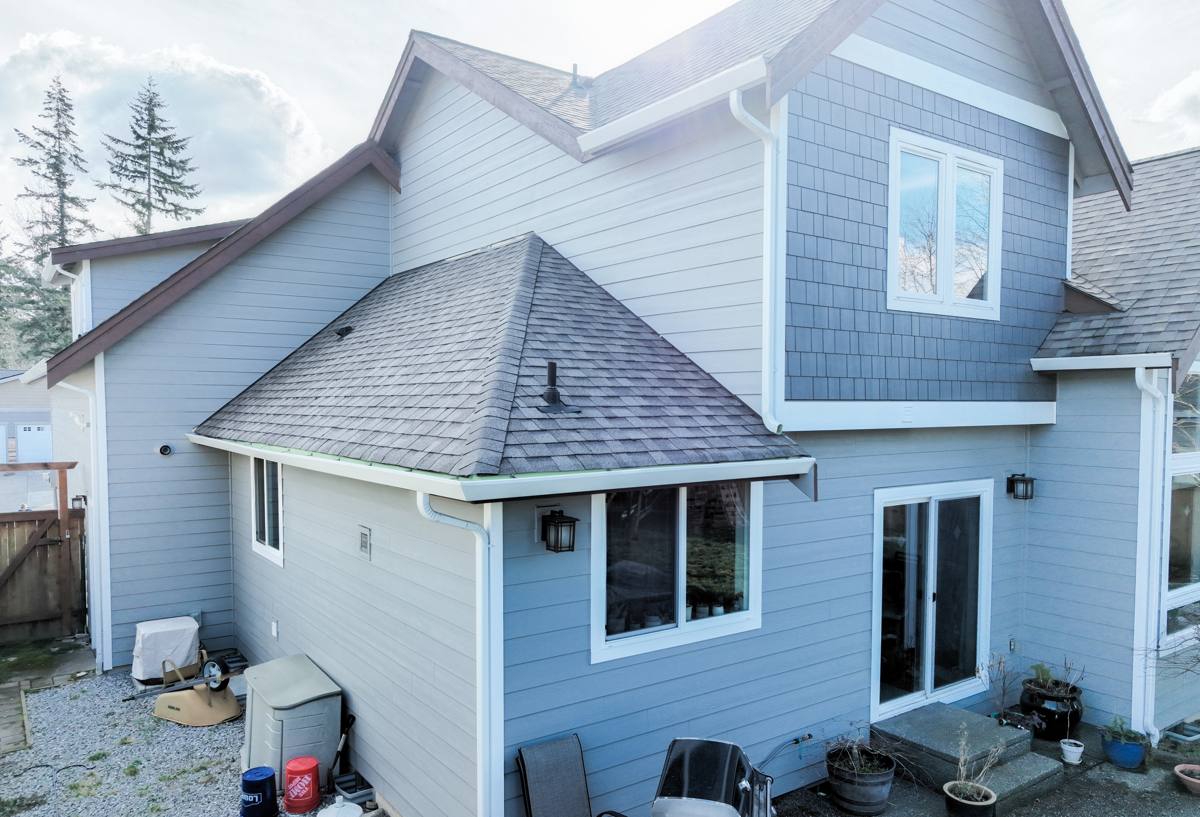
What Salt Air, Rain, and Moss Actually Do to Siding
Salt air
Airborne salt is corrosive to exposed metal fasteners, flashing, and hardware, and it accelerates the breakdown of finishes that aren't formulated to resist it. On homes closer to the water, siding and trim take on a steady low-grade exposure that adds up over the life of the product.
Driving rain
Whatcom County doesn't just get rain — it gets wind-driven rain that hits siding at an angle, working its way behind poorly lapped boards, undersized flashing, and gaps at trim joints. Once moisture gets behind the siding plane, it doesn't dry out quickly in this climate, and that's when rot, mold, and structural damage start.
The long moss season
Shaded walls, north exposures, and anything near overhanging trees stay damp long enough for moss and algae to establish. On the wrong material, that growth holds moisture against the surface and accelerates deterioration. On the wrong finish, it also means the home never quite looks clean, no matter how often it's washed.
What Correct Siding Installation Involves
A siding installation is only as good as what's underneath it and how the details are handled. In a climate like Ferndale's, the installation itself matters more than the product label on the box. Correct installation includes:
- A properly lapped weather-resistive barrier (house wrap) installed shingle-style so water sheds outward, not inward
- Rainscreen or drainage gap furring where conditions call for it, so any moisture that does get behind the siding has somewhere to drain and dry
- Correct flashing at every window, door, and horizontal trim transition — the points where wind-driven rain actually gets in
- Fastener placement, spacing, and type matched to the manufacturer's installation manual, not just "close enough"
- Proper clearance between the bottom of the siding and grade, decks, and roof lines, so water and splash-back don't sit against the material
- Caulking and sealant used only where the manufacturer specifies it — not as a substitute for proper flashing and lapping
Skip any one of these steps and you can end up with siding that looks fine for the first year or two and then starts failing from behind, which is the hardest and most expensive kind of siding problem to catch early.
Why We Install Only James Hardie Fiber Cement
We standardized on James Hardie fiber cement siding, and we don't install vinyl, LP SmartSide, cedar, primed spruce, Cemplank, or Allura. That's a deliberate call based on what holds up best under the specific conditions Ferndale and the surrounding Whatcom County coastline throw at a house.
Fiber cement is non-combustible, which matters in a region that sees wildfire smoke and occasional dry-season fire risk even in a generally wet climate. It doesn't rot, warp, or feed insects the way wood-based products can. James Hardie's ColorPlus factory-applied finish is baked on under controlled conditions rather than field-painted, which gives it more consistent coverage and better resistance to fading and moisture intrusion at the finish layer — a real advantage against salt air and UV exposure over time. Hardie's HZ5 product line is engineered specifically for the freeze-thaw and moisture-cycling conditions found in the Pacific Northwest, which is a meaningfully different climate profile than what a lot of siding is designed around.
None of this means other products are without merit — vinyl is inexpensive and low-maintenance in mild climates, and cedar has real aesthetic appeal. But vinyl can distort in temperature swings and shows its seams over time, wood siding demands ongoing sealing and repainting to survive a wet climate, and some fiber cement alternatives don't carry the same factory-finish system or track record in coastal marine conditions. We made a standard, and it's fiber cement with a factory finish, installed to spec, every time.
How Our Installation Process Works
1. On-site assessment
We look at the existing wall assembly, current siding condition, moisture history if any, sun and shade exposure on each elevation, and proximity to water, trees, and drainage paths. This tells us whether a rainscreen gap is warranted, where extra flashing attention is needed, and what the trim and transition details require.
2. Tear-off and inspection
Removing the old siding lets us actually see the sheathing underneath. This is where hidden rot, prior water intrusion, or failed flashing gets caught and fixed before new siding goes on — not papered over.
3. Weather barrier and drainage plane
We install the house wrap correctly lapped and taped, and add drainage furring where the wall's exposure calls for it, so the assembly can handle wind-driven rain and still dry out.
4. Flashing and trim
Every window, door, and horizontal joint gets flashed to shed water outward. This step is where most siding failures in this climate actually originate, and it's not one we shortcut.
5. James Hardie installation to manufacturer spec
Fastener type, spacing, clearances, and lap details follow James Hardie's published installation requirements — which is also what keeps the manufacturer's warranty intact.
6. Final walk-through
We review the finished work with the homeowner, including care and maintenance expectations specific to a coastal, high-moisture, moss-prone environment.
Comparing Siding Options for a Ferndale Home
| Factor | James Hardie Fiber Cement | Vinyl | Wood / Cedar |
|---|---|---|---|
| Salt air resistance | Strong — factory finish holds up well | Fair — can chalk and fade near the coast | Poor without frequent refinishing |
| Moisture / rot resistance | Non-combustible, doesn't rot | Doesn't rot, but seams can trap moisture | Vulnerable without diligent upkeep |
| Moss/algae resistance | Good — dense, stable surface | Fair — surface can support growth | Poor — porous surface holds moisture |
| Maintenance | Occasional wash; repaint not required for years | Low, but limited repair options | Regular sealing/painting required |
| Finish longevity | Factory-applied ColorPlus finish | Color molded through, can fade/chalk | Field-applied, weathers faster |
Installation Mistakes We See on Older Ferndale Homes
When we tear off old siding on homes in this area, certain problems come up repeatedly:
- House wrap installed upside-down or lapped incorrectly, letting water track behind it instead of shedding out
- Missing or minimal flashing above windows and doors — a direct path for wind-driven rain
- Siding installed tight to grade, decks, or roof lines with no drainage clearance
- Caulk used to "seal" gaps that should have been properly flashed or lapped instead
- No drainage gap on shaded, moisture-prone elevations, trapping dampness against the sheathing
None of these mistakes are visible from the street. They surface years later as soft trim, staining, or rot — usually costing far more to repair than they would have to do correctly the first time.
What to Ask Before Hiring a Siding Crew in This Area
- Do you install a drainage gap or rainscreen where the wall's exposure calls for it?
- How do you flash windows, doors, and horizontal trim joints?
- Are you a manufacturer-recognized installer for the siding you're proposing?
- What's covered under the manufacturer's warranty if the installation isn't done to spec?
- Have you worked on homes in this specific area, with this specific coastal and moisture exposure?
A crew that already works in Ferndale and the surrounding Whatcom County coastline has seen how these conditions actually play out on real houses — which walls take the worst of the driving rain, which elevations need extra attention for moss, and where salt air does the most damage over time. That local pattern recognition is hard to substitute with a general install checklist.
Living With Your New Siding
James Hardie siding installed correctly needs far less upkeep than wood, but it isn't zero-maintenance. An occasional rinse to keep salt residue and organic buildup from settling in, prompt attention to any caulking or trim that shows wear, and keeping gutters and downspouts clear so water isn't dumping against a wall all go a long way toward getting the full service life out of the material in this climate.
If you're weighing a siding replacement on a Ferndale home, we're glad to take a look and talk through what your specific walls, exposure, and existing construction actually need — no pressure, no upsell, just a straight answer. Reach out for a free estimate using the form below.