 Semiahmoo
 Building Decks for Ferndale's Particular Climate
Ferndale sits close enough to the water that salt-laden air is a daily fact of life, and far enough into Whatcom County's rain shadow pattern that "driving rain" isn't an exaggeration — it's a design condition. Add in the long stretch of gray, damp months where moss and algae get a real foothold on anything horizontal, and you have a set of conditions that punishes decks built to a generic, one-size-fits-all spec. A deck that would last decades in a dry inland climate can show rot, fastener corrosion, and slick moss growth within a few seasons here if it's not built with this specific environment in mind.
That's the case for treating a Ferndale deck as its own project, not a copy-paste of a deck built somewhere with milder weather. Everything from the fasteners to the board spacing to the footing depth should reflect what this ground and this climate actually do over time.
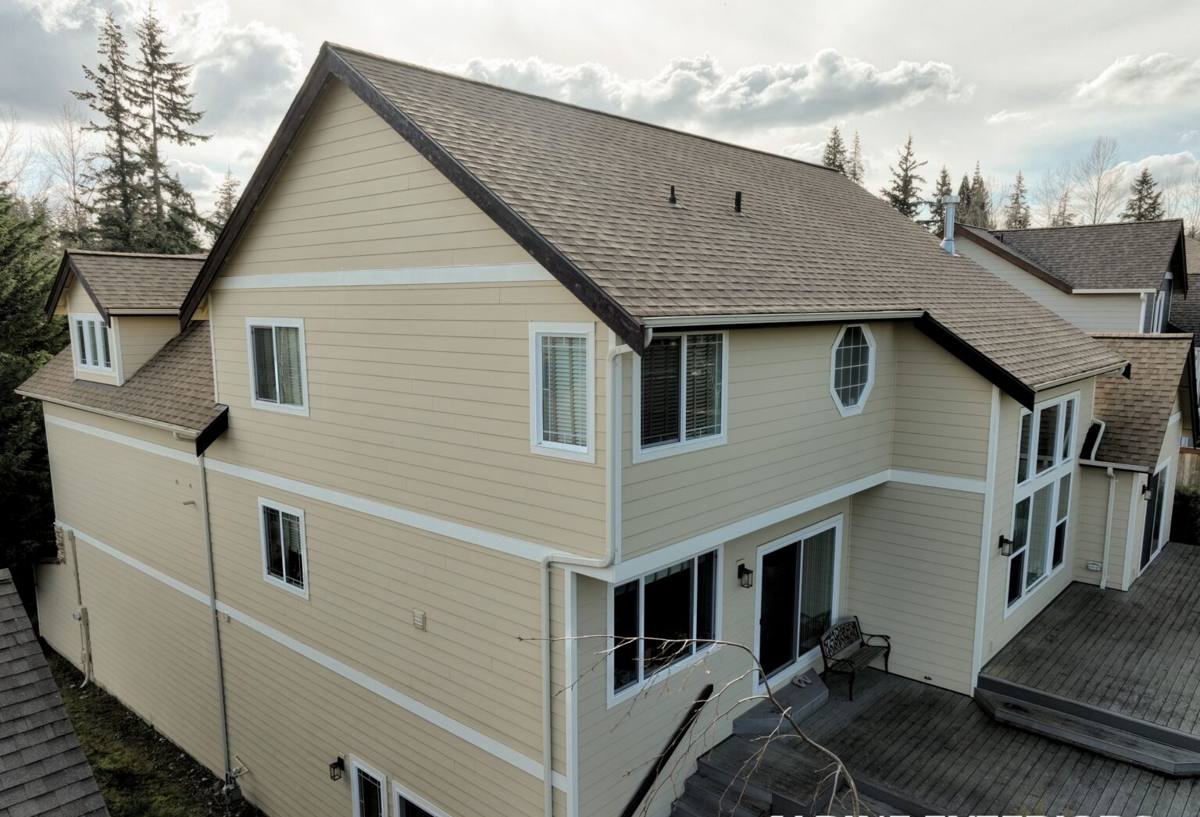
What Salt Air, Rain, and Moss Actually Do to a Deck
Salt air and corrosion
Airborne salt accelerates corrosion in any exposed metal — fasteners, joist hangers, hidden clips, railing hardware. Standard hot-dip galvanized fasteners can start showing surface rust in a coastal-influenced climate faster than most homeowners expect, and once fasteners weaken, the structural connections they hold are only as good as the metal itself.
Driving rain and water intrusion
Rain that comes in at an angle finds its way into places vertical-only rain never would — behind ledger boards, under poorly flashed rim joists, into end grain that isn't sealed. Once water gets into wood framing and can't dry out between storms, rot sets in from the inside where you can't see it until a board is already failing.
Moss, algae, and surface safety
Long stretches of damp, low-sun weather are exactly what moss and algae need to establish on deck boards, especially in shaded areas or spots with poor airflow underneath. Beyond looking bad, a mossy deck surface gets genuinely slick — a real slip hazard on stairs and along walking paths.
Material Choices That Make Sense Locally
There's no single "best" decking material — the right choice depends on budget, maintenance appetite, and how exposed the deck is to weather. Here's how the common options actually perform under Ferndale conditions:
| Material | Moisture Behavior | Moss/Algae Resistance | Maintenance |
|---|---|---|---|
| Pressure-treated fir/hem-fir | Good if properly sealed; end grain and cut edges need re-treatment | Moderate — benefits from periodic cleaning | Annual cleaning, re-sealing every 2-3 years |
| Western red cedar | Naturally rot-resistant but still needs sealing at joints and fasteners | Moderate — surface graying and moss risk without upkeep | Cleaning and oil/sealant every 1-2 years |
| Composite decking | Excellent — doesn't absorb water or rot | Better, but still needs cleaning; algae can grow on any surface left damp and shaded | Periodic washing, no sealing required |
| Tropical hardwood (ipe, etc.) | Very good, dense and naturally durable | Good, but surface can still get slick when mossy | Occasional oiling to maintain color; low structural maintenance |
Composite is the material we recommend most often for Ferndale decks that see heavy weather exposure, simply because it removes rot and repeated sealing from the equation — the trade-off is a higher upfront cost and a look some homeowners prefer to avoid in favor of real wood. Cedar and quality pressure-treated lumber are honest, proven choices too, as long as the homeowner is realistic about the maintenance schedule required to keep them performing well in this climate.
What a Correctly Built Deck Actually Involves
A deck is a structure first and a surface second. The parts nobody sees are what determine whether it's still solid in fifteen years:
- Footings sized and set below frost depth — undersized or shallow footings shift over time, especially in wet, saturated soil common to this area.
- Proper ledger board flashing — this is the single most common point of hidden water damage on attached decks; flashing has to shed water away from the house, not just sit against it.
- Corrosion-resistant fasteners and hardware — rated for the moisture and salt exposure the deck will actually see, not just whatever is cheapest at the yard.
- Joist spacing matched to the decking material — composite and hardwood often need tighter spacing than standard lumber; skipping this shows up as bounce and premature board sag.
- Airflow underneath the deck — proper clearance and, where needed, venting so the underside can dry out between rain events instead of staying damp indefinitely.
- Board gapping calculated for the material's expansion and contraction — too tight and boards buckle when wet; too wide and debris collects, holding moisture against the frame.
Skipping any one of these doesn't usually show up on day one. It shows up two, five, or ten years later as soft spots, rust streaks, or a deck that just doesn't feel right underfoot anymore.
Our Process, Start to Finish
- On-site assessment. We look at sun exposure, drainage patterns, existing grade, and how exposed the location is to wind-driven rain before recommending materials or layout.
- Design and material selection. We walk through the honest trade-offs of each decking option for your specific site and budget — no upselling toward whatever has the highest margin.
- Permitting. Deck permits and inspections exist for a reason, especially around footing depth and railing height. We handle the paperwork so the project is built to code, not around it.
- Framing and structural work. This is where the climate-specific decisions — flashing, fastener grade, footing depth — actually get executed, not just specified on paper.
- Decking, railing, and finish work. Board installation, gapping, and any sealing or finishing happens once the structure underneath is confirmed solid.
- Final walkthrough. We go over the finished deck with you, including what maintenance it will actually need going forward.
Why a Crew That Already Works in Ferndale Matters
A contractor who mostly builds in drier inland climates will default to specs that work fine there but fall short here. A crew that already works Ferndale and the surrounding Whatcom County coastline knows, without having to guess, which fastener grades hold up, where flashing details tend to fail on local homes, and how much airflow clearance a deck actually needs to avoid becoming a moss farm by its third winter. That local pattern-recognition is the difference between a deck that's engineered for this specific environment and one that's just engineered.
It also matters for something less visible: knowing the local permitting process and inspectors, understanding typical soil conditions on area lots, and having a realistic sense of how long materials take to source and how weather windows affect scheduling during the wetter months.
Common Mistakes We See on Existing Decks
When we're called out to repair or replace a deck built by someone unfamiliar with this climate, the same handful of issues come up repeatedly:
- Ledger boards attached without proper flashing, leading to hidden rot behind the house rim joist.
- Standard interior-grade fasteners used outdoors, resulting in early rust staining and weakened connections.
- Decking installed flush with no airflow gap underneath, trapping moisture and accelerating moss growth.
- Footings poured too shallow, leading to frost heave and a deck that shifts or squeaks within a few years.
- No consideration for drainage slope, so water pools instead of shedding away from the structure.
Cost Factors to Expect
Every deck project is different, but the main variables that move the price are consistent. Rather than quote a number that won't apply to your specific site, here's what actually drives cost:
| Factor | Why It Matters |
|---|---|
| Decking material | Composite and hardwood cost more upfront than pressure-treated lumber but reduce long-term maintenance |
| Deck height and footing depth | Taller decks and deeper frost-depth footings require more structural work and material |
| Site access and grade | Sloped or hard-to-access lots increase labor time for excavation and material handling |
| Railing style and hardware | Cable, glass, and custom railing systems cost more than standard wood or metal baluster railing |
| Permitting requirements | Larger or higher decks may trigger additional inspection and engineering requirements |
Keeping Your Deck in Good Shape Year-Round
Whatever material you choose, a little routine attention goes a long way in this climate:
- Sweep debris off the surface regularly, especially in fall — trapped leaves hold moisture against boards.
- Clean moss and algae off the surface and stairs before it builds up, particularly in shaded areas.
- Check fastener heads and railing connections annually for early signs of rust or looseness.
- Confirm gaps between boards and under the deck haven't been blocked by landscaping or storage.
- Reseal wood decking on the schedule appropriate to the product — don't wait until it's visibly gray and dry.
If you're planning a new deck or trying to figure out why an existing one is struggling with this climate, we're happy to take a look and talk through honest options. Reach out for a free, no-pressure estimate — the form below gets you started.