 Semiahmoo
 Window Installation Built for the Peace Arch Waterfront Climate
Peace Arch sits close enough to the water and the border that homes here take a specific kind of weather beating: salt-laden air off Semiahmoo Bay and Drayton Harbor, wind-driven rain that comes in sideways more often than straight down, and a gray, damp stretch of the year long enough to grow moss on anything that holds moisture. Windows are one of the first places that shows up. A window that would be fine in a drier inland part of Whatcom County can fail early here if it wasn't installed with this specific exposure in mind.
This page is about window installation specifically for homes in the Peace Arch area — what the climate demands, what a correct install actually looks like, and what to check before you hire anyone to do it.
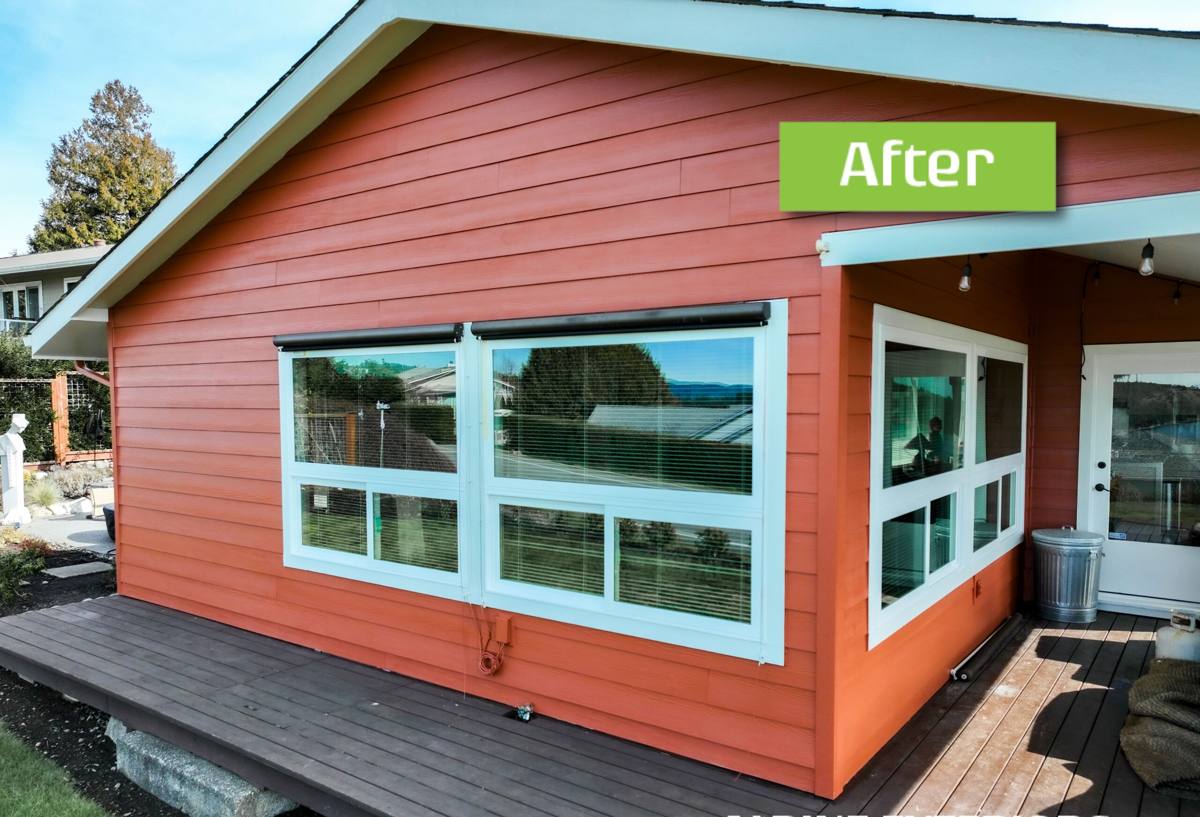
What Salt Air, Rain, and Moss Actually Do to a Window
None of these three things damage a window overnight. They work slowly, which is exactly why so many window problems in this area go unnoticed until there's already rot or a mold smell behind the trim.
Salt air
Airborne salt is mildly corrosive to metal window hardware — hinges, locks, balance mechanisms, and especially lower-grade aluminum or steel components. It also degrades some sealants and finishes faster than a drier climate would. This is less about the glass and more about the small moving and sealing parts that keep water out.
Driving rain
Wind off the bay pushes rain sideways into a house, which means water pressure against a window isn't just falling from above — it's being forced against the frame and flashing from the side. A window installed with only "good enough for normal rain" flashing details can pass fine for a year or two and still leak the first time a real windstorm hits from the water side.
Moss season
Whatcom County's long damp stretch keeps exterior surfaces wet for extended periods. Moss and algae growth around window trim and sills isn't just cosmetic — it holds moisture against wood trim and siding, which accelerates rot exactly where a window's weakest point (the sill and the flashing underneath it) already lives.
Signs a Peace Arch Home's Windows Need Attention
- Soft or discolored wood trim directly below a window sill
- Fogging or a milky look between double-pane glass (seal failure)
- Hardware — locks, cranks, hinges — that's stiff, corroded, or won't latch fully
- Visible moss or dark staining on the exterior trim around the window
- Drafts or a cold line felt along the frame edge in windy weather
- Condensation forming on the interior frame or sill rather than just the glass
- Paint or finish that's bubbling or peeling only around the window, not the rest of the wall
Any one of these on its own isn't an emergency. Several together, especially the wood damage or fogged glass, usually mean it's time to stop patching and start planning a replacement.
What a Correct Installation Actually Involves
Window installation quality is decided almost entirely by what you can't see once the trim goes back on. In a driving-rain, salt-air location like Peace Arch, a few details matter more than they would somewhere drier:
Flashing and water management
Proper flashing directs any water that gets past the exterior cladding down and out, away from the framing — not into it. Sill pan flashing under the window opening is non-negotiable here; it's the difference between a minor drip that drains harmlessly and slow rot you don't discover for years.
Sealing that matches the exposure
Sealant choice and application matter more in salt air, since UV, salt, and moisture all shorten the working life of a low-grade sealant. We use products rated for the exposure and apply them at the joints that actually see water pressure, not just a bead around the visible trim edge.
Fastening and shimming
A window that's shimmed and fastened out of square will stress the seals and hardware from day one, which shows up as premature wear in exactly the corrosion-prone areas salt air already targets. Getting the unit level, plumb, and square before it's ever sealed is basic, but it's also the step most often rushed.
Insulation at the gap
The gap between the window frame and the rough opening needs to be filled with an insulating material that doesn't compress or absorb water over time — not stuffed with fiberglass, which holds moisture against the frame instead of shedding it.
Choosing a Window Suited to This Location
There's no single "best" window brand or material for every house, but some choices hold up better than others in a salt-air, high-rain environment. Here's how the common frame options compare for this specific exposure:
| Frame Material | Salt Air Behavior | Maintenance | Notes for This Area |
|---|---|---|---|
| Vinyl | Doesn't corrode; UV-stable finishes hold up well | Low | Good default for most Peace Arch homes; verify weatherstripping quality |
| Fiberglass | Excellent — dimensionally stable, resists salt and moisture | Low | Strong option where budget allows, especially on the water-facing side of a home |
| Wood (unclad) | Vulnerable without diligent upkeep | High | Requires committed maintenance; we're honest that this is a harder sell this close to the water |
| Wood, aluminum or fiberglass-clad | Good — cladding shields the wood from direct exposure | Moderate | Solid middle ground when a wood interior look is wanted |
| Aluminum | Fair — prone to corrosion and condensation without thermal breaks | Moderate | Only recommend with a proper thermal break; otherwise it fights the climate |
Glass package matters too. In this location, we generally steer homeowners toward double or triple-pane units with a warm-edge spacer system — the spacer is where seal failure (that foggy-glass look) tends to start, and a better spacer buys years of extra life in a damp climate.
Hardware and Fasteners
Whatever frame material is chosen, the fasteners, hinges, and lock hardware should be stainless steel or otherwise corrosion-resistant. This is a small cost difference that matters disproportionately in salt air — it's often the first thing to fail on an otherwise good window.
How We Handle a Peace Arch Window Job
- On-site assessment — we check the existing window, the condition of the sill and framing underneath it, and the specific exposure of that wall (water-facing walls get more attention than sheltered ones).
- Product recommendation — matched to that wall's exposure, the home's style, and the homeowner's budget, with honest trade-offs explained rather than a single default pushed on every job.
- Careful removal — old units come out without unnecessary damage to surrounding siding or trim, and we inspect the opening once it's exposed, since this is often when hidden rot is found.
- Framing repair if needed — any soft or water-damaged framing gets addressed before a new window ever goes in. Installing a new window into a compromised opening just hides the problem.
- Sill pan flashing and air/water barrier integration — installed to shed water outward, tied into the existing weather-resistive barrier correctly rather than just taped over it.
- Setting, shimming, and fastening — the unit is set level, plumb, and square, then fastened per manufacturer spec to keep the warranty intact.
- Sealing — exterior and interior sealed with products rated for the exposure, at every joint that actually sees water.
- Trim and finish — exterior trim reinstalled or replaced, caulked, and finished to shed water and resist the moss growth that damp trim invites.
- Final check — operation, locking, and a visual water-management check before we call the job done.
Mistakes We See on Homes We're Asked to Fix
We don't call out other contractors by name, but there are a few patterns that show up repeatedly on Peace Arch homes where a window was replaced without the local exposure in mind:
- Sill pan flashing skipped or improvised, leaving the sill as the only barrier against water
- Standard-grade sealant used in a spot that gets direct wind-driven rain, failing within a couple of seasons
- Gaps around the frame packed with fiberglass insulation that holds water against the wood instead of an insulation product that stays dry
- Standard steel fasteners or hinges used where salt exposure calls for corrosion-resistant hardware
- New windows installed into an opening with existing rot that was never addressed
None of these show up as a problem on install day. They show up two, three, or five years later — which is exactly why the installation details matter more than the window brand printed on the sticker.
What Affects the Cost of a Window Installation Here
| Factor | Why It Moves the Price |
|---|---|
| Frame material chosen | Vinyl, fiberglass, and clad-wood all price differently; fiberglass typically costs more upfront |
| Number of water-facing openings | Walls exposed to driving rain and salt air get more flashing and sealing work per window |
| Condition of the existing opening | Hidden rot or framing repair adds labor that isn't visible until the old window is out |
| Number of windows done at once | Bundling multiple windows in one visit reduces per-unit setup and mobilization cost |
| Trim and siding tie-in | Matching or repairing surrounding trim and siding adds time versus a simple swap |
| Glass package | Upgraded spacer systems and multi-pane glass cost more but last longer in this climate |
We'd rather walk a homeowner through these factors honestly during a site visit than quote a number without seeing the actual opening — especially on a job where hidden rot or a compromised sill can change the scope once the old window is out.
Why Local Experience in Peace Arch Matters
A crew that mostly works drier, inland jobs can still install a technically fine window — but they may not default to sill pan flashing on every opening, or think twice about which wall gets the salt-rated hardware. Working this stretch of Whatcom County regularly means we've seen firsthand which details actually matter here versus which ones are just good practice everywhere. That's less about any single product and more about treating every water-facing window like it's going to get tested by a real storm off the bay, because eventually it will.
If you're dealing with a drafty, foggy, or aging window on a Peace Arch home — or planning ahead before the next wet season — we're happy to take a look and give you a straightforward, no-pressure estimate. Use the form below to get started.