 Semiahmoo
 Siding Replacement in Lynden: What Whatcom County Weather Does to a House
Lynden sits inland from the coast, but that doesn't mean the house is spared. Whatcom County's marine-influenced climate still delivers long, soaking rain seasons, heavy humidity that lingers on north-facing walls, and enough shade and moisture on tree-lined and farm-adjacent properties to grow a steady crop of moss and algae on anything that holds water. Homes closer to open water and exposed ridgelines around the county also deal with salt-tinged air and wind-driven rain that pushes moisture sideways into seams and laps. Whatever the exact exposure on a given lot, the pattern is the same: siding here doesn't fail because of one bad storm. It fails slowly, from years of moisture cycling in and out of a material that wasn't built to handle it.
That's the real question behind any siding replacement in Lynden: not "what color do I want," but "what will actually survive this climate without babysitting for the next 20 years." This page covers what that means in practice — for the material, the installation, and the way a local crew should approach the job.
Why Siding Fails Faster Here Than the Brochure Suggests
Most siding products are rated and marketed based on lab conditions or a national average climate. Whatcom County isn't average. A few specific stressors show up again and again on older Lynden homes:
- Extended wet seasons. Months of overcast, drizzly weather keep siding damp longer than it dries, which is exactly the condition wood-based and wood-fiber products struggle with.
- Moss and algae growth. Shaded walls, tree cover, and consistent moisture create ideal conditions for organic growth on textured or absorbent siding surfaces, which traps even more moisture against the wall.
- Temperature swings. Cool, damp nights followed by warmer days cause repeated expansion and contraction, which stresses caulk joints, fasteners, and any seams that weren't detailed correctly.
- Wind-driven rain. On more exposed lots, rain doesn't just fall — it's pushed sideways, finding its way behind poorly lapped siding or undersized trim gaps.
None of this is unique to Lynden specifically, but it's a fair description of what any Whatcom County home is up against, and it's why a siding job that looks fine at installation can start showing problems within a few wet seasons if the wrong product or the wrong technique was used.
What a Correct Siding Replacement Actually Involves
Siding replacement is not just stripping old boards and nailing up new ones. Done right, it's a full envelope job. Skipping any of the following steps is where most future callbacks come from:
1. Tear-off and inspection
Old siding comes off completely so the sheathing underneath can be inspected. This is the point where hidden rot, soft spots around old fastener penetrations, or water damage from years of undetected leaks gets found and dealt with — not covered up.
2. Sheathing repair
Any compromised sheathing gets replaced before anything new goes up. Installing new siding over damaged sheathing just locks the problem behind a fresh wall.
3. Weather-resistive barrier
A correctly lapped and taped house wrap or weather barrier goes on next. This is the layer that actually stops bulk water from reaching the sheathing if any gets past the siding — it matters as much as the siding itself.
4. Flashing at every penetration
Windows, doors, hose bibs, light fixtures, and any other penetration need proper flashing so water is directed out and down, not into the wall cavity. This is one of the most commonly rushed steps on lower-bid jobs.
5. Correct siding installation to manufacturer spec
Fastener spacing, nailing patterns, gaps at butt joints, clearance from grade, kick-out flashing at roof-wall intersections — these details are all specified by the manufacturer for a reason. Skipping them is the single biggest cause of premature siding failure, regardless of what product was used.
6. Trim, caulking, and finish work
The visible finish work matters too, but it should be the last five percent of the job, not a substitute for the first ninety-five.
Why We Install James Hardie Fiber Cement — and Nothing Else
We install James Hardie fiber cement siding exclusively. We don't install vinyl, LP SmartSide, Cemplank, Allura, or primed wood species like spruce or cedar. That's a deliberate standard, not a sales pitch, and it's worth explaining honestly.
Vinyl is inexpensive and low-maintenance, but it's a thin plastic product that can warp in heat, crack in cold, and offers little in the way of impact resistance or a premium finished look — and in a climate with this much moisture cycling, the gaps and expansion joints vinyl requires give water plenty of paths inward. Wood-fiber composite products like LP SmartSide perform reasonably when installed and maintained perfectly, but they're wood-based at the core, which means the long-term moisture exposure common in Whatcom County is precisely the condition that shortens their life if a seam, cut edge, or fastener point isn't sealed exactly right. Other fiber cement brands like Cemplank and Allura are legitimate products in the same category as Hardie, but we've standardized on one manufacturer so our crews install one system, to one spec, every time — that consistency is where quality control actually comes from.
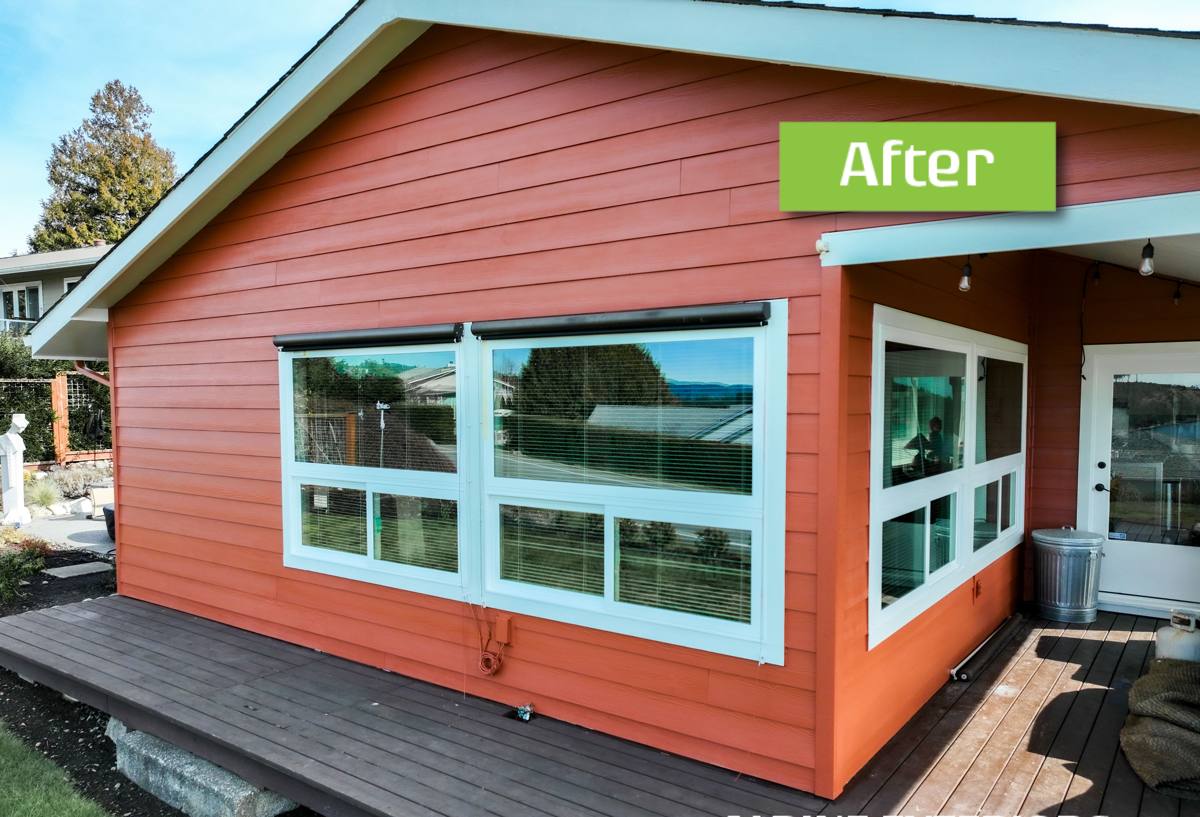
James Hardie fiber cement is non-combustible, dimensionally stable, and engineered specifically for climates like ours — the HZ5 product line is formulated for the kind of freeze-thaw and moisture cycling the Pacific Northwest sees. The factory-applied ColorPlus finish is baked on under controlled conditions, which holds color and resists the moss and mildew staining that plagues field-painted or absorbent surfaces far longer than a job-site paint job can. It also carries a strong, transferable manufacturer warranty — backed by a company with decades in the fiber cement category — which matters if the home changes hands.
None of that replaces correct installation. Even the best siding on the market will underperform if it's hung wrong. But starting with a material that's actually built for this climate, and then installing it to spec, is the combination that gets a siding job to last.
Material Comparison for Whatcom County Conditions
| Material | Moisture Behavior in Wet Climate | Maintenance | Typical Lifespan |
|---|---|---|---|
| James Hardie fiber cement | Dimensionally stable, non-combustible, engineered for moisture cycling | Low — factory finish resists staining and growth | 30+ years with correct install |
| Vinyl | Can warp/crack with temperature swings; many seams for water entry | Low, but limited repair options | 15-25 years |
| LP SmartSide / wood composite | Wood-based core is vulnerable if seams or cuts aren't perfectly sealed | Moderate — depends heavily on maintenance discipline | 15-30 years, highly install-dependent |
| Primed cedar/spruce | Natural wood movement, absorbs moisture, prone to moss/rot in shade | High — repainting, caulk checks, moss treatment | 10-20 years without diligent upkeep |
Signs a Lynden Home Needs Siding Replacement, Not Just Repair
- Visible warping, buckling, or boards pulling away from the wall
- Soft spots when pressed, especially near the bottom courses or below windows
- Persistent moss or algae that returns quickly after cleaning
- Paint that won't hold — peeling, bubbling, or needing repainting every few years
- Cracked or missing caulk joints at multiple trim and window locations
- Rising energy bills that suggest the wall assembly is no longer performing
- Visible daylight or drafts felt near exterior walls from inside
A couple of these issues can often be repaired. Several at once, or any sign of sheathing damage underneath, usually means the wall assembly has been compromised long enough that a full replacement is the more honest recommendation — patchwork siding repair on a failing wall just delays the same conversation.
Our Process for Lynden Siding Replacement Projects
- On-site assessment. We walk the exterior, check for moisture damage, evaluate sun/shade exposure and wind direction on the lot, and talk through what's actually driving the need for replacement.
- Detailed written estimate. Scope, product line, colors, and cost broken down clearly — no vague allowances.
- Tear-off and sheathing inspection. Old material comes off, the wall gets inspected, and any necessary repairs are scoped before new siding goes up.
- Weather barrier and flashing installation. Done to manufacturer spec at every penetration and transition.
- Hardie installation. Installed per James Hardie's published installation guidelines — fastener pattern, clearances, and joint treatment included.
- Final walkthrough. We review the completed work with the homeowner before calling the job done.
Why It Matters That We Already Work in This Area
A crew that's worked across Whatcom County knows what a given lot's exposure actually looks like before the estimate walk even starts — which walls take the worst of the driving rain, where moss tends to establish first, which older homes in the area were built with sheathing types that need extra attention during tear-off. That's not something a crew coming from out of the region picks up on the first visit. It affects real decisions on the job: where extra flashing attention is warranted, how aggressive the moisture inspection during tear-off needs to be, and which details matter most for a specific property's exposure.
It also means accountability. A local contractor's reputation in Whatcom County depends on the work still looking right five and ten years later, not just at final walkthrough.
What Siding Replacement Typically Costs
Exact pricing depends on the home's size, the condition of the sheathing underneath, the amount of trim and detail work, and the specific Hardie product line chosen. In general terms, expect siding replacement to be priced by the square foot of wall area, with additional cost tied to any sheathing repair, extra flashing work, or complex rooflines and trim. Rather than quote a number that doesn't reflect the actual house, we provide a detailed written estimate after walking the property, so the homeowner knows exactly what they're paying for and why.
If your Lynden home's siding is showing its age, or you just want an honest read on whether repair or full replacement makes sense, we're happy to walk the property and give a straightforward answer. Use the form below to request a free, no-pressure estimate.