 Semiahmoo
 Why Ferndale Siding Wears Out Faster Than People Expect
Ferndale sits close enough to the water that homes here deal with a different set of stresses than siding twenty or thirty miles inland. Salt-laden air moves through on the marine breeze and settles on exterior walls, driving rain comes in sideways during winter storms, and the long stretch of gray, damp months between fall and spring gives moss, algae, and mildew months of uninterrupted growing time. None of that is dramatic on its own, but stacked up year after year, it's exactly the combination that breaks down siding from the outside in.
The result is predictable: paint that fails early, caulk joints that open up, panels that cup or swell at the edges, and a north- or west-facing wall that stays damp long after the rest of the house has dried out. If your siding is more than fifteen or twenty years old, or it was installed without much attention to water management, Whatcom County's climate has probably already started working against it — even if the damage isn't obvious yet from the street.
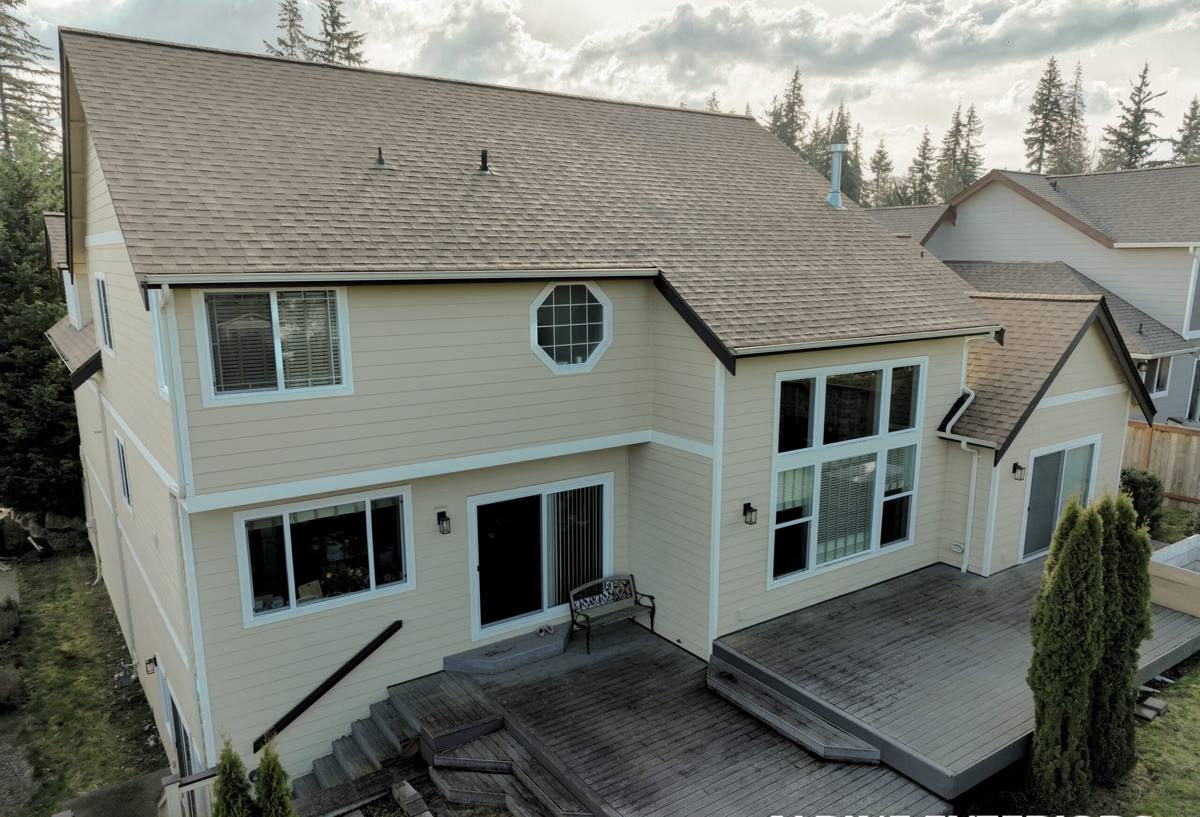
Signs a Ferndale Home Actually Needs Replacement (Not Just Repair)
Not every siding problem calls for a full tear-off. But there's a point where patching stops making sense and full replacement becomes the more honest recommendation. Some of the clearest signs:
- Soft or spongy spots when you press on the siding, especially near the bottom courses or window trim
- Paint that's peeling or bubbling in the same spots every couple of years, no matter how many times it's repainted
- Persistent moss or dark streaking on shaded or north-facing walls that comes back within a season of cleaning
- Visible warping, cupping, or gaps at panel seams and butt joints
- A musty smell or damp drywall on an interior wall that backs up to an exterior wall
- Siding that's original to a home built more than 20-25 years ago, particularly older wood or early composite products
If you're only seeing one or two of these, a targeted repair might genuinely be the right call. If you're seeing several at once, that's usually a sign the water management behind the siding — not just the surface material — has been compromised, and that's a replacement conversation.
What a Correct Siding Replacement Actually Involves
Tear-Off and Wall Inspection
Replacement starts with removing the old siding down to the sheathing, not just installing over what's there. This is the step that gets skipped by crews trying to save time, and it's the one that matters most in a climate like this. Once the wall is exposed, we can see what the old siding was hiding — soft sheathing, rotted framing, old flashing that was never installed correctly, or trim that's been letting water in for years without anyone knowing.
Water Management Comes Before the Siding
A weather-resistant barrier gets installed correctly, flashed at every window, door, and penetration, with proper overlaps and no shortcuts around trim. Given how much driving rain the region deals with in winter, this layer is arguably more important than the siding itself — it's what actually keeps water out of the wall assembly if wind-driven rain gets past the surface.
Installing the Siding to Manufacturer Spec
Correct fastener spacing, proper clearance from the ground and roofline, factory-mitered or properly caulked joints, and coordinated flashing at every trim intersection. This is also where installer experience shows the most — siding installed off-spec may look fine on day one and start failing within a few winters.
Why We Install James Hardie Fiber Cement — and Nothing Else
We made a deliberate decision to install only James Hardie fiber cement siding. We don't install vinyl, LP SmartSide, Cemplank, Allura, primed spruce, or cedar. That's not a knock on every homeowner who has one of those products on their house today — plenty of them get sold and installed reasonably well. It's a statement about what we're willing to warranty and stand behind on a home dealing with salt air and sustained winter moisture.
| Material | Where it tends to struggle here |
|---|---|
| Vinyl siding | Can warp or distort in temperature swings, seams allow water intrusion behind the panel, limited long-term color retention |
| LP SmartSide (engineered wood) | Wood-based core is moisture-sensitive; cut edges and joints need diligent sealing and maintenance to avoid swelling |
| Cedar | Beautiful when new, but demands regular refinishing and is vulnerable to moss, rot, and insect damage in sustained damp conditions |
| Primed spruce / unfinished wood panels | Field-applied paint fails faster than factory finish; end grain and joints are common failure points |
| James Hardie fiber cement | Non-combustible, holds a factory ColorPlus finish through years of coastal weather, engineered climate-specific HZ product lines |
Hardie's fiber cement is cement, sand, and cellulose fiber — it doesn't rot, it doesn't feed moss the way wood does, and it doesn't warp with humidity swings the way vinyl can. The ColorPlus factory finish is baked on under controlled conditions, which holds up better over time than a coat of paint applied on-site in variable weather. And Hardie backs it with a strong transferable product warranty, which matters more in a climate that's actively working against your siding every winter.
Our Process, Start to Finish
1. On-Site Estimate and Wall Assessment
We look at your existing siding, note any visible problem areas, and talk through what you're seeing from the inside — drafts, moisture, past repairs. This is also where we scope which Hardie product and profile fits the house.
2. Detailed Written Proposal
You get a clear scope: what's being removed, what's being replaced underneath if needed, the specific Hardie product and color, and a firm timeline — no vague allowances.
3. Tear-Off and Sheathing Repair
Old siding comes off, damaged sheathing or framing gets addressed before anything new goes up, and we walk you through anything we find that wasn't visible beforehand.
4. Weather Barrier, Flashing, and Installation
Water management gets installed and inspected before siding goes up, then the Hardie siding is installed to manufacturer spec, including fastening, clearances, and trim details.
5. Final Walkthrough
We go around the house with you, point out the completed work, and make sure everything matches what was proposed before we call it done.
What Affects the Cost of Ferndale Siding Replacement
| Factor | Why it matters |
|---|---|
| Extent of sheathing/framing repair | Hidden rot found at tear-off adds material and labor beyond the base siding scope |
| Home size and wall complexity | More corners, dormers, and trim details increase both material and labor time |
| Siding profile and color | Lap width, shingle-style panels, and premium ColorPlus colors carry different material costs |
| Access and site conditions | Steep lots, tight setbacks, or multi-story walls affect staging and labor time |
| Trim and accessory scope | Replacing window trim, corner boards, and fascia alongside siding adds to the project but improves the finished water-tightness |
We don't publish flat per-square-foot pricing because these factors genuinely move the number — a straightforward one-story home and a two-story house with a lot of dormers and trim are not the same project. What we will do is give you a specific, itemized number after we've actually looked at your walls.
Why It Matters That We Already Work in Ferndale
A crew that works this stretch of Whatcom County regularly already knows what driving rain off the water does to a north wall, how much moss pressure a shaded roofline puts on adjacent siding, and which flashing details actually hold up through a full winter here versus on paper. That's not something you can fully substitute with a generalist crew that mostly works drier inland areas and treats every job the same way. Local permitting requirements, typical soil and drainage conditions, and the realistic weather windows for tear-off and installation are all things a Ferndale-familiar crew plans around instead of learning on your house.
Caring for Your Siding After Installation
Hardie fiber cement is low-maintenance compared to wood or vinyl, but "low-maintenance" isn't "zero-maintenance," especially in this climate. A yearly rinse-down to clear pollen, salt residue, and early moss growth goes a long way. Keep an eye on caulking at trim joints and touch it up if it starts to crack, and trim back vegetation that keeps a wall shaded and damp longer than it needs to be. Beyond that, the ColorPlus finish and the material itself are built to handle the rest.
If your siding is showing its age, or you just want an honest read on whether repair or replacement makes more sense for your Ferndale home, we're glad to come take a look. The estimate is free, there's no pressure, and you'll get a straight answer either way — use the form below to get started.