 Semiahmoo
 Siding Installation Built for California Creek's Exposure
California Creek sits close enough to the water that homes here take a different kind of weather beating than houses ten miles inland. Salt-laden air moves off the Semiahmoo shoreline, driving rain comes in sideways off the water more often than it falls straight down, and the shaded, moisture-heavy stretches along the creek corridor stay damp long after the rest of Whatcom County has dried out. Siding that would hold up fine in a drier part of the state can start failing here years ahead of schedule if it's not matched to these conditions and installed correctly.
This page is about one job: installing new siding on a California Creek home. Not a general overview of siding products, not a county-wide climate lecture — the specifics of what this exposure does to a house, what a correct installation has to account for, and how we run the job from first estimate to final walkthrough.
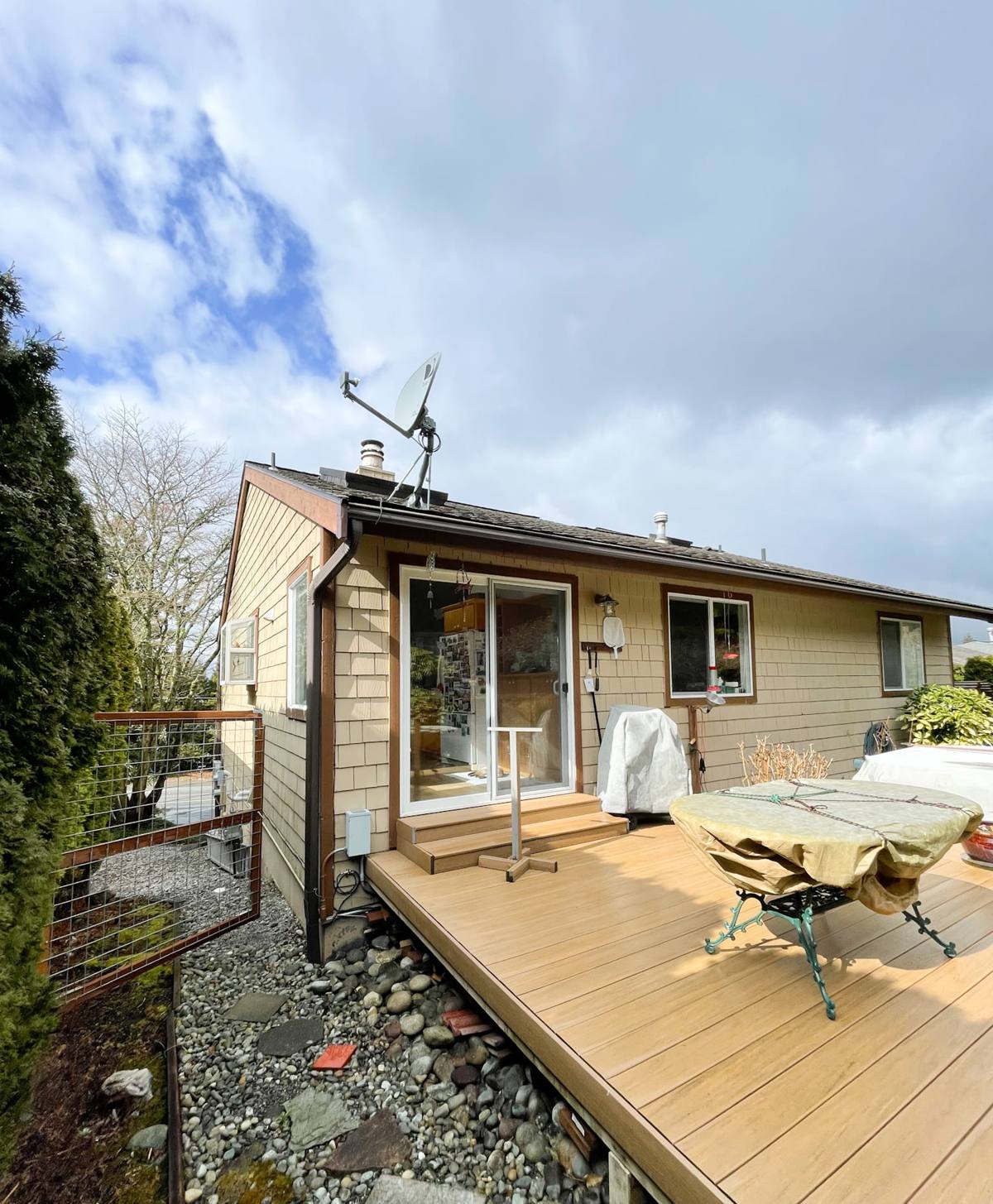
What Salt Air, Rain, and Moss Actually Do to a House
Three things wear down siding in this part of Whatcom County faster than almost anywhere else in the region, and they don't act independently — they compound each other.
Salt Air
Airborne salt from the water settles on exterior surfaces and accelerates corrosion of anything metal — fasteners, flashing, trim edges, even paint film over time. On lower-grade siding materials, salt exposure also speeds up surface breakdown and finish fading, which is one reason factory-cured, engineered finishes matter more here than they would on a house twenty miles inland.
Driving Rain
Wind-driven rain doesn't just wet the surface of a wall — it pushes water sideways and upward into laps, seams, and penetrations that a straight-down rain would never reach. A siding system that relies on face-sealing (caulk alone doing the work of keeping water out) rather than proper shingling, flashing, and drainage behind the cladding will eventually let moisture in, regardless of how good the caulk job was on installation day.
Moss and Prolonged Dampness
California Creek's tree cover and proximity to water mean surfaces stay damp longer through the fall, winter, and spring than they would in more open, sun-exposed parts of the county. That extended dampness is exactly what moss, algae, and mildew need to establish themselves on siding, trim, and fascia. Moss holds moisture against the surface it's growing on, which is a slow, steady problem for any material that isn't dimensionally stable when wet.
Why We Install Only James Hardie Fiber Cement
We install James Hardie fiber cement siding exclusively. We don't install vinyl, LP SmartSide, Cemplank, Allura, or bare wood siding like primed spruce or cedar, and we're upfront about why: in an exposure like California Creek's, the trade-offs on those products show up as real problems within a handful of years, not decades.
- Vinyl expands and contracts with temperature swings and can warp or pull away from fastening points; it also doesn't hold up structurally the way fiber cement does under wind-driven rain at seams and laps.
- LP SmartSide is an engineered wood product — strand-based with a resin binder — and wood-based products are inherently more vulnerable to sustained moisture exposure than cement-based ones, even with treated strands and factory coatings.
- Bare or primed wood siding (cedar, spruce) needs a disciplined repaint and recaulk schedule to keep water out, and in a moss-prone, damp environment like this one, that maintenance window shrinks fast.
- Other fiber cement brands (Cemplank, Allura) are chemically similar to James Hardie, but we've standardized on Hardie specifically for its ColorPlus factory finish, its regionally engineered HZ product lines, and the strength of its transferable warranty — consistency we can stand behind on every job.
James Hardie fiber cement is non-combustible, dimensionally stable in wet-dry cycling, and finished at the factory under controlled conditions rather than relying on a field-applied coat that has to perform perfectly on install day and every year after. That's the standard we hold every California Creek job to.
What a Correct Installation Involves
The siding material is only part of the equation — how it goes on the wall determines whether it actually performs in this climate. A correct installation on a California Creek home includes:
Water Management Behind the Siding
A weather-resistive barrier (house wrap or building paper) installed with proper overlaps and shingle-style laps, so any water that gets past the siding face drains down and out rather than pooling behind it. This layer matters more here than in drier parts of the county because driving rain forces more water toward the wall assembly in the first place.
Flashing at Every Penetration
Windows, doors, hose bibs, vents, and any other wall penetration need properly integrated flashing that directs water outward, not just a bead of caulk covering the gap. Caulk fails over time; correctly lapped flashing doesn't depend on adhesion to keep working.
Clearances and Gaps
James Hardie specifies minimum clearances from grade, roofing, decks, and other abutting surfaces, plus gaps at inside and outside corners that get sealed with the right sealant rather than butted tight. Skipping these clearances is one of the most common ways installers void the manufacturer warranty without the homeowner ever knowing it happened.
Fastener Selection and Placement
In a salt-air environment, fastener corrosion resistance is not optional. We use fasteners rated for the exposure and drive them per Hardie's placement specs — correct edge distance, correct depth, no over-driving that cracks the board or under-driving that leaves it loose.
Factory-Finished ColorPlus Detailing
Where boards are cut, cap and touch-up products designed specifically for ColorPlus finish get used at the cut edges, so the factory-cured color and moisture protection extend to every seam, not just the flat field of the wall.
Our Process on a California Creek Job
| Stage | What Happens |
|---|---|
| Estimate & Inspection | Walk the exterior, check current siding condition, moisture points, and existing water management, and measure for material takeoff. |
| Product & Color Selection | Review Hardie plank profiles, textures, and ColorPlus color options suited to the home's exposure and the owner's preference. |
| Prep & Tear-Off | Remove existing siding, inspect sheathing for hidden rot or water damage, and repair or replace any compromised framing before new material goes on. |
| Weather Barrier & Flashing | Install house wrap and flash all penetrations before a single piece of siding is hung. |
| Siding Installation | Hang boards to manufacturer spec — clearances, fastener pattern, corner and seam treatment. |
| Trim, Caulk & Touch-Up | Install trim, seal joints with appropriate sealant, and apply cut-edge treatment to maintain the factory finish. |
| Final Walkthrough | Walk the completed job with the homeowner, point out warranty registration steps, and answer maintenance questions. |
Because we already work regularly in the Semiahmoo area, we know what to look for when we pull old siding off a California Creek home — hidden moisture damage around window heads and lower wall sections tends to show up in predictable places when a house has spent years absorbing driving rain and staying damp under moss growth.
Choosing the Right Hardie Product for This Exposure
James Hardie makes climate-engineered product lines, and matching the right one to the site matters more in a marine, moss-prone environment than in a dry inland setting.
| Consideration | Why It Matters Here |
|---|---|
| HZ5 climate designation | Engineered for wetter, freeze-thaw-influenced climates like the Pacific Northwest coast — the right baseline for this area. |
| Plank profile | Lap siding with a wider exposure sheds water differently than a narrower reveal; profile affects both look and water-shedding behavior. |
| ColorPlus finish vs. field paint | Factory-applied finish resists fading and moisture intrusion far more consistently than a site-applied coat, especially under sustained damp conditions. |
| Panel vs. lap siding | Lap siding's overlapping courses are generally better suited to high-rain-exposure walls than large flat panels with more seams to manage. |
Cost Factors for a California Creek Siding Job
Every job is different, but the same handful of factors move the price on most California Creek homes:
| Factor | Impact |
|---|---|
| Home size and wall complexity | More square footage, more corners, dormers, and roof intersections all add labor and material. |
| Condition of existing sheathing | Hidden rot from years of moisture exposure means repair work before new siding can go on — this is more common here than in drier areas. |
| Tear-off vs. re-side over existing material | Full tear-off costs more upfront but lets us inspect and correct the water management layer, which matters in this exposure. |
| Trim and detail work | Homes with more window and door openings, custom trim, or architectural detail take more time to flash and finish correctly. |
| Product selection | Plank width, texture, and color all carry different material costs within the Hardie lineup. |
Maintaining Your Siding After Installation
James Hardie siding is low-maintenance compared to wood or vinyl, but "low-maintenance" doesn't mean "no maintenance," especially in a moss-prone, salt-air environment. A short annual routine keeps it performing the way it's designed to:
- Rinse the exterior annually to remove salt residue, pollen, and airborne grime before it builds up.
- Check for moss or algae starting on shaded, north-facing, or tree-covered wall sections and remove it early with a soft wash rather than pressure that can drive water behind the boards.
- Inspect caulk lines at trim, corners, and penetrations yearly and re-caulk any that have cracked or pulled away.
- Keep gutters clear so overflow doesn't run down the wall face and hold water against lower courses.
- Trim back vegetation and tree cover that keeps siding shaded and damp longer than necessary.
- Watch fastener heads and metal trim for early corrosion and address it before it stains or weakens the surrounding material.
Why Hiring a Crew That Already Works California Creek Matters
Siding installation isn't just a product choice — it's a set of judgment calls made on-site: how deep the moisture damage goes once old siding comes off, where the wind-driven rain actually hits hardest on a given elevation, how much clearance to leave near grade on a lot with poor drainage. A crew that already works this stretch of Whatcom County has already seen these conditions repeatedly and knows what to check for before problems become expensive.
Ready to talk through what a correctly installed James Hardie siding job would look like on your California Creek home? Reach out for a free, no-pressure estimate — we'll walk the exterior with you and give you a straight answer on condition, scope, and cost.