 Semiahmoo
 Semiahmoo Resort Puts Decking Through a Different Kind of Test
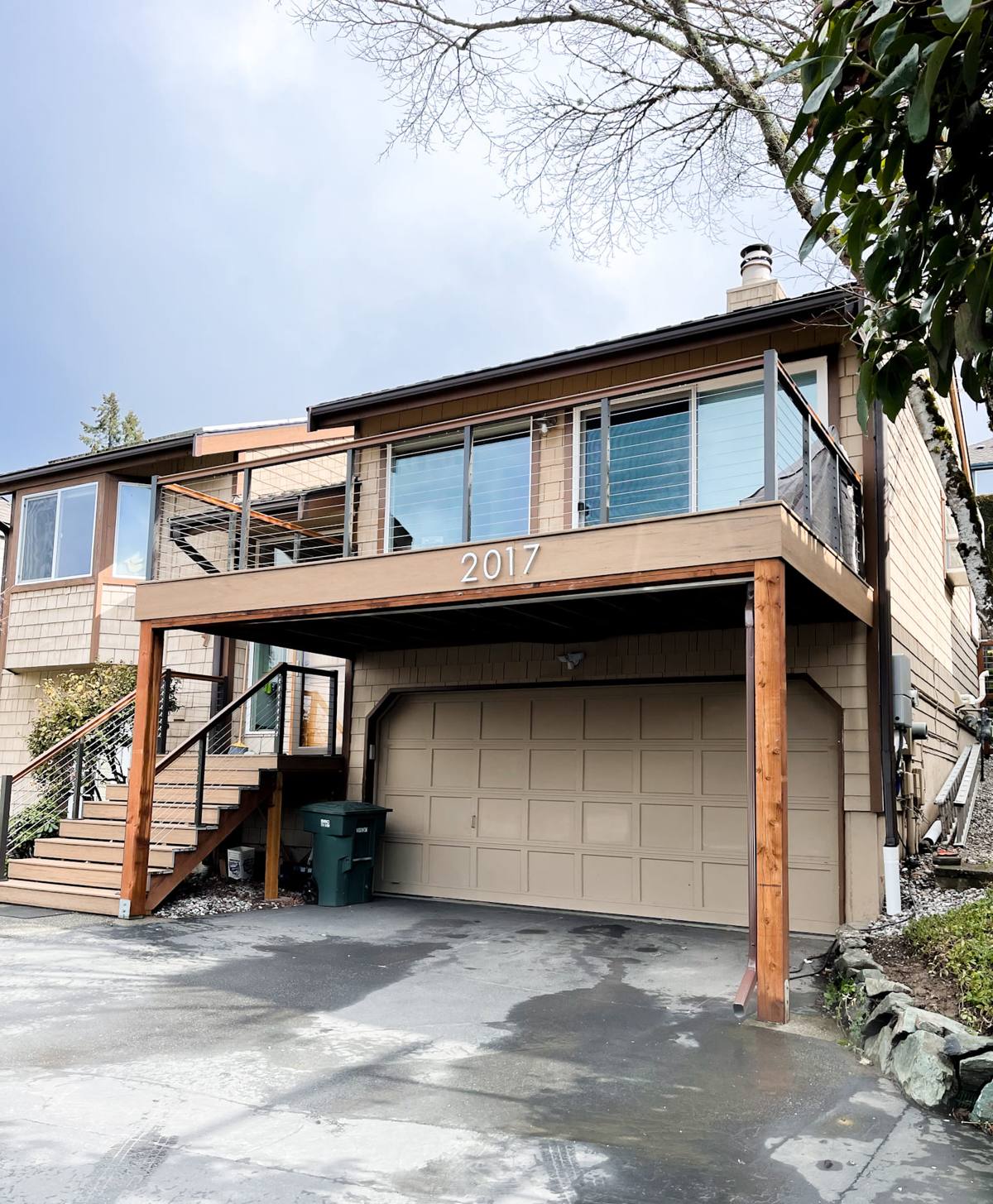
A deck built at Semiahmoo Resort deals with a combination most inland Whatcom County homes never see: constant salt-laden air off the bay, wind-driven rain that finds its way sideways under railings and doors, and a long, damp moss season that can stretch from October well into spring. None of these things are dramatic on their own. What they do is compound — moisture sits longer, salt accelerates corrosion on anything metal, and shaded or north-facing sections of a deck stay wet enough, long enough, that organic growth gets a real foothold. A deck that would be low-maintenance in a drier part of the state needs to be built with all of that in mind here.
This page is specifically about composite decking for homes in and around Semiahmoo Resort — what the climate demands, what a correct installation actually involves, and why the details matter more here than they would somewhere twenty miles inland.
What Salt Air and Constant Moisture Actually Do to a Deck
Composite decking became popular precisely because it holds up better than wood in conditions like these, but "composite" isn't a single material with one set of rules. It's worth understanding what's actually happening underneath the surface of a deck near the water.
Salt Air and Hardware
Salt in the air accelerates corrosion on anything metal — fasteners, joist hangers, railing brackets, screws. A deck built with standard exterior-grade hardware instead of marine-grade or coated stainless fasteners will show rust and staining around fastener heads years before it should. This is one of the most common corner-cutting mistakes we see on decks near the bay, and it's almost entirely invisible until the staining shows up or a fastener starts to fail.
Moisture Under the Boards, Not Just On Top
Composite boards themselves resist water well on the surface, but the substructure underneath — joists, ledger boards, and any wood framing — is still vulnerable. Driving rain gets pushed under railings and around post bases, and if that water has nowhere to drain and no barrier between it and the framing, rot starts where you can't see it. The composite deck surface can look flawless for years while the frame underneath is failing.
Moss and Organic Growth
Shaded areas, north-facing decks, and spots that don't get wind or sun exposure hold moisture longest, and that's exactly where moss and algae take hold. Even mold-resistant composite boards can develop surface growth if water isn't shedding properly, which usually comes down to drainage and airflow, not the board itself.
What a Correct Composite Deck Build Requires Here
Composite decking is often sold as low-maintenance, and it is — but only if the structure underneath it is built for this climate. A few things we treat as non-negotiable on any Semiahmoo-area deck:
- Joist tape or a flashing membrane over every joist top, to keep rainwater from soaking into the framing through screw holes and board gaps
- Stainless steel or coated marine-grade fasteners and brackets throughout, not just at the visible surface
- Proper drainage slope and gapping between boards so water sheds instead of pooling, especially under railings
- Ventilation underneath the deck so trapped moisture can dry out between rain events instead of sitting against the framing
- Ledger board flashing where the deck attaches to the house, which is one of the most common points of hidden water intrusion
- Hidden fastener systems sized and spaced correctly for the specific board profile, since composite boards expand and contract with temperature more than people expect
Skip any one of these and the deck surface can still look fine on installation day. The failures show up two, five, or ten years later — usually as soft spots, rust streaks, or boards that have shifted because the substructure moved underneath them.
Composite Board Types: What the Differences Actually Mean
Not all composite decking behaves the same way in a marine climate. The core differences that matter for a home at Semiahmoo Resort:
| Board Type | Moisture Behavior | Maintenance | Typical Trade-off |
|---|---|---|---|
| Capped composite | Best resistance — cap layer sheds water and blocks staining | Occasional wash-down; no sealing or staining | Higher upfront cost than uncapped |
| Uncapped composite | More prone to moisture absorption at cut ends and surface wear over time | May need periodic cleaning to manage mold/mildew | Lower cost, shorter realistic lifespan here |
| Capped polymer/PVC blend | Excellent moisture resistance, doesn't absorb water at all | Lowest maintenance of the group | Highest material cost; can feel different underfoot |
For a deck exposed to bay-side wind and rain, we generally steer homeowners toward fully capped boards — the cap layer is what actually keeps salt spray and standing water from working into the board over years of exposure. It costs more upfront, but on a deck that's genuinely exposed to marine weather, uncapped boards tend to show their age faster here than they would in a drier inland yard.
Our Installation Process
- On-site assessment — we look at sun/shade exposure, wind direction relative to the water, existing substructure condition if this is a replacement, and drainage around the deck footprint.
- Substructure inspection or build-out — any existing framing gets checked for rot or corrosion before new decking goes down; damaged joists or ledgers get replaced, not covered over.
- Moisture barrier installation — joist tape and ledger flashing go on before a single deck board is placed.
- Fastener and hardware selection — marine-grade or coated stainless hardware throughout, matched to the board manufacturer's specifications so the warranty stays intact.
- Board installation — correct gapping, hidden fastener spacing, and expansion allowance for the board profile chosen.
- Railing and edge detailing — attention to the points where water tends to collect: post bases, stair stringers, and the ledger connection.
- Final walkthrough — we go over care basics with the homeowner before we consider the job done.
Living With a Composite Deck in This Climate
Composite decking cuts maintenance dramatically compared to wood, but "low-maintenance" doesn't mean "no maintenance" — especially with a long moss season working against you. A realistic routine for a deck near Semiahmoo Resort:
- Sweep debris and standing leaves off the deck regularly through fall, when organic matter builds up fastest
- Rinse or lightly scrub shaded and north-facing sections a couple of times a year where moss is most likely to start
- Check under railings and around post bases occasionally for standing water or debris buildup that blocks drainage
- Keep gutters and downspouts near the deck clear so runoff isn't dumping directly onto deck boards or the substructure
- Avoid pressure-washing at close range or high pressure, which can damage the cap layer on capped boards
What Affects the Cost of a Composite Deck Project
| Factor | Why It Matters |
|---|---|
| Board tier (capped vs. uncapped vs. PVC blend) | Material cost varies significantly and affects long-term durability in salt air |
| Substructure condition | A tear-off with rotted or corroded framing costs more than decking over sound, existing framing |
| Deck size and layout | Multi-level decks, curves, and picture-frame border details add labor |
| Railing system | Composite or aluminum railing systems vary widely in price versus basic wood or cable options |
| Site access | Waterfront lots and elevated decks can add complexity for material staging and equipment |
We give honest, specific numbers after seeing the site — broad ranges quoted without a look at your framing, footprint, and access aren't worth much either way.
Signs Your Existing Deck Needs Attention
If you're deciding whether to repair, resurface, or fully replace an existing deck at Semiahmoo Resort, watch for:
- Soft or spongy spots underfoot, especially near the ledger board or stair landings
- Rust staining streaking down from fastener heads or metal brackets
- Persistent moss or dark staining that comes back quickly after cleaning
- Boards that have visibly cupped, warped, or separated at the seams
- Gaps or movement where the deck meets the house
Any one of these on its own might just need a repair. Several together usually mean the substructure has been compromised and a full rebuild is the more honest recommendation.
Why Local Experience With This Site Matters
A crew that already works homes at Semiahmoo Resort knows the specific exposure patterns here — which sides of a house take the worst of the wind-driven rain, how far salt spray typically travels inland from the water, and where moss tends to establish first based on tree cover and orientation. That's not something you get from a general decking crew working a spec sheet; it comes from having built and repaired decks in this exact stretch of Whatcom County and seeing which details actually hold up over years, not just on installation day.
If you're planning a new composite deck or replacing one that's showing its age, we're happy to come take a look and give you a straightforward, no-pressure estimate — just fill out the form below.