 Semiahmoo
 Roof Repair in Ferndale: Built for Whatcom County Weather
Ferndale sits close enough to the water that homes here deal with a specific combination of problems: near-constant damp air off Semiahmoo Bay and the Salish Sea, driving rain that comes in sideways during winter storms, heavy tree cover that shades roofs and keeps them from drying out, and a moss season that can run eight or nine months out of the year. None of that is unique to any one street in Ferndale — it's the whole stretch of Whatcom County from Blaine down through Bellingham — but it means a roof repair done right here looks different from a roof repair done in a dry inland climate. We're a Semiahmoo-based crew that already works this area regularly, and this page is about what a correct repair actually involves for a Ferndale roof.
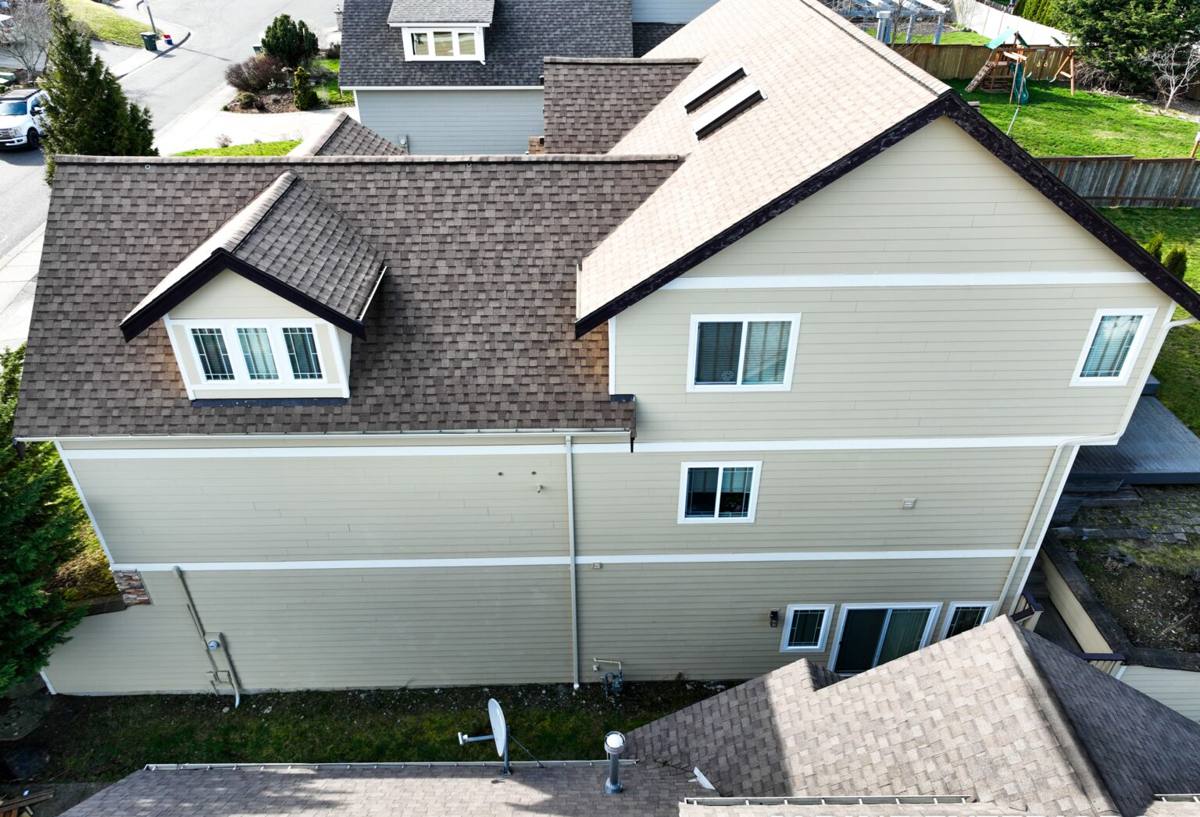
What Ferndale's Climate Actually Does to a Roof
Moss and Organic Growth
Moss doesn't just look bad — it holds moisture directly against shingles and roofing felt, and its root structure works into the granule surface of asphalt shingles or the grain of cedar shakes. On roofs with north-facing slopes or heavy tree cover, which describes a lot of Ferndale lots, moss can establish itself within a year or two of a roof being cleaned. Left unchecked, it lifts shingle edges, traps debris, and creates the exact conditions that lead to leaks at seams and flashing.
Driving Rain and Wind-Driven Water
Storms coming off the water don't just fall straight down — wind pushes rain sideways and up under shingle laps, at ridge caps, and around any penetration in the roof (vents, chimneys, skylights). A repair that only addresses the visible hole or stain, without checking the underlayment and flashing detail around it, often fails again in the next big blow.
Salt Air and Metal Fatigue
Being close to Semiahmoo Bay means a low but steady level of salt in the air. Over years, that accelerates corrosion on exposed fasteners, metal flashing, and gutter hardware. It's a slower process than moss damage, but it's a real factor in why flashing and fasteners on coastal Whatcom County homes sometimes need attention sooner than a standard warranty timeline would suggest.
Temperature Swings and Material Movement
Ferndale doesn't get extreme heat, but the freeze-thaw cycle in winter and the daily temperature swings between damp mornings and cooler nights cause roofing materials to expand and contract. Over time this works at nail heads, sealant joints, and shingle tabs — small movements that eventually show up as small leaks.
Signs Your Ferndale Roof Needs Repair, Not Just a Cleaning
- Dark streaking or moss growth concentrated on north-facing or shaded slopes
- Granules collecting in gutters or at downspout outlets — a sign of shingle wear
- Curling, cupping, or lifted shingle edges, especially near ridges and valleys
- Water stains on interior ceilings or in the attic, particularly near chimneys, skylights, or where two rooflines meet
- Visible daylight through the roof deck when viewed from inside the attic
- Sagging in the roofline, which can indicate deck or structural moisture damage, not just a surface issue
- Rusted or lifted flashing around vents, chimneys, or wall intersections
- Missing or damaged shingles after a windstorm
What a Correct Repair Actually Involves
A roof repair that's done right starts with figuring out why the damage happened, not just patching what's visible. We look at three things on every repair call: the roofing material itself, the flashing and water-shedding details around penetrations and transitions, and the ventilation that keeps moisture from building up underneath.
Diagnosis First
Leaks rarely show up directly under the hole that's causing them — water travels along the underlayment or roof deck before it drips through. A repair based on a guess, rather than tracing the actual path of the water, often means paying for the same leak twice.
Matching Materials and Fastening for the Job
Replacement shingles or shakes need to match the existing roof closely enough in profile and weight that they shed water the same way, and fasteners need to be rated for exposed coastal conditions rather than generic interior-grade hardware. This is a small detail that makes a real difference over a five- or ten-year span in this climate.
Flashing Gets Rebuilt, Not Just Resealed
Caulk and roofing cement are a short-term fix. Where flashing has failed — around chimneys, skylights, dormers, or wherever a lower roof meets a wall — the correct repair replaces the metal and re-laps it properly under the roofing material above and over the material below, so water is shed by geometry, not by sealant alone.
Ventilation Gets Checked
A surprising number of "roof leaks" in this region are actually condensation problems from poor attic ventilation, made worse by our humidity. Part of a thorough repair visit is checking that intake and exhaust venting are balanced, since a roof can be structurally sound and still develop moisture damage from trapped humid air underneath it.
Repair vs. Partial Reroof vs. Full Replacement
Not every roof problem needs a full tear-off, but not every problem is a quick patch either. Here's how we generally think about the decision:
| Situation | Typical Approach | What Drives the Cost |
|---|---|---|
| Isolated leak, flashing failure, storm damage to a small area | Targeted repair | Access difficulty, extent of hidden water damage, matching existing material |
| One slope or section significantly worse than the rest (age, sun/moisture exposure, tree cover) | Partial reroof of that section | Square footage, tie-in complexity where old and new roofing meet, decking condition |
| Roof is near or past its expected service life, multiple areas failing, or repairs have become recurring | Full replacement | Total roof area, layers to remove, decking repairs, material choice, ventilation upgrades |
| Cosmetic moss/algae staining with no underlying damage | Cleaning and treatment, not a repair | Roof size, pitch, and access |
We'll tell you honestly which category your roof falls into. There's no upside for us in overselling a full reroof when a targeted repair will genuinely hold, and there's no upside in patching something that's going to keep failing every wet season.
Our Process for a Ferndale Repair Call
- Inspection. We look at the roof itself, the attic from underneath where accessible, and the areas that typically fail first in this climate — valleys, penetrations, and shaded north slopes.
- Written explanation and estimate. You get a plain description of what's actually wrong, what's causing it, and a scope of work — not just a number.
- The repair. Matching materials, rebuilt flashing where needed, and fasteners suited to coastal exposure.
- Cleanup and debris check. Old material and fasteners removed from the site and gutters, since leftover debris is one of the more common causes of a second leak.
- Follow-up. If anything about the repair doesn't hold through the next round of weather, we come back and make it right.
Why a Crew That Already Works Ferndale Matters
Roof repair isn't a one-size-fits-all trade. A crew that mostly works in dry climates will default to assumptions — about ventilation, about how aggressive moss treatment needs to be, about how much margin to build into flashing details — that don't hold up here. Working Whatcom County roofs regularly means we've already seen how moss establishes on shaded Ferndale roofs, how wind-driven rain off the bay finds its way in around chimneys and skylights, and how salt air affects fastener life over time. That's not a marketing point — it's the difference between a repair that's designed for this specific climate and one that's designed for a textbook.
Being based in Semiahmoo also means we're not driving a long distance for a follow-up visit if something needs a second look, and we're not unfamiliar with the roofing styles and construction common to this part of the county.
Maintenance Between Repairs: What Actually Helps
A repair holds longer when the roof gets basic seasonal attention in between. In this climate, that means:
- Keeping gutters and downspouts clear so water doesn't back up under the roof edge, especially during fall leaf drop
- Trimming back overhanging branches to reduce shade, debris, and moss pressure on the roof
- Having moss treated before it establishes heavily, rather than after it's visibly thick
- Checking attic ventilation isn't blocked by insulation or debris
- Having the roof looked at after any major windstorm, even if no leak is visible yet
What We Won't Do
We won't seal over a flashing problem with caulk and call it fixed — it's a fast job that fails again within a season or two in this climate, and it usually costs the homeowner more in the end. We also won't recommend a full reroof when a targeted repair genuinely addresses the problem. Our standard is that the fix should match the actual cause of the damage, sized appropriately to what's really going on with the roof.
If you're dealing with a leak, storm damage, or moss buildup on a Ferndale roof, we're glad to take a look and give you a straight answer about what it needs. Fill out the form below for a free, no-pressure estimate — there's no obligation, and we'll tell you plainly if it's a minor fix or something bigger.