 Semiahmoo
 Why Blaine and Semiahmoo Roofs Wear Differently
A roof three miles from Semiahmoo Bay doesn't age the same way as one twenty miles inland. Homes here sit close to saltwater, which means airborne salt settles on shingles, flashing, and fasteners year-round and speeds up corrosion on anything metal. Add Whatcom County's long stretch of wet months, where driving rain comes in sideways off the water instead of straight down, and you get water finding its way into laps, seams, and nail heads that would stay dry somewhere less exposed. Then there's moss. Cool, shaded, and damp for much of the year, this part of Washington grows moss on roofs faster than most homeowners expect, and moss doesn't just look bad — it holds moisture against the roofing material and lifts shingle edges as it spreads.
None of that means a Blaine roof is doomed to constant problems. It means the repair work has to account for those three things specifically — salt exposure, wind-driven rain, and moss — rather than treating every leak or damaged shingle as a generic fix. A patch that would hold up fine in a drier, calmer climate can fail here within a season if it wasn't built for what this coastline actually does to a roof.
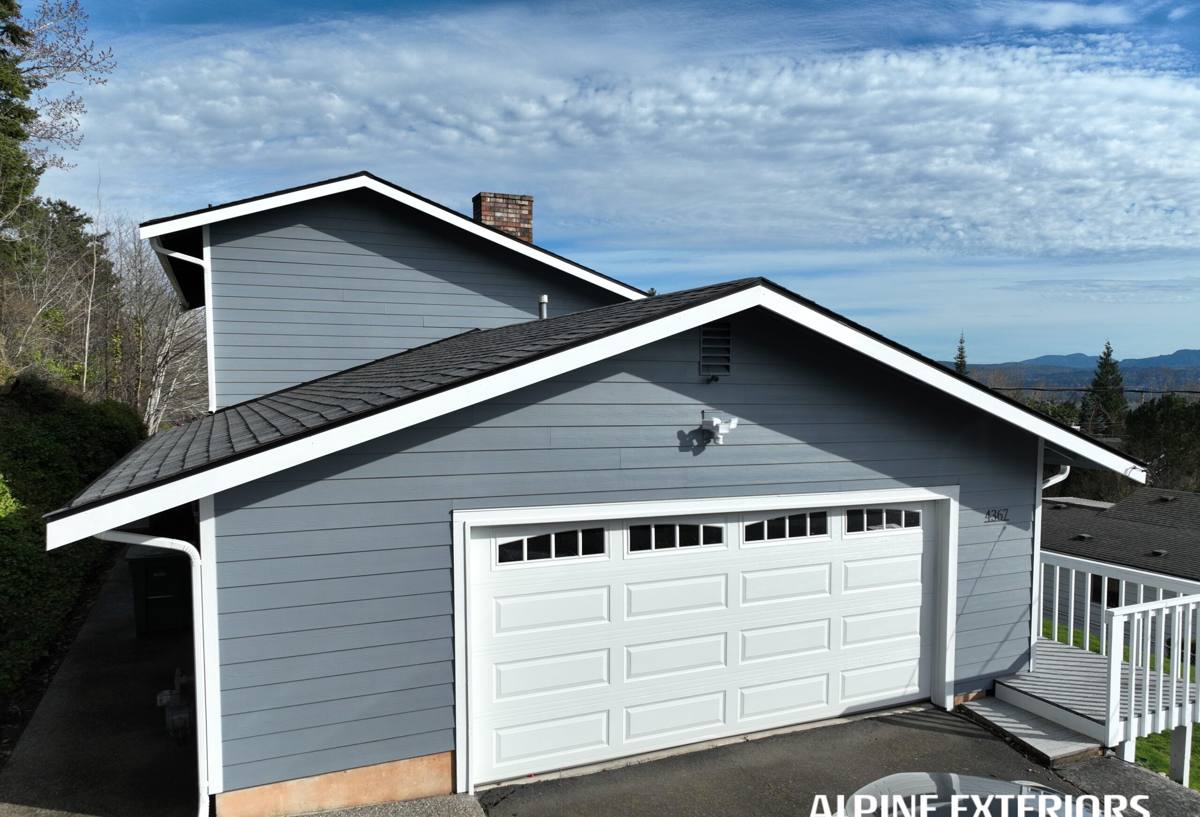
Signs a Blaine Roof Needs Repair Now
Most roof repairs get called in after a leak shows up inside the house, but by then the damage has usually been building for a while. Catching it earlier keeps the repair smaller and cheaper. Look for these signs, especially after a stretch of heavy rain or wind off the water:
- Dark streaks or thick green-black patches of moss and algae, particularly on north-facing slopes that stay shaded
- Shingle edges that look curled, cupped, or lifted rather than lying flat
- Granules collecting in gutters or at the base of downspouts — a sign shingles are losing their protective surface
- Rust staining or streaking below metal flashing, vent boots, or valleys
- Soft spots, sagging, or discoloration on ceilings and in attic spaces after wind-driven rain
- Daylight visible through the roof deck from inside the attic
- Missing, cracked, or blown-off shingles after a windstorm
Any one of these on its own might be a minor fix. Several together, or moss combined with visible granule loss, usually means the roof needs a closer inspection before the next wet season.
What a Correct Roof Repair Actually Involves
Diagnosis Before Patching
The most common mistake in roof repair isn't bad workmanship — it's fixing the spot where water showed up inside instead of where it actually entered the roof. Water travels along rafters and sheathing before it drips through a ceiling, so the visible stain and the real entry point are often several feet apart. A proper repair starts on the roof itself, tracing the path back to flashing, a cracked shingle, a failed pipe boot, or a valley where debris and moss have dammed water against the surface.
Matching Materials, Not Just Covering the Hole
Shingles fade and weather over time, so a patch using mismatched material stands out and can also perform differently than the surrounding roof — different granule wear, different flexibility in cold weather. Where an exact match isn't possible, we look at color and profile closely enough that the repair blends in rather than announcing itself.
Flashing and Underlayment Get the Same Attention as Shingles
On a coastal roof, flashing around chimneys, skylights, valleys, and wall intersections fails before the shingles usually do, because that's where metal meets metal meets water and salt air accelerates corrosion. A repair that replaces a shingle but ignores compromised flashing underneath it is a repair that leaks again within a year or two.
Dealing with Moss Correctly
Scraping moss off a roof without addressing why it grew there just buys a season or two before it's back. A correct repair removes moss without gouging the shingle surface, treats the area to slow regrowth, and checks whether tree cover, shade, or poor airflow is feeding the problem so we can recommend a realistic long-term fix, not just a one-time cleanup.
Common Roof Repair Issues We See Around Blaine and Semiahmoo
| Issue | Typical Cause Here | What the Repair Involves |
|---|---|---|
| Moss buildup on shaded slopes | Long damp season, tree cover, limited sun exposure | Careful removal, treatment, and airflow or trim adjustments where possible |
| Corroded or rusting flashing | Salt air exposure near the bay | Flashing replacement with materials suited to coastal corrosion |
| Leaks around vent boots and pipe collars | Rubber gaskets cracking with age and UV/weather cycling | Boot replacement and resealing at the penetration |
| Wind-lifted or missing shingles | Driving rain and gusts off the water | Shingle replacement and nailing pattern check on exposed slopes |
| Interior water stains with no obvious roof damage | Water traveling along the deck from a distant entry point | Full leak trace before any patch is applied |
Repair or Replace? How We Help You Decide
Not every roof problem in Blaine calls for a full replacement, and not every leak can be permanently solved with a patch. The honest answer usually comes down to the roof's age, how widespread the damage is, and whether the underlying decking and structure are still sound. A roof with isolated flashing failure or a handful of wind-damaged shingles is almost always a repair. A roof with widespread granule loss, multiple past leak repairs, or moss damage across several slopes is often closer to the end of its service life, and repeated patching stops making financial sense.
| Factor | Leans Toward Repair | Leans Toward Replacement |
|---|---|---|
| Roof age | Well within expected lifespan for the material | At or past the material's typical service life |
| Damage location | Isolated to one area or slope | Spread across multiple slopes or the whole roof |
| Underlying deck condition | Solid, dry, no rot found | Soft spots, rot, or repeated leaks in the same area |
| History of repairs | First or second repair on the roof | Long list of past patches in different spots |
We'll give you a straight answer either way. If a repair genuinely solves the problem, that's what we'll recommend — a roof doesn't need to be replaced just because it's convenient for us to sell a bigger job.
Our Process for a Blaine Roof Repair
- On-site inspection of the roof surface, flashing, valleys, and attic to trace the actual source of the problem
- A clear explanation of what we found, in plain terms, along with photos where useful
- A written estimate that separates the repair scope from anything that's optional or preventive
- Scheduled repair work, timed around weather windows so materials are installed dry and properly sealed
- Cleanup of debris, old materials, and any moss or granules removed from the roof and gutters
- A final walkthrough so you know exactly what was done and what to watch for going forward
Materials and Methods We Use — and Why
For coastal repairs, we favor flashing and fasteners rated for corrosion resistance rather than the cheapest stock option, since standard materials can start showing rust within a few years this close to the water. For moss and algae, we use removal and treatment methods that don't strip granules or damage the shingle mat, because aggressive pressure washing can do more harm to a roof than the moss itself. We also pay close attention to how repairs tie into siding, fascia, and soffit details, since a lot of roof leaks in this area actually show up at the transition between the roof edge and the exterior wall — a detail that's easy to miss if a contractor only thinks about the roof in isolation.
We don't cut corners by reusing worn flashing to save a trip to the supplier, and we don't recommend a full tear-off when a targeted repair will genuinely hold. Our standard is that a repair should be built to handle another wet Whatcom County winter, not just pass a quick visual check.
Why It Matters to Hire a Crew That Already Works Blaine
Roof repair advice that works in a dry inland climate doesn't always translate to a roof exposed to salt air and constant moisture off Semiahmoo Bay. A crew that regularly works this stretch of the county already knows which flashing details tend to fail first, how aggressively moss grows on shaded, damp roofs here, and how wind-driven rain finds its way into valleys and wall intersections that a calmer climate wouldn't stress the same way. That local pattern recognition shortens the diagnosis and reduces the chance of a repair that looks fine but leaks again after the next storm.
Keeping a Repaired Roof in Good Shape
A repair holds longer with a little upkeep. Clearing gutters and valleys of debris before the wet season keeps water moving instead of pooling against shingle edges. Trimming back overhanging branches reduces the shade and moisture that feed moss growth. And a quick visual check after any major windstorm — looking for lifted or missing shingles — catches small problems before they become interior leaks. None of this requires climbing on the roof yourself; a periodic look from the ground with binoculars, or a call to us for a check, is usually enough.
If you're dealing with a leak, visible moss, or damage after a recent storm, we're happy to take a look and give you a straight, no-pressure assessment of what your roof actually needs. Use the form below to request a free estimate.