 Semiahmoo
 Storm Damage in Marietta: What Semiahmoo-Area Homes Are Up Against
Marietta sits close enough to Semiahmoo Bay and the open water of the Strait of Georgia that its roofs take a different kind of beating than homes further inland in Whatcom County. Winter storms roll in off the water with sustained wind and driving, sideways rain rather than the straight-down soaking you'd get in a more sheltered valley. That combination — wind-driven moisture plus salt-laden air — is hard on shingles, flashing, and fasteners in ways that aren't always obvious from the ground.
Add in the region's long, wet moss season and you get a roof that's rarely given a real chance to dry out between weather events. A storm that knocks loose a section of shingles or bends a piece of flashing doesn't just sit there waiting to be fixed on a homeowner's schedule — it becomes an entry point for moisture almost immediately. That's the core reason storm damage repair here is its own specialty, not just a smaller version of a full re-roof.
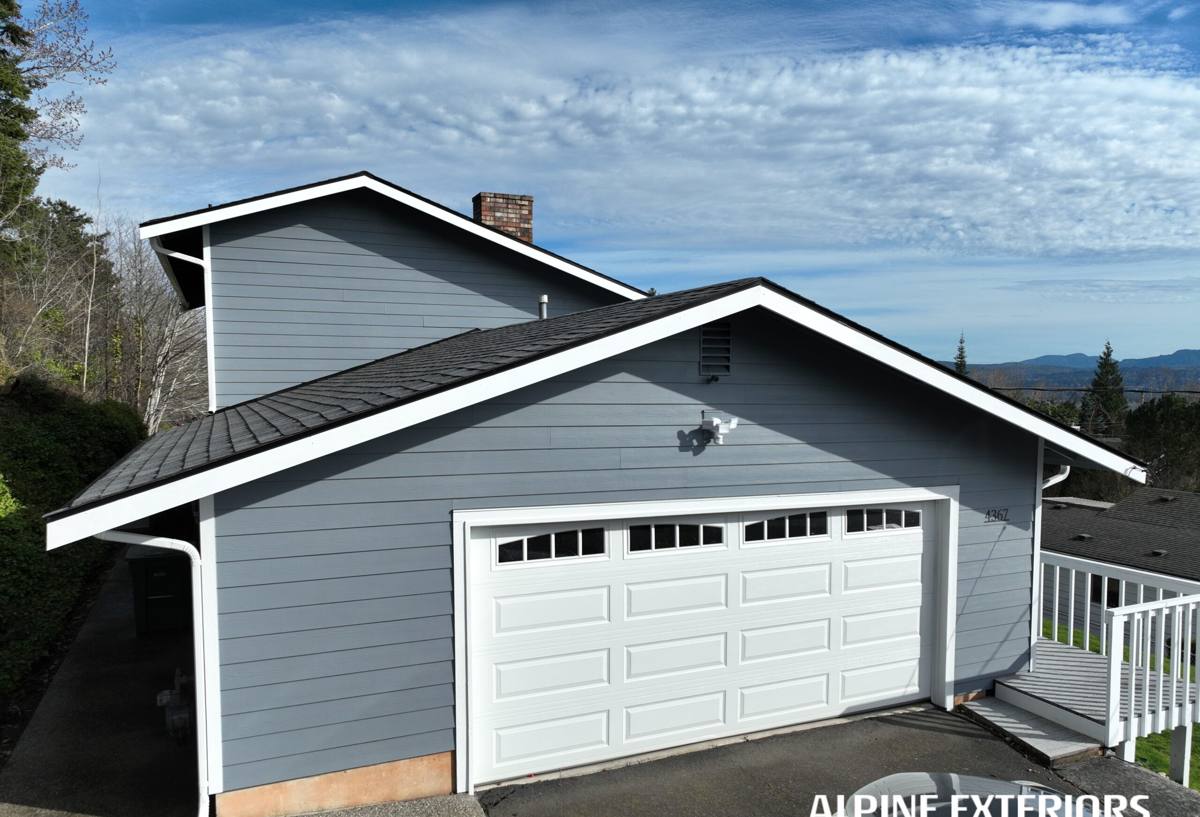
What Counts as Storm Damage (and What Doesn't)
Not every roof problem after a windstorm is actually storm damage, and it matters which one you're dealing with — for the repair approach and for any insurance claim.
- Wind-lifted or torn-off shingles — usually storm damage, especially in a defined pattern (one slope, one edge) that lines up with the direction the wind was blowing.
- Displaced or bent flashing around chimneys, vents, and valleys — often storm-related, but can also be a sign of aging or original installation that was never quite right.
- Granule loss and shingle wear that's spread evenly across the whole roof — that's typically age and weathering, not a single storm event, and it's worth being told the difference honestly.
- Moss buildup and soft, spongy decking — a long-term moisture problem, not storm damage, even if a storm is what finally exposed it.
- Punctures from falling branches or debris — clearly storm-caused, and usually the easiest to document.
Part of doing this job right is telling a homeowner which category their damage falls into, instead of labeling everything "storm damage" because that phrase is easier to sell.
Why Salt Air and Moss Change the Repair Calculus
Salt Air and Fasteners
Homes closer to Semiahmoo Bay see accelerated corrosion on exposed metal — nail heads, flashing seams, gutter fasteners, and vent boots. A repair that would hold up fine twenty miles inland can fail early here if the wrong fastener or flashing metal is used. We account for that on every Marietta repair, not just the ones right on the water.
Moss and Drainage
Moss doesn't just look bad — it holds moisture against the roof surface, works its way under shingle edges, and can lift tabs enough that the next windstorm finishes the job. If a storm-damaged section sits next to an area with active moss growth, we address both, because patching one without dealing with the other is a short-term fix.
Driving Rain and Underlayment
Whatcom County's rain doesn't always fall straight down. Wind-driven rain can work sideways under shingle edges and lifted flashing that would keep out a vertical downpour just fine. That's why storm repairs here lean on properly lapped underlayment and sealed flashing details, not just replacing what's visibly missing.
What a Correct Storm Repair Actually Involves
Full Inspection, Not a Patch Job
A storm rarely damages just the one spot that's leaking. We check the whole roof plane the wind hit — not only the obvious hole or missing shingles — because wind can loosen adjacent shingles without fully removing them, and those are the ones that fail in the next storm if they're left alone.
Matching Materials, Not Just Filling Gaps
Shingle color, profile, and exposure need to match the existing roof closely enough that the repair doesn't stand out and, more importantly, so the new material sheds water the same way the surrounding roof does. On an older roof this sometimes means sourcing a close match rather than an exact one, and we'll tell you honestly when that's the case.
Flashing and Underlayment Details
Most storm-related leaks trace back to flashing and underlayment, not the shingles themselves. We re-lap and re-seal flashing at valleys, chimneys, and penetrations as part of the repair, using corrosion-resistant materials given the salt-air exposure this close to the bay.
Documentation for Insurance
If you're planning to file a claim, we photograph the damage before and after, note the likely cause, and provide a written scope of work. That paperwork is often what separates a smooth claim from a denied or reduced one.
Our Process for Marietta Storm Repairs
- Initial assessment. We inspect the roof (and attic, when accessible) to confirm what's actually storm damage versus pre-existing wear.
- Written estimate. You get a clear scope and price before any work starts — no verbal-only quotes.
- Temporary protection if needed. If there's active leaking, we can tarp or seal the area to stop further water intrusion while repairs are scheduled.
- Repair. Matching materials, proper flashing and underlayment work, and cleanup of debris and old materials.
- Final walkthrough. We show you what was done and flag anything else worth watching, even if it's not part of the current repair.
Repair vs. Replace: How We Help You Decide
Storm damage doesn't automatically mean a full re-roof, but it can be the moment that reveals a roof is closer to the end of its life than expected. Here's how we generally think through it:
| Factor | Leans Toward Repair | Leans Toward Replacement |
|---|---|---|
| Roof age | Under roughly 12–15 years | Approaching or past expected shingle lifespan |
| Extent of damage | Isolated to one slope or section | Spread across multiple slopes |
| Underlying decking | Solid, dry, no soft spots | Soft or water-stained decking found during inspection |
| Moss/moisture history | Minor, localized | Long-term, widespread moss or trapped moisture |
| Material availability | Close match available | Discontinued or mismatched material |
We'll walk you through where your roof lands on these factors rather than defaulting to whichever option is more profitable for us. Plenty of storm damage is genuinely a repair, and we'll say so.
Insurance Claims: What We Can and Can't Do
We're a roofing crew, not an insurance company, so we can't guarantee how a claim will be handled or promise a specific payout. What we can do is give you an honest, documented assessment of the damage and cause, provide a fair written estimate, and be available if your adjuster has questions about the scope of the repair. If damage turns out to be pre-existing wear rather than storm-caused, we'll tell you that too — it affects whether a claim makes sense at all.
Checklist: What To Do After a Storm
- Check the yard and gutters for shingle granules, torn shingle pieces, or flashing — a sign something came off the roof.
- Look inside the attic (if accessible) for new water stains, damp insulation, or daylight coming through the decking.
- Photograph any visible exterior damage from the ground before it's disturbed — useful for both us and any insurance claim.
- Avoid walking the roof yourself after a storm, especially with wet moss present — it's genuinely slick.
- Call for an inspection sooner rather than later; a small gap left open through another storm cycle gets worse fast.
- Keep receipts for any temporary protective measures you take, like tarps — insurers often reimburse reasonable mitigation costs.
Why a Local Semiahmoo Crew Matters for Marietta
A crew that already works this stretch of Whatcom County knows what Marietta's roofs are dealing with before we even climb the ladder — the salt exposure off Semiahmoo Bay, the wind patterns that tend to hit one slope harder than another, and how aggressively moss takes hold here compared to drier parts of the state. That local familiarity means fewer surprises, faster response after a storm, and repair decisions based on what actually holds up in this climate rather than generic manufacturer guidance written for a different region entirely.
It also means we're not disappearing after the invoice is paid. Storm damage repair is the kind of job where a local reputation is on the line with every roof we touch, and that's exactly how we want it.
If a recent storm left you with damage, missing shingles, or just questions about what you're looking at, we're happy to take a look. Use the form below to request a free, no-pressure estimate — we'll give you a straight answer about what's actually going on with your roof.