 Semiahmoo
 Blaine Harbor Windows Work Harder Than Windows Almost Anywhere Else in the County
Semiahmoo Siding has installed and repaired windows all over Whatcom County, and Blaine Harbor homes consistently show wear patterns that inland houses don't get. The combination is specific to this stretch of coastline: salt-laden air off Semiahmoo Bay and the Strait of Georgia, wind-driven rain that comes in sideways off the water during winter storms, and a long, damp moss season that keeps north- and west-facing surfaces wet for weeks at a time. None of that is unusual for a Pacific Northwest waterfront town. What it means practically is that a window installed with inland techniques, or installed by a crew that doesn't work this specific microclimate regularly, tends to fail years before it should.
Salt air corrodes metal hardware and window frame fasteners faster than plain rain does. Driving rain finds gaps in flashing and sealant that would never leak in a sheltered yard three miles inland. And sustained moisture from moss and shade feeds rot in wood trim and sills long before homeowners notice a problem from inside the house. A correct window installation in Blaine Harbor has to account for all three, not just the basic building code minimum.
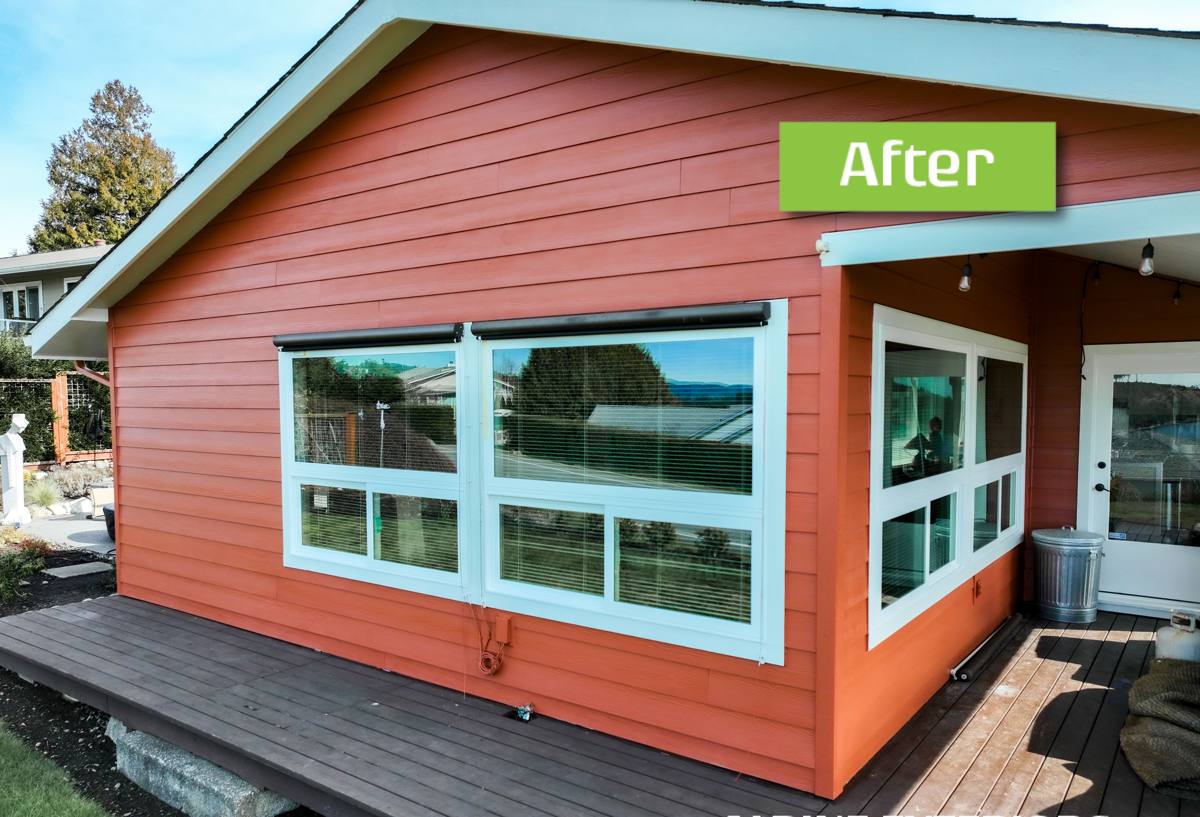
What a Correct Installation Actually Involves Here
Window installation is often sold as a simple swap: old window out, new window in. In a coastal exposure like Blaine Harbor, the window unit itself is only part of the job. The water management details around it matter just as much, and they're the details that get skipped when a crew is moving fast or unfamiliar with this exposure.
Sill Pan Flashing
Every window opening should get a sloped sill pan that directs any water that gets past the window itself back outside the wall, not down into the framing. This is standard practice, but it's also the single most commonly skipped step we find when we're called out to fix a leaking or rotted window that someone else installed.
Integrated Weather-Resistive Barrier
The window's flashing has to be woven into the house wrap or building paper in the correct shingle-lap order — top piece over the sides, sides over the sill — so water always sheds downward and outward. A break in that sequence is invisible from outside for years, then shows up as a soft spot in the wall or a stain on the interior sill.
Sealant Selection and Placement
Not every caulk or sealant is rated for the UV exposure, salt content, and temperature swings this area sees. We also leave the weep path at the bottom of the window unobstructed — a fully sealed bottom edge traps water inside the frame instead of letting it drain, which is a common mistake that looks tidy but causes rot from the inside out.
Fastener and Hardware Corrosion Resistance
Salt air degrades standard steel fasteners and hinges over time. Corrosion-resistant fastening hardware costs a little more up front and is worth it on any home within a couple miles of the water, which covers most of Blaine Harbor.
Choosing a Window Material for This Exposure
There's no single "best" window material for every home — it depends on your budget, your home's style, and how exposed the specific wall is to wind and salt spray. Here's how the common options actually perform in a Blaine Harbor setting.
| Material | Salt Air Performance | Maintenance | Notes for This Area |
|---|---|---|---|
| Vinyl | Good — won't corrode or rust | Low; occasional cleaning | Budget-friendly, reliable choice for most Blaine Harbor homes; quality varies a lot by manufacturer |
| Fiberglass | Excellent — very stable in temperature and moisture swings | Low | Higher upfront cost, but holds up well on the most exposed, water-facing walls |
| Wood / Wood-Clad | Fair — cladding protects exterior, but any breach exposes wood to rot | Higher; needs regular sealant and paint upkeep | Best suited to sheltered elevations, not the wall taking direct weather off the water |
| Aluminum | Poor without a marine-grade finish — prone to corrosion and condensation | Moderate | We generally steer homeowners away from unclad aluminum on direct waterfront exposures here |
We don't push one brand or material on every job. What we do is match the material to the wall — a west- or north-facing wall that takes the brunt of storms off the strait is a different decision than a sheltered south wall protected by the house itself or nearby trees.
Glass and Frame Performance for a Damp, Salty Climate
Beyond the frame material, the glass package matters for comfort and long-term durability in this climate. Look for:
- Low-E glass coatings to manage heat loss during Whatcom County's cool, wet winters
- Argon or krypton gas fill between panes for better insulation and reduced condensation risk
- A condensation resistance rating suited to consistently high outdoor humidity
- Warm-edge spacer systems, which resist seal failure better over time than older aluminum spacers
- Corrosion-resistant hardware and screens, especially for homes within sight of the water
Condensation between panes is one of the clearest signs a window's seal has already failed — in this climate that failure tends to show up sooner than manufacturers' general warranty language might suggest, simply because the seals are under more constant humidity stress.
Our Installation Process
We keep the process straightforward and explain each step as we go, because homeowners deserve to know what's happening to their walls, not just their windows.
- On-site assessment — we look at each opening individually, check for existing rot or moisture damage, and note which walls take the most direct weather exposure
- Removal — old windows come out carefully to protect existing siding and trim wherever possible
- Opening inspection and repair — any soft framing, rot, or old flashing failures are addressed before a new window goes in; installing a new window over hidden rot just hides the problem for another few years
- Sill pan and flashing installation — sloped sill pan, properly lapped flashing tied into the weather-resistive barrier
- Window setting and shimming — leveled, plumbed, and squared before fastening
- Sealant and weep path check — sealed where it should be sealed, open where it needs to drain
- Interior and exterior trim finishing — matched to your home's existing look
- Final walkthrough — we test operation, check the seal, and walk the homeowner through basic care
Signs Your Current Windows Are Already Losing the Fight
If your home is in Blaine Harbor and your windows are original to the house or were installed more than 15–20 years ago, it's worth checking for these before a small problem becomes a wall repair.
- Fogging or moisture trapped between panes of double-glazed windows
- Paint bubbling, peeling, or staining on interior sills and trim
- Soft or spongy wood around the window frame, inside or out
- Visible gaps, cracked caulk, or daylight around the frame edges
- Noticeable draft or cold spot near the window even when it's closed
- Difficulty opening, closing, or locking the window
- Green or black staining around the frame — often moss or mildew growth from sustained dampness
- Higher heating bills than similar-sized homes nearby
What Affects Cost
Every home and opening is different, so we don't quote firm numbers without seeing the job, but these are the main factors that move the price up or down for a Blaine Harbor window installation.
| Factor | Effect on Cost |
|---|---|
| Number of windows and opening sizes | More or larger openings raise material and labor cost proportionally |
| Frame material chosen | Vinyl is generally the most affordable; fiberglass and wood-clad cost more upfront |
| Existing rot or framing damage | Repair work adds cost but is far cheaper than dealing with it later |
| Wall exposure and access | Second-story or hard-to-access water-facing walls take more labor time |
| Glass and hardware upgrades | Better condensation resistance and corrosion-resistant hardware add a modest premium |
| Trim and finish work | Matching existing exterior trim details adds labor beyond a basic install |
Permits and Local Considerations
Window replacement in the City of Blaine and unincorporated Whatcom County generally requires a permit when the work involves structural changes to the opening or affects egress requirements, though straightforward same-size replacements are sometimes exempt — this can change, so we confirm current requirements before starting your project rather than assume. Egress code matters especially for bedroom windows, which need to meet minimum opening size and sill height requirements for emergency escape. We handle the permit process as part of the job so homeowners don't have to navigate it themselves.
Why a Crew That Already Works Blaine Harbor Matters
There's a real difference between a contractor who occasionally does a window job and a crew that regularly works Blaine Harbor's specific conditions. We already know which walls in this neighborhood tend to take the worst weather, how moss buildup behaves on the shaded sides of homes near the water, and what corrosion looks like on hardware that's a few years old in this air. That familiarity shows up in fewer callbacks and fewer surprises — not because the work is exotic, but because the details that matter here are consistent from house to house, and we've already seen them.
If you're ready to talk about your home's windows, we're happy to come take a look, walk the exterior with you, and put together a free, no-pressure estimate — no obligation, just a straight answer on what your home actually needs. The form below will get you started.