 Semiahmoo
 Roofing in Blaine Isn't the Same as Roofing Inland
Blaine sits right on the water at the northern edge of Whatcom County, close enough to the Strait of Georgia that salt-laden air and wind-driven rain are just part of daily life. That combination is hard on roofs. Salt air accelerates corrosion on exposed metal fasteners and flashing. Wind-driven rain doesn't fall straight down — it gets pushed sideways and up under laps, edges, and vents that would stay dry in a calmer climate. And because Blaine stays cool, damp, and shaded through much of the fall, winter, and spring, moss and moisture-loving growth get a long runway to take hold on north-facing slopes and anywhere debris collects.
None of that means a roof in Blaine is doomed to fail early. It means the installation details matter more here than they would in a drier, calmer part of the state. A roof that's "good enough" for inland Whatcom County can come up short a few miles from the water. We build for the conditions this town actually has, not the conditions the shingle manufacturer's brochure assumes.
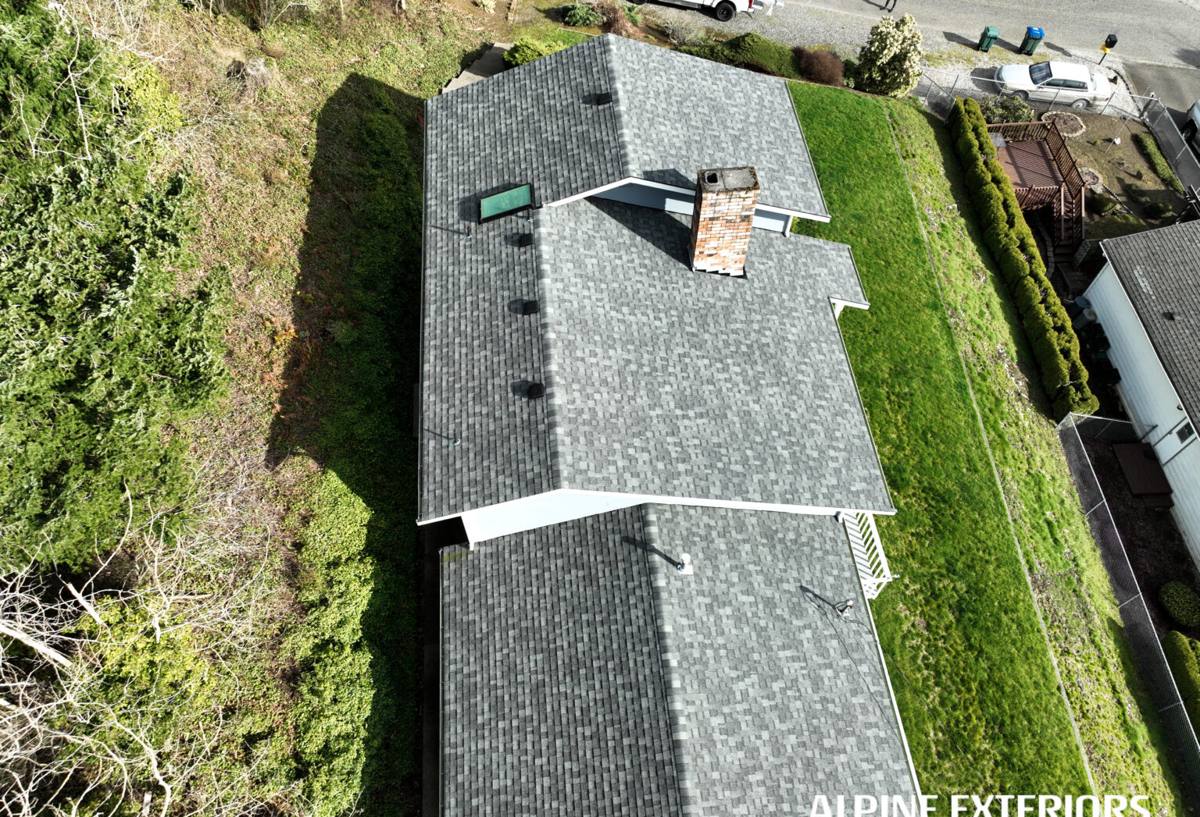
What Blaine's Climate Actually Does to a Roof
Salt Air and Corrosion
Airborne salt settles on every exposed surface, including roofing. Over years, it accelerates rust on unprotected steel fasteners, cheaper flashing metals, and any hardware that isn't rated for coastal exposure. Once a fastener or flashing seam starts corroding, it stops sealing properly, and that's when water finds its way into the deck.
Driving Rain and Wind
Storms off the water regularly push rain sideways instead of straight down. That means water can work its way under shingle tabs, around chimney flashing, and into vent boots that would never see that kind of pressure in a sheltered location. Underlayment and flashing details that are merely adequate elsewhere need to be done right here, every time.
Moss, Algae, and a Long Damp Season
Blaine gets extended stretches of overcast, cool, moist weather, especially from fall through spring. That's ideal growing weather for moss and algae on roofing, particularly on north- and east-facing slopes that don't get much direct sun. Moss isn't just cosmetic — its root structure lifts shingle edges and holds moisture against the roofing material, which shortens the life of the roof underneath it.
What a Correct Roof Installation Looks Like Here
A new roof installed correctly for this area isn't dramatically different in materials from a roof anywhere else in Western Washington — but the details that get skipped on a rushed job are exactly the details that matter most in Blaine's climate.
- Tear-off and deck inspection: We remove the old roofing down to the deck and check for soft spots, rot, or delamination before anything new goes on. Covering a compromised deck just hides the problem.
- Ice-and-water shield at vulnerable points: Eaves, valleys, and roof-to-wall transitions get self-adhering waterproof membrane, not just felt, because these are the spots wind-driven rain exploits first.
- Corrosion-resistant fasteners and flashing: Given the salt air, we use fasteners and flashing metals rated for coastal exposure rather than the cheapest option that meets code inland.
- Proper ventilation: Balanced intake and exhaust ventilation keeps the attic dry and temperature-stable, which reduces condensation buildup that can be mistaken for a roof leak.
- Careful flashing at every penetration: Chimneys, plumbing vents, skylights, and dormers are where most roof leaks actually start. Each one gets flashed and sealed individually, not just caulked over.
- Algae-resistant shingle options where appropriate: Many manufacturers now offer shingles with copper or zinc granules blended in specifically to slow algae and moss growth — worth discussing given how much of Blaine's roofing gets limited direct sun.
Choosing Materials for a Coastal, Moss-Prone Roof
There isn't one "correct" roofing material for Blaine — the right choice depends on the home, the roof's slope and sun exposure, and the homeowner's budget and maintenance appetite. Here's how the common options actually compare for this specific climate.
| Material | Coastal / Moisture Performance | Moss Resistance | Typical Lifespan | Maintenance |
|---|---|---|---|---|
| Architectural asphalt shingle | Good, with proper flashing and underlayment | Fair; algae-resistant granule options help | 25–30 years | Periodic moss/debris removal |
| Standing seam metal | Excellent when properly coated and fastened | Very good; sheds moisture, little for moss to grip | 40–50+ years | Low; occasional gutter/valley clearing |
| Cedar shake | Fair; needs regular upkeep in damp climates | Poor without treatment; retains moisture | 20–30 years with maintenance | High; treatment and cleaning needed |
| Synthetic/composite shingle | Good; consistent, engineered moisture resistance | Good; many include algae-resistant additives | 30–50 years | Low to moderate |
We don't push cedar shake as a go-to choice for exposed, damp roofs in this area. It can look great, but it demands consistent maintenance to fend off moisture retention and moss, and that's a real ongoing cost most homeowners underestimate when they're comparing sticker prices. If a homeowner wants that look and understands the upkeep, we'll install it correctly — we just make sure that trade-off is on the table up front rather than discovered later.
Our Roof Installation Process
- On-site assessment: We inspect the existing roof, attic ventilation, and any trouble spots (chimneys, skylights, valleys) before quoting anything.
- Written estimate: Materials, scope, and timeline in writing — no vague allowances that turn into surprise change orders.
- Tear-off and deck check: Old roofing comes off, the deck gets inspected, and any rot or soft sheathing is replaced before new roofing goes down.
- Waterproofing and flashing installation: Ice-and-water membrane, underlayment, and flashing go in at every vulnerable point, sized for what this coastline actually throws at a roof.
- Roofing installation: Installed to manufacturer spec and local code, with attention to nailing pattern, exposure, and ventilation.
- Final walkthrough: We walk the job with the homeowner, clean up the site, and go over warranty paperwork before we consider it finished.
Why a Roof Fails Early — And How to Avoid It
Most premature roof failures we see in this area trace back to a handful of preventable causes, not bad luck:
- Flashing installed as an afterthought rather than integrated into the roofing system
- Fasteners and metal components not rated for salt air exposure
- Inadequate attic ventilation causing condensation that gets mistaken for a leak
- Moss and debris left to accumulate on shaded slopes for years
- Underlayment skipped or downgraded to cut cost on the initial bid
Every one of these is a decision made (or skipped) during installation. That's why the crew doing the work matters as much as the shingle brand on the invoice.
Why It Matters to Hire a Crew That Already Works in Blaine
A roofing crew that mostly works inland — Bellingham east side, the valley, wherever — isn't necessarily used to building for salt exposure and constant wind-driven rain. They may do fine work by inland standards and still under-spec flashing and fasteners for a home two blocks from the water, simply because that's not the failure mode they see day to day.
We work Blaine and the rest of Whatcom County's coastal edge regularly. We know which slopes on a typical Blaine roof stay shaded and damp long enough to grow moss, which directions the worst storms come from, and which flashing details actually get tested by this specific weather. That's not a marketing point — it changes real decisions on the job, like which fasteners we spec and where we add extra waterproofing membrane even when it's not strictly required by code.
What to Check Before Hiring Anyone for a Roof in This Area
- Are they licensed and insured to work in Washington State, and will they show you proof without being asked twice?
- Do they inspect and address the roof deck, or just install over whatever's underneath?
- Do they specify corrosion-resistant fasteners and flashing for coastal exposure, or use whatever's standard for inland jobs?
- Is the estimate detailed in writing, including tear-off, underlayment type, and flashing scope?
- Can they explain, specifically, how they'll handle ventilation and moss-prone slopes on your roof?
What a New Roof Typically Involves, Cost-Wise
Every roof is different, and we won't quote a number without seeing the roof, but a few factors consistently drive cost on Blaine homes:
| Factor | Why It Matters Here |
|---|---|
| Roof size and complexity | More valleys, dormers, and penetrations mean more flashing labor and material |
| Deck condition | Rot or soft sheathing found at tear-off adds repair cost before new roofing goes on |
| Material choice | Asphalt, metal, and composite options span a wide cost and lifespan range |
| Ventilation upgrades | Older Blaine homes often need added intake or exhaust venting to meet modern standards |
| Access and pitch | Steeper or harder-to-access roofs take longer and require more safety setup |
Broadly, homeowners in this area should expect a range that reflects those variables rather than a flat per-square number — which is exactly why we walk every roof in person before putting a price on paper.
If your roof is aging, showing moss buildup, or you've noticed leaks after the last big storm off the water, we're happy to take a look. We offer free, no-pressure estimates for new roof installation in Blaine and the surrounding area — use the form below to get started.