 Semiahmoo
 Why New-Construction Windows Are Different in Blaine Harbor
New-construction windows aren't just "new windows" — they're a different product category from replacement windows, and the distinction matters most in a place like Blaine Harbor. A new-construction window has a nailing fin built into the frame and gets installed before the siding and trim go on, which means the window becomes part of the wall's water-management system rather than sitting inside an existing opening. Get that installation wrong here, and the house won't just leak eventually — it'll leak in the first hard blow off the water.
Blaine Harbor sits right where Semiahmoo Bay meets the open strait, which means homes here take a combination most inland Whatcom County builders never have to plan for: salt-laden air that accelerates corrosion on hardware and fasteners, wind-driven rain that gets pushed sideways into wall assemblies most manufacturers' install instructions assume won't happen, and a long, wet moss season that keeps exterior surfaces damp for months at a stretch. A window built and flashed for a dry-side neighborhood in Bellingham doesn't automatically hold up on a lot facing the water in Blaine.
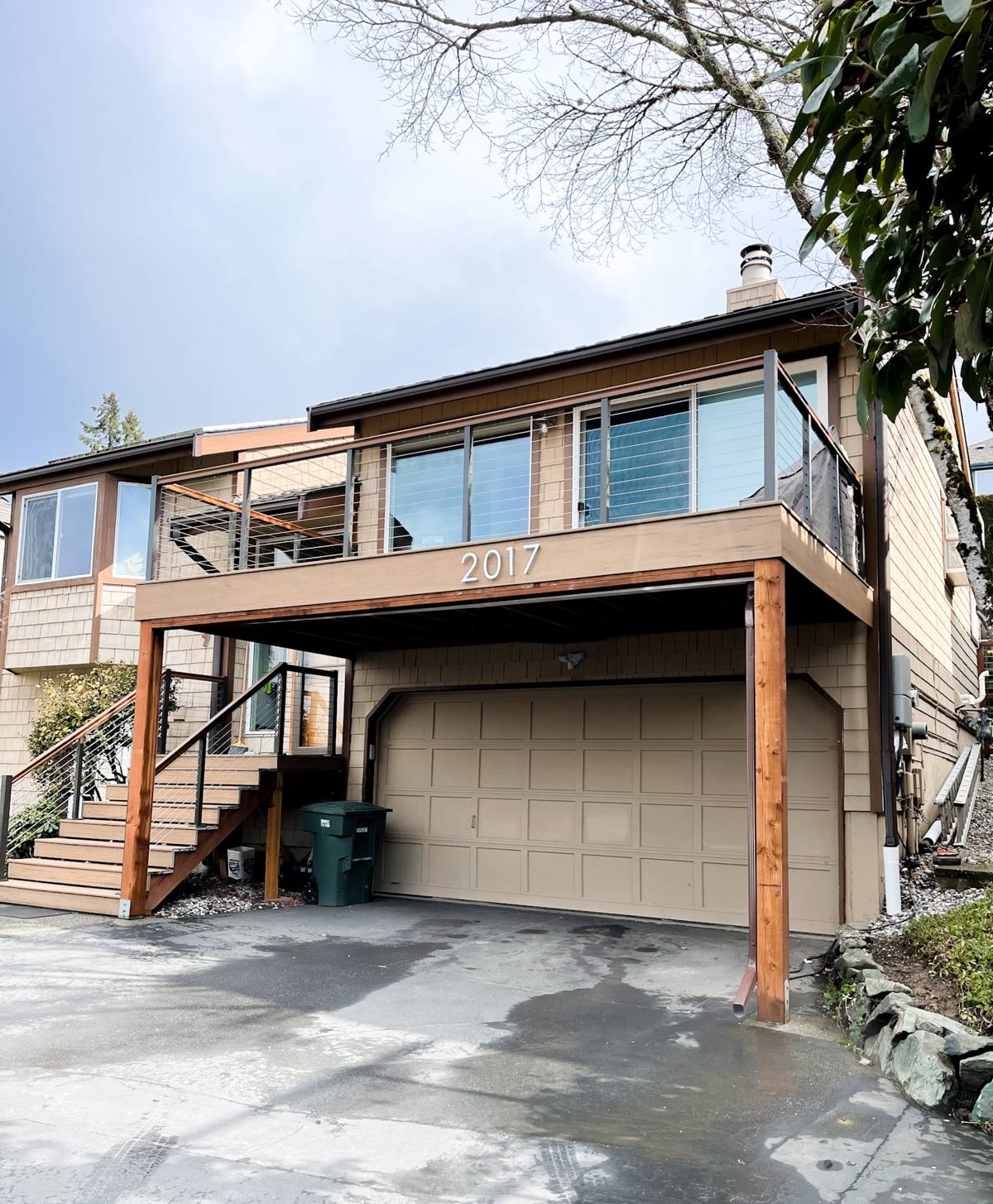
What Local Conditions Actually Demand From a Window
Salt Air and Hardware Corrosion
Standard steel fasteners, uncoated aluminum trim, and basic mill-finish hardware corrode faster within a mile or two of saltwater. On new construction, this isn't just a coating question on the window itself — it's a question of what fasteners, flashing tape, and trim coil the installer chooses. We spec corrosion-resistant fasteners and flashing components on Blaine Harbor jobs as a standard practice, not an upsell, because replacing corroded hardware on a window that's already sided over is a much bigger job than getting it right the first time.
Wind-Driven Rain
Rain that comes in sideways off the water finds every shortcut in a window opening — a flashing lap installed backward, a sill pan that wasn't sloped, a gap where sealant should be. New-construction framing gives us the chance to build the opening correctly from the studs out: sill pan flashing that sheds water to the exterior, head flashing that laps over the water-resistive barrier (not under it), and jamb flashing sequenced so every layer drains onto the layer below it. This is standard building science, but it only works if every layer is actually installed in the right order — skipping steps is the single most common cause of window leaks we see in this area.
Moss Season and Prolonged Moisture
Whatcom County's wet season runs long, and Blaine Harbor's marine exposure keeps humidity and surface moisture around even longer than a few miles inland. Windows and the wall assembly around them stay damp for extended stretches, which is exactly the condition that lets rot start in unprotected wood trim or lets a marginal flashing detail turn into a real leak over a few winters. Materials and details that "probably would've been fine" in a drier climate aren't a risk worth taking on a harbor-facing new build.
What a Correct New-Construction Window Installation Involves
There's no shortcut version of this that holds up long-term. A proper install, in order, looks like this:
- Rough opening checked for square, level, and correct dimensions before anything else happens.
- Sill pan flashing installed and sloped to drain water to the exterior, not into the wall cavity.
- Window set into the opening, shimmed level and plumb, and fastened per the manufacturer's schedule — not just at the corners.
- Nailing fin sealed and flashed in the correct shingle-lap sequence: sill first, then jambs, then head, each layer overlapping the one below.
- Head flashing integrated with the water-resistive barrier so water is directed out and over the window, never behind it.
- Interior and exterior sealant joints completed, with backer rod used where the gap calls for it rather than sealant alone.
- Final check for operation, square, and a visual water-path review before siding closes the opening up.
That last step matters more than it sounds like. Once siding goes on, the flashing work is hidden for the life of the house. On a harbor lot, that's not a detail to get "close enough" — it's the difference between a window that's dry for thirty years and one that starts showing stains on the interior sill in five.
Our Process on a Blaine Harbor New Build
1. Plan Review and Product Selection
We start from the plans, not a generic spec sheet. Window sizes, egress requirements, and the home's orientation to wind and rain all factor into which frame material, glazing package, and flashing approach we recommend for that specific opening.
2. Coordination With Framing and WRB Timing
New-construction windows have to land at the right point in the build sequence — after the water-resistive barrier is on, before siding starts. We coordinate directly with the framing and general contractor schedule so the opening is ready and dry when we show up, and so our flashing work integrates cleanly with the rest of the building envelope instead of getting layered on as an afterthought.
3. Installation
Our crew follows the flashing sequence above on every opening, every time — not just on the ones facing the water. Wind direction shifts, and a wall that's sheltered today can take weather straight-on during a winter storm off the strait.
4. Pre-Siding Inspection
Before siding closes anything up, we walk every opening and check the flashing lap, sealant joints, and drainage path. This is the last point where a mistake is cheap to fix.
5. Final Walkthrough
We check operation, hardware function, and appearance with you before we call the job done.
Choosing Windows for a Harbor-Facing New Build
Frame material and glazing choice both affect how a window holds up in this environment. None of these are wrong choices in general — they're trade-offs, and the right one depends on the specific elevation and budget.
| Frame Material | Salt Air / Moisture Behavior | Maintenance | Typical Fit |
|---|---|---|---|
| Vinyl | Won't corrode; performs consistently near saltwater | Low — occasional cleaning | Most Blaine Harbor new builds, cost-conscious projects |
| Fiberglass | Excellent moisture and corrosion resistance; very stable dimensionally | Low | Higher-exposure elevations, larger openings |
| Aluminum-clad wood | Good exterior protection but relies on cladding integrity; interior wood needs protection from condensation | Moderate | Interior wood aesthetic wanted, sheltered elevations |
| Bare wood | Higher maintenance burden in this climate; prone to moisture issues if finish isn't kept up | High — regular refinishing | We generally steer harbor-facing new builds away from this unless the owner commits to upkeep |
On glazing, dual-pane low-E units are standard on new construction here and perform well against Whatcom County's temperature swings. For elevations that take the brunt of wind-driven rain, we also talk through impact-resistant glazing options and heavier-duty weatherstripping — not because code requires it in this area, but because it reduces air and water infiltration risk over the life of the window.
Cost Factors on a New-Construction Window Package
Every new build is different, so we won't quote a number without seeing the plans, but these are the factors that move the price on a Blaine Harbor job specifically:
| Factor | Why It Matters Here |
|---|---|
| Frame material | Vinyl is the most economical; fiberglass and clad-wood cost more but reduce long-term maintenance in salt air |
| Window count and size | Larger view windows facing the water add cost in both unit price and flashing labor |
| Elevation exposure | Openings facing prevailing wind and rain get the same careful flashing as sheltered ones — labor time is comparable, but product upgrades (impact glazing, upgraded weatherstripping) may cost more there |
| Flashing and WRB integration complexity | Homes with more complex rooflines or wall transitions take more time to flash correctly, regardless of window brand |
| Coordination timing | Scheduling that lines up cleanly with framing avoids delay costs and rework |
What to Check Before You Hire a Window Crew for a Harbor Lot
Not every installer who does replacement windows well is set up to do new-construction flashing correctly — it's a different skill set tied to framing sequence, not just window setting. Before hiring, ask:
- Do they install sill pan flashing on every opening, or only "when needed"?
- Can they walk you through their flashing lap sequence without hesitating?
- Do they coordinate directly with your framer or GC on timing, or expect the opening to already be perfectly staged?
- Do they use corrosion-resistant fasteners and hardware as standard practice near saltwater, or only on request?
- Will they do a pre-siding walkthrough with you before the opening gets covered?
- Do they have experience specifically in Whatcom County's marine-exposure conditions, not just general new-construction experience inland?
If the answer to any of these is a shrug, that's worth pausing on — mistakes made now get sealed behind siding and don't show up until there's already damage.
Why Local Experience Matters Here
Blaine Harbor isn't a generic Pacific Northwest building site — it's a specific combination of saltwater exposure, wind direction, and a wet season that runs longer than most of the state. A crew that installs windows all over Whatcom County, including directly on and around the harbor, has already seen which details actually matter here and which ones are just manufacturer boilerplate written for a different climate. That's the difference between a window package that's technically installed and one that's installed for this address.
We work new builds throughout Semiahmoo and Blaine, and we treat every opening — sheltered or exposed — with the same flashing discipline, because weather direction here doesn't stay predictable for the life of a house.
If you're planning a new build in Blaine Harbor and want windows installed right the first time, we're happy to walk your plans and give you a straightforward, no-pressure estimate — just fill out the form below.