 Semiahmoo
 What Custer's Climate Actually Does to a Roof
Custer sits close enough to the water that salt-laden air is a real factor, not a theoretical one. Add in the driving, wind-pushed rain that comes off the Strait during fall and winter storms, plus the shaded, damp conditions under fir and cedar cover that keep moss growing nearly year-round, and you've got three separate stresses working on a roof at the same time. Most roofing problems we see in this part of Whatcom County aren't caused by one dramatic event — they're the slow result of a roof that was built for a drier, calmer climate than the one it actually lives in.
Metal roofing handles all three of those stresses better than most alternatives, but only if it's specified and installed correctly for this environment. A metal roof that would be perfectly fine inland can underperform here if the wrong fasteners, flashing details, or panel material were chosen.
Why Metal Roofing Makes Sense for a Custer Home
We don't push metal roofing on every homeowner — it's not the right fit for every budget or every house. But for Custer properties dealing with wind-driven rain, moss buildup, and salt exposure, it solves problems that asphalt shingles simply can't:
- Sheds water fast off a slick, continuous surface instead of relying on overlapping tabs that can wick water under driving rain
- Doesn't provide the rough, granulated surface that moss spores and organic debris cling to and root into
- Holds up to wind uplift far better than shingles, which matters during winter storm systems
- Doesn't absorb moisture, so it isn't prone to the freeze-thaw and rot cycle that eventually degrades shingle mat and decking
- Typically outlasts two or more shingle roof cycles, which matters if you plan to stay in the home long term
The trade-off is upfront cost and the need for a crew that actually understands metal roofing details — not just standard asphalt practices applied to a different material.
Panel Types: Getting the Right Fit for This Area
Standing Seam
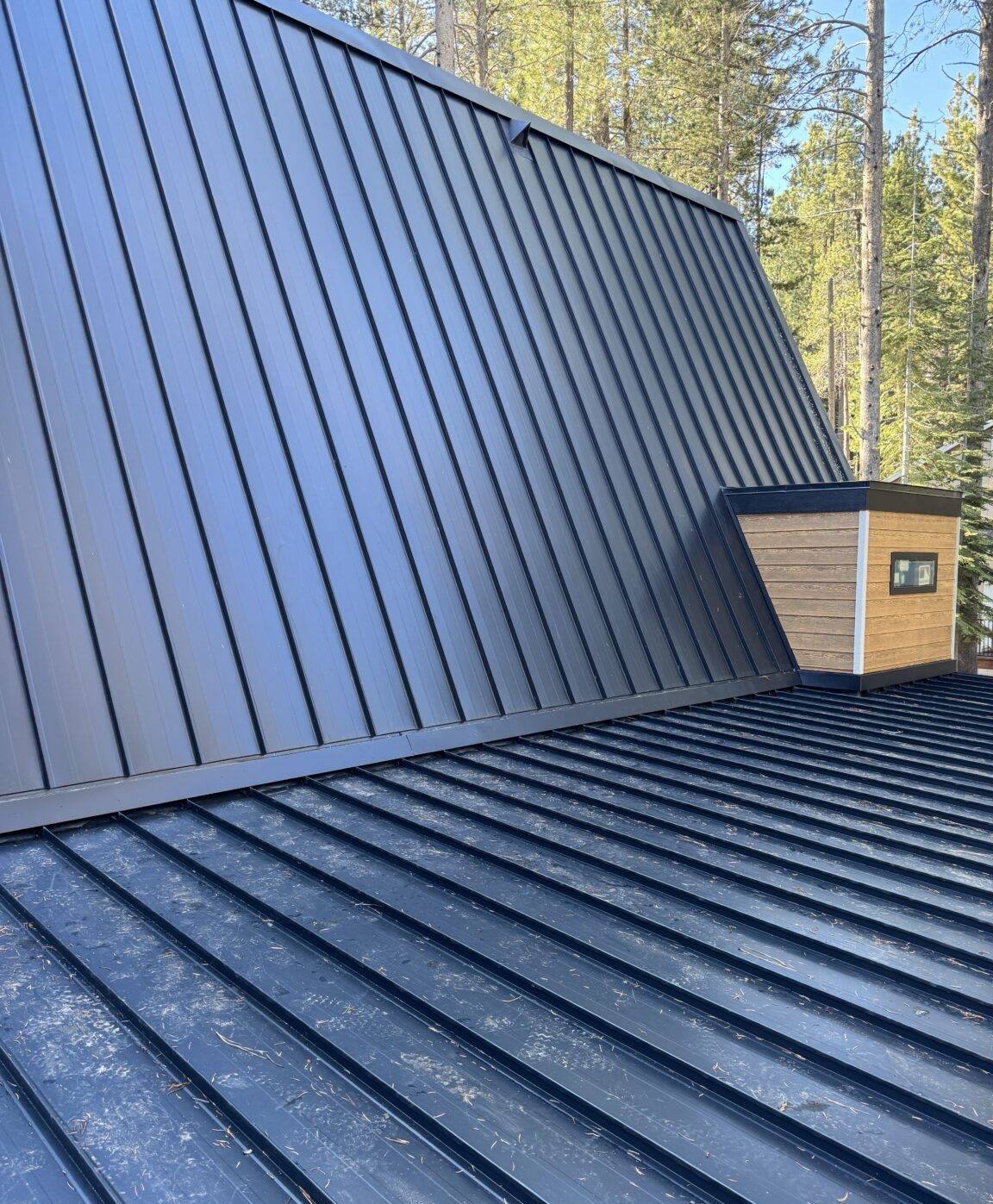
Standing seam panels use concealed fasteners and interlocking vertical seams, which means no exposed screw heads for salt air and moisture to work on over time. This is our default recommendation for Custer homes that are more exposed to weather or closer to the water, because it removes the single biggest long-term weak point of a metal roof: fastener corrosion and backing-out.
Exposed-Fastener Panels
Exposed-fastener (screw-down) panels cost less upfront and are a reasonable option for outbuildings, shops, or budget-conscious projects. The trade-off is that the fasteners themselves — and the rubber washers under them — are the maintenance point. In a salt-air environment, that maintenance schedule tightens up, and washers typically need inspection or replacement well before they would inland.
| Factor | Standing Seam | Exposed-Fastener |
|---|---|---|
| Upfront cost | Higher | Lower |
| Fastener exposure | Concealed | Exposed, needs periodic inspection |
| Best fit near salt air | Strong fit | Workable with maintenance plan |
| Expected service life | Longer, fewer maintenance points | Good, but fastener-dependent |
| Typical use case | Primary residence roofs | Shops, outbuildings, budget projects |
What a Correct Metal Roof Installation Actually Involves
Metal roofing looks simple from the ground, but the details underneath the panels are what determine whether it performs for 40+ years or starts causing problems in year eight. A correct install for this climate includes:
Underlayment
We use a high-temp, self-adhering synthetic underlayment as a secondary water barrier, not the thin felt that's still common on lower-end jobs. Given how much wind-driven rain this area gets, that secondary barrier is what protects the deck if wind ever pushes water past a panel seam.
Flashing and Penetrations
Valleys, chimneys, vent pipes, and wall intersections are where the vast majority of roof leaks originate, on metal or shingle roofs alike. Flashing has to be sized, layered, and sealed specifically for metal panel profiles — generic flashing details borrowed from shingle work don't seal correctly against a raised seam or rib.
Fastener and Metal Compatibility
Not every fastener is safe with every metal. Mixing incompatible metals (for example, the wrong fastener alloy against a given panel coating) sets up galvanic corrosion, which shows up as pitting and staining well before the panel itself would have failed. This is a detail that matters more here than in a dry inland climate, because salt air accelerates any galvanic reaction that's already present.
Ventilation
A metal roof over a poorly ventilated attic can trap moisture underneath it just as easily as any other roofing material. We check and correct ridge, soffit, and attic ventilation as part of the install — not as an afterthought — because trapped moisture is what actually causes rot and mold, not the metal itself.
Salt Air: The Detail Most Installers Skip
Proximity to the water means airborne salt settles on every exterior surface, including the roof, more or less constantly. Over years, that accelerates corrosion on any metal component that isn't rated or coated for it. For Custer homes, we pay particular attention to:
- Choosing panel coatings and fastener finishes rated for coastal or marine-adjacent exposure, not standard-grade hardware
- Avoiding metal-on-metal contact between dissimilar materials that can trigger galvanic corrosion
- Detailing flashing and trim so salt-laden runoff sheds cleanly instead of pooling against seams
None of this changes the basic installation method — it changes which materials we spec for the job before the first panel goes up.
Moss Season and Long-Term Roof Care
Whatcom County's tree cover and damp winters mean moss is a near-constant presence, especially on shaded roof sections and north-facing slopes. Metal roofing resists moss establishment far better than shingles because there's no rough surface for spores to take hold in, but it isn't moss-proof — debris that collects in valleys or against trim can still hold enough moisture for growth to start.
A simple annual routine keeps a metal roof performing the way it should through Custer's long wet season:
- Clear needles, leaves, and debris from valleys and around penetrations before fall rains set in
- Check gutters and downspouts for blockage so water isn't backing up against roof edges
- Look for any staining or streaking that could indicate a developing fastener or flashing issue
- Trim back overhanging branches that keep sections of the roof shaded and damp longer than necessary
Our Process for a Custer Metal Roof Project
- On-site inspection of the existing roof, decking condition, ventilation, and any problem areas specific to the home's exposure
- Panel and coating recommendation based on the home's position relative to weather and salt exposure, plus your budget
- Written estimate that spells out materials, underlayment, flashing scope, and timeline — no vague allowances
- Deck inspection and repair as panels come off the old roof, since hidden rot or soft decking has to be addressed before new metal goes on
- Installation of underlayment, flashing, and panels to manufacturer and local-climate specifications
- Final walkthrough covering what maintenance the roof will need and when
What Drives the Cost of a Metal Roof Here
| Cost Factor | Why It Matters in Custer |
|---|---|
| Panel type and coating | Coastal-rated coatings and standing seam systems cost more but reduce long-term maintenance |
| Roof complexity | Valleys, dormers, and multiple penetrations increase flashing labor |
| Decking condition | Rot from past moisture issues may require deck repair before install |
| Tear-off vs. overlay | Full tear-off costs more but lets us fix ventilation and inspect the deck properly |
| Accessibility | Steep pitches or limited access add labor time and safety equipment needs |
We're not going to quote a number here that means nothing until we've actually seen your roof — but broadly, metal roofing runs higher upfront than asphalt shingles and lower than most other premium roofing systems, with the payoff coming in reduced maintenance and a much longer service life.
Why It Matters That We Already Work in Custer
A crew that installs roofs mainly in dry, inland climates and occasionally takes a coastal job doesn't always know to spec coastal-rated fasteners, or to think through how a shaded, moss-prone slope needs to be detailed differently than a sun-exposed one. We work in Whatcom County's coastal microclimate regularly, which means these aren't special considerations we have to research for your job — they're standard practice for us.
That local familiarity also means we know what tends to fail first on older roofs in this area, so we're looking for those specific warning signs during inspection rather than working from a generic checklist.
Get a Straight Answer for Your Roof
If you're weighing metal roofing against a repair or replacement on a Custer property, we're happy to take a look and give you an honest read on what your roof actually needs — no pressure, no upsell. Fill out the form below to schedule a free estimate.