 Semiahmoo
 Lynden's Climate: Inland, But Still Firmly Pacific Northwest
Lynden sits back from the saltwater of Semiahmoo Bay and Drayton Harbor, out in the Nooksack River valley, so it doesn't take the direct salt spray that shorefront homes deal with. That's a real difference, and we don't pretend otherwise. But Lynden roofs still sit under the same marine weather systems that soak the rest of Whatcom County — long stretches of low cloud, wind-driven rain off the Strait, and humid ground from surrounding farmland that keeps roof surfaces damp far longer than a drier inland climate would. Add in the outflow winds that occasionally push through the Fraser Valley gap in fall and winter, and a Lynden roof takes a steady, cumulative beating even without direct salt exposure.
What this means in practice: moss, algae, and trapped moisture are the bigger long-term threats here, not corrosion. A roof replacement built for Lynden needs to manage water and organic growth first, with wind resistance as a close second.
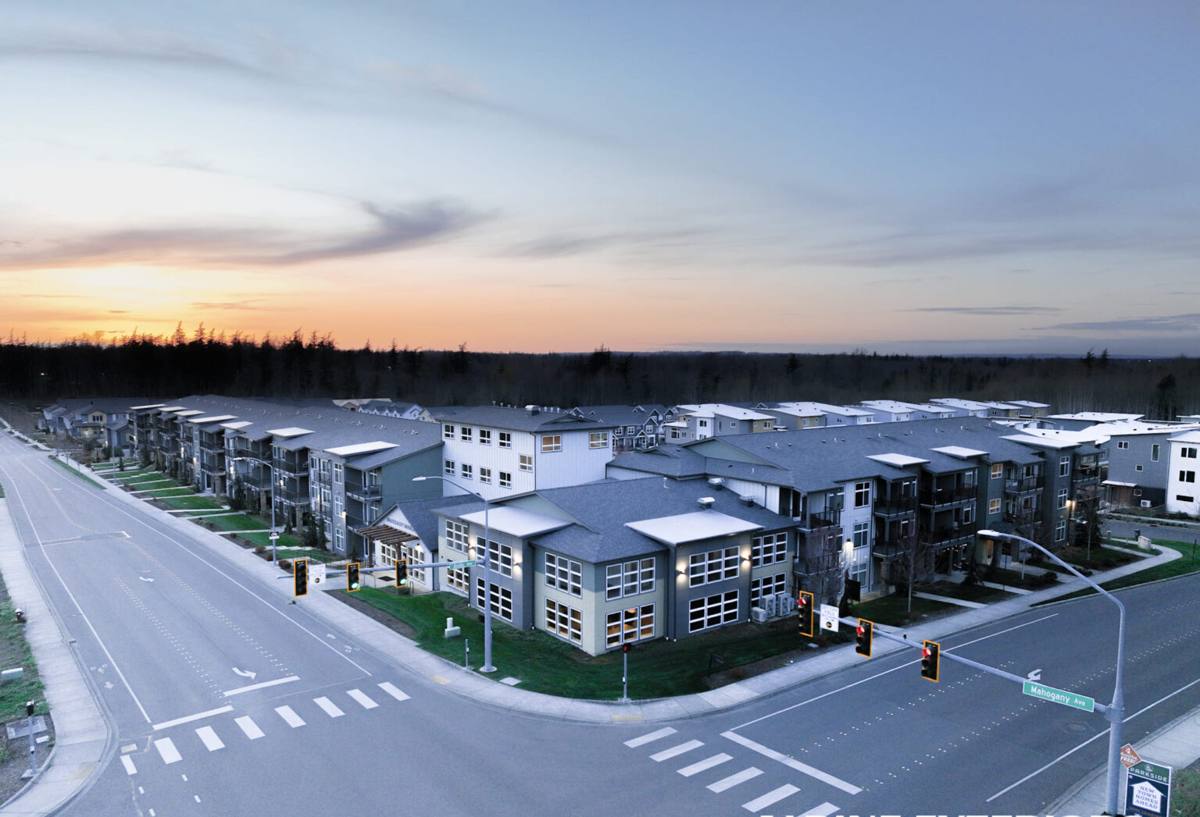
What Driving Rain and a Long Moss Season Do to a Roof Over Time
Moss and Trapped Moisture
Whatcom County's moss season isn't a few weeks in spring — on shaded, north-facing, or tree-lined roof slopes it's close to nine months of the year. Moss doesn't just sit on the surface. It roots into shingle mat and lifts tabs, and once tabs lift, wind-driven rain gets underneath instead of running off. That's how a roof that "looks fine from the driveway" ends up with soaked decking underneath.
Wind-Driven Rain Finds Every Gap
Rain here rarely falls straight down. It comes in sideways off storms moving through the Strait and the valley, which means it tests every seam, flashing joint, and vent boot on a roof — not just the open field of shingle. A roof that would perform fine in a drier, calmer climate can still leak in Lynden if the flashing details were done sloppily.
Signs a Lynden Roof Needs Replacement, Not a Patch
- Granules collecting heavily in gutters or at downspout outlets
- Shingles that are curling, cupping, or cracking rather than lying flat
- Moss established in thick mats across a slope, not just isolated patches
- Soft or spongy spots when walking the roof, or sagging between rafters
- Daylight, water stains, or musty smell in the attic
- A roof that's already had two or more patch repairs in the last few years
- Asphalt shingle roofs at or past 20–25 years old
If a roof only shows one or two of these, a targeted repair may still make sense. Once several show up together, patching is usually just delaying a full tear-off — and paying for both along the way.
What a Correct Roof Replacement Involves
Full Tear-Off, Not a Layer-Over
We tear off down to the decking on every replacement rather than installing new shingles over an existing layer. Layering is faster and cheaper up front, but it traps whatever moisture and rot is already in the old layer, hides deck damage that needs fixing, and voids most manufacturer warranties. In a climate where hidden moisture is already the main enemy, layering over a problem doesn't solve it — it just buries it under a new roof.
Deck Inspection and Repair
Once the old roofing is off, the decking gets inspected board by board. Any wood that's soft, delaminated, or water-stained gets replaced before anything new goes down. Skipping this step is one of the most common ways a "new roof" fails early.
Underlayment and Ice-and-Water Membrane
Self-adhered ice-and-water membrane goes at eaves, valleys, and around penetrations — the spots where wind-driven rain and moss-related water backup do the most damage. Synthetic underlayment covers the rest of the field. This isn't optional upgrading; in Whatcom County's rain volume, it's the difference between a roof that sheds water and one that eventually wicks it inward.
Flashing, Drip Edge, and Vent Boots
Chimney flashing, wall step flashing, and vent boots are common leak points because they're where two materials meet. We replace these as part of the job rather than reusing old flashing against new shingles — reused flashing is a frequent source of "new roof, same old leak" calls.
Roofing Materials That Make Sense for Lynden Homes
Most Lynden homes land on one of three practical options. Each has real trade-offs worth understanding before deciding — we'll walk through them at the estimate, but here's the honest comparison.
| Material | Moss & Moisture Behavior | Maintenance | Typical Lifespan |
|---|---|---|---|
| Architectural asphalt shingle | Good with proper ventilation; algae-resistant granules help on shaded slopes | Occasional moss treatment on shaded areas | 25–30 years |
| Standing seam metal | Sheds moisture and moss far more readily than shingle; steeper slopes shed even better | Low; periodic fastener and sealant check | 40–50+ years |
| Cedar shake | Attractive but holds moisture in a wet, moss-prone climate unless maintained closely | High; regular cleaning and treatment needed to avoid rot | 20–30 years with upkeep |
We install and stand behind architectural asphalt and metal roofing. We're upfront that we steer most Lynden homeowners away from cedar shake as a primary roof — not because it's a bad-looking product, but because the maintenance schedule needed to keep it healthy in a climate this wet and mossy is more than most homeowners want to keep up with, and neglect shows up as rot faster here than in a drier region.
Ventilation and Moisture Control: The Step That Gets Skipped
A new roof is only as good as the attic underneath it. Balanced intake (soffit) and exhaust (ridge) ventilation keeps humid air moving instead of condensing on the underside of the decking. In a farming valley climate with high ambient humidity, an under-ventilated attic can grow mold and rot decking from the inside even with a brand-new roof surface. This is one of the most common corners cut on quick re-roof jobs — new shingles go on, but nobody checks whether the old ventilation was ever adequate to begin with. We size and correct intake/exhaust balance as part of every replacement, not as an upsell.
Cost Factors in a Lynden Roof Replacement
Every roof is different, so we don't quote pricing sight unseen — but these are the factors that actually move the number, roughly ordered by impact.
| Factor | Why It Matters | Relative Cost Impact |
|---|---|---|
| Roof size (squares) | More material and labor required | High |
| Roof pitch and complexity | Steep or multi-plane roofs take longer and need more safety setup | Medium–High |
| Layers to remove | Multiple existing layers add tear-off time and disposal cost | Medium |
| Decking repair needed | Rotted or soft sheathing found during tear-off requires replacement | Variable |
| Material choice | Asphalt, metal, and cedar carry very different material costs | Medium–High |
| Access and site conditions | Long driveways, tight lots, or steep grades affect staging and disposal | Low–Medium |
The only way to get a real number is a walk of the actual roof — anything quoted without seeing the roof in person is a guess.
Our Process, Start to Finish
- On-site inspection of the roof surface, decking condition (where visible), attic ventilation, and flashing details
- Written estimate covering material options, scope, and timeline — no pressure to decide on the spot
- Material selection based on your budget, home style, and how much long-term maintenance you want to take on
- Scheduling built around Whatcom County's weather windows so tear-off and dry-in happen on a realistic timeline
- Tear-off, deck repair as needed, underlayment, flashing, and installation
- Full site cleanup, including magnetic sweep for nails and debris haul-off
- Final walkthrough and warranty paperwork
Why a Crew That Already Works Lynden Matters
Roofing crews based well outside Whatcom County tend to schedule around drive time, not around Lynden's actual weather windows — which means jobs get pushed into wetter stretches or rushed to beat a drive back. A crew already working this area knows the seasonal patterns, including when moss treatment and roof work fit best around the wettest months, and isn't guessing at how outflow wind events or valley humidity affect a install schedule.
It also matters after the job is done. Roofing is one of the few home projects where a problem might not show up until the next heavy storm season. A local crew is the one that's still around and easy to reach if a flashing detail needs a warranty check a year or two later — not a name from out of town that did one job and moved on.
Get a Straight Answer on Your Roof
If your Lynden roof is showing moss buildup, granule loss, or you're just past the point of wanting to patch it again, we're glad to take a look and give you a straight, no-pressure estimate — what we'd actually do, what it would cost, and why. Use the form below to get started.