 Semiahmoo
 Why Laurel Siding Wears Differently Than Siding Inland
Laurel sits back from the water compared to homes right on Semiahmoo Bay, but that distance doesn't buy full protection from the Salish Sea. Onshore wind still carries salt-laden moisture across Whatcom County during winter storms, and it settles on siding, trim, and fastener heads whether a house is waterfront or a few miles in. Add the region's driving rain — the kind that comes in sideways during a real Pacific storm rather than falling straight down — and siding here has to shed water at seams and laps that a drier climate would never stress-test.
Then there's moss. Whatcom County's long wet season, mild temperatures, and tree cover give moss and algae months at a time to establish themselves on north-facing walls, under eaves, and anywhere siding stays damp longer than it should. On some materials that's a cosmetic nuisance you can pressure-wash away. On others, trapped moisture behind moss growth is exactly what shortens a siding system's life. A siding replacement in Laurel isn't just about picking a color and a product — it's about choosing and installing a system that's built for this specific combination of salt exposure, wind-driven rain, and a moss season that runs longer than most homeowners realize.
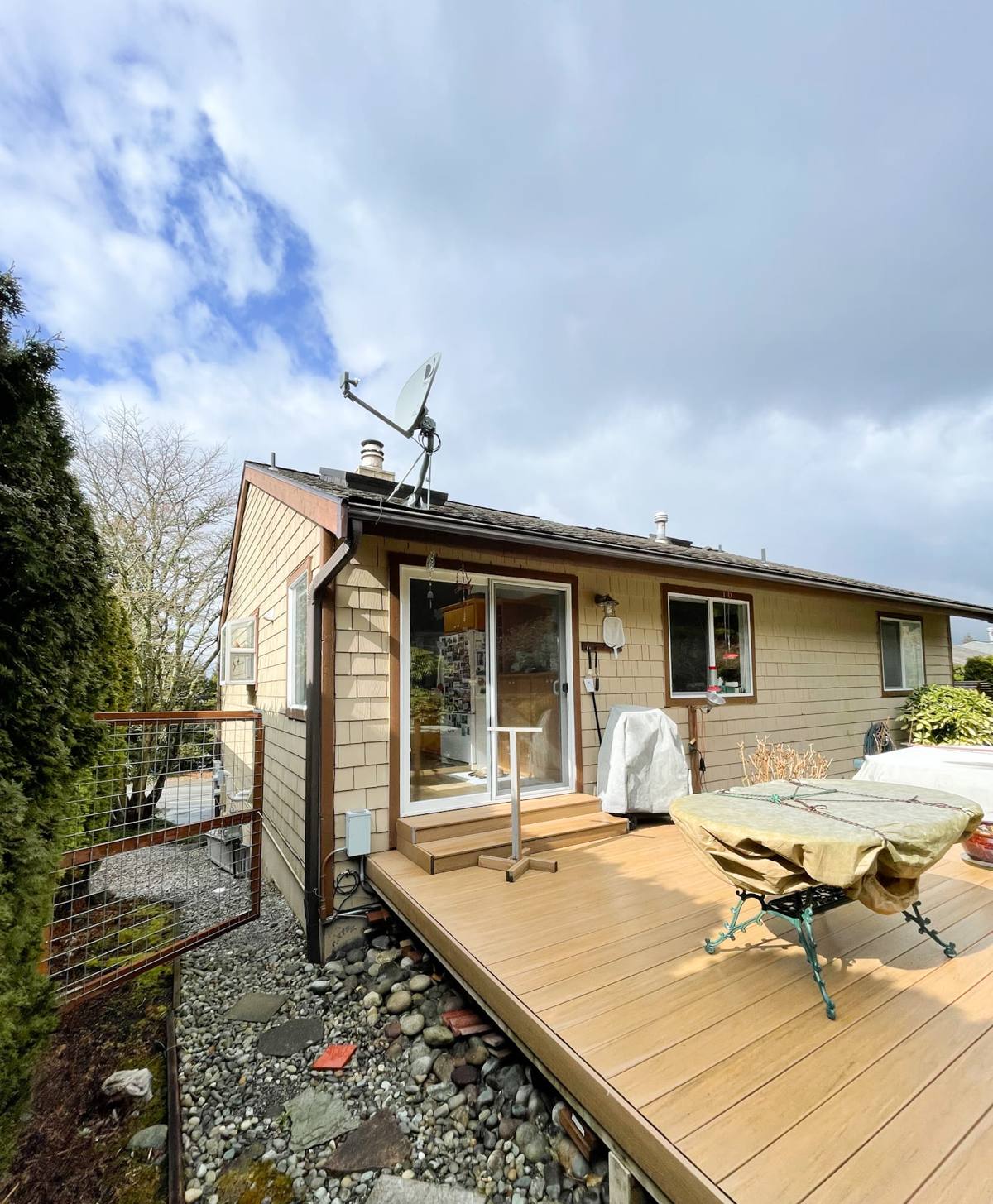
Signs Your Laurel Home Needs Replacement, Not Just Repair
Siding gives warning signs well before it fails outright. The trouble is that many of those signs look minor from the ground and get written off as cosmetic. Here's what actually points to a replacement conversation rather than a patch job:
- Soft, spongy, or crumbling spots when you press on the siding, especially near the bottom courses or around windows
- Paint or finish that keeps failing in the same spots within a year or two of repainting
- Persistent moss or dark staining that comes back within a season of cleaning
- Visible gaps, warping, or buckling panels, particularly on walls that face prevailing wind and rain
- Rising interior humidity, musty smells along exterior walls, or drywall staining near the siding line
- Siding that's original to a home built more than 20–25 years ago, especially older wood or engineered wood products
- Caulk lines that have pulled away from trim and won't hold a fresh bead for more than a few months
One or two of these on their own might mean a targeted repair. Several together, or any sign of moisture reaching the sheathing underneath, usually mean the siding system as a whole has stopped doing its job and a full replacement is the more honest recommendation.
What a Correct Siding Replacement Actually Involves
Tear-Off and a Real Sheathing Inspection
Replacement starts with removing the old siding entirely, not covering over it. That's the only way to see the sheathing underneath — and in a climate like this, sheathing condition is often the real story. Water that got behind failing siding for years can rot OSB or plywood long before the siding itself looks bad from the outside. Any soft or delaminated sheathing needs to be cut out and replaced before new siding goes up; installing new siding over damaged sheathing just hides the problem for another few years.
Water-Resistive Barrier and Flashing Details
The siding itself is the least important layer for keeping water out of the wall — the water-resistive barrier and flashing underneath do the real work. In a driving-rain climate, every window, door, and penetration needs flashing that's lapped correctly (upper pieces over lower ones, always shedding water downward) and integrated with the barrier so water that gets past the siding still runs down and out, not into the wall cavity. This is the step that separates a correctly installed siding job from one that just looks right on installation day.
Fastening, Clearances, and Ground Contact
Siding needs proper clearance from grade, decks, and roof lines so it isn't sitting in standing water or splash-back — a common issue on lots with limited drainage or heavy landscaping. Fasteners need to be the corrosion-resistant type appropriate for coastal exposure, driven at the manufacturer's specified depth and spacing. Overdriven or underdriven fasteners are a leading cause of early siding failure, and it's an easy detail to get wrong on a rushed job.
Factory-Finished Installation
The final step is installing pre-finished panels and trim with the joints, caulking, and touch-up done to spec — not field-painting raw material and hoping the finish holds up to salt air and UV. A factory-applied finish is more consistent and more durable than anything applied on-site, which matters most in exactly the kind of exposure Laurel homes deal with.
Why We Install Only James Hardie Fiber Cement
We don't offer a menu of siding brands, and that's a deliberate standard rather than a limitation. James Hardie fiber cement is non-combustible, doesn't rot or delaminate the way wood-based products can when moisture gets past the surface, and holds its factory ColorPlus finish far longer than field-applied paint. For a climate that combines salt air, sustained moisture, and moss, those properties aren't marketing points — they're the specific things that determine whether siding is still doing its job in fifteen or twenty years instead of needing attention again in five.
Hardie also makes climate-specific product lines engineered for different exposure levels, which matters in a region where a waterfront lot and an inland lot a few miles apart can see meaningfully different weather loads. We size the product line to the site rather than defaulting to one option everywhere, and every installation is backed by a warranty that's transferable if the home sells — a detail that matters to buyers doing due diligence in a market where siding condition gets scrutinized.
How Siding Materials Compare in This Climate
| Factor | James Hardie Fiber Cement | Vinyl | Wood-Based / Engineered Wood |
|---|---|---|---|
| Moisture behavior | Resists moisture; doesn't swell or rot | Sheds water but can trap moisture behind panels if installed loose | Absorbs moisture at cut edges and joints if finish fails |
| Salt air exposure | Stable; finish holds up well | Can chalk, fade, or become brittle over time | Finish breaks down faster; exposed wood is vulnerable |
| Moss and algae resistance | Doesn't feed organic growth; cleans easily | Growth sits on the surface but can trap moisture at seams | Growth can hold moisture against the substrate |
| Maintenance | Occasional wash; no repainting needed for the warranty period | Low, but repairs are hard to color-match after fading | Regular repainting and caulk maintenance required |
| Fire resistance | Non-combustible | Melts/deforms under heat | Combustible |
No material is maintenance-free, and every product has a legitimate use case somewhere. This table reflects why, for the exposure Laurel and the wider Semiahmoo area deal with, we've standardized on one system rather than installing whichever product a homeowner has seen advertised.
Our Siding Replacement Process for Laurel Homeowners
- On-site assessment — we walk the exterior, check for moisture intrusion, and evaluate sun/wind exposure specific to the lot
- Sheathing and structural check — confirmed once old siding is removed, with any damage addressed before new material goes up
- Water management plan — house wrap, flashing, and drainage details specified for that home's exposure
- Product selection — the right Hardie line and profile for the site, with color and trim decisions made up front
- Installation to manufacturer spec — correct fastening, clearances, and joint treatment, inspected as the work proceeds
- Final walkthrough — caulking, touch-up, and trim details reviewed before the job is considered complete
Why a Crew That Already Works Laurel Matters
Whatcom County's permitting requirements, wind and rain-exposure patterns, and even the way lots drain vary from one part of the county to another, and a crew that's worked the Semiahmoo area repeatedly already knows the local baseline instead of learning it on your project. That shows up in small but consequential decisions — how much clearance a particular lot's drainage calls for, which walls typically take the worst of the driving rain, how aggressive moss growth tends to be on shaded or tree-lined properties nearby, and what inspectors in the area expect to see on a water-resistive barrier and flashing before signing off.
It also shows up in accountability. A crew that plans to keep working in the same community has every incentive to get the water management details right the first time, because a callback on a flashing detail is far more costly to a local reputation than to an out-of-town outfit that won't be back.
What Affects the Cost of a Siding Replacement
| Cost Factor | Why It Matters |
|---|---|
| Home size and wall area | More square footage means more material and labor hours |
| Number of stories | Multi-story homes need scaffolding or lift equipment, adding labor and safety setup time |
| Sheathing condition | Rot discovered during tear-off adds repair scope that can't be priced sight-unseen |
| Trim and architectural detail | Corners, dormers, and window/door trim take more time per square foot than flat wall runs |
| Product line and profile | Hardie's climate-engineered lines and premium profiles cost more than base products |
| Site access | Tight lots, landscaping, or limited driveway access can slow material staging and disposal |
Because sheathing condition is only fully known once the old siding comes off, a firm final number typically follows the initial assessment and any adjustment for what's found underneath — not a number quoted sight-unseen over the phone.
Living With Salt Air and Moss Season After Installation
A correctly installed Hardie system is low-maintenance, not no-maintenance. A yearly rinse-down removes salt residue and early moss growth before it has a chance to establish, and it's worth doing before the wet season sets in rather than after moss has already taken hold. Keep an eye on caulk joints around windows and trim — caulk is the one component that wears out well before the siding itself and is cheap to refresh proactively. Trim back vegetation and tree cover that keeps a wall shaded and damp longer than the rest of the house; that's almost always where moss returns first. None of this is heavy upkeep, but skipping it is how a well-installed system loses years of its expected life to a climate that doesn't give siding much of a break.
If your Laurel home is showing any of the signs above, or you're simply due for a straight answer on whether repair or replacement makes sense, we're happy to take a look. The estimate is free, there's no pressure attached to it, and you'll get a clear read on what your home's siding actually needs.