 Semiahmoo
 Why Decks in Laurel Wear Out Faster Than Most
Laurel sits close enough to the water that salt air is part of daily life here, and that changes how a deck ages. Salt-laden air accelerates corrosion on anything metal — nails, screws, joist hangers, post bases — long before the wood itself gives out. Add Whatcom County's driving rain, which tends to come in sideways off the water rather than straight down, and you get moisture finding its way into ledger boards, end grain, and fastener holes that a drier climate would never expose. Then there's moss season, which around here isn't really a season at all — it's most of the year. Moss holds moisture against decking boards, blocks sun and airflow, and turns wood surfaces slick and slowly punky underneath a layer of green that looks harmless from a distance.
None of this means a deck can't last in Laurel. It means a deck built or replaced without accounting for these conditions will fail years before it should — usually starting at the connections and low points where water collects, not in the open field of decking where you'd expect to see trouble first.
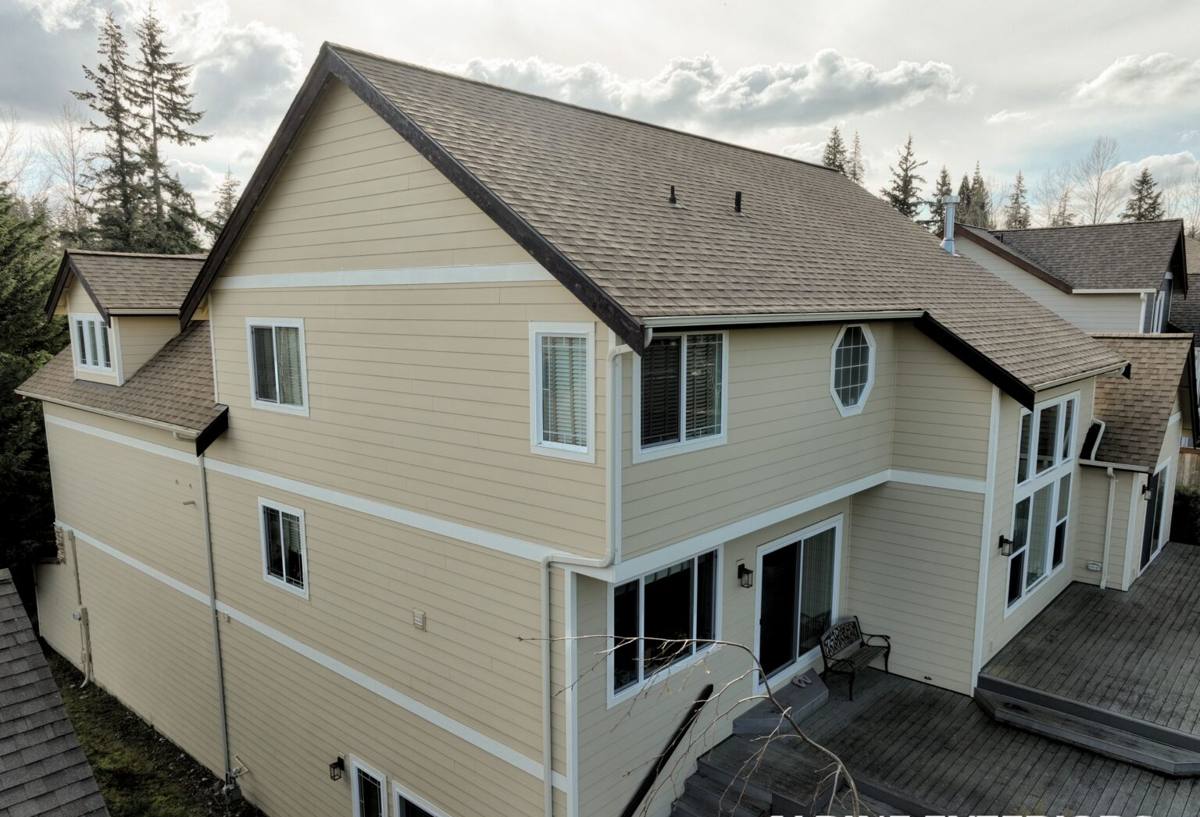
Signs Your Laurel Deck Has Reached Replacement, Not Repair
Repair makes sense when the damage is isolated — a cracked board, a loose railing baluster, a single soft spot near a planter. Replacement becomes the honest answer when the problems are structural, spread out, or rooted in the framing itself. A contractor who tells you every deck just needs a few boards swapped, regardless of what's underneath, isn't doing you any favors.
- Soft or spongy decking in multiple areas, not just one board
- Rot or discoloration at the ledger board where the deck attaches to the house
- Rust streaks running down from screw heads or joist hangers
- Visible gaps, sag, or bounce when you walk across the deck
- Posts that wobble or show soft wood at the base, near or below grade
- A railing that flexes noticeably under hand pressure
- Persistent moss or algae that returns within weeks of cleaning
- A deck older than 15-20 years that has never had the framing inspected
If you're seeing two or more of these, especially anything involving the ledger board or posts, it's worth having someone look at the framing before spending money on cosmetic fixes that won't hold.
What a Correct Deck Replacement Actually Involves
Ledger Board and Flashing
The ledger board — where the deck bolts into the house — is the single most common failure point in this climate, and it's almost always a flashing problem, not a wood problem. Water gets behind the ledger, has nowhere to drain, and rots the rim joist behind it from the inside. A correct replacement includes proper flashing between the ledger and the house siding, not just fresh lag bolts into old wood.
Framing and Footings
Joists, beams, and posts all get inspected and, where needed, replaced — not just the decking on top. In Whatcom County's damp ground conditions, footings that are too shallow or improperly set will shift over time and take the whole structure out of level. We check footing depth and post connections as part of any replacement, not as an upsell.
Fasteners and Hardware
This is where salt air does the most damage, and it's the detail that gets skipped most often on budget jobs. Standard galvanized hardware corrodes faster near the coast than most homeowners expect. We use stainless steel or high-grade coated fasteners and connectors rated for coastal exposure, because replacing a deck only to have the hardware fail in five years defeats the purpose.
Decking and Railing Material
The visible surface matters for looks, but it's the last decision, not the first — it only performs well if what's underneath it is built right.
Comparing Decking Materials for Laurel's Climate
There's no single "best" decking material — each one is a different trade-off between upfront cost, upkeep, and how it handles moisture and moss. Here's how the common options stack up under Whatcom County conditions:
| Material | Moisture Behavior | Moss & Mildew Resistance | Maintenance | Typical Lifespan |
|---|---|---|---|---|
| Pressure-treated wood | Absorbs and releases moisture; prone to cupping if not sealed | Low — needs regular cleaning and sealing | Annual cleaning and re-staining | 10-15 years |
| Cedar | Naturally moisture-resistant but still needs sealing here | Moderate | Sealing every 1-2 years | 15-20 years |
| Composite decking | Doesn't absorb water like wood; can trap moisture at fastener points if not installed with gapping | Higher, but still grows moss without airflow underneath | Periodic washing, no sealing | 25-30 years |
| PVC decking | Fully moisture-resistant, doesn't rot | Highest, but surface texture still needs occasional washing | Low — mostly washing | 30+ years |
Composite and PVC cost more upfront, but the maintenance savings and moisture resistance tend to matter more the closer a home sits to the water. Wood costs less initially and still has a place, particularly where a homeowner wants the natural look and is committed to yearly upkeep. We'll walk through the real trade-offs for your specific deck rather than push one material across the board.
Our Deck Replacement Process
- On-site assessment. We inspect the existing deck, ledger connection, framing, and footings, and measure for the new build.
- Written scope and estimate. You get a clear breakdown of what's being replaced, materials, and cost — no vague allowances.
- Removal. The old deck comes out, including decking, railing, and any framing that doesn't pass inspection.
- Framing repair or rebuild. Ledger flashing, joists, beams, and footings are corrected to current code before anything new goes on top.
- Decking and railing installation. Installed with proper spacing and fastening for drainage and airflow, which matters as much as the material choice.
- Final walkthrough. We go over the finished deck with you, including basic care guidance for our climate before we consider the job done.
Permits and Local Code Considerations
Deck replacement in Whatcom County typically requires a permit once the work goes beyond simple board-for-board repair, especially when framing, footings, or railings are involved. Requirements can vary by jurisdiction and by the specifics of the deck — height above grade, size, and proximity to property lines all factor in. Guardrail height and baluster spacing are also governed by code, particularly on raised decks. We handle the permit process as part of a full replacement so you're not left guessing whether the work will pass inspection or cause problems at resale.
What Affects the Cost of a Deck Replacement
Costs vary widely depending on the specifics of the project, but the main drivers are consistent from job to job:
- Size and shape — square footage and complexity of the layout (multiple levels, angles, wraparounds)
- Framing condition — whether joists, beams, and posts can be reused or need full replacement
- Height and stairs — decks well above grade require more structural work and stair construction
- Decking material — wood, composite, and PVC carry very different material costs
- Railing style — basic wood railing versus composite, metal, or cable systems
- Ledger and flashing work — correcting an improperly flashed ledger adds labor but prevents the most common failure point
The honest range for a full deck replacement in this area runs from a modest few thousand dollars for a small, simple deck in wood, up into the higher five figures for a large, multi-level deck in composite or PVC with custom railing. We'll give you real numbers based on your deck, not a generic quote pulled from a national average that doesn't reflect coastal Whatcom County conditions.
Why Hire a Crew That Already Works in Laurel
A contractor who's worked decks in Laurel and the surrounding Semiahmoo area already knows where the ledger boards tend to fail, which fastener grades actually hold up against the salt air, and how much airflow a deck needs underneath to keep moss from taking over again in a year. That's not something you can fully learn from a manual — it comes from having repaired and replaced decks in this exact climate, on homes dealing with the same rain patterns and the same proximity to the water. It also means we're familiar with local permitting expectations, so there are fewer surprises mid-project.
If your deck is showing its age or you're just not sure whether it needs repair or a full replacement, we're happy to take a look and give you a straight answer. Reach out for a free, no-pressure estimate using the form below — we'll walk the deck with you, explain what we find, and lay out your options in plain terms.