 Semiahmoo
 Building a Deck That Actually Holds Up in Laurel
Laurel sits close enough to the water that every deck built here is fighting a slower, quieter battle than decks built inland. It's not one big storm that takes a deck out — it's years of salt-laden air working into fasteners, driving rain finding its way behind ledger boards, and moss creeping across shaded boards for months at a stretch. A deck built to a generic national spec will often look fine for the first few years and then start failing in ways that are expensive to fix because the damage is hidden under the decking, not on top of it.
We build decks in Semiahmoo and the surrounding Whatcom County neighborhoods, including Laurel, and we design around this climate rather than around it happening to be pretty here. That means different fastener choices, different framing details, and a different maintenance conversation than you'd get from a contractor who mostly works drier ground.
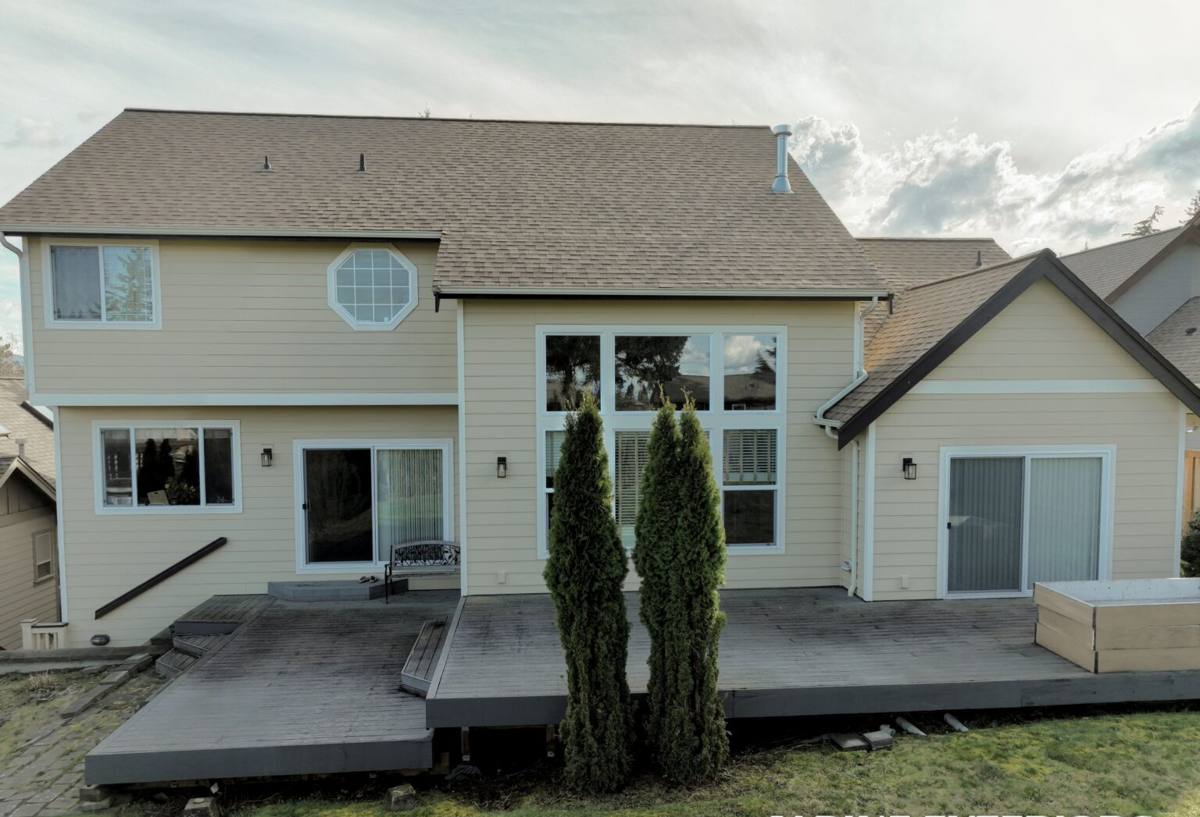
What Laurel's Climate Actually Does to a Deck
Salt Air
Even a few miles inland from open water, airborne salt settles on exposed metal and accelerates corrosion. On a deck, that shows up first in fastener heads, screw threads, and any steel hardware that wasn't rated for a marine or coastal environment. Corroding fasteners don't just look bad — they lose holding strength, and a deck's structural integrity depends on every joist hanger and ledger bolt doing its job for decades, not years.
Driving Rain
Rain here rarely falls straight down. Wind-driven rain gets pushed sideways into ledger connections, under railing posts, and into any gap where flashing was skipped or done poorly. Water that gets behind a ledger board and can't get back out is one of the most common causes of rot we find on older decks in this area — often invisible from the top until the deck starts to feel spongy or a post starts to lean.
Moss and Prolonged Dampness
Whatcom County's long wet season means shaded and north-facing deck sections can stay damp for weeks without a real drying window. Moss and algae take hold in that dampness, and once established they hold moisture against the board surface, which speeds up wood decay and makes the surface slick and unsafe underfoot. Moss growth is a maintenance issue, but it's also a warning sign about airflow and drainage under the deck.
Picking the Right Decking Material for This Ground
There's no single "correct" material for every deck — it depends on budget, how much upkeep you want to do, and how exposed the deck is to salt air and shade. Here's how the common options actually perform in a Semiahmoo-area climate:
| Material | Salt Air / Moisture | Moss Resistance | Maintenance | Realistic Local Lifespan |
|---|---|---|---|---|
| Pressure-treated pine | Good with proper sealing; fasteners must be rated for treated lumber | Fair — needs regular cleaning | Annual sealing/staining | 15–20 years |
| Western red cedar | Naturally decent rot resistance | Fair — softer surface holds moisture | Sealing every 1–2 years to hold color and resist decay | 15–25 years |
| Composite decking | Very good — doesn't absorb moisture the way wood does | Better, but surface can still stain if debris sits | Periodic washing, no sealing/staining | 25–30+ years |
| Tropical hardwood | Excellent natural density and rot resistance | Good | Occasional oiling to maintain appearance | 25–30+ years |
Composite has become a common choice for Laurel homeowners specifically because it removes the sealing/staining cycle from the maintenance list, which matters when the wet season gives you a short window to do that work anyway. That said, composite isn't maintenance-free — it still needs to be kept clear of debris and washed periodically, or moss and mildew will stain the surface just like they would on wood.
Framing and Structure: Where Most Deck Failures Start
The decking boards are the part everyone sees, but the framing underneath is what determines whether a deck lasts fifteen years or forty. In this climate, three framing details matter more than they would somewhere dry:
- Ledger flashing: The connection where the deck attaches to the house needs proper flashing that sheds water away from the wall, not just a bead of caulk that will eventually fail.
- Joist protection: Joist tops and cut ends absorb water fastest. Tape or coating on joist tops significantly slows rot compared to bare treated lumber.
- Footings below frost and water table: Footings need to be sized and set correctly for our soil conditions, not just poured to the minimum code depth, to avoid movement over time.
We've replaced enough Whatcom County decking on top of frames that were structurally sound to know it's worth separating the two problems — sometimes a deck needs new boards, sometimes it needs a rebuild from the ledger out, and an honest contractor tells you which one you actually have before quoting the job.
Railings, Fasteners, and Hardware That Won't Corrode
This is the detail that separates a deck that ages gracefully from one that develops rust streaks and loose railings within a few years. In a salt-air environment, we use stainless steel or hot-dip galvanized fasteners and structural hardware rated for exterior and coastal use, not standard zinc-coated screws that look fine in the box but start corroding within a season or two once they're exposed to the air here. The same goes for post bases, joist hangers, and any structural connector — the grade of steel and the coating matter as much as the design of the part.
Railings deserve the same attention, since they take direct weather exposure and get handled constantly. Post caps, baluster brackets, and any exposed cap screws are worth upgrading to corrosion-resistant hardware even if it costs a little more up front, because replacing a rusted-through railing connection later means tearing into finished work.
Drainage and Ventilation Under the Deck
A deck that can't shed water and dry out will eventually rot from underneath, regardless of what decking material sits on top. Two things drive this: how water moves off the deck surface and away from the house, and how much airflow reaches the underside of the frame. Low decks built tight to grade, or decks enclosed with skirting that blocks airflow, are the ones we see with moss and rot problems developing fastest in this climate — the space underneath simply never gets a chance to dry between rain events.
When we build or rebuild a deck, we look at grading and slope away from the foundation, gap spacing between boards for drainage, and whether the underside needs vents or gaps in skirting to keep air moving. It's a detail that costs nothing extra if it's planned from the start and is expensive to retrofit later.
Our Deck Building Process
- On-site assessment: We look at sun exposure, drainage, existing structure (if this is a rebuild), and how the deck will actually be used before recommending a material or layout.
- Design and material selection: We walk through the material comparison honestly, including upfront cost versus long-term maintenance, so the choice fits your budget and your tolerance for upkeep.
- Permitting: Most decks over a certain height or size require a permit locally — we handle that process as part of the job rather than leaving it to the homeowner.
- Framing built for this climate: Corrosion-resistant hardware, proper ledger flashing, and joist protection as standard, not upgrades.
- Decking installation: Correct fastening pattern and board spacing for drainage and expansion, whether it's wood or composite.
- Final walkthrough: We go over basic maintenance expectations specific to the material installed and the deck's exposure.
Maintenance Checklist for a Laurel Deck
Whatever material you choose, a little seasonal attention keeps a deck from developing the problems that turn into expensive repairs. This is the routine we recommend to homeowners in this area:
- Sweep leaves and debris off the deck regularly, especially from shaded corners where moss takes hold first
- Wash the surface at least once a year with a deck cleaner appropriate for the material — pressure washing wood too aggressively can damage the surface
- Check and reseal or restain wood decking on the schedule the product calls for, typically every one to two years
- Inspect railings and stair connections for looseness or rust streaks at least once a year
- Confirm gaps between boards stay clear so water can drain rather than pool
- Look underneath the deck periodically for signs of moisture, mold, or standing water near footings
Why Hire a Crew That Already Works in Laurel
A lot of deck problems we get called to fix started with a design or material choice that made sense somewhere drier but wasn't right for a marine climate. Fastener grade, ledger flashing, and material selection aren't places to guess — they're the difference between a deck that needs real attention in eight years and one that's still solid at thirty. Working regularly in Semiahmoo and the rest of Whatcom County means we're not learning this climate on your project; we've already seen what salt air, driving rain, and a long moss season do to decks built without those details in mind, and we build accordingly from the first footing.
If you're planning a new deck or need to replace one that's showing its age, we're glad to come take a look and talk through what makes sense for your home. Reach out for a free, no-pressure estimate using the form below.